By: Sergio García
Automatic translation made by AI.
Sunday night’s results mark a turning point. They are one of those moments that make all the previous political plans to stumble. They are a photo, in this case a tremendous one for the national government, which appears with the possibility of turning into a horror movie for the ruling party.
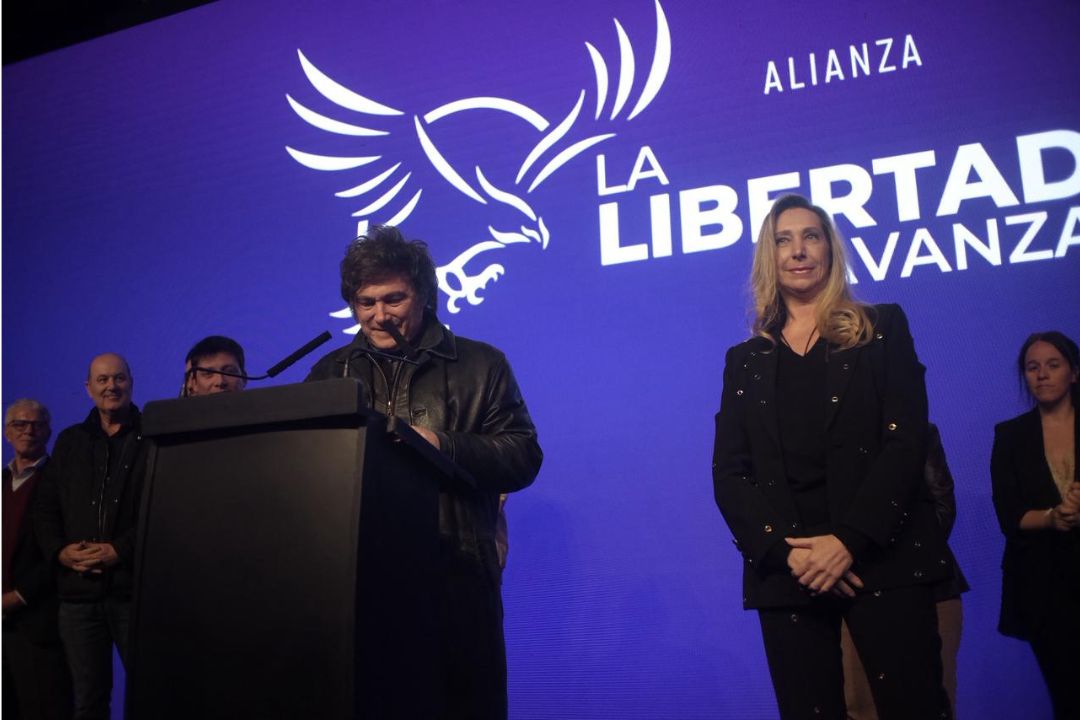
Only four days before in Moreno, in a libertarian closing act with few people genuinely present and some people who came paid, Milei had once again nationalized the election in depth and insisted that they were going to paint the province in purple. None of that happened and a large part of the population decided to give him a tremendous political blow. The president’s force, La Libertad Avanza, was swept away, coming in second place and separated from first place by an overwhelming gap of more than thirteen percentage points. A difference that reflects the discontent and wear and tear between the government and a broad sector of society.
President Milei’s Libertad Avanza, together with the PRO that accompanied him from behind, was relegated to a distant and bitter second place with only 33% of the votes. This figure represents a resounding fall for a force that aspired to paint the province in purple and that now evidences its electoral ceiling and its rapid wear and tear. The defeat was so resounding that it could only win in two of the eight electoral sections: the Fifth and the Sixth. He lost in all the others, including losing clearly in the 3rd and 1st sections, the two most populated. The thrashing was very important, removing any doubts about the message sent by the electorate.

The elections in the Province of Buenos Aires, the largest and most significant electoral district in the country, decided the renewal of 46 provincial deputies and 23 provincial senators, as well as city councilors and school councilors. However, over and above these positions, the elections were transformed into a plebiscite on the President’s administration. The result was categorical: Milei kissed the canvas. He only managed to get up to speak to his followers from his Bunker. And there he again lost the little credibility he has left, with a speech that seemed not to understand anything of what was going on. He pretended with a very lukewarm self-criticism, to quickly ratify the course of everything. Popularly it is said that he feigned insanity and went ahead. Only that ahead there is a hard wall against which he is going to crash. The markets have already reminded him of this since early Monday morning, when Argentine stocks started sinking on Wall Street and the dollar tightened its grip on the accelerator. Behind this, it is evident that the big bourgeoisie and the imperialist financial power are already beginning to have more doubts and uncertainties about this government and its future.
Reasons for a resoundingdefeat
Throughout the country millions of workers and young people are celebrating Milei’s defeat, a feeling we share. At the same time, it is necessary to go deeper into the reasons for his fall. This election day in Buenos Aires took place under the shadow of a political crisis, triggered just a few weeks ago by the ANDIS corruption scandal. The audios of the ex-official Diego Spagnuolo, which implicated the President’s own sister, Karina Milei, and her most intimate environment in a bribery scheme, submerged the government in an unprecedented scandal, dismantling to its foundations its discourse of “caste” versus “people“. However, this scandal was the straw that broke the camel’s back, but it is only a part of the analysis that explains the forcefulness of the defeat.
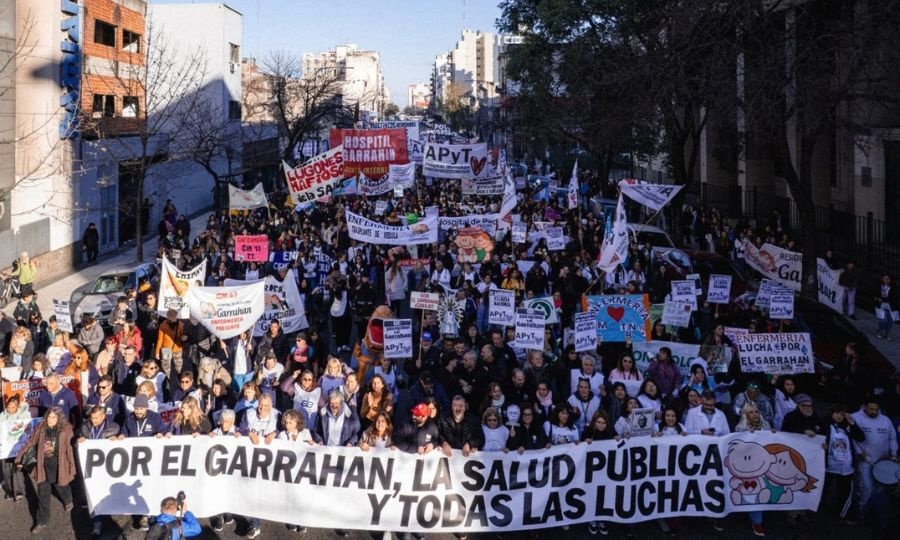
The central explanation of this result is to be found in the accumulated social unrest, a discontent that springs from the empty pockets of millions of working families. The defeat can also be explained by the fact that there were very sensitive sectors that have been consistently confronting the government for months, such as the retired, the Garrahan workers, the disability collective, the university and science, the labor sectors claiming for decent wages. The ballot boxes in Buenos Aires made real what was already palpable in the streets: the majority rejection of a model of economic adjustment, repression and systematic reduction of rights. That is why Milei’s defeat is the triumph of all the sectors that have been fighting against this government and that evidently have a strong social support that now must be used in their favor.
Why does Peronism win?
The final result left no room for speculation and paints a reconfigured political panorama for the province. The official results confirmed the magnitude of the setback for the national ruling party and delineated a new chessboard of forces. The Peronist front, Fuerza Patria, won a comfortable victory, obtaining 47% of the votes. This figure, although it gives it an undisputed triumph which it quickly tried to capitalize, must be read with caution and also in depth. First of all, it speaks more of a useful anti-Milei vote than of an enthusiastic support to his provincial administration. There is no way there is a 47% that supports the Peronism project, within that percentage there is a large group that votes with their noses held in the air. At the end, a sector of the population decided to vote, 63%, more than in all the elections of this year, reflecting the fact that a group of people wanted to make Milei lose and found the possibility to do so in the Peronist Party. This Peronism, headed by Kicillof, capitalized on this protest vote against the national government. Another sector, also important, did not vote as another form of social discontent.

It is at this point where it becomes crucial to make an accurate and non-celebratory reading of the triumph of Fuerza Patria’s Peronism. Its first place does not represent, in any way, a victory born of its own virtues or of a genuine and massive support to its project. It should not be forgotten that Peronism is the ruling party in the province and that Axel Kicillof’s government, together with the vast majority of the mayors who are part of its lists, applies its own adjustment on the workers of Buenos Aires.
Far from presenting a firm opposition to defeat and stop the government now, the Peronist victory already showed its strategic limits on Sunday night, whenKicillof himself, in his triumphal speech, called Milei to “dialogue“ to “negotiate” and to “change the course“. A position that seeks to manage the discontent, to channel it institutionally and to deactivate all its mobilizing potential, instead of encouraging and deepening it in order to definitively defeat the hunger plan. Beyond the healthy intentions of its voters and sympathizers, it is not surprising that the leadership of Peronism encourages this policy, from a box full of mayors and representatives of the union bureaucracy that all this time, did not lift a finger to confront Milei. This wrong policy is logical, because we cannot forget that the PJ is a pillar of the Argentine bourgeois regime, therefore it always acts from its defense without taking its feet off the plate. This position of the PJ is the one that Milei will try to take advantage of in search of time to get back on its feet. Something that perhaps, however, he will not be able to achieve.
The third option linked to other governors
The third force at provincial level was Somos Buenos Aires, with 5.2%, supported in some sections of the interior and reflecting the crisis and fragmentation of the non-Peronist center-right space. A sector which, in an opportunistic manner, in order not to be tied to the crisis the government is going through, created its own seal, evidencing the endorsement of a bourgeois sector, which encourages a more national phenomenon, headed by Córdoba and Santa Fe, the new space “United Provinces”.
Built by political leaders who until very recently were fundamental for Milei’s government to be able to advance with the current adjustment in Congress. In the heat of this libertarian defeat, this sector will surely decide to deepen its arming towards October, where it hopes to become even more nationalized.
Good election of the Frente de Izquierda (Left Front), being the 3rd force in the conurbation.
A very important fact of this election was that in spite of the fact that a sector of the population chose a useful vote to defeat Milei, also an important fringe of workers and youth, decided to accompany and vote for the Frente de Izquierda, which surpassed 4.3 % at the level of the whole province and in the 3rd section obtained a higher vote and managed to obtain two seats of deputies, a new political conquest for this coalition of the anti-capitalist and socialist left. Unlike the vote for Peronism which contains a large part of borrowed votes, the FIT-U supports polarization because it expresses an important fringe convinced of giving support to a different and left-wing alternative.
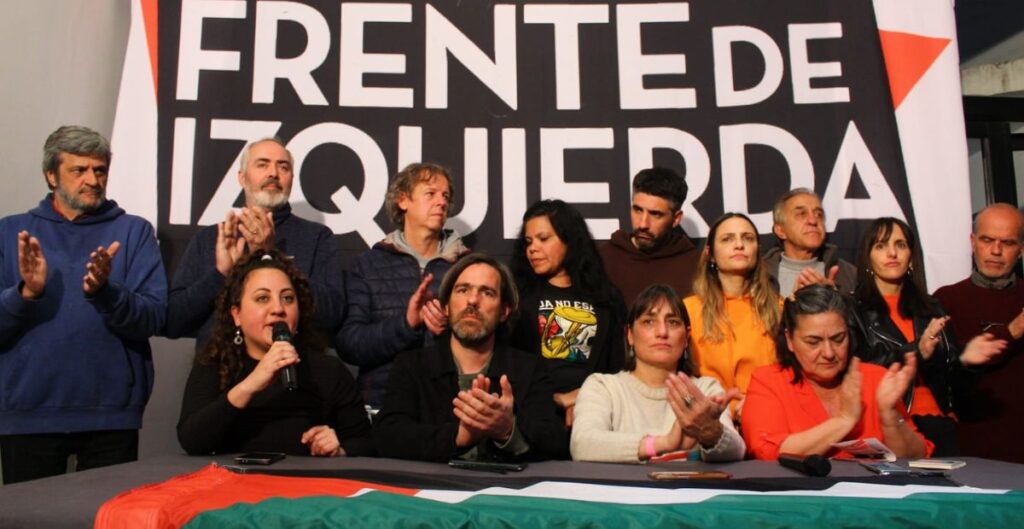
The FIT-U, although it narrowly failed to be the third force in the whole of the extensive province of Buenos Aires, it was the third force in its central zone of greater population and more strategic; we came out 3rd force in the 1st section with 4.2%, also in the 3rd section with 5.6%, that is to say in the two sections which group together all the working class and popular municipalities of the whole conurbation. And we were also 3rd force in the 8th section of La Plata, provincial capital, obtaining 5.5%. All reflections of the fact that the left showed more levels of support and strength in all the great neuralgic centers of the workers and popular electorate. This growth was neither circumstantial nor isolated; in key working class municipalities such as La Matanza, the left surpassed 7%, while in districts such as Merlo, Quilmes, Berisso and Lanús the results were equally significant. It was a campaign made on its own, without access to the millionaire resources of the traditional apparatus or to massive media publicity and without resources granted by the State for campaigning. Even if with great effort he was able to connect with a sector of society, tired of the traditional options.
The Frente de Izquierda (Left Front), comes out of this election well positioned for all that is to come. There is already much more that it could advance, both in elections and above all in social struggles, if it were willing to go much further than an electoral front. If only as an electoral unity we have achieved all this, it is not difficult to imagine how much more we could influence without that limitation. In the face of the social convulsions and tensions that are coming, more than ever from the MST we insist on our proposal: that the Left Front advances to form a common party of democratically organized internal tendencies or currents, that allows us to include social referents, intellectuals and allied groups that accompanied us in this election. In Milei’s darkest night and in the face of the struggles and crises of magnitude that are approaching, this whole fundamental and strategic debate acquires topicality and urgency.
The electoral performance of the Frente de Izquierda is relevant and its result is not a minor fact; it is the reflection of a campaign built from below, in the neighborhoods, in the factories and in the universities, which presents itself as a consistent option and without double discourse. As our elected deputy of the MST in the FIT-U, Ana Paredes Landman, said during the celebration on Sunday night: “The defeat of the government, which today has been exposed and which even many point out as a resounding fall, is not only explained by the bribery scandal, but fundamentally by the accumulation of struggles that confronted it in the streets. There were the Garrahan workers, the disability movements, the retirees and so many popular sectors which, with the support of the Frente de Izquierda, kept the resistance alive while other spaces linked to the trade union bureaucracy and Peronism chose passivity. The good electoral result of the Frente de Izquierda marks a recognition to those of us who support a consistent proposal, to those of us who do not turn back and always defend the rights of the workers and the youth in the legislatures and in the Councils”.
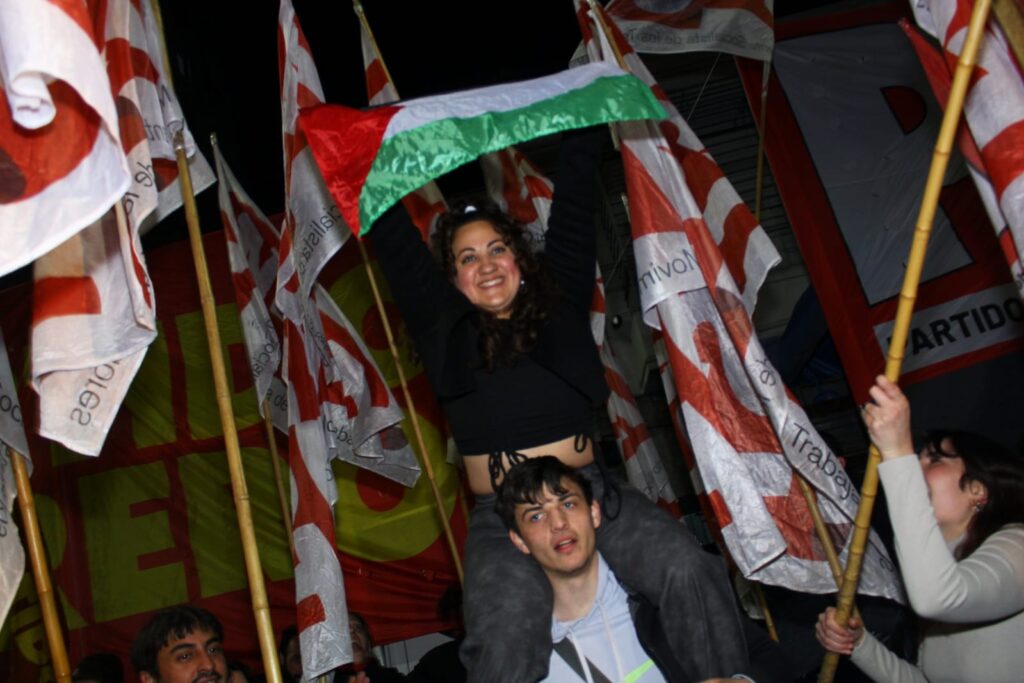
This is the perspective we are preparing for. Of greater crisis, social struggles and hypothesis of sharp turns of the situation on the horizon. We are getting ready to strengthen the fight in the streets against this government, not to give it time or oxygen, as Peronism mistakenly proposes. To unite every struggle from below, to coordinate and promote them more than ever and to continue insisting on the need to massify the struggle to get rid of this government of bribers, adjusters and repressors. That is the task between these elections and the national elections coming in October. There we will also give a strong political fight for these objectives. And to make ever bigger and stronger an alternative that fights for a government of the workers and socialism.