By The Socialist Alternative, Peru.
On Thursday night, in a lightning decision, the Congress of the Republic of Peru dismissed President Dina Boluarte after declaring her “permanent moral incapacity” to hold office, amid the growing wave of citizen insecurity and the advance of organized crime that is hitting the country.
The Congress approved the four vacancy motions with 122 votes in favor out of 130, only 87 were needed to make the impeachment effective. The president did not appear at the session to exercise her defense, which reinforced the perception of political isolation that already surrounded her.
The legislative resolution states “the permanent moral incapacity of the President of the Republic and the vacancy of the office,” also providing for the “application of the succession regime” established in the Constitution. Since there are no vice presidents, the head of state falls to the president of the Congress, José Jerí, leader of the right-wing Somos Perú party, that immediately assumed the interim presidency of the country.
The main charges against Boluarte include political responsibility for the deaths of more than 50 people during the repression of social protests in 2022 and 2023, as well as investigations into alleged receipt of luxury gifts, including Rolex watches. She’s also being questioned regarding having hidden her temporary physical impediment to holding office while undergoing cosmetic surgeries, which would have constituted a serious lack of transparency in the exercise of power.
That is how the Peruvian Congress consummated the departure of Dina Boluarte and opens a new stage of political instability, with a government headed by José Jerí, whose legitimacy is already a subject of debate in broad social and political sectors.
The end of political support for Dina Boluarte in Peru
The political support that supported Dina Boluarte finally collapsed when even the sectors that had defended her began to assume the high cost of her unpopularity. In recent months, the country has been engulfed in a spiral of violence, insecurity and institutional crisis. Kidnappings, extortions and murders increased alarmingly, while Peruvians faced unemployment, inflation and the increasing deterioration of their living conditions.
On Wednesday, an event marked the turning point: an armed gang attacked a cumbia group in a Peruvian Army premises, an event that sparked national outrage and brutally exposed the loss of state control in the face of organized crime.
At the same time, young people of the so—called Generation Z took to the streets of Lima again — as detailed in a previous article – to demand Boluarte’s resignation, amid clashes with the police and allegations of excessive repression. This fresh and defiant youth mobilization finally sealed the political isolation of the president.
Boluarte: the fall of a president with no social or political base
Since she came to power, Dina Boluarte was trapped between repression and popular distrust. Her government was characterized by a lack of dialogue and growing authoritarianism in addition to family and personal scandals, such as the arrest of her brother for corruption and the investigation against her for the misuse of luxury goods, including the controversial Rolex watches.
In its last months, neither the Congress nor the Constitutional Court could keep it up. Thursday night’s vote, which declared vacancy due to moral incapacity, was the confirmation of an exhausted political cycle and the predictable outcome of a government that never managed to build legitimacy or respond to the urgent demands of the country.
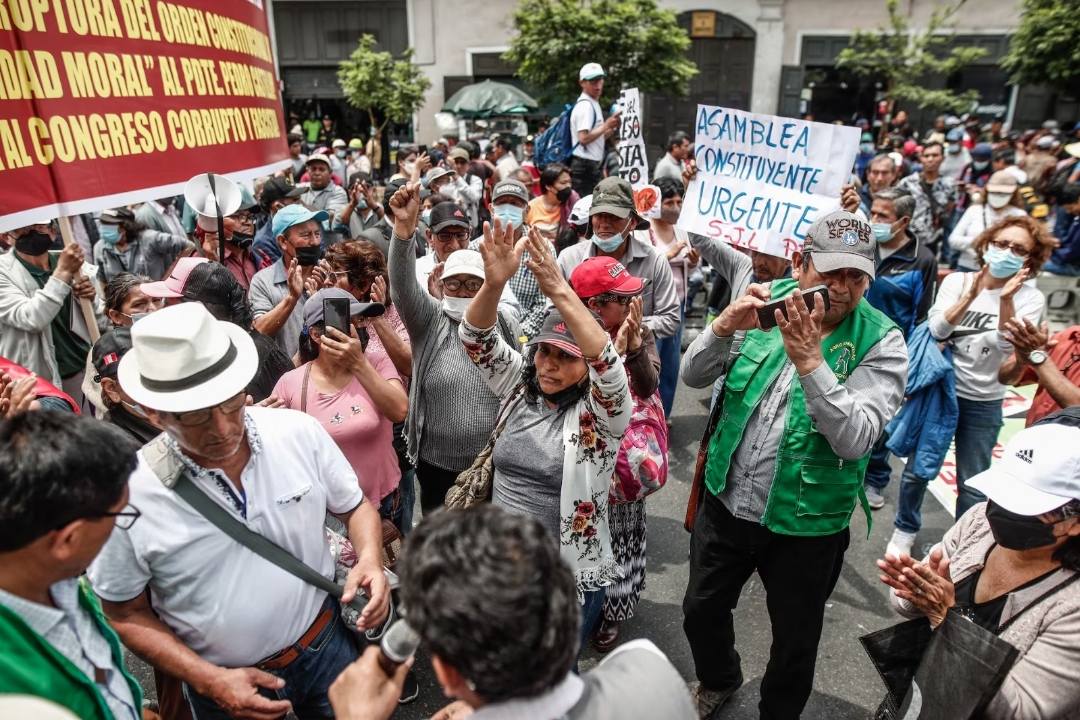
The call for a National Strike for this Wednesday, October 15, is strengthening and emerges as a direct response to the climate of indignation and exhaustion that the country is going through after the dismissal of Dina Boluarte and the assumption of José Jerí to the presidency. Initially promoted by the young people of the so-called Generation Z, the call was quickly supported by university students, workers’ unions, transport guilds, peasant organizations, collectives and regional fronts. Under the slogan “Out with everyone!”, the mobilizations seek to denounce the political crisis, structural corruption and the growing insecurity plaguing the population.
In Lima, rallies are planned in San Martín Square and outside of the Congress, while blockades, marches and popular assemblies are announced in the regions. Beyond a temporary protest, the National Strike expresses the awakening of a new generation that combines digital rebellion with street action, articulating the accumulated frustration of a people that no longer trusts institutions and demands a profound transformation of the current political and social model.
Celebrations and protests in the streets
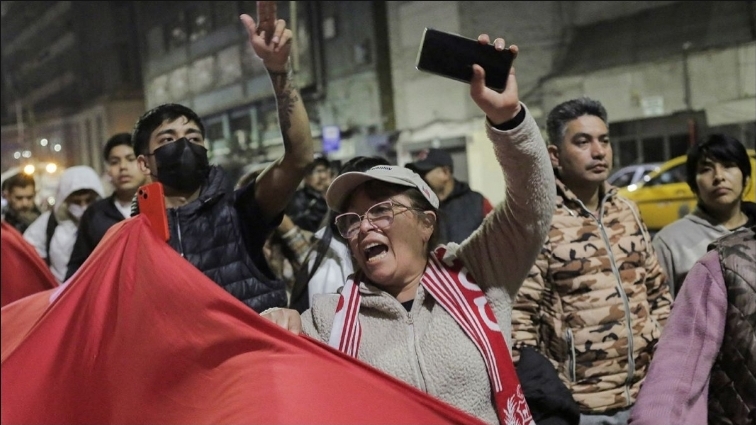
After the impeachment, protesters celebrated in front of the Congress and the Ecuadorian embassy, where it was rumored that Boluarte might apply for political asylum. In the streets, the chants were mixed with uncertainty. Some demanded early elections, while others called for an institutional refounding to stop the country’s permanent crisis.
A history of fleeting presidents
With José Jeri, Peru has accumulated seven presidents in seven years: Pedro Pablo Kuczynski, Martín Vizcarra, Manuel Merino, Francisco Sagasti, Pedro Castillo, Dina Boluarte and now Jeri.
This frenetic succession reflects a structural and terminal crisis of the classic bourgeois institutionality, which won’t be solved with changes of command. Three former presidents – Alejandro Toledo, Ollanta Humala and Pedro Castillo – are in prison for corruption or abuse of power.
What’s coming is unpredictable
The new president took office to propose the old recipes of right-wing politicians: rebuild internal confidence, stabilize the economy and call for an electoral process in April 2026.
Jeri promised to keep the electoral calendar and focus his administration on the fight against insecurity and corruption. However, the legitimacy of his government is clearly questioned by the widespread discredit and will be subjected to a permanent test faced with strikes and marches called behind the slogans of “Out with all of them” that we, Socialist Alternative, also chant.
Meanwhile, Boluarte remains a symbol of the capitalist institutional wear and tear of a country that fails to find its way. Her fall marks another chapter in the endless saga of presidential crises that have been shaking Peru for years and that once again poses the obligation to make a call for unity of all sectors that claim to be anti-capitalist to discuss a way out of this permanent crisis. From Socialist Alternative we will continue fighting for the call for a Constituent Assembly where the popular sectors democratically debate all the alternatives in the perspectives that once and for the workers and the people to govern.
Out with all of them!
Out with Jeri, you corrupt rapist!
For a free and sovereign Constituent Assembly from below by workers, students, peasants and the people all!