By Alberto Giovanelli
Automatic traslation made by AI.
This October 9 marked the 58th anniversary of the assassination in Bolivia of Comandante Ernesto Guevara de la Serna, who we have all come to know worldwide as Che. The Argentine-Cuban guerrilla fighter has become one of the world’s most famous icons. His face is synonymous with rebellion, especially among young people. Despite attempts to commercialize his figure and turn him into a T-shirt or advertising T-shirt, Che, his life and thought have crossed all borders.
Today we want to remember a little known aspect of his journey as an internationalist revolutionary, the link that Che had with the struggle of the Palestinian people.
Few remember Che Guevara’s visit to Gaza in 1959 as one of the first signs of the transformation of the Zionist colonization of Palestine from a regional conflict to a global struggle against colonialism. The trigger was the Bandung conference in 1955 and the resultant movement of non-aligned countries, where convened by the very prominent figure for the time as Nasser led world leaders to see for themselves the devastating consequences of the ethnic cleansing of Palestine, clearly demonstrated in the Gaza refugee camps.
The Gaza Strip became the symbol of Palestine. This small sliver of land (1.3% of Palestine) was the only place where the Palestinian flag was still raised. It bore a large part of the burden of Al-Nakba when it became the temporary shelter for the inhabitants of 247 villages, expelled from their homes in southern Palestine. The southern villages were ethnically cleansed by the Israeli military operation “Yoav”, also called “The Ten Plagues”, in October 1948. Not a single Palestinian village was left standing. This act of total ethnic cleansing was prompted by several massacres perpetrated in Al-Dawayima, Bait Daras, Isdud, Burayr, among others.
The occupation of Palestinian land and the expulsion of its population gave rise to a resistance movement, then known as the Fedayeen. These resistance fighters crossed the Armistice line to attack the occupiers of their land.
In order to stop the Fedayeen incursions and eliminate the idea of resistance, Israel continuously attacked the refugee camps in the Gaza Strip.
Egyptian President Gamal Abdel-Nasser, who assumed power in Egypt in July 1952, signed the first armaments agreement with the Soviet bloc for arms that the British were denying him. He also authorized the Fedayeen resistance by officially organizing them under the command of Colonel Mustafa Hafez.
On October 29, 1956 Israel invaded Sinai together with Britain and France. The attacking Israeli soldiers entered Khan Yunis on November 3, 1956, took all males between the ages of 15 and 50 out of their homes and shot them in cold blood on the doorstep of their own house or against a wall in the main square of the village. 520 names were recorded on the list of those killed. The following week another massacre of refugees was perpetrated in Rafah. There was a deafening silence in the West.
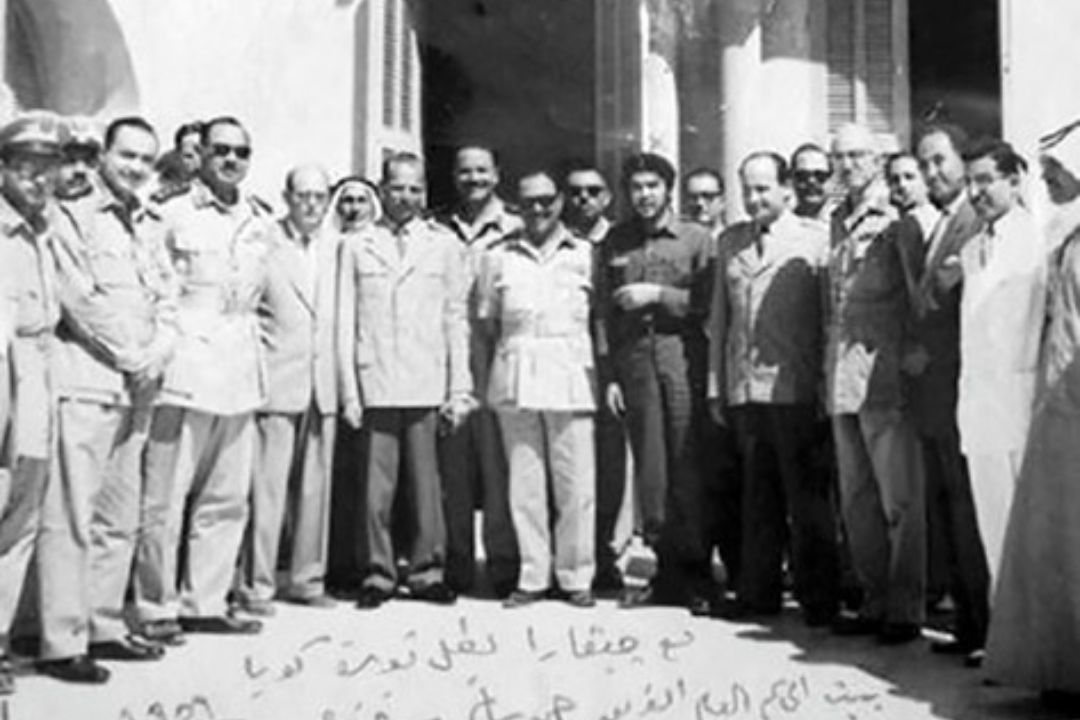
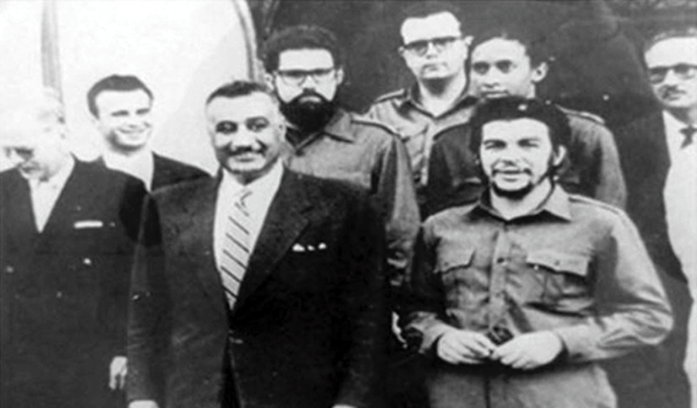
As a consequence of this political development, Che Guevara, a revolutionary and consistent internationalist, went to visit the Gaza Strip at the invitation of Nasser.
Guevara’s visit was momentous. It was the first time that a famous revolutionary was going to see first hand the devastation produced by Al-Nakba. He was received with great enthusiasm by resistance leaders such as Abdullah Abu Sitta, leader of the Fedayeen and leader of the southern front in the Arab Revolt of 1936 and Qassem El-Farra secretary of the municipality of Khan Yunis who kept records of the Fedayeen and their activities. Both were members of the Palestinian Legislative Council.
According to witnesses, Guevara told the Palestinian refugees that “they must fight to liberate their land. There is no other way but to resist the occupation.” He admitted that their case was “complex” because the new Jewish settlers occupied their homes. “The right must finally be restored,” he said.
Mustafa Abu Middain, leader of the Al-Bureij camp, took Guevara to visit the camp and showed him the situations of poverty and hardship. “We have the worst situation of poverty,” Guevara replied. “You have to show me what you have done to liberate your country. Where are the training camps? Where are the arms factories? Where are the centers for mobilizing the people?”
After the visit, Cuba, at Che’s initiative, gave scholarships to Palestinian students, granted Cuban citizenship to many of them and held many conferences in support of Palestine.
Today Palestine is the symbol of the struggle for liberation from the most transcendent and enduring colonialist project. That is why when the whole world rises in support of the struggle of the Palestinian people against the Zionist genocide, to remember Che is to pay homage to his permanent struggle for the liberation and independence of the peoples of the world.