By Imran Kamyana
Not even five months have passed since the so-called “ceasefire” in Gaza — which, in reality, amounted to nothing more than a temporary slowing down of the process of Palestinian genocide or ethnic cleansing — and once again the flames of war have erupted in the Middle East.
This is a war whose potential devastation could eclipse all previous wars and armed conflicts in the region. The kind of destruction witnessed in Iraq, Libya, and Syria now looms over Iran. Meanwhile, only a short distance away, the destruction caused by the Pakistan–Afghanistan conflict continues unabated.
According to Tehran local time, the joint US–Israeli assault on Iran began at 9:45 AM on Saturday, 28 February. Yet in less than twenty-four hours, nearly all Gulf states have been drawn into the line of fire, and the crisis has engulfed the entire region. The human and material losses could prove catastrophic — not only for the Middle East, but globally. Air travel has already been severely disrupted worldwide. Middle Eastern airlines alone have cancelled over a thousand flights, leaving tens of thousands of passengers stranded at airports.
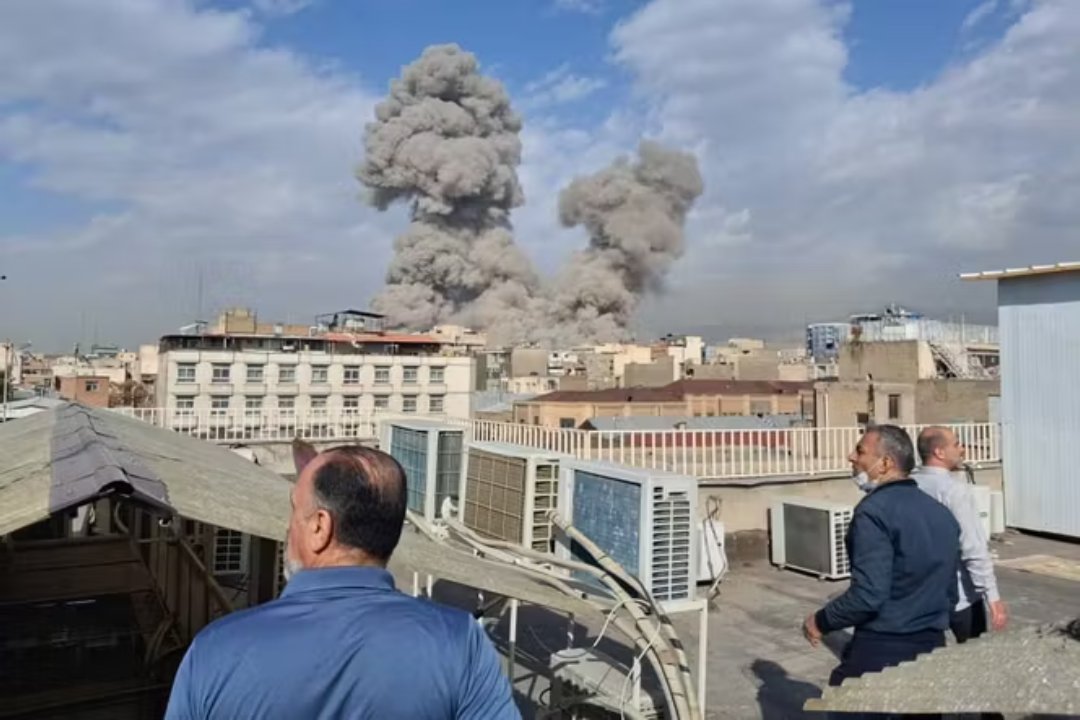
At the time of writing, the United States and Israel have targeted more than thirty sites across over a dozen cities, including Tehran, Qom, Isfahan, and Shiraz. These targets include key military installations, residences of senior government officials, and state offices. In the city of Minab, a girls’ school was reportedly bombed, killing more than one hundred civilians — many of them innocent schoolchildren. A school in Tehran was also struck. According to the Red Crescent, more than two hundred people have been killed in US–Israeli attacks so far.
There are also reports of the deaths of major military figures, including Islamic Revolutionary Guard Corps Commander-in-Chief Mohammad Pakpour and Secretary of Iran’s Defence Council Ali Shamkhani. Yet this may well be only the beginning of an imperialist assault and bloodshed that could persist for days or even weeks.
In addition to the physical bombardment, Iran’s infrastructure, government websites, and security-related communication systems have come under sustained cyberattack. The website of the Iranian state media outlet Press TV has been repeatedly taken offline. In fact, the country’s internet system has been rendered nearly paralysed. The principal objective appears to be disrupting the internal communications of the Iranian military and the Revolutionary Guards. Israel has described this as the largest cyberattack in its history.
The most significant development since the outbreak of war has been the assassination of Iran’s Supreme Leader, Ayatollah Ali Khamenei. Iranian authorities initially denied the reports, but the Supreme National Security Council has now confirmed that he was killed in the attack while working in his office on Saturday morning. Satellite imagery had already indicated severe damage to parts of the Leadership House compound in Tehran. In a statement, the Revolutionary Guards–affiliated Tasnim News Agency declared that “Khamenei’s martyrdom in his office proves that rumours of him going into hiding were part of the enemy’s psychological warfare.” His death represents a major blow to the Iranian regime — though it is possible that the leadership had mentally and administratively prepared for such contingencies.
However, Ayatollah Khamenei was not merely a political leader. He was also a deeply revered religious authority for millions of Shia Muslims around the world. Beyond Iran, Shia populations constitute a majority in Azerbaijan, Bahrain, and Iraq. Nearly half the populations of Lebanon and Yemen are Shia. In Kuwait, Turkey, Saudi Arabia, Syria, Afghanistan, and Pakistan, Shias form substantial minorities — ranging roughly between 15 and 30 percent. In many of these countries, Shia communities have experienced insecurity, state discrimination, or repression, contributing to a long history of Sunni–Shia tensions and Shia uprisings.
In this context, Khamenei’s killing could inflame millions of followers, potentially triggering Shia rebellions or acts of individual militancy. This was one of the key reasons Gulf states had been deeply apprehensive about a US strike on Iran and the targeting of the Ayatollah.
As these lines are being written, reports indicate that in Karachi, protesters demonstrating against Khamenei’s killing have stormed the US consulate. Police — and according to some reports, US Marines — opened fire, killing at least eight people. Clashes between police and demonstrators are reportedly ongoing, with protests spreading to other cities across the country. This unrest could expand to engulf South Asia and the broader Middle East, adding a new and complex dimension to an already volatile situation.
Even setting aside the religious factor, the immediate backlash and indirect consequences of this war could ignite mass protests and uprisings — as we witnessed previously in response to events in Gaza.
In response to the US–Israeli assault, Iran has not only targeted Israel but also all Gulf states hosting American military bases — including Saudi Arabia — through waves of drones and missiles. Most of these projectiles are reportedly being intercepted mid-air by US air defence systems. Yet, despite their technological sophistication and enormous cost, such systems can never be 100 percent effective.
Moreover, following last year’s Twelve-Day War with Israel, Iran has refined both the design of its missiles and its operational tactics. As a result, the headquarters of the US Fifth Fleet in Bahrain has reportedly been successfully struck. There are also circulating reports and videos of successful attacks on American installations in Qatar, including an advanced and extremely expensive radar system. According to the Islamic Revolutionary Guard Corps (IRGC), it has launched large-scale missile and drone attacks on US bases across the region, targeting 27 American facilities.
Claims have also been made regarding strikes on the US aircraft carrier Abraham Lincoln, Israel’s Tel Nof Airbase, the Israeli military’s command headquarters at HaKirya in Tel Aviv, and a major defence-industrial complex. While such wartime claims are often exaggerated, they typically contain at least some element of truth. For instance, the United States has so far acknowledged the deaths of three of its soldiers and serious injuries to five others. Meanwhile, confirmed reports indicate that nine Israeli civilians were killed when an Iranian missile struck the city of Beit Shemesh.
Following confirmation of Khamenei’s death, the Revolutionary Guards announced a new phase of attacks against Israel and US bases. However, Iran has not confined its strikes solely to military installations. Airports of international significance, major buildings, and luxury hotels in Dubai, Abu Dhabi, Kuwait, Bahrain, Qatar, and Iraq have also been targeted.
On one level, this reflects Iran’s strategy of exhausting and gradually depleting American air defence systems in the region by forcing them to fire large numbers of costly defensive missiles in response to relatively cheap drones and short-range projectiles. On another level, it serves as a serious warning from the Iranian regime: in the event of an existential threat, it is prepared to generate maximum destruction and instability across the region.
One cannot ignore Iran-aligned armed groups in this context — including Hezbollah in Lebanon, Ansarallah (the Yemeni Houthis), as well as numerous smaller militias in Syria and Iraq. Although these groups have been significantly weakened in recent years due to successive Israeli strikes, leadership assassinations, and the collapse of Bashar al-Assad’s government, and are presently relying more on rhetoric than action, they nonetheless retain the capacity to create serious complications for US forces and their allies by opening additional fronts.
Following the attack on Iran, the Houthis formally announced the resumption of military operations against the United States and Israel. They could operate along three principal fronts: disrupting commercial shipping in the Red Sea and the Bab al-Mandab Strait, targeting US naval assets, launching missile strikes against Israel, and attacking US military bases and aircraft carriers in the region. They possess medium-range ballistic and cruise missiles, drones, and naval capabilities, which they have previously deployed in operations against Israel and others. The same applies to Hezbollah and similar groups. Although weakened, their survival after Assad’s downfall is now closely tied to the fate of the Iranian regime. For them too, this war is a matter of life and death.
For decades, Iran has threatened to close the Strait of Hormuz in the event of American aggression. Perhaps for the first time, that threat now appears to be materialising. On the night of 28 February, the Iranian navy announced that no vessel would be permitted to transit the strait. This roughly three-kilometre-wide maritime passage handles approximately 20–25 percent of global oil shipments and around 30 percent of global gas supplies. Nearly 90 ships pass through it daily (about 33,000 annually). Eighty percent of the oil transported via this route flows to Asian markets. China imports roughly half of its oil needs through Hormuz, India about 60 percent, South Korea 70 percent, Pakistan 80 percent, and Japan 90 percent.
The issue does not concern importing nations alone. Saudi Arabia, Qatar, Kuwait, and Iraq export around 90 percent of their oil and gas via this route. From these figures alone, one can grasp the severity of potential shortages — oil supply deficits in importing countries and revenue collapses in exporting states — should the strait remain closed. This is yet another reason why Gulf states had been keen to avoid this war.
Furthermore, the global economic consequences of such massive oil shortages in major economies such as China (the world’s second-largest economy by GDP and largest in manufacturing), Japan, and India are not difficult to imagine.
Even before open hostilities, oil prices had been trending upward due to rising war risks. Now, crude prices could rise from $73 per barrel to $100 or even $150. For a global economy already grappling with stagnation and inflation (stagflation), this signals further destruction and crisis. The first manifestation will likely appear in stock markets when they reopen on Monday — after capital rapidly flees toward relatively safe assets such as gold, followed by sharp declines that could wipe out trillions of dollars in market value.
There is also the alarming possibility that Saudi Arabia, Qatar, and others might be compelled to enter the war directly to reopen the Strait of Hormuz. Some analysts suggest that the Trump administration may even have calculated this scenario — seeking to provoke Iran into closing the strait in order to squeeze China. It should be noted that, as an extreme measure, Iran could also target oil infrastructure in Gulf states — a scenario potentially even more catastrophic than a mere disruption of supply routes.
Another economic dimension of this war concerns the reputational damage to Gulf states as hubs of investment and tourism. These countries are major centres for economic activity, financial markets, global investment, tourism, and travel. Their core promise to the world has been: establish offices here, travel here, invest here — your life and property will be secure. Their cities are among the busiest globally, showcasing modern infrastructure, vibrant commercial districts, entertainment venues, and shopping complexes.
The exposure of these supposedly secure centres of global capital to bombs, missiles, and chaos will have far-reaching consequences. Even in the short term, their economies will suffer severely. Should instability persist, capital flight on a large scale may occur, and future investment prospects could diminish significantly.
Thus, this war may mark the beginning of profound transformations across the region.
There is another complexity worth noting: if, hypothetically, the current Iranian regime were replaced by a more liberal or Western-aligned government, Iranian oil would flood global markets on a massive scale — hardly a favourable scenario for Gulf oil-producing states. Hence, while these states maintain hostility toward Iran (particularly Saudi Arabia), both the instability associated with efforts to topple the Iranian regime and the post-regime-change economic implications are causes for concern.
The 19th-century Prussian (German) field marshal Helmuth von Moltke once observed with great insight that once the first shot is fired, all prior war planning collapses. War develops its own logic. It can be started at will — but not ended at will. Even the most powerful and seemingly invincible armies in history have faced such dilemmas. This does not diminish the importance of prior planning. But if that planning is already marred by haste, ambiguity, or superficiality, the likelihood of defeat multiplies — sometimes becoming inevitable. Arrogance, too, has often proved fatal.
Vietnam, Afghanistan (and to a considerable extent Iraq) stand as examples of the failure and humiliation of American imperialist ambitions. These defeats must be understood in relation to the broader economic, industrial, and ideological decline of US imperialism.
With regard to the Iran war, serious observers and policymakers within imperialist circles believe that despite assembling the largest concentration of US military power in the Middle East since the Iraq War, Trump lacks a clear objective or strategy. There are even indications of unease within the American military. Reports have circulated about the hesitation of the US Chairman of the Joint Chiefs of Staff, General Dan Caine, and his warnings to Trump.
According to reports, his concerns are grounded in concrete realities:
- US missile stockpiles — including Patriot and THAAD systems — have already been depleted due to repeated confrontations involving Israel and continuous use in the Ukraine war. A war with Iran could reduce these inventories to dangerously low levels, severely compromising America’s ability to defend regional allies or confront China or Russia. Such shortages also reflect deeper industrial and economic weaknesses of US imperialism.
- A military campaign against Iran would not be as straightforward as operations in Venezuela. It could result in significant American casualties.
- Neutralising Iran’s missile programme would require hundreds — possibly thousands — of strikes, entangling the United States in a prolonged and highly complex conflict.
- Most Arab allies do not wish to become involved and may refuse to allow their airspace or territory to be used for American attacks. This must also be viewed in the broader context of NATO’s paralysis, internal fractures within Western imperialism, and — unlike previous wars — growing American isolation because of what Trump has been doing since coming to power. At present, the United States and Israel appear to be prosecuting this aggression largely alone. NATO allies have not moved beyond rhetorical support tied to calls for restraint and negotiations. Spain and Norway have openly opposed the US attack. Meanwhile, even the country of Trump’s “favourite field marshal” has strongly condemned it.
Some observers suggest that the publicised issues surrounding the USS Gerald R. Ford — including its sluggish deployment and even reports of malfunctioning toilets — may reflect underlying unease within the US military establishment and Pentagon hesitation regarding this war.
China and Russia, as usual, have confined themselves to verbal condemnations of American aggression. Under current conditions, one can expect at most indirect and passive forms of assistance to Iran from them. The driving force of their foreign policy is neither class solidarity nor anti-imperialism, but their own imperialist interests. Russia remains bogged down in Ukraine, while in China, Xi Jinping appears preoccupied with reshuffling and purging his top military leadership. In any case, China has no desire at present to become entangled in a war.
An analysis of the war declarations delivered by Trump and Netanyahu is also essential from a strategic perspective. While both speeches created the impression that their objective was regime change in Iran, their careful choice of words kept other options open.
Trump’s speech was particularly crude in that he had to justify the attack on Iran by invoking events decades old — the 1979 seizure of the US embassy in Tehran, the 1983 attack on US troops in Beirut, and so forth — alongside references to the Iranian regime’s internal repression. As if, over the past two years, they had been showering flowers upon Gaza, and as if their military campaigns that have devastated entire countries were motivated by humanitarian concern.
Trump declared: “We’re going to destroy their missiles and raze their missile industry to the ground. It will be totally again obliterated. We’re going to annihilate their navy… And we will ensure that Iran does not obtain a nuclear weapon. This regime will soon learn that no one should challenge the strength and might of the United States Armed Forces.” These words are worth noting. Trump speaks of teaching the Iranian regime a lesson. Later in the speech, he acknowledged the possibility of American casualties and effectively asked the public to be mentally prepared for them. This is significant in several respects.
First, Trump clearly fears that this war will not be easy and that Iran may respond forcefully. Second, he recognises that American ground troops may ultimately be required. Third — and perhaps most importantly — he came to power on the promise of not dragging America into further wars, amid deep public fatigue with endless military interventions. So he now appears anxious about the domestic backlash that would follow the return of American soldiers in coffins.
In conclusion, he made the absurd appeal for Iranian armed forces, Revolutionary Guards, and police to surrender, and for the Iranian people to rise up against their government: “When we are finished, take over your government…” In other words, even in Trump’s own formulation, the Iranian government would still exist after the United States and Israel have finished attacking Iran. Like many of his undertakings, this war and its declaration reflected his volatile, bigoted, and unserious personality — as well as a fundamental uncertainty about the war’s outcome.
Netanyahu, in his own declaration, described Israel’s so-called Operation “Lion’s Roar” as aimed at putting “an end to the threat from the Ayatollah regime in Iran.” Again, the wording is revealing: not eliminating the regime itself, but eliminating the threats posed by it. He added that the operation would continue “as long as necessary.” Most importantly, regarding regime change, he essentially echoed Trump’s formula: “Together with the United States, we will strike hard at the terror regime and create conditions that will allow the brave Iranian people to cast off the yoke of this murderous regime.”
Like Trump, Netanyahu appeared wary of Iranian retaliation and the potential reaction of Israeli society to sustained counter-strikes. He appealed to Israeli citizens to endure “challenging days ahead” with patience and resilience.
From the rhetoric of these two warmongers, it appears that their core strategy rests upon the extremely slim possibility that what normally requires ground invasion and occupation will instead be accomplished by the Iranian people themselves. Or perhaps they are indifferent to what fills the vacuum that may emerge from the fragmentation of the Iranian regime — even if Iran descends into conditions resembling Iraq, Libya, or Syria, plunging the entire region into deeper instability and chaos, and condemning millions to death, displacement, hunger, migration, and endless humiliation.
A third possible outcome could resemble the Venezuelan model — or at least an attempt to engineer one. In previous writings, we have highlighted the severe weaknesses in Iran’s counter-intelligence system, the extensive Mossad networks operating within the country, and the internal contradictions within the Iranian state. The ease and precision with which Iranian leaders have been targeted and eliminated — and continue to be eliminated — would be impossible without facilitation from within.
One cannot rule out the possibility that certain factions within the Iranian regime may have reached an understanding with the United States, paving the way for a more internationally acceptable governmental setup. The perceived “success” of operations in Venezuela may have emboldened American strategists. However, such operations cannot be replicated everywhere with the same speed and ease. Hardline elements within the Iranian state — and there is no shortage of them — could resist, potentially leading to confrontation or even civil war.
A partial historical analogy can be drawn from the collapse of the Soviet Union, when — despite severe economic and ideological decay — hardline Stalinist elements attempted a half-hearted but armed and violent effort to preserve the existing order.
Israel and the United States appear to have calculated that the Iranian regime is currently in a weakened position: grappling with deep economic crisis, facing the aftermath of brutal crackdowns on protesters only weeks ago, and still suffering structural damage to its defence apparatus from its previous war with Israel. Therefore, they believe the opportunity must not be missed.
What unfolds in the coming days remains to be seen. But these conditions — and even the death of Khamenei — do not automatically imply the collapse of the Iranian state. Even the loss of several top military and political leaders, as now seems possible, does not guarantee disintegration. The opposite outcome is equally conceivable, as there are indications that, in anticipation of such attacks, a structured succession mechanism has already been established, and that military and administrative affairs have been reorganised in a decentralised manner. Unlike Saddam Hussein’s Iraq or Gaddafi’s Libya, Iran’s state structure — though different in many ways — more closely resembles that of Assad’s Syria in terms of organisational coherence. It also retains certain social foundations. Moreover, it is ideologically anchored — religiously framed though it may be — in narratives of resistance, endurance, and perseverance. Since its inception, it has weathered crises, sanctions, wars, and external attacks. Its resilience and capacity for prolonged conflict may therefore exceed the expectations of its imperialist adversaries.
From a military standpoint as well, while Iran’s air force is effectively negligible, cautious estimates suggest that it possesses around 3,000 long-range missiles capable of striking Israel, and tens of thousands of medium-range missiles capable of hitting targets in neighbouring countries. In addition, it has large numbers of drones of various types — many domestically produced and exported abroad.
Some of these missiles and drones are relatively inexpensive to manufacture, whereas the American interceptors used to shoot them down are extremely costly. Thus, many Iranian projectiles are launched not necessarily to strike targets directly, but to saturate and overwhelm American and Israeli air defence systems, forcing them to expend as many interceptors as possible. For Washington, this presents a serious challenge.
As noted earlier, during last year’s Iran–Israel conflict, approximately 25 percent of US THAAD missile stockpiles were reportedly depleted. Similar patterns were observed with other missile systems. In those twelve days alone, Israel is said to have expended $12 billion worth of interceptors in defence. These missiles are not only expensive — they also require considerable time to produce. Indeed, it may take years for the United States to replenish even last year’s usage levels.
Viewed from this perspective as well, this war could become a significant strategic headache for Washington — unless Iran’s missile stockpiles are destroyed on a massive scale on the ground. But that, in itself, is far from an easy task.
It is equally important to stress that popular disillusionment with the clerical regime in Iran does not automatically translate into support for the United States or a willingness to rally behind a contemptible and sycophantic figure like Reza Pahlavi. Especially not under conditions in which they stand as foreign aggressors against the Iranian masses, raining explosives from the sky and killing innocent civilians.
Iranian students and workers carry a proud tradition of resistance against imperialism and struggle for revolutionary social transformation. This makes it equally clear that even if the Iranian state were to kneel or fragment under pressure, imposing a puppet regime or securing imperialist occupation would not be an easy task. From factories and universities to streets and marketplaces, new forms of resistance would emerge — in the form of slogans, strikes, protests, and, if necessary, armed struggle.
The attack on Iran has taken place at a time when negotiations over the nuclear programme were ongoing. After talks concluded in Geneva on Thursday, 26 February, a vague but tangible hope had emerged that the matter might be resolved through dialogue. As Oman’s Foreign Minister, Badr bin Hamad — who had played the role of mediator — lamented after the US strike, compromise had been possible, but serious negotiations were sabotaged. In a message posted on Twitter, he expressed both helplessness and a sober warning: “Neither the interests of the United States nor the cause of global peace are well served by this. And I pray for the innocents who will suffer. I urge the United States not to get sucked in further. This is not your war.”
According to some reports, Iran had even been prepared to suspend uranium enrichment for several years and to transfer already enriched material to a third, “neutral” country. Tehran has long used its nuclear programme as a bargaining chip in negotiations with Washington — accelerating, slowing, halting, or resuming activities as circumstances required.
But the issue has now moved beyond the nuclear question. In light of recent events, not only Israel but also the United States increasingly perceives Iran’s missile programme as a major threat. Yet demanding the dismantling of that programme amounts to tying Iran’s hands and feet — after which it could be slapped at will or have a knife placed at its throat. In other words, it is a demand for unconditional surrender without war. For this reason, despite American insistence, Iran had categorically refused in recent negotiations to discuss its conventional weapons capabilities.
From this perspective, it is largely accurate to suggest that Washington used the negotiations as a means of buying time to prepare for attack. But this is hardly something unknown to Tehran, which likely used the same period to prepare its own response.
Only one week after inaugurating his so-called “Board of Peace,” Trump has launched a major war. In doing so, he has once again signalled that he holds the entire liberal international order — including the United Nations and NATO — in contempt. The problem, however, is that an exploitative imperialist order is being replaced by a more exploitative and destructive disorder.
Wars — not merely wars, but wars of massive destruction, death, and even genocide — are becoming normalized. Behind them lie not only imperialist ambitions abroad, but deep crises at home. Trump’s position in the United States is steadily weakening. His name reportedly appears tens of thousands of times in the Epstein files. The American economy is struggling. Courts are repeatedly overturning his actions. His approval ratings continue to decline. The operations of ICE are generating intense anger and resistance.
On the other side stands the boss of the Zionist state — a hardened goon and merciless war criminal facing serious charges of corruption, bribery, and fraud — whose political survival appears increasingly tied to the opening of one war after another.
But the problem is not merely two individuals. Surrounding them are layers of even more ruthless, greedy, vile, opportunistic, reactionary, and authoritarian figures embedded within state and government structures — and beneath them, social constituencies that sustain and empower such forces. This is a reign of ignorance and vulgarity born from the rotting womb of decaying capitalism, spreading from one country to another.
They are heralds of humanity’s ruin, generating conditions reminiscent of those last witnessed in Nazi Germany. If left unchecked, the unending cycle of repression, war, environmental devastation, and economic collapse will drag humanity toward barbarism.
As Albert Einstein once remarked: “I know not with what weapons World War III will be fought, but World War IV will be fought with sticks and stones.” What once sounded almost ironic now reads as a grave warning.
To avert such catastrophic prospects, the imperialist capitalist system driving the world toward disaster must be abolished. Armed with the scientific ideas of Marxism and revolutionary socialism — and a clear class-based programme — we must wage relentless ideological, political, and cultural struggle against imperialism and its entire system at every level and on every front.
It will be a long, difficult, and demanding struggle.
But if it is not fought, annihilation is certain.