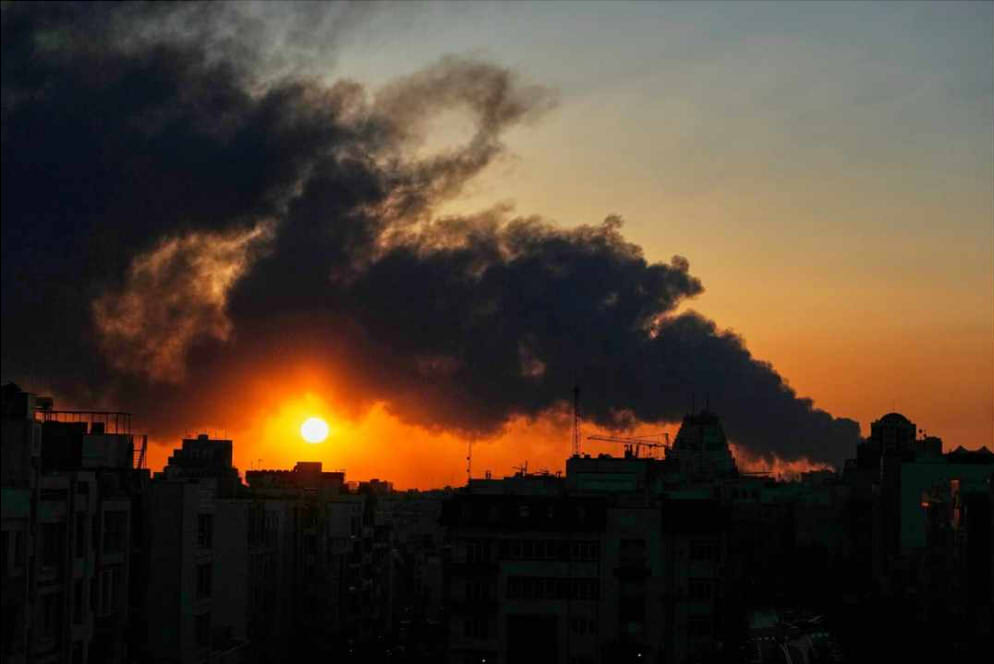
The military offensive of Washington-Tel Aviv deepens the war in the Middle East. While Iran responds to the attacks and the region is militarized, the imperialist powers show support, disputes and contradictions in the face of a daily changing conflict that threatens to spread. In this scenario, it is necessary to promote a united international movement to stop the aggressors.
By Ruben Tzanoff
Consequences of the attacks
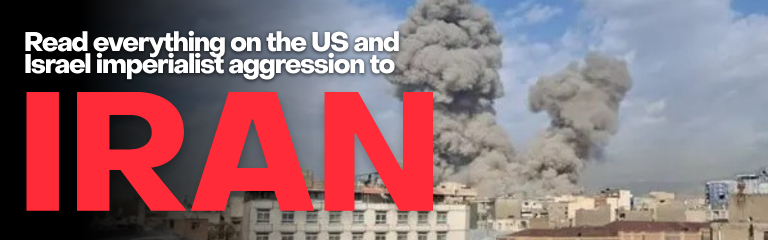
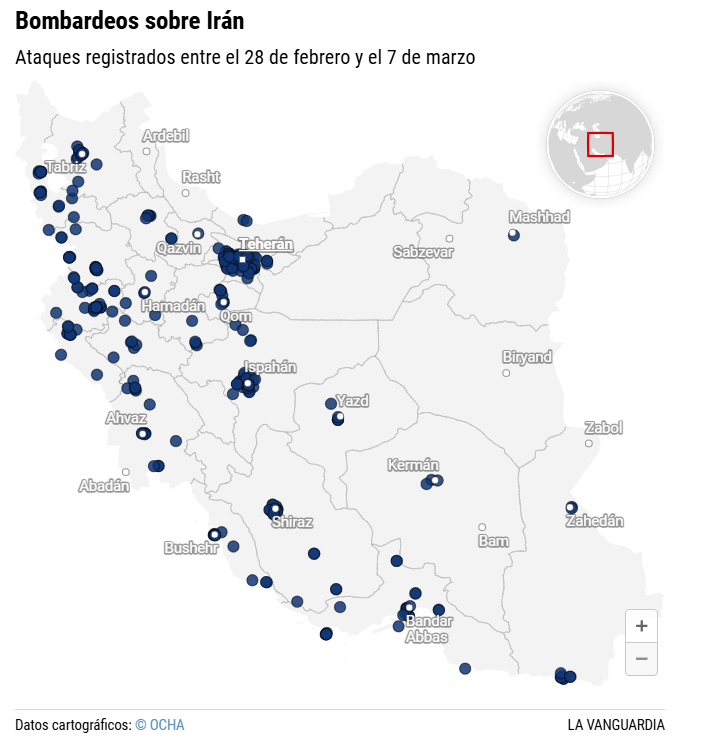
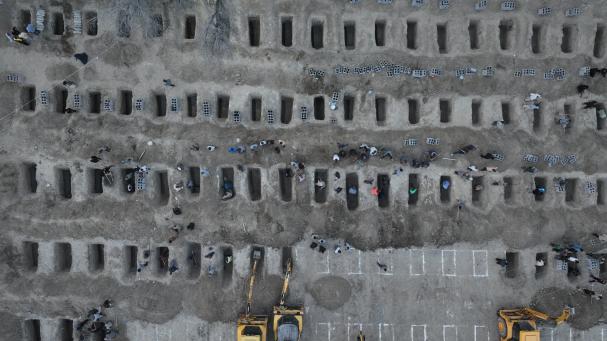
The new offensive unleashed by Trump and Netanyahu is in full swing. The assassination of Supreme Leader Ali Khamenei is part of a strategy to head off the regime in order to make way for a new government that is more inclined to colonialist designs. Iranian strategic installations are under heavy attack, and civilians are also suffering the consequences, mainly in Tehran, for which the religious authorities report more than 1,200 dead and more than 10,000 wounded.
The bombardments respect no borders. From the Iranian capital to southern Lebanon, Israel has launched a land incursion and, as is usually the case, the so-called “surgical operations” are accompanied by indiscriminate killings. Added to this is the naval dimension of the conflict: following the sinking of an Iranian frigate near Sri Lanka by a US submarine, tension in the Indian Ocean has increased and threatens to seriously affect world trade routes.
Trump, his support and setbacks
Trump has the backing of the US Senate, which has given him a blank check to continue the aggression at its discretion. He also has the complicity of allied Arab governments and seeks to use the Kurdish militias in Iraq, arming them through the CIA to encourage internal uprisings in Iran.
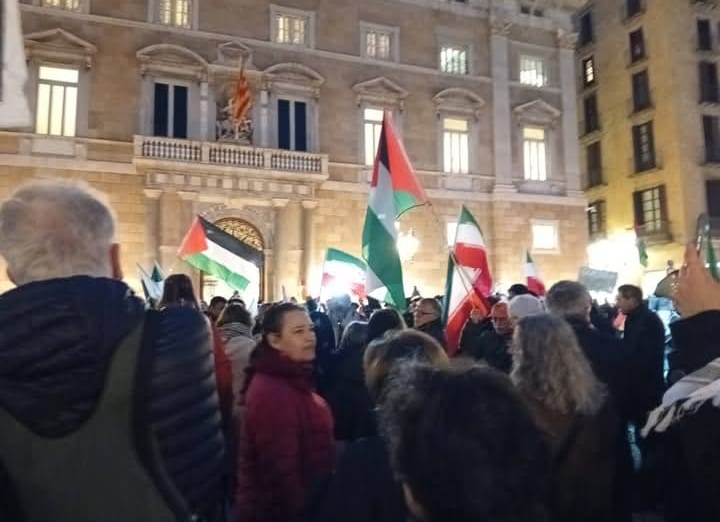
However, within the U.S. there has also been strong questioning of the war, both politically and in public opinion. The conflict has generated divisions and social protests. Demonstrations were held in front of the White House and in several cities against Trump’s warmongering policy. Polls show that only a minority supports the attacks against Iran, which increases the pressure on Trump in a context marked by the election year.
An aggressive offensive tandem
It is important to underline that this is a criminal offensive in tandem. On the one hand, the US is trying to strengthen its interests through an action that reflects the “Trump style”: verbal threats, direct aggressions and contradictory statements. This dynamic was expressed when officials justified the attacks with multiple arguments, such as “regime change”, “elimination of a direct threat” or the destruction of “nuclear weapons capability”.
For its part, the State of Israel, after consolidating its positions in Gaza, is moving in two directions. On the one hand, against Iran, which it considers its main strategic regional threat, and on the other, towards the objective of “Greater Israel”, accelerating the annexation of the West Bank and reinforcing its presence in southern Lebanon. In short, it is an offensive of mutual convenience: to strengthen Israel as a gendarme enclave of imperialism vis-à-vis the peoples of the Middle East and, at the same time, to strengthen the US in the inter-imperialist dispute with China and Russia for geostrategic influence in the region.
Iran resists and fights back
Iran is exercising its right to defend itself, and has even warned that it is prepared to sustain a “long war”, something that reality will affirm or deny in the future. The truth is that the reactionary regime of the ayatollahs is facing an existential challenge. Its historical leadership is weakened after having violently repressed thousands of demonstrators who took to the streets demanding better living conditions and democratic freedoms. Repression is not a new phenomenon, but the magnitude of the murders and persecution surpassed all previous institutional crimes. Plus the external political, economic and military pressure that imperialism and Zionism seek to take advantage of.
For the time being, Iran is not giving up and is resisting by launching bombings against Israel and against countries hosting US bases and interests. In this context, the appointment of Mojtaba Khamenei – son of the assassinated Ayatollah – as the new supreme leader by the Assembly of Experts indicates that the most hard-line sector of the regime remains in control. At the same time, this decision constitutes a direct challenge to Trump, who had previously rejected the possibility of such a nomination.
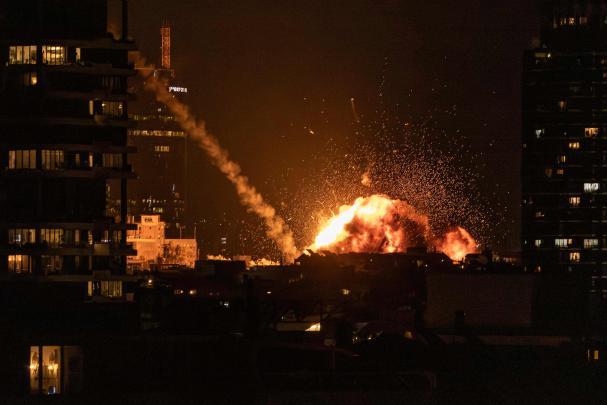
In the face of the aggressions of US imperialism, it is evident that Iran is different from Venezuela, since the reactionary theocratic regime is much more structured in ideological, political and military terms to guarantee its continuity in power in the face of extreme situations such as a war or the assassination of an Ayatollah. It is no coincidence that warnings from the Pentagon to Trump have emerged, pointing out that it is difficult to provoke a regime change in Iran by bombing alone.
In the midst of all these contradictions, many questions arise: will it be a protracted war? to what extent will the regime resist? will it yield to the “unconditional surrender” demanded by Trump? will it try to negotiate with imperialism while accepting conditions? how will the Iranian mass movement react? Beyond these internal uncertainties, it is also necessary to observe the international scenario.
Pressures on the reactionary Arab monarchies
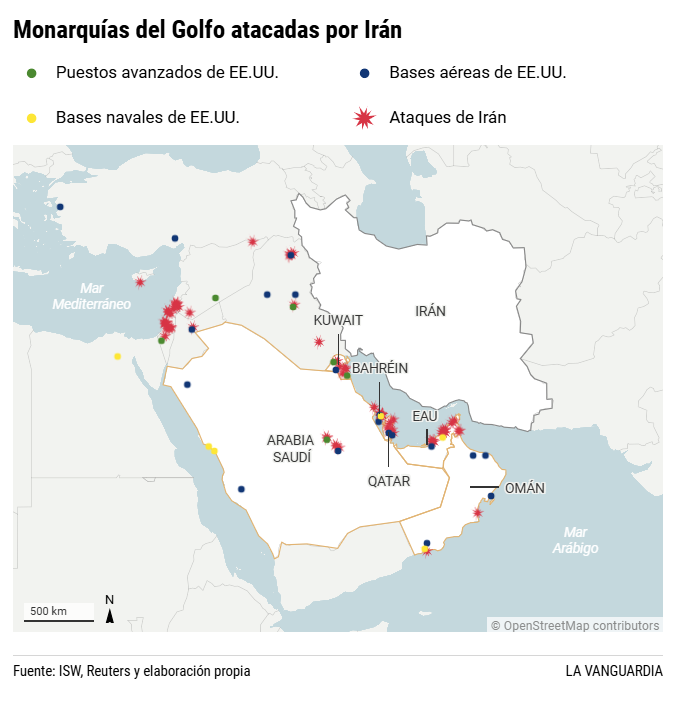
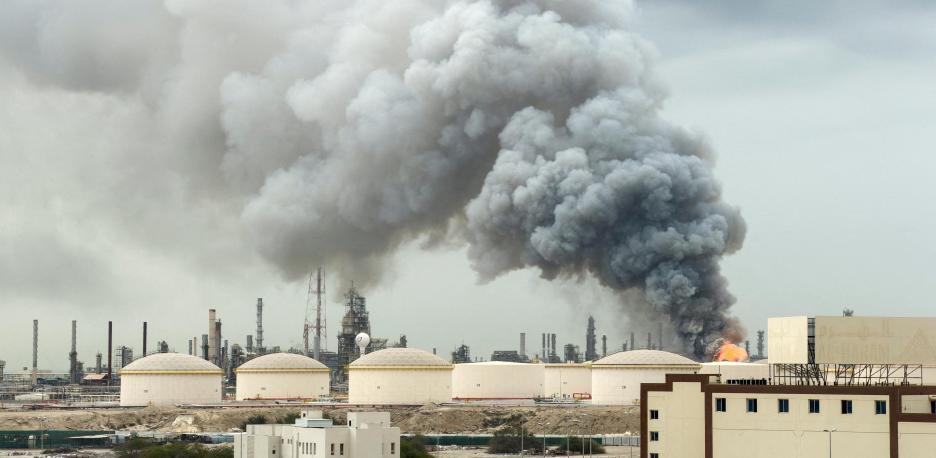
Saudi Arabia, the United Arab Emirates, Kuwait and Bahrain are strategic allies of the US and this very alliance makes them direct targets of Iranian attacks. These countries, often presented as “stability heavens,” are in reality vulnerable to regional war. While higher oil and gas prices could benefit exporters in the short term, a prolonged war seriously threatens their economic diversification, tourism, finance and international investment projects.
The Gulf monarchies are militarily dependent on the US, but many of their governments are trying to avoid a direct confrontation with Iran. At the same time they are under pressure to take clear positions, although open support for the aggressors could provoke further criticism from public opinion and from the so-called “Arab street”.
Thus, the reactionary and treacherous Gulf monarchies are torn between their dependence on imperialism and the need to avoid becoming a battleground in the war against Iran, while seeking to preserve their political and economic stability.
The EU, a reluctant and contradictory partner in crisis
Many Western imperialist states remain firmly aligned with the US and Israel. Although Trump criticizes and pressures them as not doing enough, the British military provided logistical assistance for airstrikes against Iran and offered support. France has made naval moves on the grounds of “protecting” the Gulf countries, while Germany and Italy host key US air bases to guarantee supply chains for the US war machine.
However, there are also contradictions. The Spanish Prime Minister, Pedro Sanchez, expressed his rejection of the war, criticized Trump’s policy and received the backing of European Union authorities. Meloni also clarified that Italy does not intend to enter the war. At the same time, NATO Secretary General Mark Rutte praised the US-Israeli military action against Iran, although he clarified that NATO will not participate directly in the conflict.
The European Union thus appears as a lagging imperialist bloc, going through a crisis of identity and political project, oscillating between questioning Trump and avoiding a complete break with its traditional partners. This position generates friction, tensions and constant repositioning. Ultimately, these frictions reflect an inter-imperialist dispute in which no expectations can be placed. There are no progressive or “lesser evil” imperialisms: they all respond to interests of plunder and domination over the peoples.
War as a factor of global uncertainty
The bombings also involve enormous economic costs. Each Patriot interceptor missile costs approximately four million dollars, while the Iranian Shahed drones have an estimated cost of between 20,000 and 50,000 dollars. Beyond the differences in technology and military capability, both the US and Iran claim to have enough weapons to sustain a prolonged conflict, although the financial cost is a determining factor. The global consequences are already beginning to be felt. Fuel prices are on the rise and there is a risk of a world energy crisis. This increase is already having an impact on fuel prices and, consequently, on food and other basic resources. The Zionist imperialist aggression is generating a strong political and economic tremor in capitalist finances that were already in crisis.
We have to stop the aggressors’ hand
We reject the aggressions of the United States and Israel against Iran, Lebanon, Palestine and other countries in the Middle East. Iran has the right to defend itself from attacks with all the means at its disposal. In this sense we reaffirm all the terms of the Resolution of the International Socialist League (ISL): Resolution of the International Socialist League: Hands Off Iran! Defeat the US and Zionist war! We stand in solidarity with the anti-imperialist and anti-Zionist Iranian working people, without implying political support for the reactionary and repressive fundamentalist regime of the ayatollahs. We also repudiate the governments, institutions and political leaderships that align behind imperialism, both in the West and in the Middle East. We call for a united movement with mobilizations, boycotts, workers’ strikes and other actions against imperialist and Zionist aggressions in the Middle East and for the breaking of relations with the United States and Israel. There will be no just and lasting regional peace without defeating the State of Israel, U.S. imperialism and its accomplices. The strategic solution passes through the revolution in the Middle East, so that the workers and socialism rule.