Ali Hammoud, from Beirut
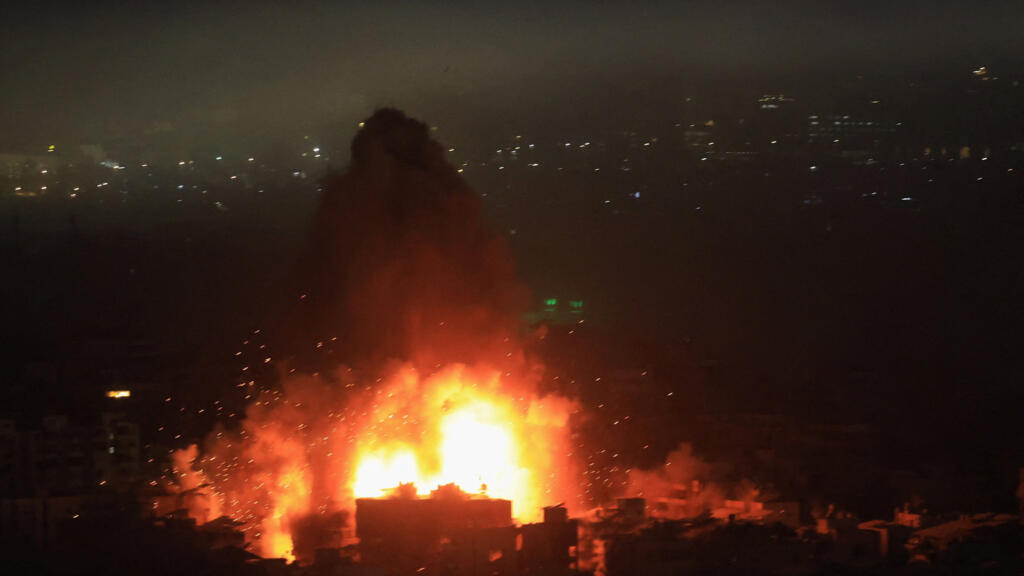
The aggressive war waged by the U.S. and the Zionist entity against Iran continues to expand and deepen, transcending the framework of a limited military confrontation to become a broad regional conflict whose direct effects extend to almost fourteen countries in the region. What is happening today cannot be understood as a mere passing military confrontation; rather, it is part of a broader project led by US imperialism to reassert its hegemony in the Middle East through military force and an alliance with the Zionist project.
However, the course of events has not unfolded according to the calculations on which this military adventure was based. Assessments in Washington assumed that the Iranian response would be limited to a narrow geographic area or focused on attacking the Israeli entity within borders that could be contained politically and militarily. However, the expansion of the Iranian response to larger areas of the region has come as a real shock to U.S. decision-making centers and has opened the door to a much more complex regional equation than the U.S. administration had anticipated.
The most dangerous twist came with the closure of the Strait of Hormuz, one of the world’s most vital energy arteries. This strait, through which a significant part of the world’s oil trade passes, is not simply a waterway, but a central axis of the global economic system. Threatening navigation through it means, in practice, that the conflict has transcended the boundaries of traditional military confrontation and now affects the entire world economy.
In this sense, the United States faces a real test of its ability to “protect” trade and energy routes, control of which has long been considered a cornerstone of its global hegemony. The current situation raises a clear question: to what extent can the world’s largest imperial power impose its military will in a region rife with contradictions and confrontational forces?
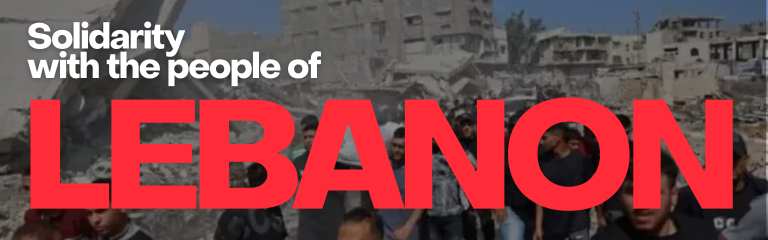
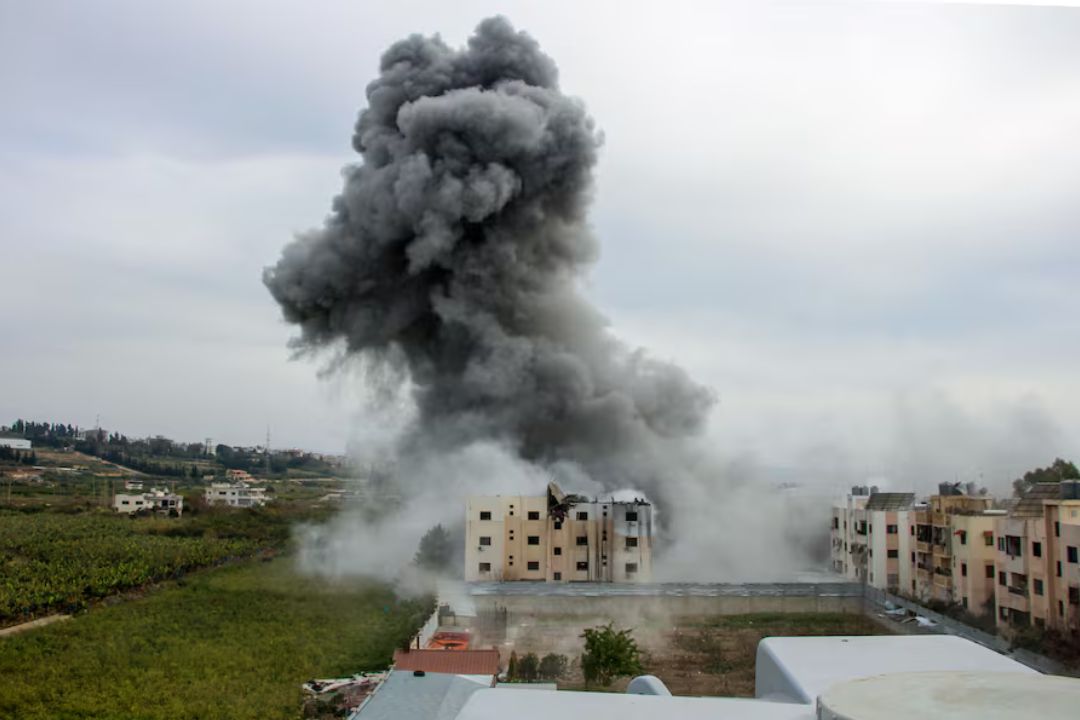
Parallel to this regional escalation, Lebanon has been under Israeli aggression for two weeks now. The Israeli army has announced a limited ground operation inside Lebanese territory, with the aim of extending its control in the south of the country, while intense clashes continue between Hezbollah fighters and the Israeli army on the border. However, the objective of these operations is not limited to gaining military advantage on the ground. The long history of conflict with the Zionist project shows that Israel often takes advantage of wars to impose new political and geographical realities, taking advantage of the imbalance of power and international pressure exerted on the attacked countries and peoples.
We believe that the enemy seeks to use war as a tool to impose new political equations in Lebanon, through direct military pressure on the one hand, and political and diplomatic pressure on the other. In this context, dangerous negotiation proposals are being promoted, the practical objective of which is to impose a political solution under pressure.
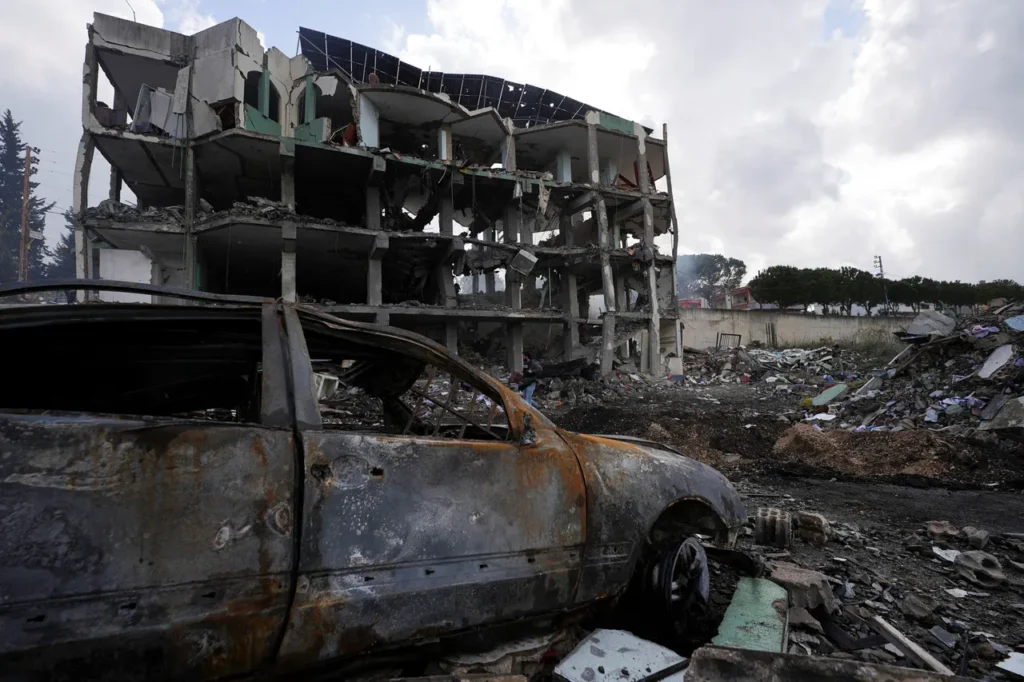
This comes amidst the apparent political paralysis of the Lebanese authorities – the government and the presidency – who continue to adopt positions described as defeatist in the face of US and Israeli pressure, while debating the idea of officially recognizing the occupying entity as a basis for any possible solution.
These proposals do not include real guarantees for Israel’s withdrawal from the occupied Lebanese territories, or even a clear commitment to stop the repeated attacks. Even more dangerous is to speak of a promise to disarm Hezbollah without specifying the mechanisms, the guarantees or the political context of this proposal. This trend is practically nothing more than an attempt to dismantle Lebanon’s sources of strength to confront the enemy, opening the door to the possibility of a dangerous internal conflict that could threaten stability and ultimately serve the Zionist project. What aggravates the current situation in Lebanon is the emergence of intelligence reports and numerous analyses suggesting the possibility of a ceasefire with Iran by the end of this month, while the Israeli occupation army continues its war against Lebanon. This opens the door to new aggressions and crimes committed without any restraint.
What is happening today reveals, once again, the true nature of the conflict in this region. The confrontation with the Zionist project has never been simply a border dispute, nor a traditional conflict between two states. In essence, it is a historical confrontation between a colonial settlement project, supported by global imperialism, and the peoples of the region who are struggling to defend their land and their right to life, sovereignty and freedom.
Given this reality, the region seems to be facing a critical juncture where military fronts are intertwined with political and social conflicts. The war raging in the region today is not simply a temporary military confrontation, but a new chapter in a long struggle for the future of the region and the balance of power in it. We therefore stress that imposing political realities under the pressure of war will not lead to stability, but will lay the groundwork for new phases of conflict. History has repeatedly shown that resisting peoples cannot be subjugated by military force, and that hegemonic projects, however powerful they may be, are incapable of bending the will of the people in the long term.
The confrontation with the enemy is constant; it is not a border war or a technical conflict on the lines of contact. It is a protracted struggle for existence, identity and freedom. In this struggle, the battles are not only decided on the immediate battlefields, but also by the ability of the people to persevere, organize and refuse to surrender, until a new balance of power is established that paves the way to true liberation.