Markus Lehner
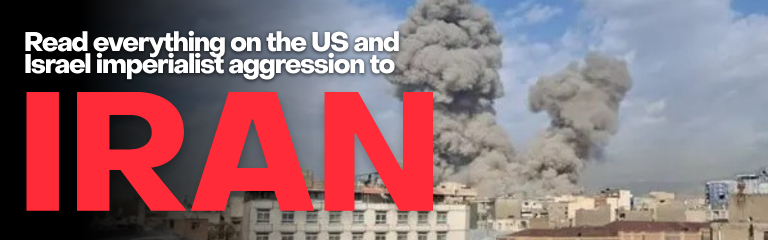
The US-Israeli attack on Iran, codenamed ‘Epic Fury’, threatens, among other things, to have serious consequences for large parts of the global economy. Apparently, Trump and the US leadership had assumed that the initial ‘decapitation strike’ would quickly bring down the regime in Iran. Instead, the war is dragging on. Iran has launched effective counter-strikes with missile and drone attacks on Israel and Gulf states allied with the US, as well as the de facto closure of the Strait of Hormuz – and appears capable of sustaining this for some time to come.
The cost of the war to the US, the damage to the Gulf states and the expected consequences for the global economy do not appear to have been properly factored in by Trump & Co. – unless Trump has a secret master plan. If not, the US has only the choice between a further escalation of the war (deployment of ground troops) or its rapid conclusion, without having removed the unwelcome regime in Tehran. A prolonged continuation of the current situation would be a disaster, particularly in economic terms.
The cost of the war to the US
These economic consequences include, first and foremost, the immediate costs of the war. For the US and Israel, this style of warfare is enormously costly. Whilst Iran is completely outmatched militarily and has little to counter air and missile strikes, it responds with ‘asymmetric tactics’. Thus, Iran can inflict considerable damage in the Gulf region and on Israel using cheap drones (20,000 dollars each), whilst the sophisticated systems of the US and Israel are immensely costly. The deployment of a single Patriot missile costs around 5 million dollars.
It is therefore no wonder that the US Congress is currently being told the cost of the war is around 2 billion dollars a day. After his boss had already proclaimed ‘final victory’, ‘Minister of War’ Hegseth submitted a request to Congress on 19 March to spend 200 billion dollars on continuing the war effort. This means that even the official costs of the US mission amount to a quarter of the country’s military budget. Added to this are the costs of Israel, which is already deeply in debt (debt level 70% of GDP), to which the US has, in recent years, provided special payments of around 16 billion dollars for its warfare and genocide, in addition to the usual 3.8 billion dollars annually.
Yet the US itself is one of the most indebted countries in the world: even before the war, its debt stood at 120% of GDP, meaning that interest payments on this debt have already reached the 1 trillion mark and have become the largest item in the budget. A significant portion of this debt is held by countries now massively affected by the economic consequences of the US attacks: Japan, China, EU states, Britain, and the Gulf monarchies. In addition, it is primarily US investors and the US Federal Reserve from whom a shift towards rising interest rates is expected in response to the global economic situation.
Overall, the US and Israel could only afford this costly war if the global economy were on the upswing, thereby allowing the growing US deficit to be sustained. Any downturn in the global economy, however, will present the US government (and, by extension, Israel) with an enormous debt problem that would force a radical change in fiscal policy, with serious consequences for the upcoming congressional elections as well.
The costs of the war in the region
Even though Iran is using far less costly military equipment than the US and Israel (and with tens of thousands of drones, it can certainly sustain this form of warfare for months to come), the resulting costs for the state and its population are, of course, the greatest of the war. This concerns not only the far greater number of dead and injured, but also the extent of the destruction of buildings, infrastructure and production facilities. In particular, the Israeli attack on the South Pars/North Dome gas field, which accounts for 70% of Iran’s gas production, could set back energy supplies by years. The long-term environmental damage is impossible to quantify, for instance due to attacks on fuel depots, with corresponding consequences for the country’s already precarious groundwater situation. After the war, Iran could therefore also experience a significant wave of emigration, particularly among highly skilled workers.
The situation in Lebanon is developing in a similarly catastrophic manner, where the Israeli army, under the pretext of combating terrorism, intends to create a ‘second Gaza’ in the areas inhabited by Shia Muslims. In a country already grappling with severe economic problems and large numbers of (internal) refugees, this will lead to a catastrophe that will likewise trigger a new wave of refugees.
In Gaza, too, the inability or unwillingness of the dominant Western imperialist states to provide the population with peace, security or even the prospect of reconstruction has already become apparent. The $70 billion – a conservative estimate by the UN and the World Bank – required for the reconstruction of Gaza amounts to a mere $5 billion in Trump’s ‘Peace Council’. Given the sums that would be needed for Iran and Lebanon, it is clear that there is absolutely no prospect of this happening. If the US fails to bring about regime change in Iran, it is more likely that China, due to its supply ties with the Iranian oil and gas industry (90% of Iranian oil exports go to China), will become even more deeply and directly involved in it (Iran’s gas fields are already being developed practically by Chinese companies). The US might then, in the interests of stabilising the oil and gas markets, have to concede greater influence in the region to its main global rival.
Even if the war damage in the Gulf states cannot be compared with that in Iran and Lebanon, this war is dealing a severe blow to their plans for regional ascendancy. Whereas they had previously viewed their alliance with the US as a safeguard for peaceful economic activity outside regional conflicts, their main sources of income from the oil and gas business, their role as ‘secure’ transport hubs and the new ‘Côte d’Azur’ of global capitalism are now severely compromised, despite all their subservience to the US. Qatar’s gas fields have been severely hit (significantly by Israeli air strikes), as has its LNG loading capacity – both will result in months of disruption for one of the world’s largest LNG suppliers. But facilities in the oil industries of Saudi Arabia, the United Arab Emirates, Kuwait and Oman have also been hit and taken out of operation for the duration of the war. All Gulf states are expected to see an economic slump of around 10% this year. Bahrain has been hit particularly hard, having already struggled with economic difficulties before the war and with its Shia majority population seeking to settle scores with the ruling regime. In all Gulf states, there is criticism – expressed to varying degrees – of the US’s haphazard action (despite their own warnings), calls for a swift end to the war, and efforts to achieve greater independence from the US (e.g. new military alliances with Pakistan and Turkey, or the strengthening of relations with China). In any case, the economic slump in the Gulf states is having a negative impact on the global economy.
Impact on the global economy
Since the start of the Iran war, oil prices on the world market have risen by around 50 per cent, whilst gas prices have at times doubled. Depending on how long the war lasts, an oil price consistently above $120 per barrel could become the norm (pre-war level: $60). This would be many times higher than the ‘oil price shock’ that triggered the first severe global recession after the Second World War in 1973–74. Once again, economists assume that an oil price at this level and a war lasting beyond March are a sure path to a global recession (e.g. The Economist, 14 March 2026, p. 61). This is linked to the current rise in energy demand across the IT and defence industries. In particular, rising energy prices on this scale could cause serious problems for all industries already struggling with profitability (the automotive industry, basic materials industries, etc.) and could completely wipe out the meagre returns from AI investments to date (along with a possible bursting of the AI bubble in the investment markets).
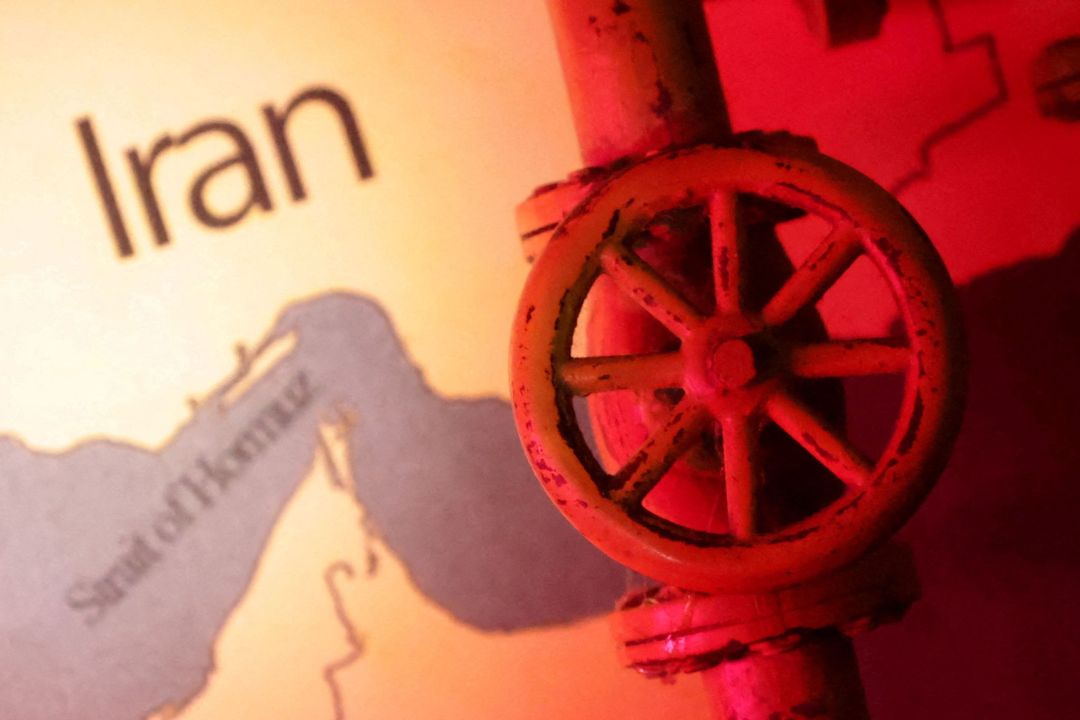
The problems with oil and gas supplies from the Gulf region are not only a result of war damage to oil and gas production facilities, but a direct consequence of the ‘blockade’ of the Strait of Hormuz. This bottleneck between the Gulf region and the Indian Ocean is only 38 kilometres wide at its narrowest point and, over a length of no less than 167 kilometres, never wider than 55 kilometres. Navigation with huge supertankers is further complicated by shoals, meaning there are only two shipping routes, each 3 kilometres wide, which require precise navigation. Therefore, the mere prospect of hostilities around this shipping route is reason enough for shipowners not to risk their tankers. Currently, insurance costs for the tankers stranded in the Gulf alone have risen to over 300 billion dollars – many times the sum the US had set aside as a contingency in the event of a blockade (yet another instance of poor planning in this war). It seems that the shelling of just a few tankers was enough to strand hundreds of tankers on both sides of the Strait. Instead of the usual 138 per day, only 5–6 tankers are currently passing through the Strait. The latter mainly for China and India, which received corresponding assurances of protection from Iran.
As a result, 15 million barrels of crude oil (15% of global output) and 4 million barrels of refined products per day are currently unavailable to the world market. The loss of LNG shipments currently accounts for around 5% of global output, but could rise to 15% in the event of a prolonged disruption. The diversion via pipelines (primarily through Saudi Arabia) to the Red Sea offers only limited relief at 4 million barrels per day – and further potential for escalation (keyword: Yemen). The same applies to pipelines through Iraq, which has so far been largely kept out of the war. Even the oil and gas reserves held particularly in the imperialist countries (including China) can only provide limited relief to the world market price – the IEA (International Energy Agency) reserves can, due to technical feasibility, add around 3 million barrels per day to the world market. Even a convoy solution for tankers in the Strait of Hormuz would only get a fraction of the 138 tankers per day through the bottleneck.
The consequences of a months-long shortfall in these raw materials for the global economy affect not only the energy sector, but everything that ultimately has to do with oil and gas products, from artificial fertilisers, food production and metal processing to semiconductor production and the transport industry.
Regional differences
It is also clear that the impact of these disruptions varies greatly from region to region. The US, with its own oil and gas industry, is not directly affected, but only indirectly through global market prices. US oil and gas companies are undoubtedly among the main beneficiaries of the war. Russia, of course, is also benefiting economically, as it can now sell to its customers at higher prices and is, at least temporarily, exempt from sanctions – this is likely also linked to the fact that Russia is providing Iran with satellite intelligence on targets in the Gulf region, as well as the latest drone technology (this is apparently also being used as a bargaining chip in negotiations with US negotiators regarding Ukraine). The EU countries and the UK are not directly affected by the oil and gas shortages either, as they source their supplies primarily from the US, Norway and the successor states of the Soviet Union (and thus, de facto, continue to rely on the Russian oil and gas industry). But they too must, of course, factor the rise in world market prices into their energy and other oil/gas-related costs – consumers are currently experiencing this most directly at the petrol stations. If the war continues, however, this will manifest itself in a general rise in prices.
The impact is most severe in Asia, however, where dependence on supplies from the Gulf region is greatest. Countries such as Japan and South Korea source around 90% from the region – but at least they have reserves. Other countries, such as China and India, also have the Russian option. Most other countries (even those with their own oil production, such as Indonesia) are net importers of oil and gas from the Gulf region and, due to low reserves, can currently only meet their needs through expensive imports from the US. In countries such as Pakistan, Bangladesh, Indonesia, Thailand, Vietnam, etc., the energy shortage is hitting poorer sections of the population hardest and is leading to more or less drastic rationing, or even to a scaling back of production and the transport sector. In many countries, workers are forced to return to their home villages as they can barely survive in the big cities (for example, when gas for cooking is simply unavailable). The longer these supply problems persist, the more certain it is that global supply chains will also be affected. As during the Covid-19 pandemic, this shock of supply shortages will in turn fuel higher energy prices and rising inflation. The global economy would thus inevitably move towards stagflation.
The madness of this war, which threatens to plunge millions of people worldwide into misery, once again highlights the alternative: socialism or barbarism. On the one hand, the insane military-imperialist apparatuses must be smashed and the major monopoly capitals expropriated, as they repeatedly attempt to impose their interests with such destructive force. On the other hand, the ever-increasing dependence on fossil fuels and their ecologically destructive use must be brought to an end. Finally, the misery and destruction in large parts of the world – with Gaza serving as a stark reminder – make it clear that eliminating the consequences of this imperialist system requires a global emergency plan, one that ensures compensation, reconstruction and security of supply under the control of those affected by neo-colonial exploitation and policies. The war waged by the US, Israel and their allies, and its looming escalation, can only be stopped if we ourselves declare war on the capitalist, imperialist system that gives rise to it.