The NATO summit held in Ankara, Turkey, confirmed a significant escalation in imperialist militarization. Although it was marked by Trump’s erratic behavior and tensions between the U.S. and its European allies, the result was a renewed subordination of the European Union powers to Trump’s demands: more military spending, greater profits for the arms industry, and a strengthening of the global war strategy. There were also demonstrations of opposition, and the need for a revolutionary socialist policy independent of all forms of imperialism was reaffirmed: “No to austerity for imperialist wars. For workers’ governments. For a Socialist Europe.”
By Rubén Tzanoff
An agenda that serves imperialist interests
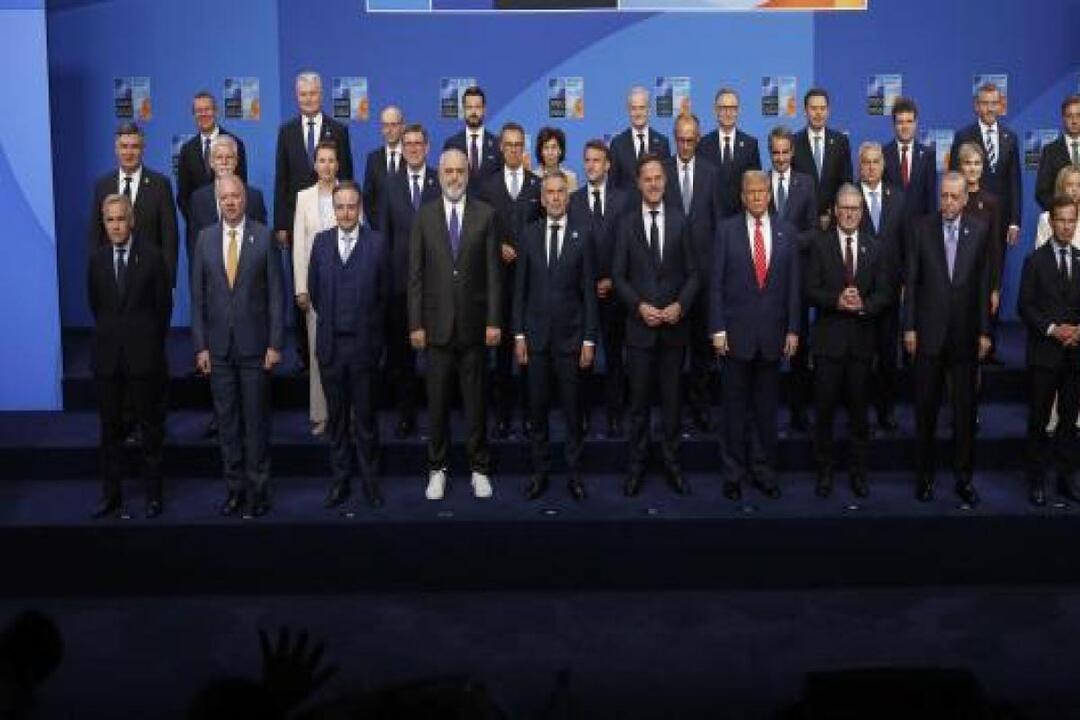
The 36th NATO summit, held on July 7 and 8 in Ankara under the chairmanship of Recep Tayyip Erdoğan’s government and with Secretary General Mark Rutte as the lead organizer, brought together the heads of state and government of the 32 member countries, along with representatives of the European Union and Ukrainian President Volodymyr Zelenskyy. The agenda was dominated by increased military spending, the future of support for Ukraine, the reorganization of burden-sharing within the Alliance, and NATO’s adaptation to a strategy of simultaneous confrontation with Russia, Iran, and China.
Trump Sets Conditions
Trump’s presence loomed large over the entire summit. The meeting was carefully designed to avoid open clashes with the U.S. president and ensure his continued membership in the Alliance. Rutte even went so far as to present the increase in European military spending as one of Trump’s personal achievements.
However, Trump maintained an aggressive tone. He once again insulted several European governments for their lack of support for the U.S. offensive against Iran, threatened once more to reduce U.S. military commitment in Europe, and reignited disputes over Greenland. Even so, he concluded by formally reaffirming the commitment to Article 5 on collective defense, making it clear that Washington will continue to lead NATO as long as the Europeans shoulder a greater share of the costs. He expressed this by stating that he had received “love” and “unity” from his European allies.
Europe is pushing for rearmament
The major EU governments closed ranks in support of NATO’s continued existence, albeit with differences in tone. Germany, Poland, the Baltic states, and the Nordic countries are pushing for a rapid increase in military spending and a policy of constant confrontation with Russia. France insists on developing greater European military autonomy, though without breaking away from the transatlantic structure.
The Spanish government attempted to partially distance itself from certain aspects of spending and the war against Iran, but ultimately endorsed the summit’s key decisions. These differences reflect tactical disagreements over the distribution of costs and the pace of rearmament, not opposition to the Alliance’s imperialist nature.
They care more about war than about social needs
The main resolution was to begin implementing the commitment approved in The Hague to increase military spending to 5% of GDP, accompanied by oversight mechanisms.
New multimillion-dollar contracts for the military industry were also approved, along with investments in air defense, anti-drone systems, naval capabilities, and weapons production. A large portion of these resources will ultimately benefit primarily the major U.S. and European military-industrial complexes, consolidating a massive transfer of public funds to the military-industrial complex while social spending cuts continue in numerous European countries.
Asia-Pacific Keeps Its Distance
Unlike in previous years, several Asia-Pacific partners refrained from giving the summit political prominence. Reservations persist regarding U.S. imperialism’s attempt to integrate NATO more closely with its strategy of containing Chinese imperialism. While military cooperation and bilateral agreements continue, several governments in the region are seeking to avoid becoming completely subordinate to a bloc-based logic that would increase regional confrontation.
Ukraine remains subordinate to NATO’s strategy
Zelensky secured new financial and military commitments, but made no significant progress toward Ukraine’s formal accession to NATO. Washington continues to make its military support for Ukraine contingent on its own strategic objectives vis-à-vis Russia, while avoiding commitments that could lead to a decisive Ukrainian victory over the Russian invasion and Putin, and to a direct confrontation between nuclear powers.
Military aid was renewed, though always under the political control of the major imperialist powers, which subordinate the needs of the Ukrainian people to their own geopolitical interests.
Protests Against the Alliance
The summit was marked by significant security measures and demonstrations by peace groups, labor unions, student organizations, and left-wing groups, which denounced the rearmament, the genocide against the Palestinian people, and the increase in military spending amid ongoing social austerity measures. Turkish police cracked down on and arrested protesters at various locations in Ankara.
A Leap Forward in the Arms Race
The summit confirmed that NATO is entering a new phase. Far from presenting a unified alliance, it reveals growing tensions between the U.S. and Europe over the division of responsibilities. But these contradictions do not alter its essential nature: all the governments present agreed to step up rearmament, strengthen the military-industrial complex, and prepare for new international confrontations.
Europe’s subservience to Trump’s demands reflects both the relative weakening of U.S. leadership and the inability of the European bourgeoisies to build their own alternative outside the U.S. military umbrella.
Unified Mobilization, Strategic Approach
We condemn the summit, reject NATO, and advocate for its dissolution, as it is the main military alliance of global imperialism, responsible for wars, occupations, and acts of aggression against peoples; we demand the closure of foreign military bases. We oppose both U.S.-led imperialism and the other imperialist capitalist powers vying for spheres of influence, including China and Russia.
We promote international solidarity among workers and peoples; we defend the Ukrainian people’s right to defend themselves by all means at their disposal; and we support the resistance against the Russian imperialist invasion, while maintaining political independence from Zelensky.
In the face of the arms race, which entails spending more than 700 billion dollars, we say: No to multimillion-dollar spending! In the national budgets of EU countries, this would mean cuts to healthcare, education, and other areas. Money for social programs, not for imperialist wars!
We are promoting international mobilization against the genocide in Palestine, the attacks on Iran, Lebanon, Venezuela, and Cuba, and against all of imperialism’s military adventures. Only the independent action of the working class and the struggle for workers’ governments can provide a fundamental solution to capitalist barbarism and war.
That is why the International Socialist League’s call for mobilization and for a fundamental solution is summed up in the slogans: “No to austerity for imperialist wars. For workers’ governments. For a Socialist Europe.”