By Alberto Giovanelli
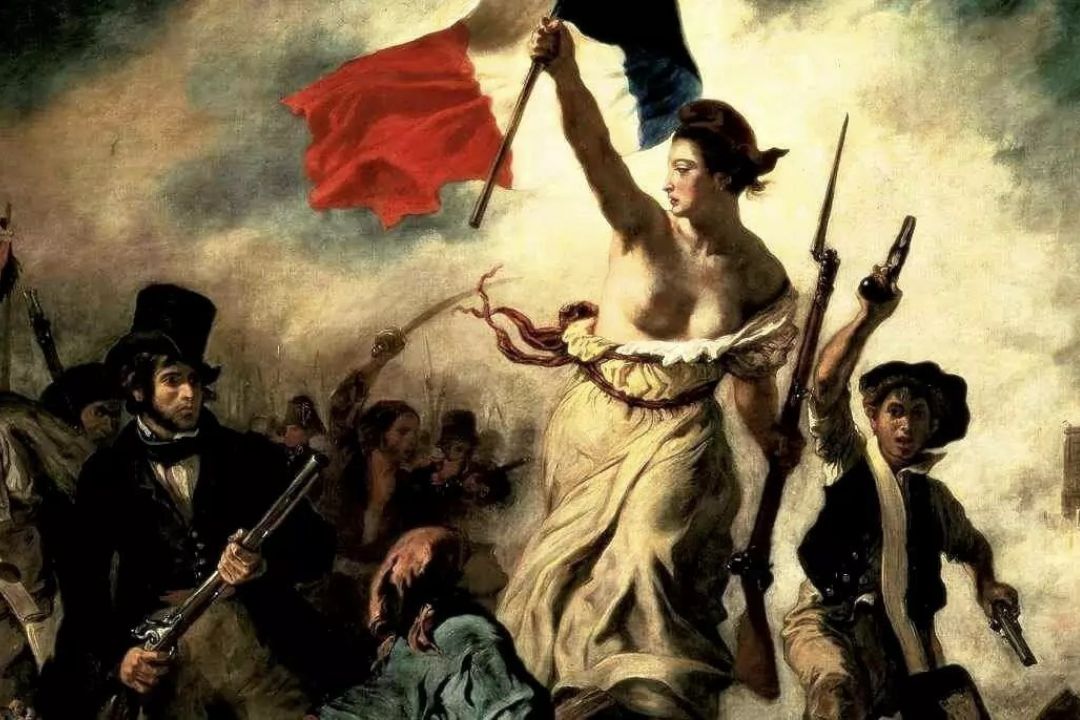
In the month of July, once again, revolutionaries find it necessary to remember and analyze one of the most momentous events in history. On July 14, 1789, the people of France stormed the Bastille fortress, launching one of the most significant revolutions recognized as essential to understanding the development of humanity—not only for its political character, but also for its legacy in advancing the rights to liberty, security, and property. Thanks to this event, on August 26, 1789, the Declaration of the Rights of Man and of the Citizen was adopted in France.
Traditionally, the French Revolution has been considered the end of an era—the Ancien Régime—and the beginning of a new one: the modern age. When the conflict erupted in 1789, King Louis XVI believed he ruled over all the French by divine right and, as an absolute monarch, was under no obligation to be accountable to anyone, least of all the people.
Nevertheless, the king was a good-natured man, with a conformist and easily influenced personality, which both his advisors and, at times, his wife, Queen Marie Antoinette, sought to exploit.
In 1788, the Estates-General were convened, bringing together representatives of the three estates—clergy, nobility, and commoners—to address the country’s severe financial crisis. The people began demanding that each delegate vote individually, rather than by estate as had been customary.
The monarch paid little attention to this initiative, but on July 14, 1789, when an enraged crowd stormed the Bastille—a royal fortress turned prison on the outskirts of Paris—Louis XVI asked in surprise: “Is this a revolt?” To which one of his ministers replied: “No, Sire, it is a revolution.”
The situation had already spun out of control the day before, on July 13, when chaos spread throughout the city. An enraged crowd marched to Saint-Lazare prison, where debtors were held, stormed the building, and released all the prisoners.
Finally, Tuesday, July 14, would mark the beginning of the Revolution. At dawn, a rumor spread that 30,000 rifles had been stored at the Hôtel des Invalides, a military hospital located to the west of the city. The Invalides was protected by several cannons, but its capture was relatively easy since the guards stationed there offered no resistance.
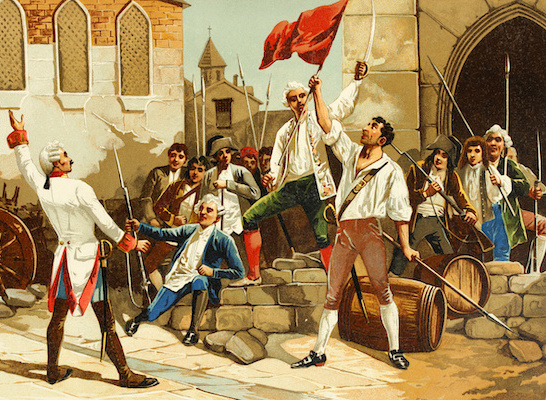
Just a few meters away, several cavalry, infantry, and artillery regiments under the command of Baron de Besenval were camped, awaiting orders. Besenval assembled all the units to ask whether they were willing to march against the insurgents.
The response was unanimous: a resounding “No.” Thus, the building fell into the hands of an enraged crowd, who seized the rifles and twelve cannons. According to many historians, this was likely the decisive moment of the day—the instant when Louis XVI lost the battle for Paris.
The storming of the Bastille was only the first step of the Revolution, followed by many more. The consequences of these events, which shook France for years—some marked by extreme violence and chaos—are complex and still resonate today.
One of the main outcomes of the revolutionary process was the end of the monarchy and the privileges of the clergy and nobility. But things would not be so simple. After the execution of the monarchs, the country faced war with neighboring European powers, united as the First Coalition (1792–1797), who declared war on revolutionary France with the goal of restoring the monarchy.
Despite this, the French Revolution marked the beginning of a profound transformation that overturned the feudal order still dominant in many nations, where the seeds of revolution would take root. And not only in Europe. In the Americas, Spanish colonies drew inspiration from French revolutionary ideas, fueling their own independence struggles. Years later, the Spanish Crown would face its own revolutionary processes.
Among the many changes brought by the French Revolution, one of the most significant was the transformation of production methods, with the implementation of supply and demand laws and the rejection of state intervention in economic affairs.
In this new social and economic context, the rising bourgeoisie came to occupy the position previously held by the aristocracy as the ruling class. For the first time, the humble gained certain rights thanks to the French Revolution.
The famous slogan “Liberty, Equality, Fraternity—or Death” paved the way for the first Declaration of the Rights of Man and of the Citizen (August 26, 1789), which would go on to inspire today’s Universal Declaration of Human Rights.
For the first time, laws began to apply equally to all, regardless of social background, creed, or race, and debt imprisonment was abolished. But the same did not happen for women. They were denied the right to vote, although they were granted a more active role in the construction of a new society.
All of this culminated in the proclamation of the first French constitution on September 3, 1791—a charter that guaranteed the rights gained during the revolutionary process and reflected the liberal spirit of the new economy and society.
Another major consequence of the French Revolution was the establishment of the separation of Church and State—an essential step toward the modern secular state. Church and clergy property was expropriated, and their political and social power reduced.
All the revenues the Church had collected from the people were transferred to the State, and all Church and aristocratic lands and property were sold to wealthy peasants and bourgeois loyal to revolutionary ideals.
By 1795, France was governed by the Directory, composed of five members holding executive power, while legislative power resided in two chambers: the Council of Five Hundred and the Senate.
On January 21, 1793, the guillotine ended the life of the French sovereign after a trial in which he was accused of treason against the nation and the revolution.
Marxism began to study the French Revolution as a political expression of the economic and social hegemony the bourgeoisie had achieved in the 18th century, following a process that began with the end of the late medieval crisis. The Revolution defeated the feudal aristocracy and cleared the way for capitalism, becoming the paradigm of a society in which the capitalist mode of production gave rise to a political regime serving the bourgeoisie. Hence the idea of the “necessity” of the bourgeois revolution—not as a final destination, as liberal historians claimed, but as a phase of history that would eventually be overcome through the clash between proletariat and bourgeoisie under fully developed capitalism.
Marx was particularly interested in Jacobinism and Robespierre. He believed the Jacobins had erred by trying to establish political equality without the necessary social and economic development. A democratic republic was only possible if the typical social inequalities of the bourgeois regime were overcome. The Jacobin regime was a precursor or experiment in what could become a future society governed by proletarian principles—only viable once the development of the productive forces allowed it.
Lenin, for his part, was drawn to two aspects of the French Revolution: the revolutionary activism of the Convention period and the popular participation—both of which directly related to his own theoretical and practical concerns. Regarding the causes of the Revolution, Lenin argued that during the revolutionary process, there was a simultaneous transformation of the socioeconomic base and the political superstructure. Class tensions exploded, even though initially the bourgeoisie had the support of the peasantry and urban lower classes. The Revolution dismantled feudalism to consolidate capitalism. But the bourgeoisie eventually became counterrevolutionary to maintain control over the Revolution. In 1792, the people continued pushing the Revolution forward with the storming of the Tuileries, launching the Convention phase. This was followed by the king’s execution and the Reign of Terror. Despite Jacobin radicalism, the bourgeoisie continued to dominate this phase—Robespierre himself, Lenin held, was a bourgeois revolutionary. In 1794, an alliance was forged between the bourgeoisie and the peasantry once the counterrevolutionary threat had been eliminated, ushering in the Directory phase. Lenin considered the Napoleonic era to be part of the Revolution, as it represented the phase in which the bourgeoisie consolidated its power—a view that has since become common among historians, who often study the two periods together. The Revolutions of 1830 would mark the definitive rise of the haute bourgeoisie.
The Great French Revolution left a profound mark on the thinking of Leon Trotsky as well. He argued that the sans-culottes triumphed over the monarchy not only out of class hatred, but through political and moral conviction. He explained this in his military writings as well, showing how the imperialist bourgeoisie could not comprehend how, in a country devastated by World War I, workers and peasants not only took power but built an army of five million and defeated the siege of 14 imperialist armies, emerging victorious. When Trotsky founded the Red Army, he told soldiers that they were now the vanguard of the world socialist revolution. In the trenches they fought through mud, blood, and snow—but they pressed on because they knew they were fighting to change world history. Political and moral conviction were just as important as the rifle.
Both revolutions—the French and the Russian—changed world history and deserve to be studied in order to prepare for the victories of 21st-century revolutions. And this is not utopian: what’s truly utopian is to believe there will never again be revolutions. That’s exactly what King Louis XVI thought—until his head met the blade of the guillotine.