A day on one of the ships of the Global Sumud Flotilla (GSF).
By Flor Salgueiro
The most basic training of a coastal sailor requires a few weeks of maritime safety and boarding workshops. The crew of each GSF ship is already experienced, but many activists received elementary training that they strengthen day by day on board.
This is evidence of GSF’s commitment and the urgency of reaching out to the dramatic situation in Gaza. The Zionist siege implies: aerial bombardments, tanks advancing on land, destroyed hospitals, thousands of murders and famine caused by the blockade of humanitarian aid. Genocide. The forced exodus of Gazans evokes the Nakba. This is ethnic cleansing.
The dehumanization imposed by Zionism will go down in history as barbarism, comparable only to that perpetrated by the Nazis against the Jewish people.
Activists do not know whether Israeli forces will block their arrival, attack them or imprison them. But they prepare every day to face the consequences of trying to break the humanitarian blockade.
The departure from Barcelona on August 31 has made following what happens on the ships on a daily basis part of people’s daily routine. People who are concerned about how the crews live, how they organize, what they do, when they will arrive in Gaza, and so on.
Cele’s testimony illustrates what a day on the “Adara” is like on the high seas:
“What is a day sailing in the Mediterranean like? The truth is that you might confuse days with the nights: there is permanent navigation surveillance, 24 hours a day, without a break. At 5:30 a.m. we’re already on our feet to prepare breakfast. We work in rotating groups: two or three crewmates cook for the 22 crew members of the “Adara”. I take part in the cooking shifts. There are also other shifts to keep the ship clean and tidy. There are difficulties, but the fact that we share a common goal strengthens us as a group.
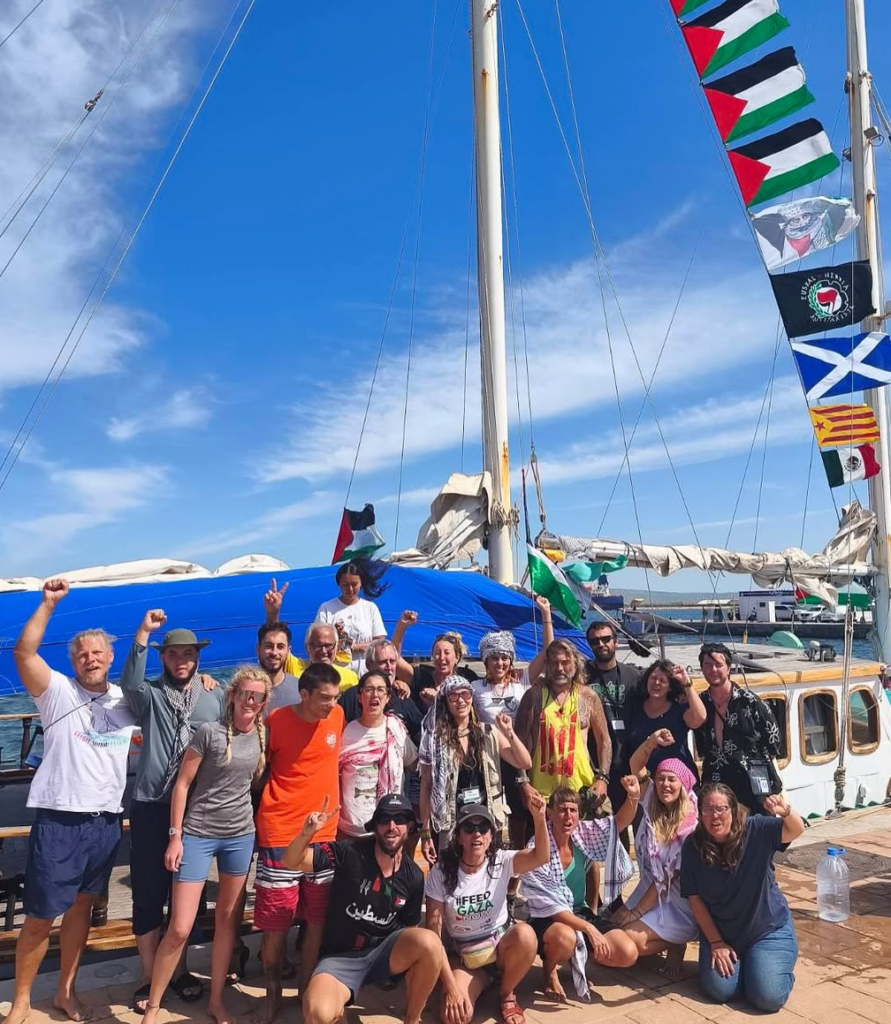
The schedules are strict and are combined with coordination meetings where we report on the progress of the journey, our planned course and the weather conditions at sea. We also share the latest news from Gaza, because the flotilla’s mission is to denounce the genocide and break the blockade on humanitarian aid. Lunch is set for 1pm; and at 3pm, we usually conduct training exercises to prepare for different possible scenarios.
In the evening we have dinner around 8pm, and around 9pm and most of the ships are sleeping and we turn off the lights. Then the night watches begin. During this time we carry out general control tasks, we keep an eye on the position of other ships and watch the sky for drones, since we have seen them following the flotilla, and two ships were attacked in Tunisia.
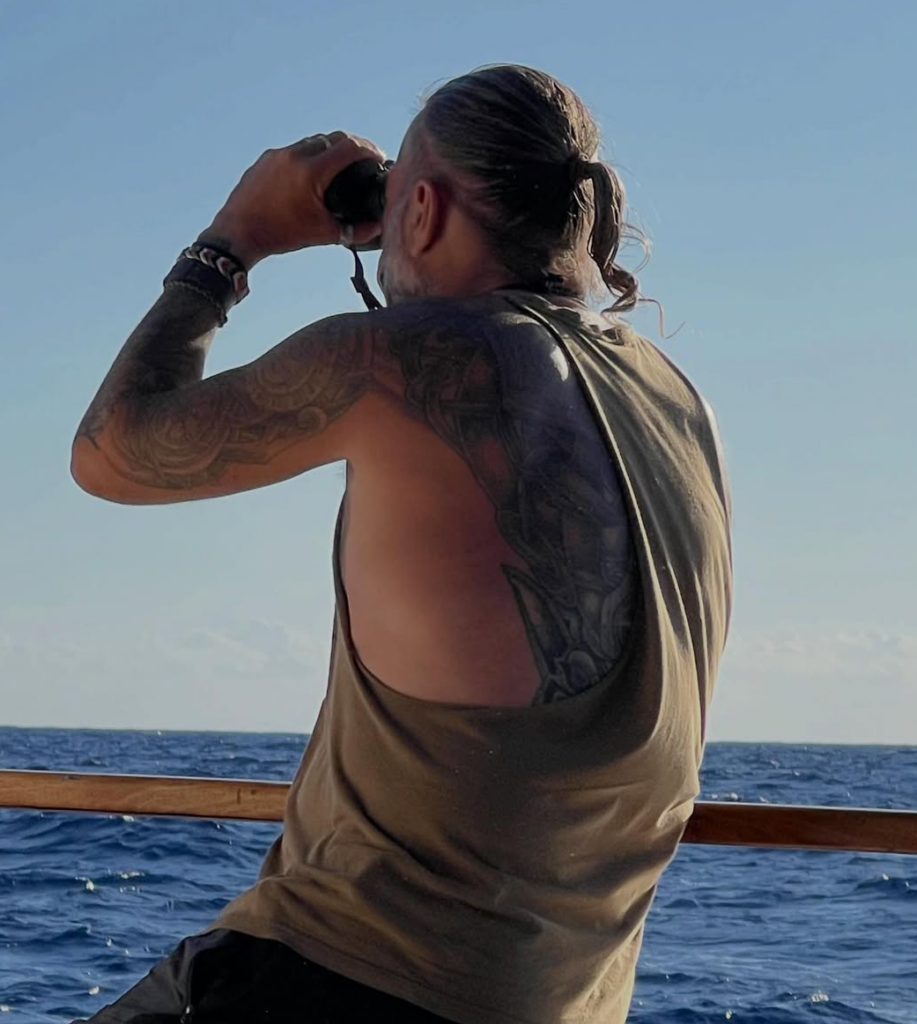
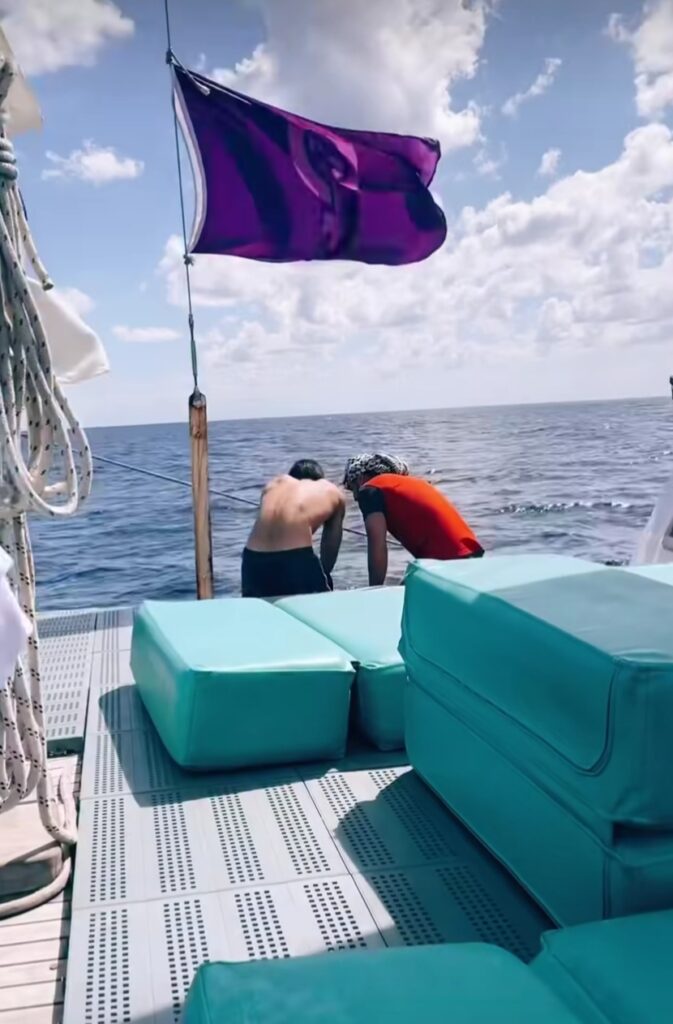
When the sea is calm, we make use of that opportunity and do some activities or read. The rotation of tasks is key to keep us alert and, at the same time, recover strength.
As you can imagine, comforts are minimal: many of us sleep on deck to lessen the effect of seasickness and showering is almost imaginary, as fresh water on board is a scarce and vital resource.
I feel satisfied with what we are doing, aware that our effort does not even compare to that of every Palestinian who struggles to survive day by day in inhumane conditions. I also feel the constant support of my loved ones and the encouragement of my comrades of MST and the ISL whenever communication allow it.
I would like to highlight Adara’s patience in the face of problems and its solidarity, which towed the “Catalina” for the second time on this trip, although it no longer needs us to do so.
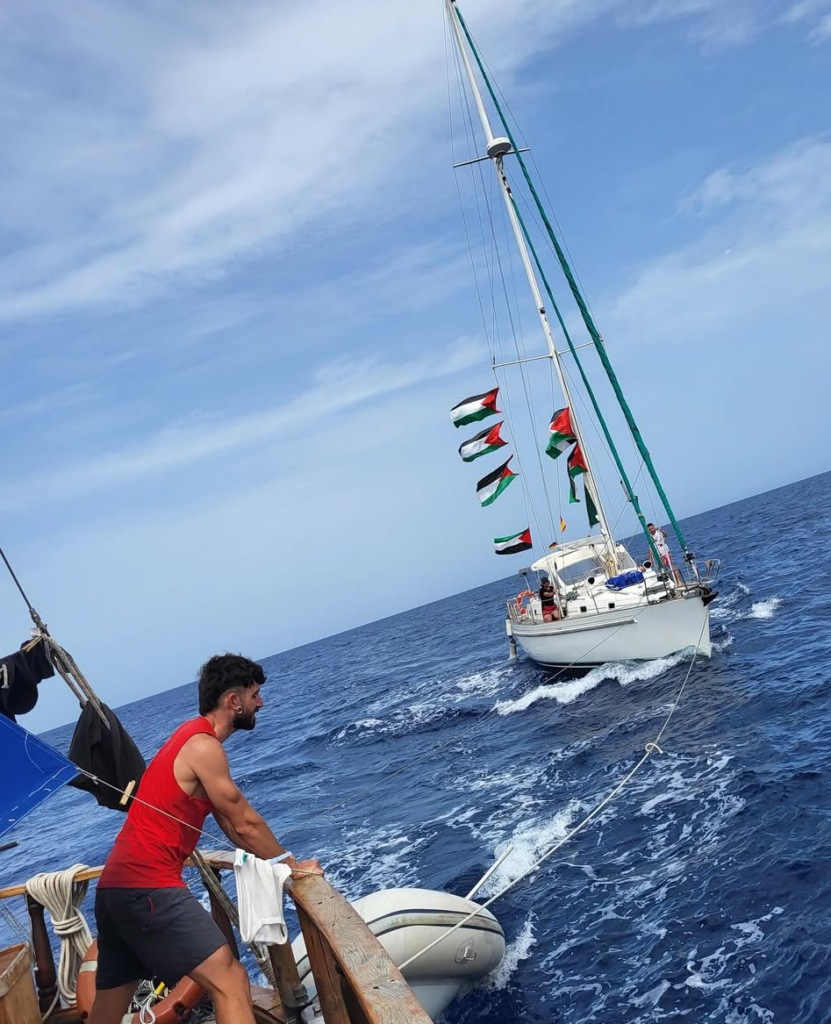
I emphasize this because our boat is a schooner(1) that moves at three to five knots(2) with sails up (approximately 6 to 10 km/h) so towing did slow us down and demanded more effort from the entire crew.
Since we set sail for the first time, the flotilla has grown. Ships from Italy joined, and others from Greece will soon. Four days away from Gaza, tension will increase. We do not know what will happen in the face of Zionist threats. In any case, we hope to reach Gaza in seven days and break the blockade on humanitarian aid”.
The testimony of the crew has nothing to do with the campaign orchestrated by Zionism on social media, were they spread lies about a group of “terrorists” who “threaten security” sailing around the Mediterranean.
With the flotilla at sea and with those mobilizing on land, let’s shout: Stop genocide in Palestine! Let’s break the blockade to humanitarian aid! Let’s protect the flotilla!
1.- Schooner: Sailboat of two or more masts, traditionally used for long voyages.
2- Knot: Unit of maritime speed; equivalent to 1.85 km/h.
You may also be interested in: “Heading for Gaza V: with the body in the sea and the eyes on Palestine”.