In December 2025, the Eastern European country went through a new political crisis with mobilizations that led to the resignation of the conservative government.
By Oleksandr Iskrin from Sofia.
Among the factors that triggered the crisis were economic, social and political causes. The state budget for 2026 proposed by the government contemplated an increase in taxes and social security contributions, which provoked strong social discontent. There was serious criticism of the transparency and fairness of the budget process, compounded by allegations of corruption. Political instability marked by frequent changes of government, fragile coalitions and a weak parliamentary majority amplified the impact of these economic and social factors. Mass protests and opposition forced the government to withdraw the draft budget and resign, demonstrating that the mobilized people have determined the course of events.
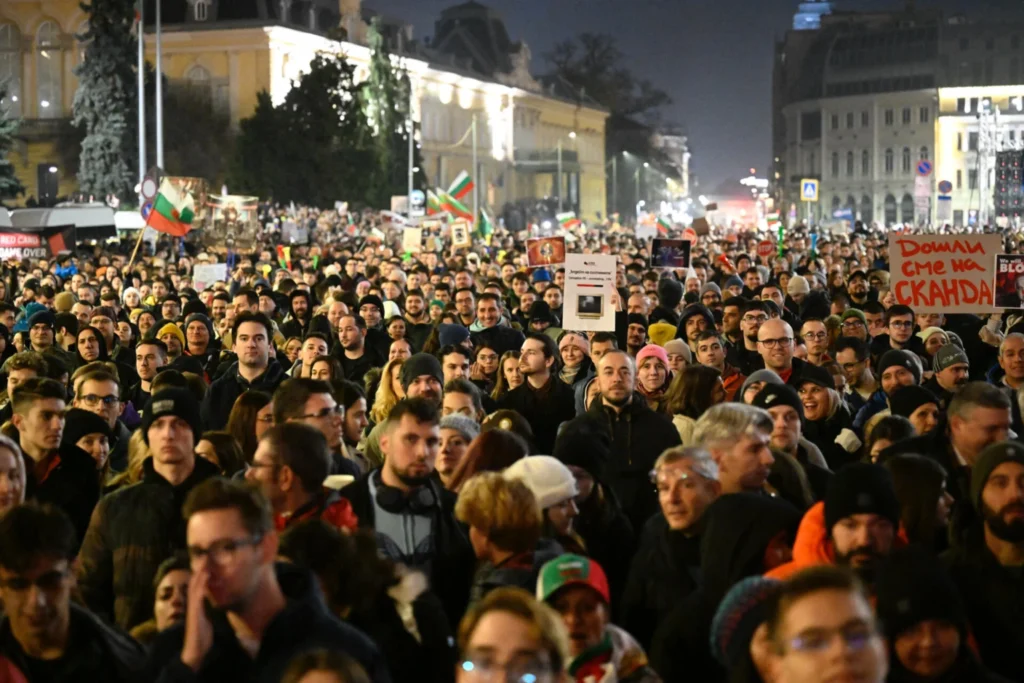
There were multiple mobilizations during the month of December.
Causes of dissatisfaction with the proposed budget
The draft budget provided for a significant increase in taxes and social contributions. It was negatively perceived by a large number of citizens as an attempt to “cover up corruption schemes” and further burden the working population. The measures were accompanied by fears of inflation on the eve of the adoption of the euro (the budget was drawn up in euros for the first time) and the growth of the black economy. As a result, different social and political sectors considered the draft budget economically unbalanced and politically unpopular, and pointed out that the protests were also due to discontent with corruption and the political system.
Euro adoption and inflation fears
One of the main economic factors for the rejection of the budget was the planned adoption of the euro in Bulgaria as of January 1, 2026, which intensified social fears related to prices and the cost of living, against a backdrop of unpopular tax changes and accusations of corruption.
Bulgaria plans to become the 21st country in the Eurozone and introduce the euro as the official currency, replacing the Bulgarian lev (1 euro = 1.95583 levs for the transition). Despite the problems, the European Commission (EC) and the European Central Bank (ECB) confirmed that Bulgaria meets the criteria for joining the Eurozone on schedule. The various surveys published reflect that public opinion on the adoption of the euro is very divided and that there are strong economic concerns: almost 60% of Bulgarians fear that the cost of living will increase after the introduction of the euro.
Political forces that opposed the budget
The “PP-DB” Coalition (in Bulgarian: “Prodŭlzhavame Promyanata – Demokratichna Bulgaria” – “We Continue the Change – Democratic Bulgaria”), led by Asen Vasilev opposed the budget, called for mobilization and filed a motion of censure against the government. The protests were joined by other political forces such as the far-right nationalists of “Vazrazhdane” (“Rebirth”). Even some former allies of the government coalition expressed their discontent, in particular, the leader of the Movement for Rights and Freedoms (DPS), Delyan Peevski criticized the pro-European opposition forces. The budget proposals were mainly rejected by opposition parties and civic organizations, which accused the government of corruption and social injustice.
Background to the government’s decision to resign
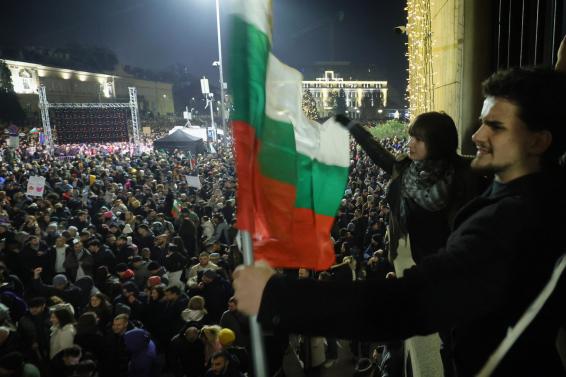
The decision to resign followed prolonged social pressure. In the second half of November and early December, a wave of protests swept the country: in Sofia and in more than a dozen other cities, tens of thousands of people took to the streets (according to media reports, more than 100,000 demonstrators participated in the capital alone at the peak), with slogans such as “Resign!”, “Mafia out!” and “I am fed up!”. The demonstrators demanded not only the withdrawal of the budget initiatives, but a general change in government policy. After the initial withdrawal of the draft budget under the pressure of the protests, the mobilizations did not stop. Protesters called the failed budget a covert attempt to hide rampant corruption that successive governments had failed to eradicate, and expanded their demands by calling for the resignation of the center-right government.
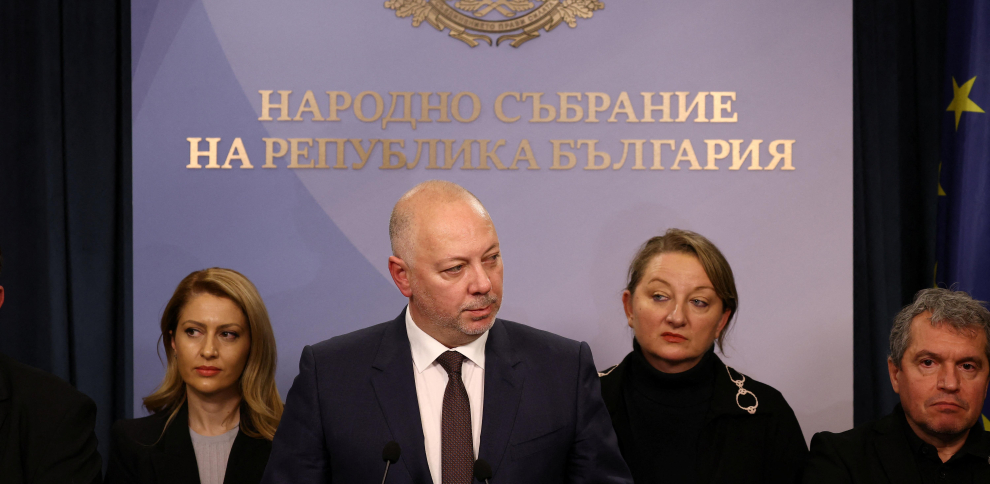
Bulgarian Prime Minister Rosen Zhelyazkov announced the government resignation.
On the eve of the parliamentary vote, the opposition officially initiated a motion of censure. In this context, Prime Minister Zhelyazkov announced his resignation in a televised message “taking into account the voice of the people”, literally amid the planned vote, which translated means “the strength of mobilization”. President Rumen Radev harshly criticized the corrupt practices of power and called on the government to listen to the demands of the protesters, which in turn provoked strong criticism from the ruling coalition and some pro-European sectors. The resignation came on December 11, in the face of a massive mobilization and less than three weeks before Bulgaria’s planned accession to the Eurozone on January 1. The Bulgarian government resigned on Thursday, after less than a year in power (11 months), following weeks of street protests against its economic policies and its inability to fight corruption.
Reaction from Parliament, the opposition, coalition partners and public opinion
Parliament unanimously approved the resignation of the government: all 227 deputies present voted in favor. The main coalition party GERB and its leader Boyko Borissov reacted cautiously. Borissov stated that, from that moment on, GERB would not participate in any “reformatting” and would not support any budget. He promised to turn GERB into a “strong opposition” and to prepare for new elections.
Delyan Peevski, leader of the DPS, declared that “someone else won”, implicitly acknowledging that the opposition benefited from the government’s resignation, while distancing his political force from responsibility for the budget failure. Opposition politicians assessed the resignation positively. Asen Vasilev called it the first step towards “a normal European country” and called for honest and fair parliamentary elections.
Activists and tens of thousands of demonstrators welcomed the decision, noting that the authorities had finally listened to society. Mobilizations took place on the streets of Sofia and in more than 25 major cities, including Plovdiv, Varna, Veliko Tarnovo, Razgrad, Plovdiv and Burgas; and young people were once again at the forefront of the protests.
Steps after resignation
According to the Constitution, President Rumen Radev must give the mandate to form a new government to the largest parliamentary group, GERB. However, Borissov has already announced that he will refuse the mandate, so the president will offer the opportunity to form a government to the next largest political forces. If they fail to do so as well, Radev will appoint a caretaker government and call early parliamentary elections.
Experts predict that elections will most likely be held in the spring of 2026. Thus, Bulgaria faces a new stage of political uncertainty: first an interim government and then new elections to try to form a stable majority, with a reformist “left”, with ties to the right and influence of the old Bulgarian Communist Party (PCB) without a revolutionary left alternative in a position to present an alternative program with substantive proposals in favor of the workers and the people.
Formation of a new government
According to the results of the last parliamentary elections, the seats in the 240-member Bulgarian Parliament are distributed as follows: “Continuing Change – Democratic Bulgaria” (PP-DB): second force (36 seats). “Rebirth” (Vazrazhdane): third (33); Movement for Rights and Freedoms (DPS): fourth (29). Next: Bulgarian Socialist Party – United Left (BSP-OL) (19), Alliance for Rights and Freedoms (APS) (19), There Is Such a People (ITN) (17) and other minor parties. Following GERB’s resignation, the president may first offer the mandate to PP-DB and, in case of rejection or impossibility to form a majority, resort to combinations of other forces (e.g. “Rebirth” or the DPS) to reach the support of 121 deputies out of 240 in the Parliament.
Conclusion
The events of December 2025 in Bulgaria demonstrated that society is capable of mobilizing against political decisions that it considers economically unfair and non-transparent. The resignation of the government was the result of a combination of social pressure, protests and the political activity of opposition forces that rejected the budget and denounced the corrupt practices of the government. The reaction of the Parliament, the opposition and the citizenry evidenced the division of the political elites: some tried to distance themselves from the crisis, while others saw it as an opportunity to push for systemic changes.
The next stage will be the attempt to form a government through new parliamentary coalitions or, failing that, the appointment of a provisional government and the calling of early elections, reflecting the political fragmentation of the country and a high degree of uncertainty. The absence of a consistent left alternative favors the parties to continue recreating new traps within the capitalist system and the regime, pulled between the influence of European imperialism and Russian imperialism. It is necessary to build a project of the consistent and independent left, so that the workers may govern, with the regroupment of revolutionaries as the International Socialist League (ISL) is promoting.
You can also read: “Bulgaria: capitalism causes poverty and inequality”.