By Veronica O’Kelly
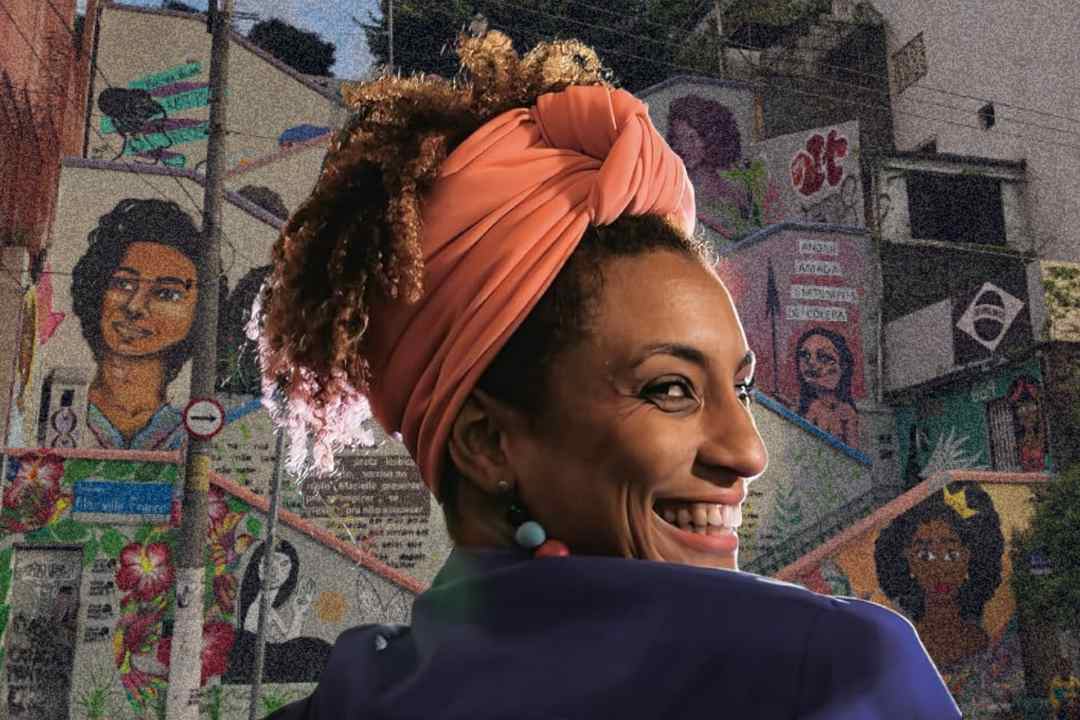
Today is a historic day. The Supreme Federal Court finally sentenced the brothers Domingos Brazão and Chiquinho Brazão to 76 years in prison for ordering the murder of Marielle Franco. Eight years after the crime that took the lives of Marielle and Anderson Gomes, justice – albeit belated – comes as a direct result of a mobilization that never died down.
This condemnation did not arrive unprompted. It is the result of the persistence of the women’s movement, the black movement, human rights organizations, the left and thousands of people who, in the streets of Brazil and the world, repeated for eight years: “Who had Marielle killed and why? It was popular pressure that prevented the case from being buried under the weight of impunity that usually protects militiamen, corrupt politicians and power.
We celebrate with our fist in the air!
It is a political and symbolic victory. It shows that collective struggle can bring answers even to a structurally slow justice system when the accused have power, money and connections. Because we know: to judge young people from the peripheries – mostly blacks – the system is fast, implacable and generally arbitrary. To judge the powerful, justice is usually cautious, delayed and full of resources. That is the essence of bourgeois justice.
Marielle was a woman, black, from the favela, a human rights defender. She was also a living denunciation of the violence of the State in the peripheries. Her execution was not an “isolated case”: it was the expression of a mechanism where militias, bourgeois politicians and sectors of the State are intertwined. It is not a detail that five military police participated in the assassination, in addition to two police commissioners and a civilian policeman. This reveals the degree of infiltration and institutional promiscuity that corrodes the public structures from within.
State corruption kills. It kills when it protects criminal schemes. It kills when it allows armed groups to consolidate. It kills when it transforms security forces into instruments of parallel power. It kills when it chooses who should live and who can die in the peripheries.
The conviction of the intellectual authors does not close this story.
It opens a new stage. That of continuing to dismantle the networks that sustain the militias, of demanding the demilitarization of the police and the democratization of the forces so that they may be controlled by the working people. That of confronting the logic of criminalization of poverty and guaranteeing an end to the impunity of economic power.
Keeping Marielle’s memory alive is more than remembering her name. It is to continue her struggle for a world without oppression. Justice for Marielle and Anderson is not just a sentence. It is a permanent commitment against impunity and against all forms of state violence.
Today we celebrate. Tomorrow we continue to fight.