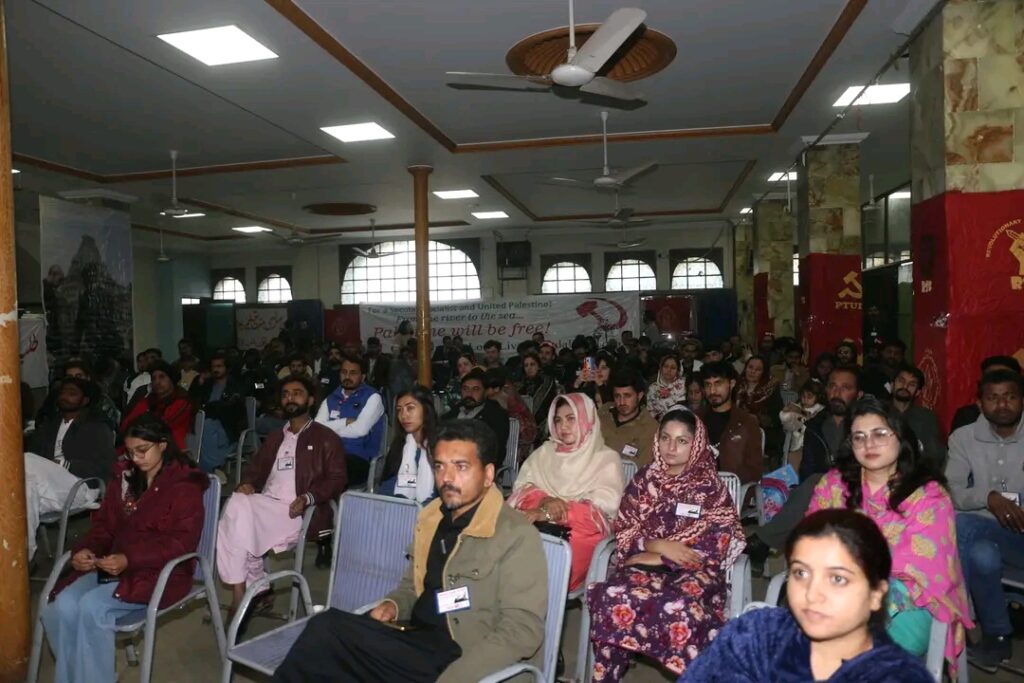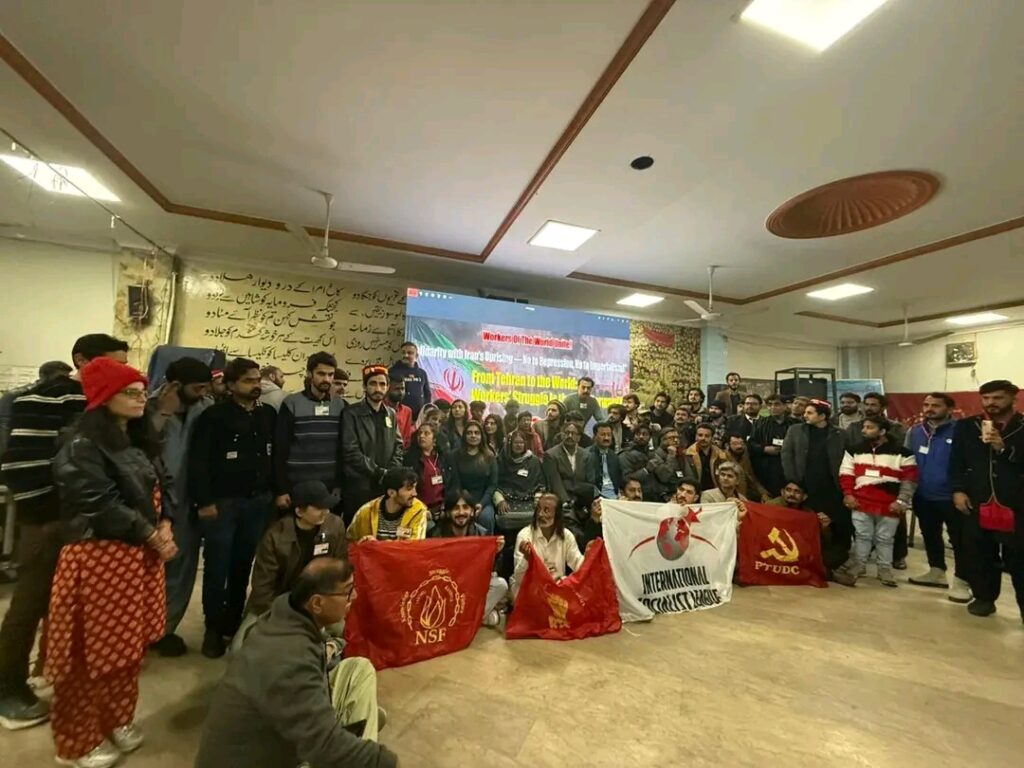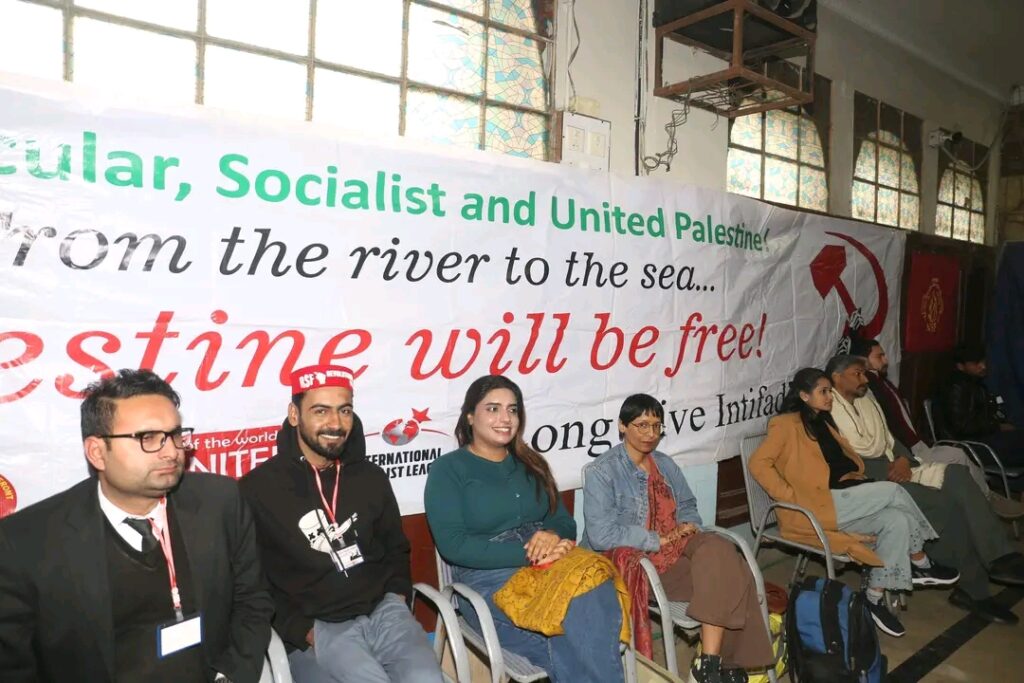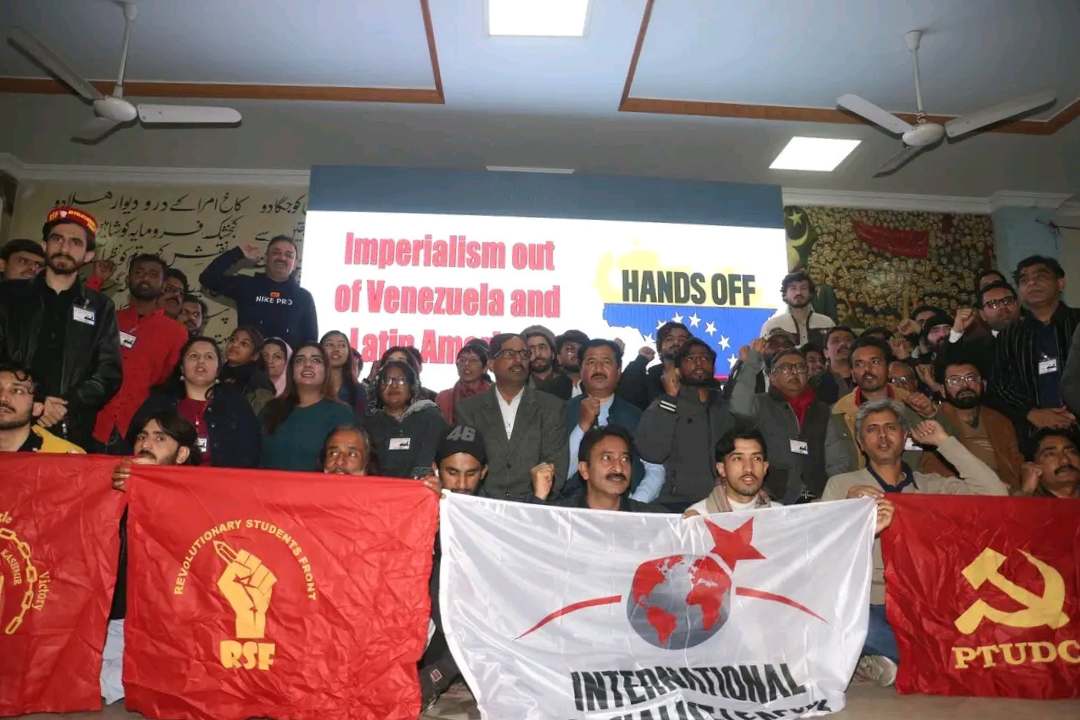
The National Winter Marxist Youth School, held on 30–31 January 2026 in Lahore, successfully brought together more than 200 revolutionary youth from different regions for two days of political discussion, theoretical clarity, and collective learning at a time of deep global crisis.
At the start of the school, one minute of silence was observed in memory of late Comrade Gopal Charan.
The school took place against the backdrop of intensifying capitalist instability, imperialist wars, genocidal violence, and growing resistance across the world. Its aim was not only to analyse the world as it is, but to equip young activists with the revolutionary ideas and programme necessary to change it.
Session 1: The Global Capitalist Crisis, Imperialist Aggressions, Wars, and Revolts
The opening session, led by Vinod Kumar and chaired by Rihana Akhtar, analysed the structural crisis of global capitalism, prolonged economic stagnation, inflation, debt, and widening inequality. Discussions focused on the weakening of US imperialist hegemony, sharpening inter-imperialist rivalries, and the instability of the emerging multipolar order.
The lead presentation was followed by questions and contributions. Kaleeq Diamiri, Yasir Rasool, Shahzad Arshad, and Sharjeel Shah contributed to the discussion, while Imran Kamyana summed up the session in light of the questions raised.
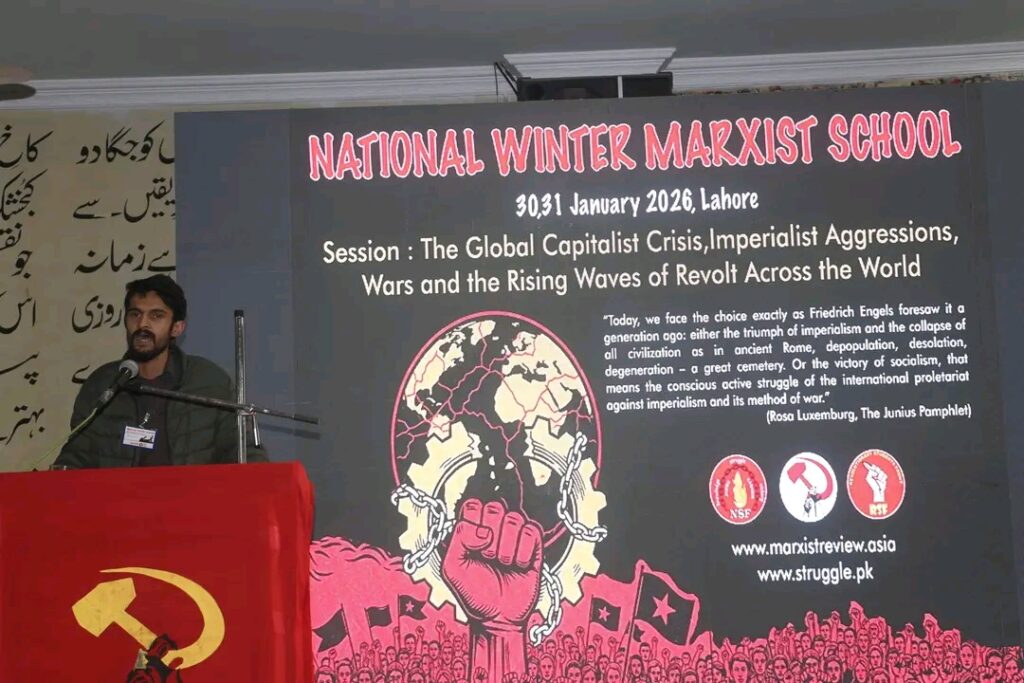
Special attention was given to imperialist wars and barbarism — particularly the genocide in Gaza, the war in Ukraine, and US aggression against Venezuela. The session also highlighted mass movements and resistance, including protests in Iran against the repressive Mulla regime, as well as the wider wave of Gen-Z and popular revolts across South Asia and parts of Africa. The crisis of Pakistani capitalism and the growing anger of workers and youth were discussed in this international context, stressing the necessity of revolutionary internationalism.
Session 2: Marxism and Scientific Socialism — Origins and Constituent Elements
After the lunch break, the second session, led by Altamash Tasadduq and chaired by Faiza, focused on the theoretical foundations of Marxism as a scientific worldview. Participants engaged with the historical conditions that gave rise to Marxism, its three sources, and the transition from utopian socialism to scientific socialism.
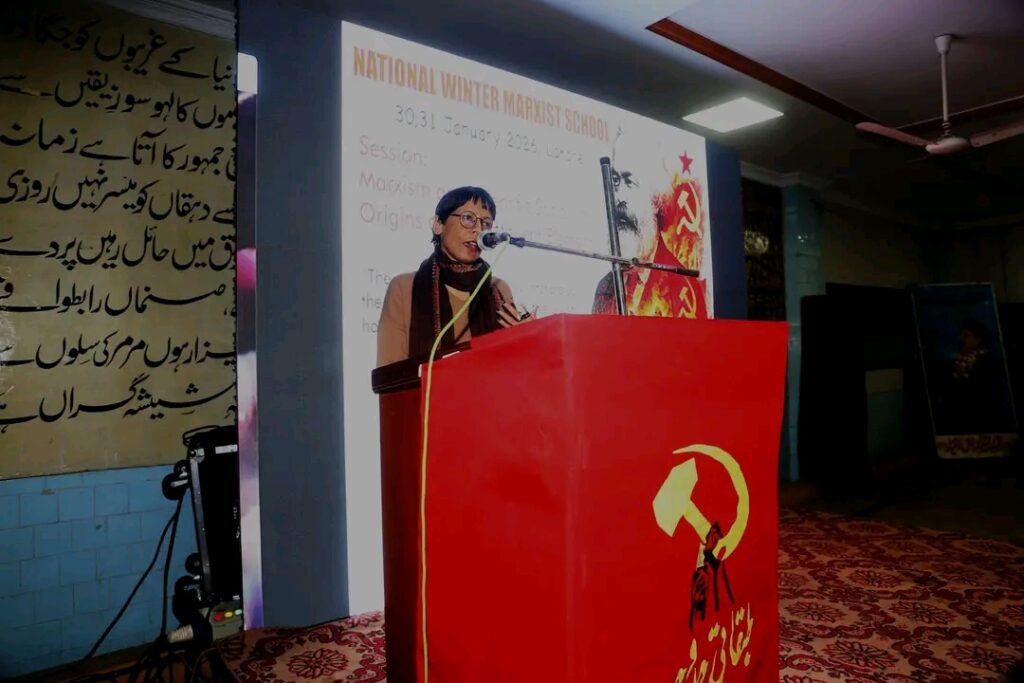
Key concepts such as dialectical materialism, historical materialism, class struggle, surplus value, exploitation, the capitalist state, and ideology were discussed, with emphasis on the relevance of Marxism in understanding and intervening in today’s crisis-ridden world. The importance of revolutionary theory, organisation, and Bolshevism as a method of action was underlined throughout.
Umair Khursheed, Mujeeb Akbar, Faizan Tariq, and Asif Rasheed made contributions, and Altamash summed up the session by responding to the questions raised.
Session 3: The Revolutionary Socialist Transitional Programme and Demands
The third session, led by Imran Kamyana and chaired by Khakula Bacha, addressed the limits of reformism in the present epoch and the necessity of a revolutionary transitional programme. Discussions centred on linking the immediate struggles of workers, students, peasants, and oppressed nationalities with the fight for socialist transformation.
Themes included the sliding scale of wages and working hours, nationalisation under workers’ control, democratic economic planning, resistance to austerity and repression, the national question and the right to self-determination, and the role of mass committees in struggle. The session stressed transitional demands as a tool to raise class consciousness and build a revolutionary organisation rooted in the working class.
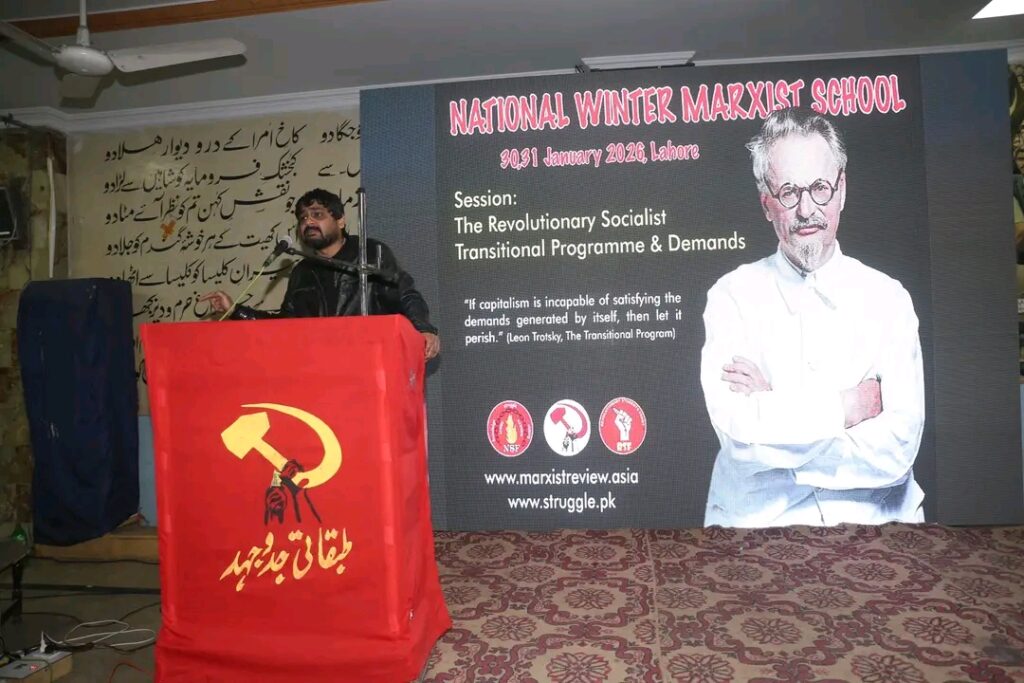
Umair Khursheed, Aryan, Shahzad Arshad and Danish Fida contributed to the discussion, while Imran Kamyana summed up the session.
Theatre Performance
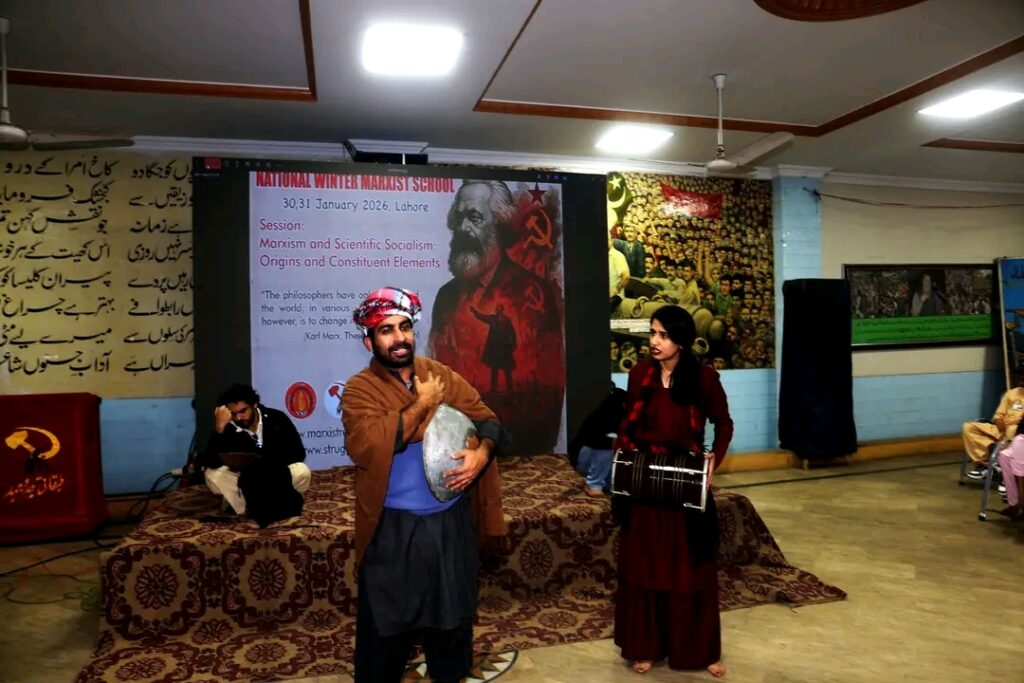
Alongside the theoretical sessions, a theatrical performance by young comrades was staged on 30 January. Through political theatre, movement, and dialogue, the performance expressed resistance to exploitation, oppression, and injustice — demonstrating that culture and art are also terrains of struggle.
Film Screening: The Young Karl Marx
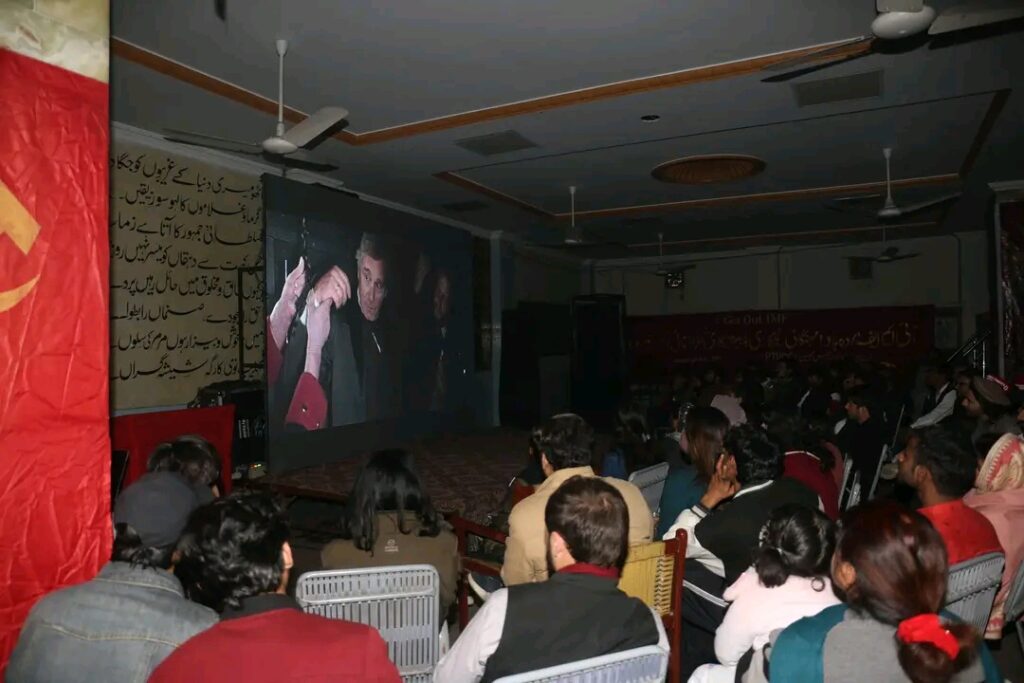
On 31 January, a special screening of The Young Karl Marx was organised, marking its first-ever screening in Pakistan. The film provided an accessible and powerful portrayal of the early political development of Marx and Engels, complementing the school’s theoretical discussions and inspiring participants to connect ideas with organisation and action.
International Solidarity
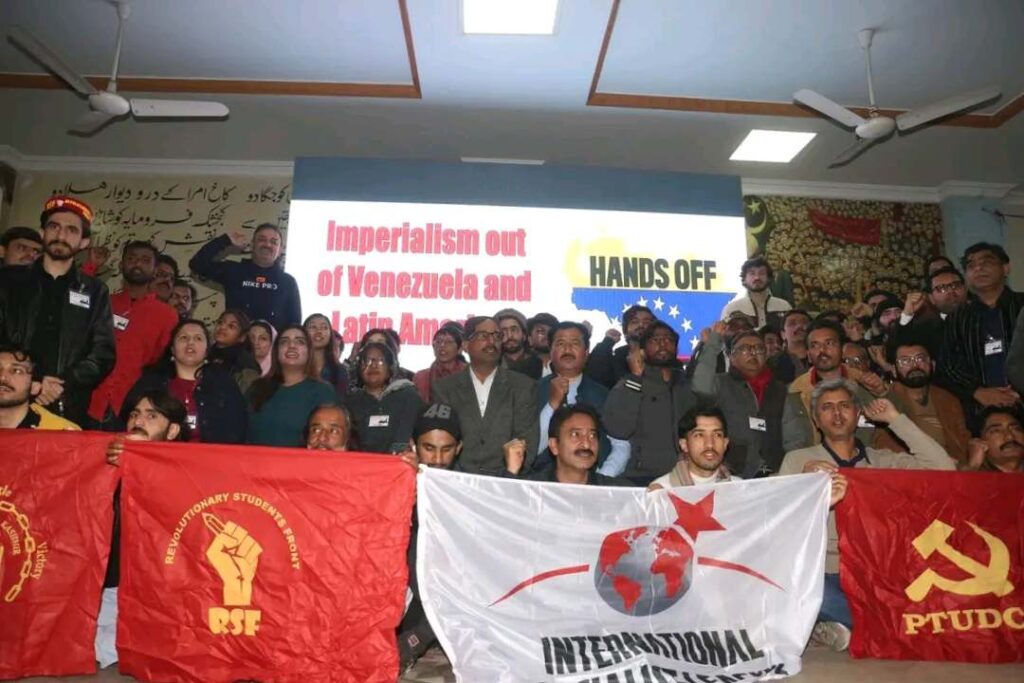
During the school, participants also expressed solidarity with the people of Venezuela against US imperialist aggression, and with the people of Iran against the repressive Mulla regime and imperialist interference, reaffirming the internationalist foundations of Marxism.
The National Winter Marxist Youth School was not an academic exercise, but a step toward building revolutionary clarity, confidence, and organisation among youth in a period of historic crisis.
Knowledge . Struggle . Socialism