By Ezra Otieno
In December 2025, the United States launched direct military action in Nigeria under the Trump presidency. This escalation followed months of aggressive public rhetoric, including repeated threats to intervene “guns blazing” if Nigeria failed to halt violence against Christians. In late November, Trump formally designated Nigeria a Country of Particular Concern, tying internal insecurity to religious persecution and presenting military intervention as a moral necessity.
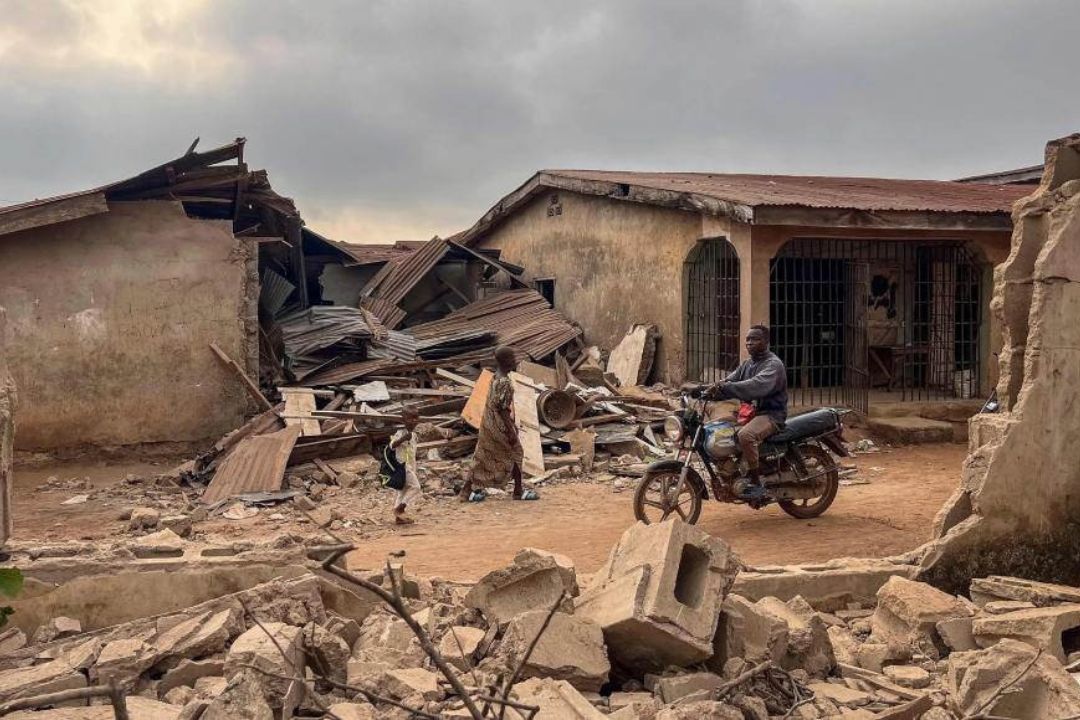
On Christmas Day 2025, U.S. forces struck targets in Sokoto State in northwest Nigeria that Washington described as linked to ISIS-affiliated groups. At least sixteen Tomahawk cruise missiles were reportedly launched from U.S. naval platforms. Nigeria’s federal government stated that the operation was conducted with its knowledge and coordination. Trump, however, publicly framed the strikes as a unilateral defense of persecuted Christians.
In early February 2026, the United States officially confirmed the deployment of a small contingent of its military personnel to Nigeria. Officials from U.S. Africa Command said the move followed high-level talks with Nigeria’s government and was aimed at strengthening counter-terrorism cooperation in the face of persistent jihadist violence and insecurity. This force is described as limited and focused on intelligence, surveillance, and support tasks rather than large-scale combat, but it marks the first public acknowledgement of U.S. troops on the ground in Nigeria since the Christmas Day airstrikes. The deployment signals a shift from distant military pressure toward a more direct U.S. presence, raising fresh concerns about sovereignty, regional stability, and the potential expansion of imperialist intervention in West Africa.
Understanding the U.S. Military Action in Nigeria
The official U.S. justification rested on two claims. The first was the need to stop extremist violence. The second was the alleged defense of Christians facing systematic extermination. Trump repeatedly asserted that Islamist militants were carrying out genocide and that military force was the only adequate response.
Reality on the ground is far more complex. Nigeria is experiencing multiple, overlapping conflicts driven by social, economic, and political factors. These include a long-running insurgency involving Boko Haram and Islamic State West Africa Province in the northeast, the rise of localized armed groups such as Lakurawa operating in parts of the northwest, widespread banditry and kidnappings rooted in poverty and state collapse, and farmer herder conflicts in central regions shaped by land pressure, climate stress, and ethnic marginalization.
Violence in Nigeria does not follow a simple religious binary. Armed groups target Muslims and Christians alike. The drivers of insecurity include unemployment, inequality, environmental degradation, weak institutions, and entrenched elite corruption.
The reported targets of the U.S. strikes were camps associated with Lakurawa, a group that emerged locally and operates across Sokoto and Kebbi states. The nature of this group remains contested. Some analysts question whether Lakurawa is genuinely an ISIS affiliate or whether it primarily functions as a localized armed network shaped by economic and governance failures. Nigerian authorities emphasized that the operation was not religiously motivated and framed cooperation with the U.S. as part of a broader counter-violence strategy.
Imperialism, Religious Narratives, and Political Theater
From a revolutionary socialist perspective, the invocation of religious persecution performs several political functions. It mobilizes domestic support within the United States, particularly among evangelical and conservative constituencies. It frames military intervention as moral rescue rather than power projection. It diverts attention from structural causes of insecurity rooted in capitalism and state failure.
Imperialist powers have always cloaked interventions in the language of protection and humanitarian duty. Whether framed as defending minorities, spreading democracy, or combating terror, these narratives conceal strategic objectives. Control over regions, markets, resources, and client states remains the underlying logic.
Trump’s rhetoric fits squarely within this tradition. Moral language is used to legitimize violence while obscuring the class interests it serves. The result is political theater that sacrifices Nigerian lives to reinforce imperial credibility.
Class Roots of Violence and the Limits of Air Power
Insecurity in Nigeria cannot be solved through military technology. Chronic unemployment, rural marginalization, collapsing public services, and the absence of democratic accountability create conditions in which armed groups thrive. Where the state retreats, militias and criminal networks fill the vacuum, sometimes providing order, income, or protection.
Airstrikes do not resolve these contradictions. Precision weapons can kill fighters, but they cannot build schools, redistribute land, or create dignified work. At best, bombing displaces violence. At worst, it fragments armed groups and fuels cycles of retaliation.
Short-term tactical gains often carry long-term strategic costs. Religious framing of the intervention risks becoming a recruitment tool for militant organizations. Foreign strikes deepen resentment, harden resistance, and undermine local legitimacy.
Imperialist Rivalries and Nigerian Sovereignty
The U.S. intervention must also be seen in the context of growing imperial rivalry in Africa. China’s expanding economic presence and Russia’s security engagements have prompted Washington to reassert military influence. Nigeria, as Africa’s most populous country, occupies a strategic position in West Africa and the Sahel.
Nigerian officials emphasized sovereignty and mutual respect in their response. Yet reliance on imperial powers for security reflects deeper structural weakness. States hollowed out by debt, austerity, and elite predation struggle to pursue independent paths to stability. Military cooperation often entrenches dependency rather than autonomy.
Critique of Campism
Revolutionary socialists reject the logic that divides imperial interventions into good and bad camps. Whether justified by humanitarian language or counter-terrorism claims, imperialist violence consistently serves ruling classes, not working people.
In Nigeria, the masses endure hunger, unemployment, and collapsing infrastructure. They gain nothing from U.S. strategic calculations. Real security requires democratic control over security forces, massive investment in public services, land reform and equitable resource distribution, and regional cooperation independent of imperial dominance.
These goals cannot be achieved through foreign military intervention. Instead, intervention strengthens local elites aligned with imperial interests and suppresses popular alternatives.
Lessons from History
Revolutionary history offers clear warnings. Trotsky argued that liberation cannot be delivered by imperial powers. Experiences from Algeria, Vietnam, Iraq, and Libya demonstrate that foreign intervention replaces one form of domination with another while leaving societies fractured and unstable.
Nigeria faces a similar danger. Dependence on U.S. firepower without social transformation risks reproducing cycles of violence. Reports of poor intelligence and unclear targeting raise serious concerns about civilian harm and misdirected force. Such outcomes further erode trust and legitimacy.
A Working-Class Pathway to Security
Lasting security emerges from collective power, not missiles. A working-class strategy must center democratic mobilization and social transformation. This includes building independent labor movements that cross ethnic and religious lines, developing community-based defense accountable to the people, fighting for land and resource revolution that undercut the economic roots of violence, expanding access to education, healthcare, and employment, and linking Nigerian struggles to global working-class resistance to imperialism and the working class fight for socialism.
This approach rejects both authoritarian repression and foreign militarism. It recognizes that capitalism produces insecurity and that only organized masses can dismantle it.
Struggle and Resistance
The strikes in Nigeria represent a dangerous escalation of imperialist intervention in West Africa. Further military actions will likely deepen social fractures and reinforce extremist narratives.
At the same time, resistance will grow. This resistance will take the form of Nigerian workers challenging both domestic elites and foreign domination, regional labor alliances opposing militarization, and international anti-war movements confronting capitalist exploitation.
Working-class solidarity must cross borders. Nigerian workers share common interests with workers across Africa and the world. Their future lies not with imperial powers but with collective struggle.
Trump’s airstrikes in Nigeria expose the bankruptcy of imperialist solutions to social crisis. They reflect political calculation, not humanitarian concern. They intensify the conditions they claim to address.
Security and liberation cannot be delivered by foreign armies. They must be built through democratic organization from below. Only a working-class program rooted in socialism, equality, and internationalism offers a path to peace, autonomy, and dignity for Nigeria and the African continent.