February 24 marked four years since Russia’s full-scale invasion of Ukraine in 2022. The war remains open, with a stalemated front, huge human and material losses, and a growing geopolitical dispute that is redefining Europe and the world order. As negotiations open, the powers are pushing for a way out more related their interests than those of the Ukrainian people.
By Oleg Vernyk and Ruben Tzanoff
Devastation and resistance
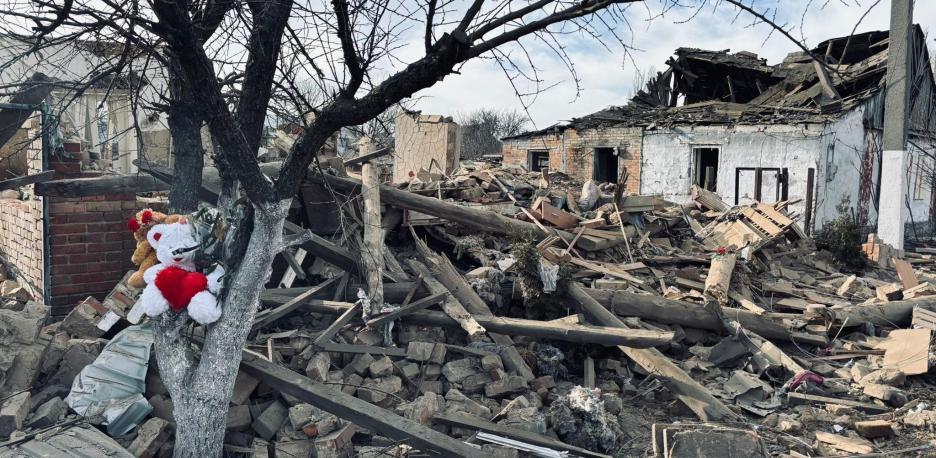
The Russian invasion is leaving a devastating toll on Ukraine: tens of thousands of dead, millions of internally displaced persons and refugees, razed cities and a deeply damaged economy. The energy infrastructure has been systematically targeted, aggravating the living conditions of the population. Despite this, the Ukrainian state has managed to sustain its functioning and society has shown remarkable resilience in the face of large-scale aggression.
Russia has failed to defeat Ukraine
The Kremlin’s initial goal of a quick victory failed. Vladimir Putin’s forces failed to break Ukrainian resistance or take full control of the country. However, the conflict has devolved into a war of attrition, with a relatively stabilized front. Russia, the aggressor country, is a military power that maintains superiority in military resources, industrial capacity and troop volume. Its control over territories in the east and south of Ukraine gives it a relevant strategic position. However, it faces logistical problems, economic sanctions and troop attrition. On the other hand, Ukraine, the attacked country, is poor, dependent, and is in inferior conditions in all the fields that define a war. Military and economic aid from the United States, the European Union and other countries are as key as they are limited: they allow Ukraine not to surrender, but are insufficient to defeat Russia.
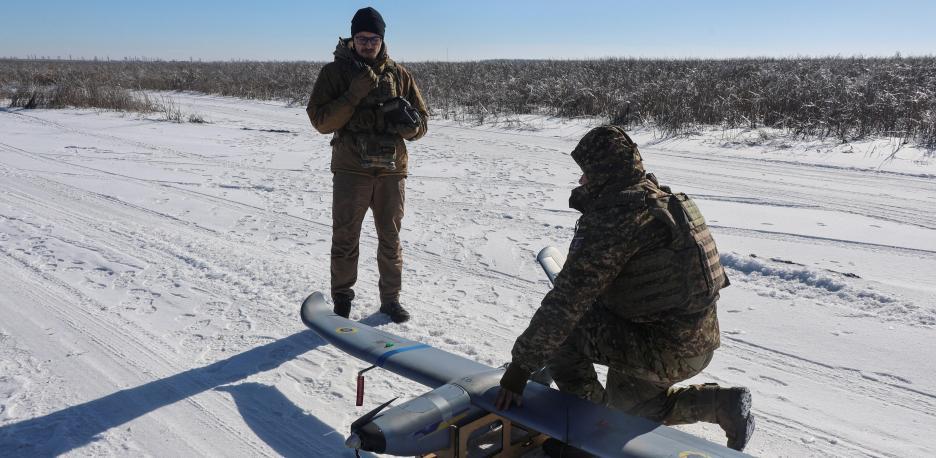
The determining factor for Ukraine to continue fighting in clearly inferior conditions is the resistance of the working people, since its own sovereign existence and territorial sovereignty is severely questioned. The resistance is articulated with a great dose of heroism and solidarity, but it has the great weakness of not having a revolutionary leadership, nor democratic and independent organizations of decisive existence neither in the front nor in the rear. The just Ukrainian cause is led by Zelenski with a corrupt regime and a pro-Western imperialist and neo-liberal government, which assaults the working class with reactionary measures in the midst of war. Even in these conditions, the Ukrainian people are the bulwark of territorial defense and social mobilization.
Europe: militarization and crisis
The conflict has transformed Europe in multiple dimensions. With the excuse of war and an eventual “Russian invasion”, the European imperialisms are promoting a generalized rearmament, an increase in military spending to the detriment of social items and the salvage of the battered and criminal NATO as a political-military axis. Historically neutral countries modified their positions, while the European Union, in crisis of existence, project and stumbling, tries to redefine its relationship with the US and other powers in the best possible conditions in the face of Trump’s onslaughts and pressures.
On the economic front, the energy rupture with Russia led to inflation, higher gas prices and social tensions. The war also accelerated industrial crisis trends in some countries and deepened internal inequalities. Europe thus appears more militarized, more strategically dependent and with greater social tensions, manifested in struggles for housing, labor rights and against the advance of the ultra-right.
Trump’s politics: pressure and negotiation
In his attempt to change the order established after World War II and regain US hegemony, Trump has introduced a factor of uncertainty and global disorder, also present in Eastern Europe. His posture combines pressure on Ukraine to negotiate and an ambiguous attitude towards Russia, including signs of rapprochement with Putin. Trump has questioned the level of military aid to Kiev and has raised the need to reach a quick agreement, even at the cost of territorial concessions.
Negotiations are still going on without definitive results. Among the points under discussion are: an eventual cease-fire freezing the current front lines, the status of the territories occupied by Russia, security guarantees for Ukraine and the partial or total lifting of sanctions against Russia, among others.
Differences remain important. Ukraine insists on the recovery of its territorial integrity, while Russia seeks to consolidate its gains. Western powers push for a negotiated solution to stabilize the region, but without a clear solution to the structural causes of the conflict.
The politics of revolutionaries
Four years after the invasion of Russian imperialism and with no definite result, some things are clear. Those who trusted U.S. imperialism and refused to reject the policy of Trump and NATO were wrong. The leftist currents that characterized the conflict as the beginning of the Third World War between imperialists and defined revolutionary defeatism as their orientation, without differentiating the aggressors from the attacked, were mistaken. And also the campists who, starting from a just and shared hatred of the murderers of Western imperialism and NATO, placed themselves on the side of Putin’s false justifications of an “anti-Nazi” and “anti-imperialist” crusade, when Russia represents imperialist interests and the Trump-Putin duo is lavishing itself with winks of rapprochement.
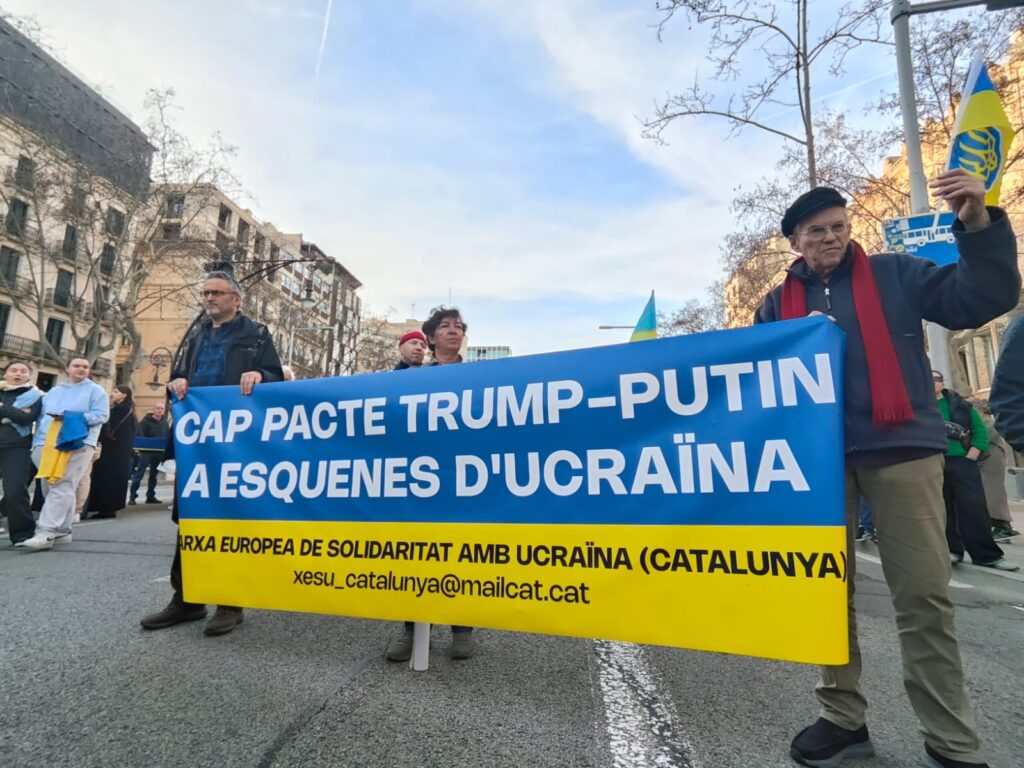
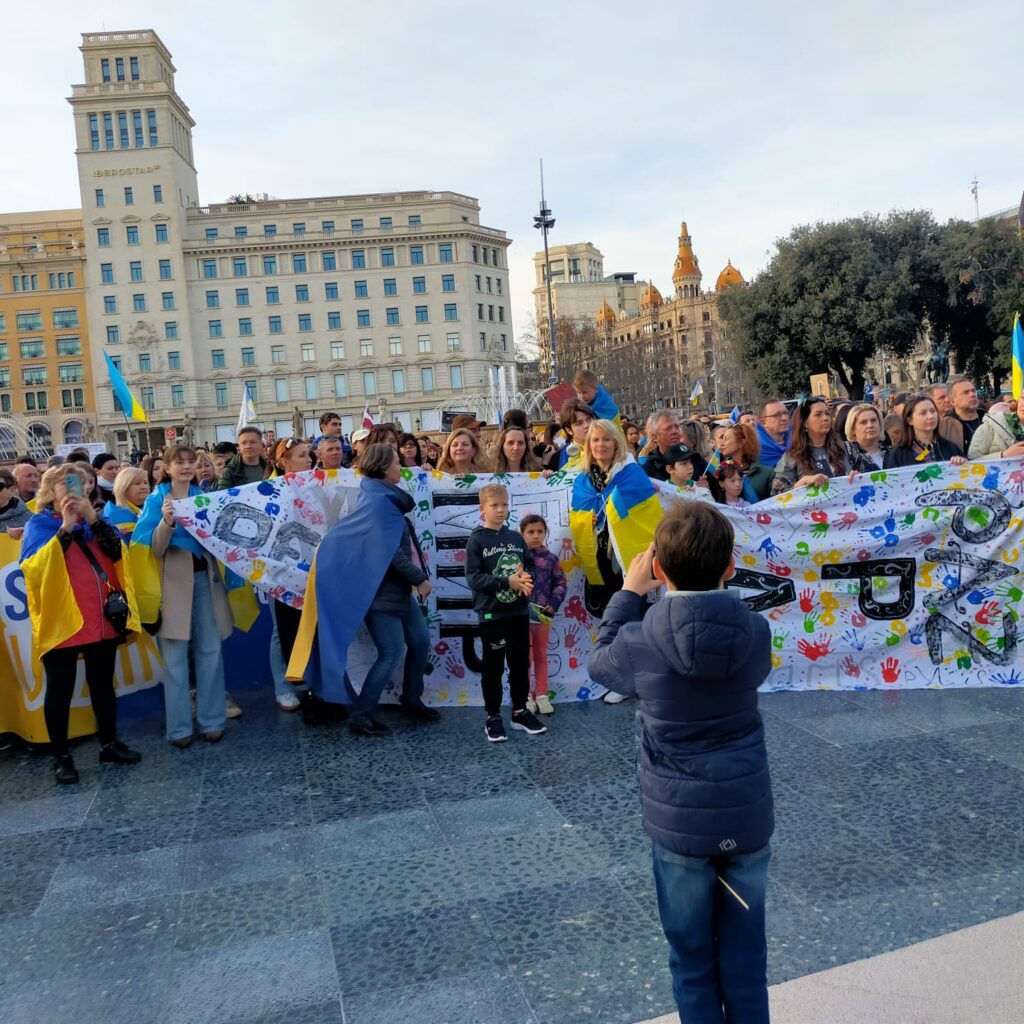
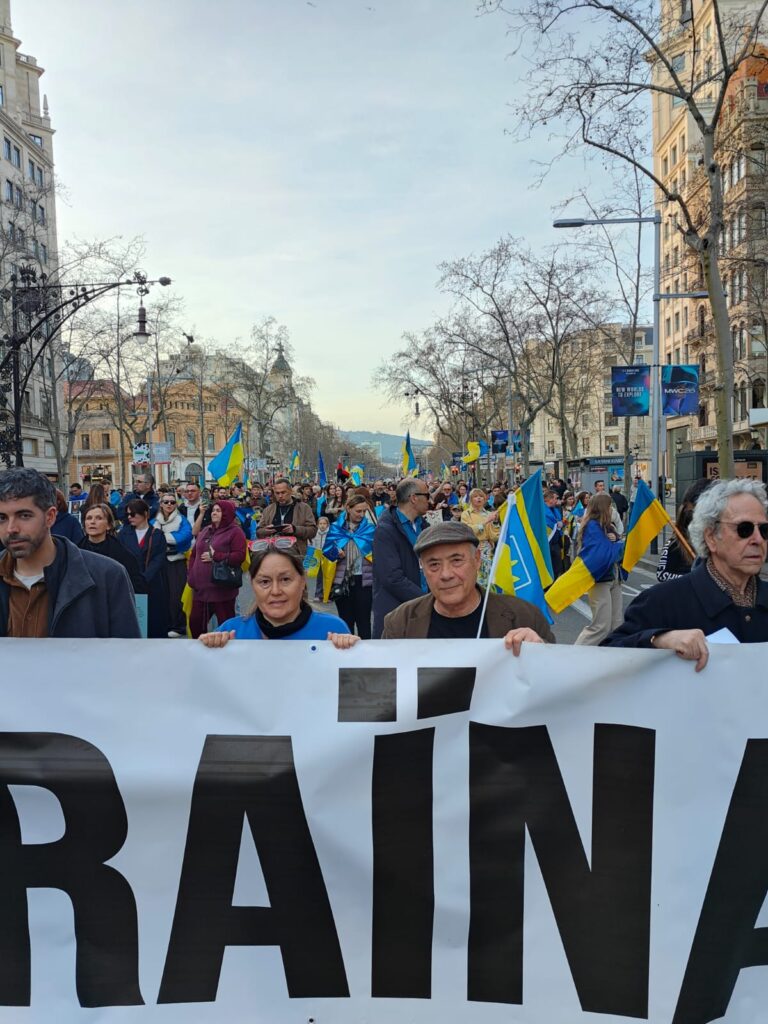
From the International Socialist League (ISL) we reaffirm that the war in Ukraine has a dual character, since both the just cause for self-determination and the inter-imperialist dispute for hegemony are involved. This implies a double task: to reject the Russian invasion and to defend the right of the Ukrainian people to resist, to defend themselves with all the means at their disposal, at the same time denouncing the role of NATO and the Western powers, which instrumentalize the conflict for their own interests in Eastern Europe. All with a policy independent of the Zelensky government and from a socialist and revolutionary perspective.
You may also be interested in: “A contribution on the war and the debates on the left”.
Of course, the right to self-determination that must be applied to the Ukrainian nation must also be applied in the regions with a strong presence of Russian nationality. It cannot be realized under the impositions of invading troops that must withdraw, nor under the pressure of Ukrainian forces, but with truly democratic mechanisms.
The solution will not come from negotiations behind the backs of the workers and the people, between governments that respond to ruling class interests, but from the independent action of the working class and the people, both in Ukraine and in Russia and Europe. Only an internationalist and socialist perspective can put forward an in-depth socialist solution that overcomes the logic of war, occupation and exploitation that today dominates the scenario. In this sense, the LIS will continue to promote the international regroupment of revolutionaries as an urgent and indispensable task.
You may also be interested in: III LIS Congress: Document on Ukraine