Veronica O’Kelly and Douglas Diniz Fernandes – from the National Directorate of Socialist Revolution, Brazilian section of the ISL.
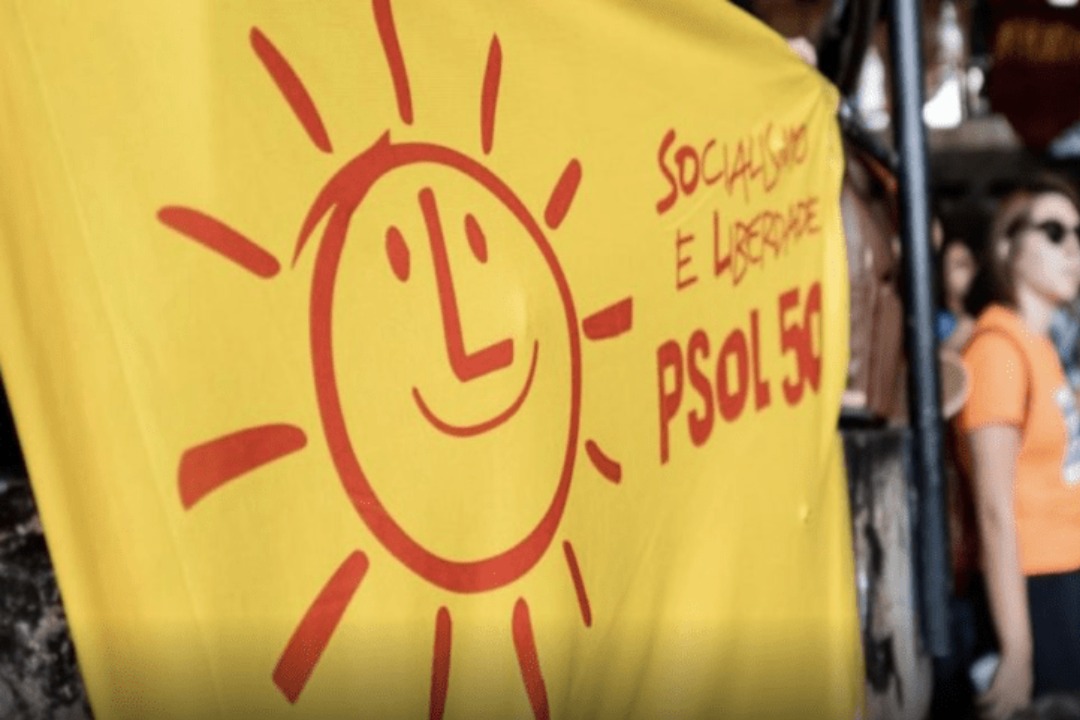
The recent evolution of the PSOL puts a strategic debate back on the table for the Brazilian left, which, as in other parts of the world, faces the challenge of combating and defeating the far right. Two decades after its foundation, the party is going through an advanced process of adaptation to the regime and integration into the Lula administration. This forces us to make a serious assessment of this experience and, at the same time, to discuss what perspectives exist today to reorganize an anti-capitalist and revolutionary left in Brazil.
1. On what policy to have in the face of the growth of the alt-right
The growth of the far right in Brazil, with Bolsonaro as the main political reference, poses a strategic challenge for the entire left. The forces of the so-called “progressivism” maintain that, in order to defeat Bolsonarissm, it is necessary to uncritically support the Lula-Alckmin administration and even integrate it. This is the thesis that led PSOL leaders, such as Guilherme Boulos and Sônia Guajajara, to form part of a government that includes among its ministers officials from the traditional right and even Bolsonarists. In other words, the aim is to defeat the far right through alliances with sectors of the same right.
Entrusting in a government class conciliation is already a wrong and dangerous political orientation. But placing expectations in a government that also incorporates sectors of the reactionary right is even more unjustifiable.
This political orientation has also had consequences within the PSOL. Instead of asserting an independent alternative, majority sectors of the party chose to subordinate their strategy to Lulism in the name of ”unity against fascism”. This was expressed in the decision not to present a candidate of their own in the 2022 presidential elections and to support Lula in the first round. This was ratified by the National Directory held on March 7, which reaffirmed that perspective for 2026. In that vote, our organization, Socialist Revolution, was the only one to vote against.
The reformist sectors defend the “broad fronts” as a response to the authoritarian threat, but far from defeating the far right, this policy has helped to preserve and even strengthen it.
2. A break that opened a new political experience
In retrospect, we can affirm that the founding of the PSOL in 2004 was a progressive response to the adaptation of the PT, when that party was completing its integration to the bourgeois democratic regime when it came into government. For broad sectors of the left and activism, it represented the possibility of reorganizing forces around a common project, with an anti-capitalist program and a democratic functioning of tendencies.
The revolutionary left was a central protagonist in the founding of the PSOL, along with centrist organizations and a small reformist sector with few public figures and a small organized base. They were correct in the decision of building a broad party, with a socialist program, capable of bringing together thousands of activists and militants frustrated with the betrayal of the PT and Lula. For years the PSOL was a space where currents of different traditions converged, articulating electoral intervention, social struggle and programmatic debate.
With its advancing adaptation to the regime, already visible within it’s first years with the entry of new reformist sectors coming from later ruptures within the PT, this configuration changed and the revolutionary left became a minority. We then began to apply the tactic of entryism, maintaining political independence with the aim of building the revolutionary party, making our differences public and, more recently, acting as a public faction in the face of decisions made by the majority leadership.
3. A dizzying process of adaptation to the regime
Over time the party consolidated a dynamic increasingly marked by electoral and institutional logic. The strengthening of parliamentary apparatuses, the increasing weight of mandates and the permanent search for electoral expansion gradually displaced the original political project. Added to this was a characteristic never surpassed: the absence of the party in the dispute about the leadership of the processes of class struggle. Although there have always been sectors, like us, that have tried to reverse it, the centrality of the electoral dispute and parliamentary action prevailed, a material condition that delimited the strategic horizon of the party.
Today this process reaches a new level with the integration of central figures of the PSOL, such as Guilherme Boulos, into the Lula-Alckmin administration and with the abandonment of the anti-capitalist program approved upon its foundation. What began as a break from the Petist class conciliation was transformed into a new variant adapted to the same regime, today controlled by reformist currents and without real possibilities of being disputed.
4. Mistakes made by the currents that built the party
This result cannot be explained by external pressures alone. It also expresses key errors of the very currents that drove the PSOL. In the first few years, sectors of the left with leadership weight promoted a very broad opening towards reformist currents, with the aim of building a larger party with greater electoral weight. This orientation was based on a legitimate concern, but it was carried out without establishing firm political limits in the face of pressures to adapt to the regime.
Currents that have always defended the anti-capitalist character of the party — such as the MES and other leftist sectors of the PSOL — are now facing the consequences of these politics. The question now is whether they are willing to draw strategic conclusions and promote common initiatives to confront the current orientation of the party and the dispersion of the classist left.
5. Sectarianism also weakened the revolutionary left
At the same time, it would be wrong to ignore the responsibility of the PSTU-LIT that, sectarily, chose remain in the sidelines of this experience and not participate in the founding of the PSOL. That decision meant giving up intervening in the main reorganization process of the Brazilian left at that time. The presence of the PSTU would have meant a different correlation of forces, in favor of the classist left. His refusal weakened the possibility of disputing his political orientation from the very beginning.
Throughout these years, in addition, the PSTU maintained a policy of isolation from the broad political vanguard that the PSOL managed to gather, which contributed to deepening the fragmentation of the revolutionary left. This has meant many ruptures for them, including a very important one that joined the PSOL and unfortunately made a complete pivot, moving from sectarianism to assimilation to the reformist project of the majority leadership, even strengthening it. Recently, at the international level, the LIT has had a new large rupture, fragmenting more and more. All this only confirms that sectarianism is a path to the failure for any attempt to solve the revolutionary leadership crisis that we are experiencing.
6. A necessary debate on revolutionary regroupment
Faced with the advancement of the far right and the limits of the so-called progressive governments, the need to build a political alternative with class independence is still fully valid in Brazil. Therefore, the assessment of the PSOL’s experience should serve to open a new debate between currents and militants who maintain that perspective. Is it possible to promote common initiatives, spaces for dialogue and coordination processes that allow progress towards a reorganization of the classist left in the country?
The adaptation of the PSOL to the regime is bad news for the entire anti-capitalist left. But the absence of revolutionary reorganization processes outside the party also represents a strategic problem. Overcoming this situation requires drawing conclusions from the experiences of recent decades and, above all, a real willingness to break with both opportunist adaptations and sectarianism that have historically weakened the revolutionary left.
This would imply, for example, that the PSTU breaks from its politics of self-proclamation and isolation, as well as that internal currents of the PSOL, such as the MES, draw conclusions about the strategic limits of the party and prepare to seriously discuss the construction of an alternative outside of it.
From the International Socialist League (ISL) we have been building this regroupment, merging different experiences and traditions of the revolutionary field into an international organization. We stated this in a resolution of our 3rd Congress: ”We propose to move forward with all those who are willing to come together on the basis of agreement on the main processes of the class struggle, a program for revolutionary action and the transition to socialism.”
For our part, we will continue to fight, inside and outside the PSOL, for this perspective. It is not just a question of “reorganizing the left”, but of advancing in the regroupment of the revolutionary left on firm programmatic bases, class independence and a strategy to dispute the political leadership of the working class.