By: Communist Workers Party – Italy
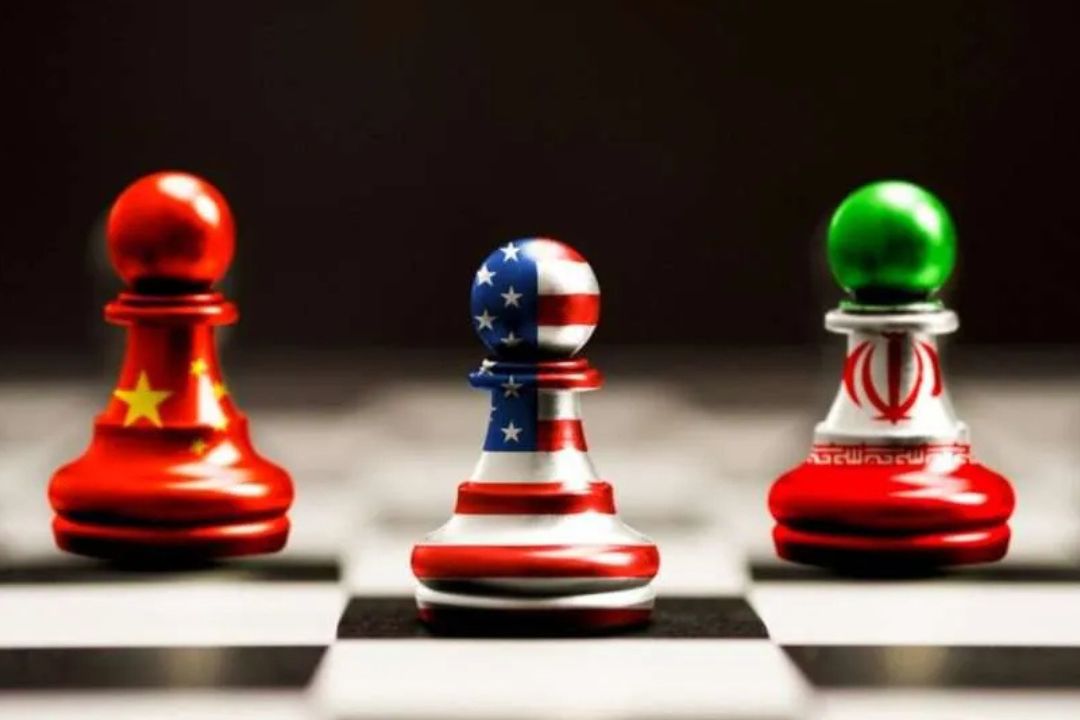
Russia and China are indisputably great powers, “allies” of Iran in the BRICS alliance. As is well known, the “campist” left not only denies the imperialist nature of these powers, but presents them as the progressive pole on the world scene, a sort of protective shield for dependent countries against US and NATO imperialism. In our pages, we have repeatedly and extensively demonstrated the total fallacy of this representation, which replaces class criteria with geopolitics, especially in support of reactionary regimes particularly oppressive towards their own workers and other peoples. But the American Zionist war on Iran offers a new perspective on this issue.
In 2025, Putin signed a strategic partnership with Tehran, which was supposed to last twenty years. China is the main importer of Iranian oil. Yet neither Russia nor China has lifted a finger in the face of American Zionist aggression against their Iranian ally. That is a fact. It already happened during the ‘twelve days war’, last June, and it is happening again now, even though this military operation is much more disruptive.
Neither Russia nor China has lifted a finger in material terms for its Iranian ally. This is no coincidence.
Putin has offered Iran nothing more than ‘heartfelt condolences’ for the assassination of Khamenei. China has criticised the American choice in the name of multipolar dialogue. Both have expressed verbal condemnation at the UN, but in material terms they did nothing. Not even the assistance of anti-aircraft systems, such as those provided to Ukraine by NATO imperialist powers (and which Ukraine has every right to use, as Iran would have with any Russian or Chinese aid).
This path has its reasons and its consequences.
The reasons are obvious, albeit different.
Russian imperialism is concentrating its forces with great difficulty on the invasion of Ukraine. It does not have the military and material resources to invest on other fronts. Furthermore, it does not want to waste Donald Trump’s negotiations offer for the partition of the invaded country. The repeated American abstention at the UN on condemning the invasion of Ukraine on the fourth anniversary of the war (as on the third anniversary) is a recognition that is worth much more than Iran’s rights and sovereignty.
The paradox is that the Iranian regime’s military assistance to Russia throughout the war in Ukraine – in terms of drones and missiles – has been far greater than that of Russia to Iran. Meanwhile, the rise in oil prices, a side effect of the new Middle East war, objectively benefits Russia’s pockets and the financing of the war in Ukraine, which is already facilitated by the West’s ‘distraction’ on the new front. Not all evil comes to harm, in Moscow’s eyes.
Chinese imperialism is focused on its own economic expansion, i.e. on expanding its penetration in Africa, Asia and Latin America in search of land, raw materials and outlets for its marine and air forces. China is working to capitalise on the deep crisis of Western imperialism and to widen its relations network and diplomatic channels (BRICS). It aims to expand the reach of its currency on the world market. It offers valuable technological and logistical support to its Russian ally’s war in Ukraine. But it does not want direct military involvement that could jeopardise its growing spoils. Its military strength is growing massively, both in nuclear and conventional (naval) terms, and it is no coincidence that it is planning a 7.5% increase in spending by 2026. However, it is essentially focused on Asia, with a view to Taiwan, and with no global military presence, unlike US imperialism. Moreover, the Xi regime’s incessant purges of the military high command reveal unresolved tensions and contradictions that it would be best not to expose to risks and uncertainties.
The only certain thing is that neither Russian imperialism nor Chinese imperialism has any interest in the rights of peoples and the national sovereignty of others. This is demonstrated by their position on the Palestine on several occasions. Russian is complicit with the Zionist state (the latter, not surprisingly, abstained at the UN on the Russian invasion of Ukraine). Chinese companies take part in the Zionist exploitation of the occupied and colonised West Bank. Both Russia and China gave green light at the UN Security Council to the Trump-Blair-Netanyahu colonial plan for Palestine (via abstention vote). Putin made overtoures to the so-called Board of Peace, endorsed by the UN.
Russia and China, imperialist countries, have no interest in the rights of peoples and national sovereignty. Their position on Palestine, before and after the genocide in Gaza, clearly demonstrates this.
On every issue, as is natural, all imperialist powers, old and new, have no other compass than their own interests. Including the interest in making trades on different theatres – ‘I’ll give you green light for Ukraine, you don’t be annoying in the Middle East’. Normal trades between bandits.
However, Trump’s imperialist line, beyond a certain threshold, complicates the situation for Russia and China. The “America First” policy indeed aims at a division of the world between great powers, breaking the transatlantic axis with European imperialist powers and recognising Russia and China as possible negotiating partners. But this approach is by no means friendly and conciliatory in itself. Neither are any negotiations between bandits. Those who have confused Trumpism with isolationism, or even Trumpism with ‘pacifism’ (as initially happened in various currents of the Italian left, along with bourgeois journalist Marco Travaglio) understand nothing of the current world situation.
‘America for Americans’ means throwing out China (and Russia) from the entire continent: the defenestration of Maduro, the resumption of full control over Panama, and the ongoing strangulation of Cuba are exactly this. When possible, Trump uses military pressure as a tool of corruption and takeover. This is what happened in Venezuela, where US imperialism corrupted the Bolivarian regime led by Rodriguez in exchange for its oil and subservience. And they would like to do the same even to Cuba (which is a tougher nut to crack) along the negotiations initiated by Rubio with Raul Castro’s nephew. But in any case, the desired result is the monopoly of US imperialist control over the entire continent at the expense of rival imperialist powers and their local allies.
The US aims to reassert its global dominance by leveraging its military superiority, both in Latin America and the Middle East.
And it is not just about America. Trump aims to negotiate with rival and competing imperialist powers from stronger positions in other continents as well. Starting with the strategic crossroads of the Middle East.
Those who see the US simply as Netanyahu’s sidekick are only seeing one side of the picture. Netanyahu’s warmongering and genocidal policy certainly influences US in his own interest. But American imperialism, in turn, uses Netanyahu’s military breakthrough in the region as a tool to rebuild and relaunch its own power in the Middle East against competing imperialist powers, as proved by the war on Iran.
The whole meaning of the Board of Peace around Trump, beyond its grotesque aspects, is an attempt to draw a new Zionist-American order in the Middle East in which the US dominates the game. Russia and China may even derive some indirect advantage from this on their own theatres (Ukraine and Asia). But fundamentally, they are suffering the American game and a downsizing of their own areas of influence.
Russia is stuck in a long war in Ukraine and experiences one setback after another. The fall of Assad, the defeat of Hezbollah, and the weakening of Iran and its ‘axis’ in the region are blows to the influence of Russian imperialism. Of course, Russia has gained new positions in Africa by capitalising on the collapse of old French colonialism and positioning itself as the new protector of nationalist military regimes (in Mali, Burkina Faso, the Central African Republic and Niger). But the failure to protect its Iranian ally raises serious questions in the eyes of its new African clients: ‘Can we rely on Russia if it does not have the strength or the will to assist us in the face of new possible challenges?’. The new African military leaders in power would aspire to something more than a possible exile in Moscow.
Russia, China, and the countries linked to them are facing new difficulties. Oppressed nations and semi-colonial countries remain pawns in the clash between imperialisms.
More generally, the BRICS countries, based on the ‘protection’ of Russian and Chinese imperialism, faces new uncertainties.
In conclusion, US imperialism has chosen to leverage its overwhelming military superiority to try to halt its decline on a global scale. Russia and China, as new imperialist powers, face a new challenge. Oppressed peoples and semi-colonial countries are both victims and bargaining chips in the new great game of imperialism and its balance of power.
The international working class and the oppressed peoples of the world are the only one who can free humanity from the endless cynicism of imperialism. From its wars as well as its ‘peace deals’.