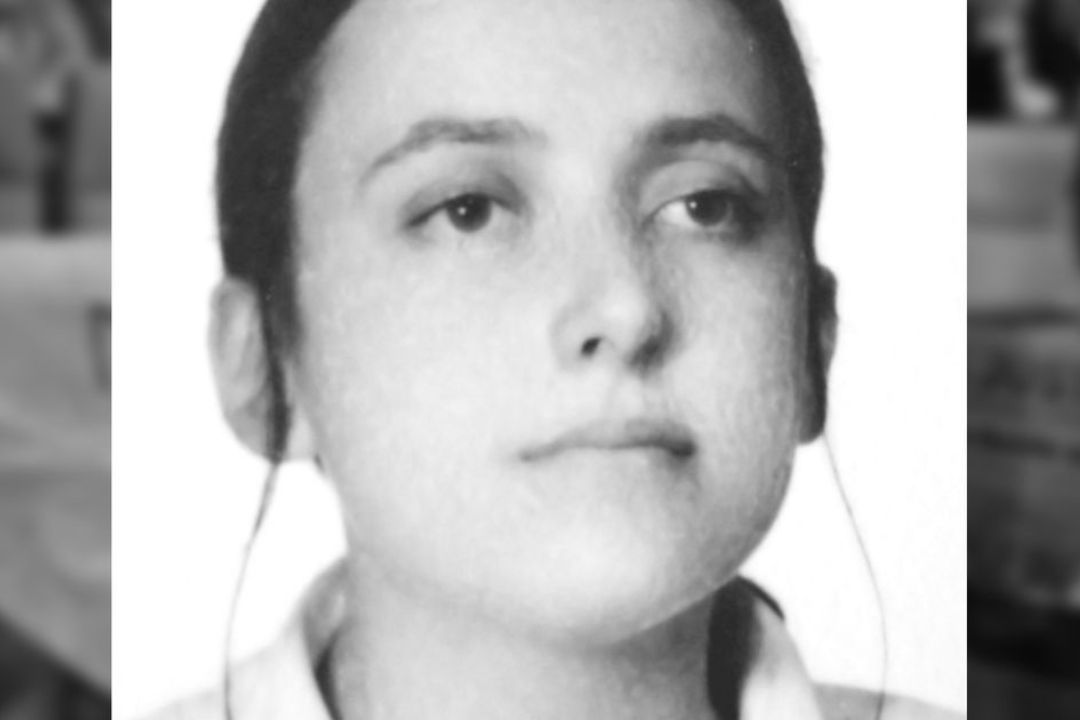
This week marks the 50th anniversary of the genocidal coup. A few days ago, the Argentine Forensic Anthropology Team together with human rights organizations announced that in the former concentration camp of La Perla, on the outskirts of the city of Córdoba, 12 bodies of detainees-disappeared killed by the genocidal dictatorship were found and recognized. The truth and horror continue to emerge. A colleague of the ISL leadership and relative of Mónica O’Kelly, one of the victims, sent us this moving account.
We recovered our identity and our memory, in order to continue to fight
Monica O’Kelly, present!
By Veronica O’Kelly
A few days ago I received a call from my father, Raul, who with a cracked voice gave me the news that a whole family has been waiting for 50 years: Monica (Moniquita, as she was called in the family intimacy) is one of the 12 people identified in the excavations of Loma del Torito, in La Calera (Cordoba, Argentina).
Thus, as in a sort of time travel, we return to that fateful April 21, 1976, when she was kidnapped from her home, when the militiamen cowardly entered her and her mother, Amalia’s, house while they were sleeping, to take her away. From then on, nothing more was known, although the search never stopped.
1976. A month after the genocidal coup of March 24, with the beginning of the dictatorship, she was taken away, “disappeared”.
1982. In the year in which the milicos were defeated and the dictatorship fell, I was born. I was never able to see or talk to Monica, but her existence is part of my identity.
She and Horacio (“Horacito”), her only brother, were cousins of my old man, Raúl, from a rather small family. Their absence was one of the first family events that impacted me in a very particular way.
“Horacito disappeared in 1975, probably at the hands of the militia, because he was a member of the armed wing of the ERP. He had already gone underground,” the family said. “It was different with Moniquita. They took her out in the middle of the night, while she was sleeping in her house on San Alberto Street, in the San Vicente neighborhood. From that day on we never heard anything more. Amalia never stops looking for them.“
I was 12 years old when, during a medical consultation, the professional who attended me, upon seeing my last name, asked me: “Do you have anything to do with Monica? To which I answered, with great pride: “Of course! She is my aunt”. Then she told me that she always remembered Monica with great affection because she had been her partner in a volunteer work they did at the Casa Cuna (a public pediatric hospital in Cordoba). Monica, at that time, was 15 years old.
I left there and asked my mom to take me to the Casa Cuna because I wanted to volunteer. Unfortunately, my young age was an impediment and I was not allowed to do it at that time. A few years later I joined the MST (Movimiento Socialista de los Trabajadores). Today I continue to militate, in another country, but with the same convictions and objectives.
In these days of emotion and happiness (a sad happiness), many stories came to me, many stories of my aunt. In 2019, when we got Horacio back, the same thing happened, it’s so beautiful!
A friend tells me that she hated her first name, Elsa. She also said that there was no way she wanted to use both last names, O’Kelly Pardo, because that was a “bourgeois” thing to do. No brand name clothes or anything like that: simple, plain clothes, but colorful and, if possible, flowery. She went on diets. I played carnival. I painted. She crocheted. That she was an extremely supportive and sensitive woman. That for her it was impossible to stand still in the face of inequality, poverty, the violence of this rotten system. This friend told me that I look like Monica.
My father always said that “Moniquita” was reckless and courageous. That she was not afraid of the milicos and that she went around shouting to the four winds that they had disappeared her brother, Horacio. Few things fill me with more pride than knowing this.
He was about to start the Faculty of Architecture at the National University. I was told that he was thinking of going underground. The genocidal militias cut his plans short.
50 years of impunity are now coming to an end. We recovered the story of Monica’s last days, we know where she was killed and who did it. It is material, so real and concrete, that it hurts.
Denialists like Milei can keep their hate speeches: those of us who fight for the truth and against impunity have just won a battle. We continue to fight for those who are missing and to make those who tried to “disappear” “appear”. This 24th, let our cry be heard louder than ever in the streets: Never again!