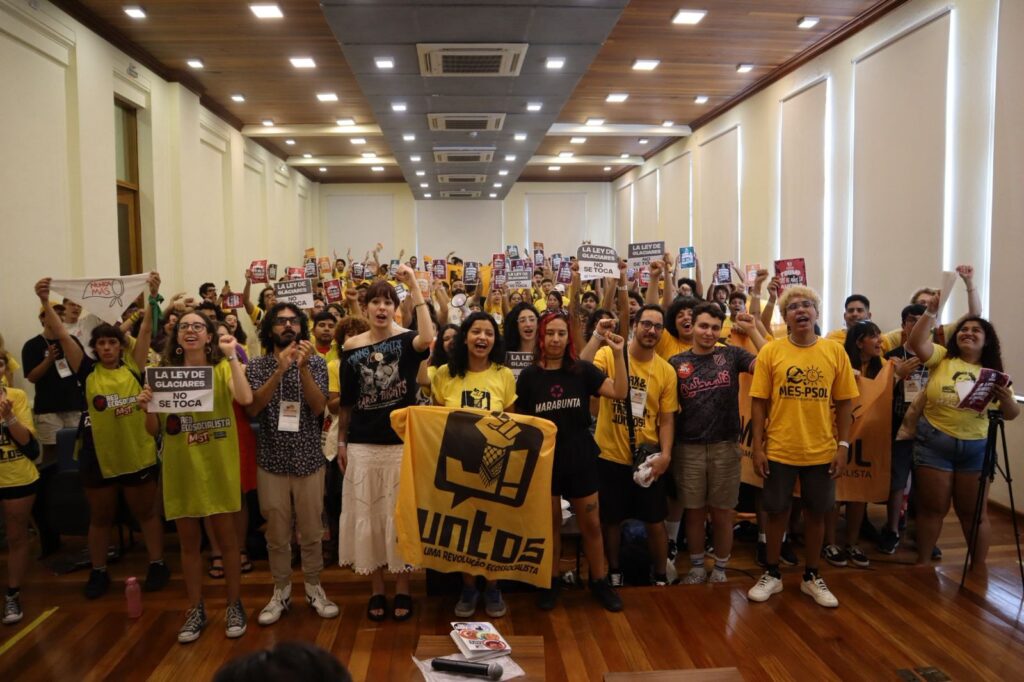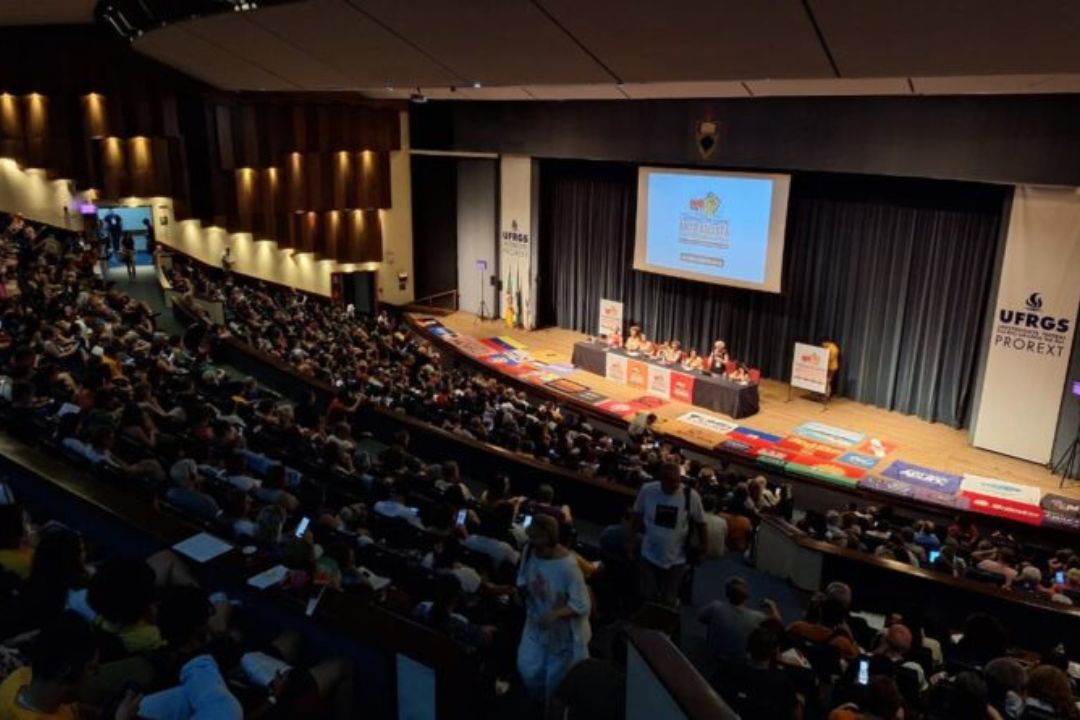
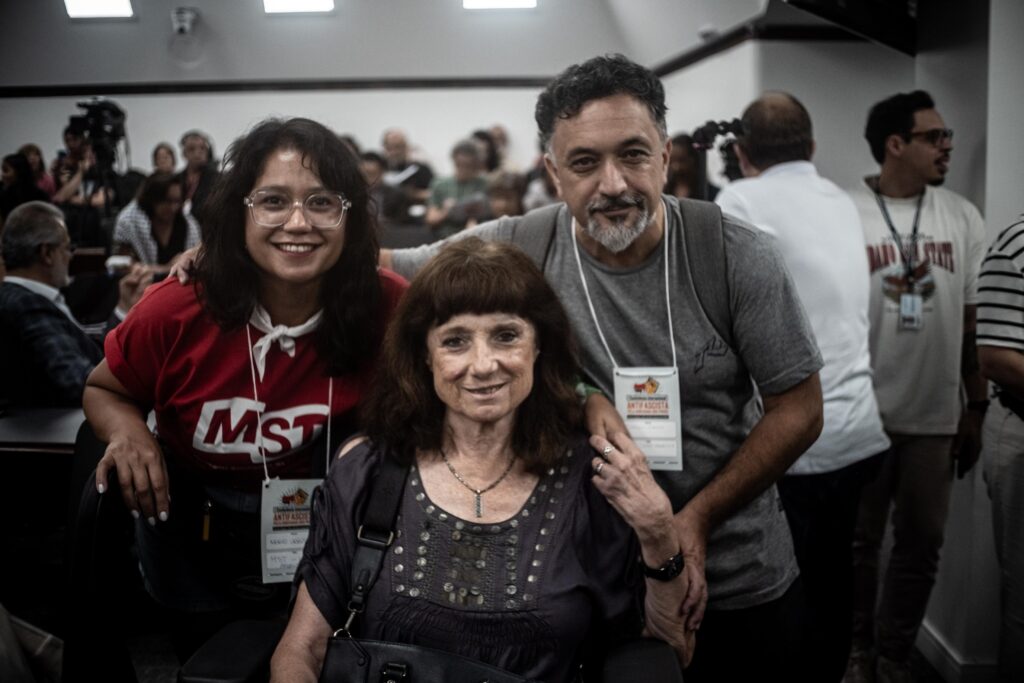
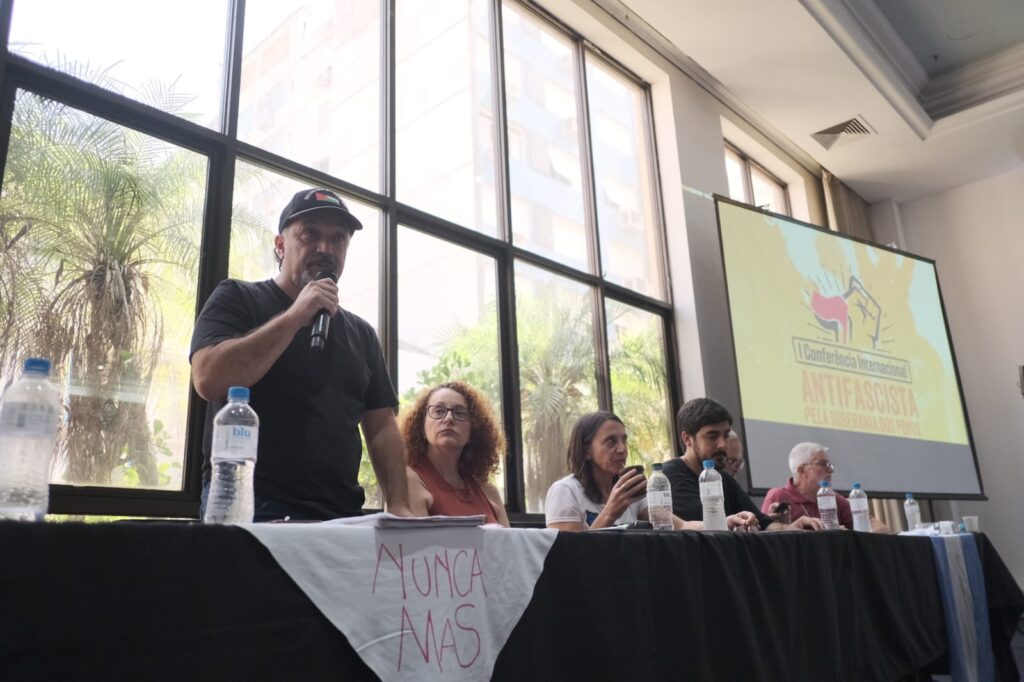
The 1st Anti-Fascist Conference was held in Porto Alegre, Brazil, between March 26 and 29. The conference was a joint call by the MES-PSOL from Brazil, other USFI forces, the PT of Porto Alegre, the PCdoB, the Landless Workers Movement and other organizations. The conference had considerable attendance, a combination of forces of different political and social extractions. And therefore debates, agreements, disagreements and issues that remain to be further thought for future events. The MST in the Left Front, was invited to participate as a member of the ISL. Together with a Brazilian delegation of Socialist Revolution of the PSOL, we took our opinions and proposals to the event. Now that the conference has ended, here are some opinions on the political balance of the Conference and its perspectives.
Sergio Garcia and Veronica O’kelly
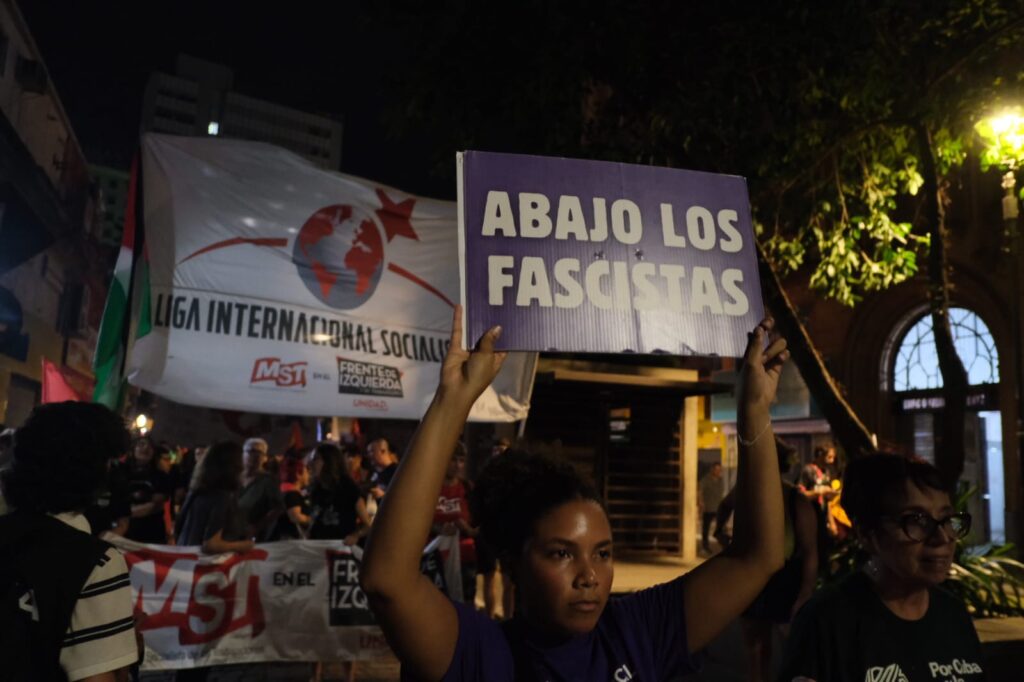
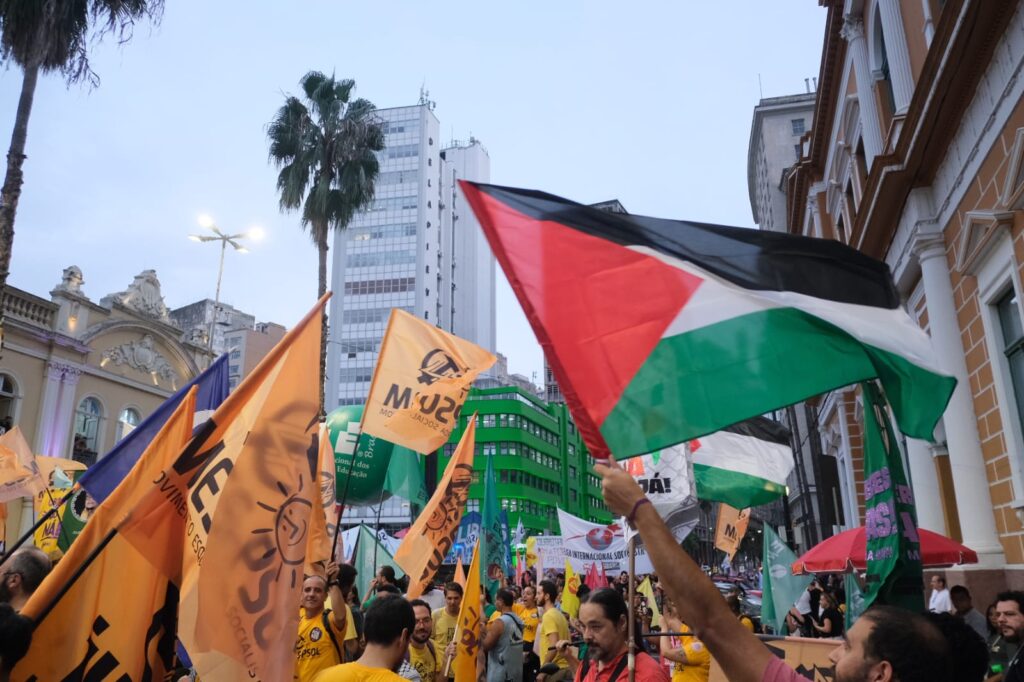
First of all, it is necessary to state an obvious fact: the Porto Alegre Anti-Fascist Conference became an event of political importance. This was evident from the very initial mobilization on March 26, where several thousand demonstrators walked the streets of Porto Alegre amidst chants and posters against Trump, Bolsonaro, Netanyahu, Milei and other far-right and neo-fascists of the world, provinding the beginning of the event with a positive imprint of anti-imperialist and anti-fascist struggle and mobilization.
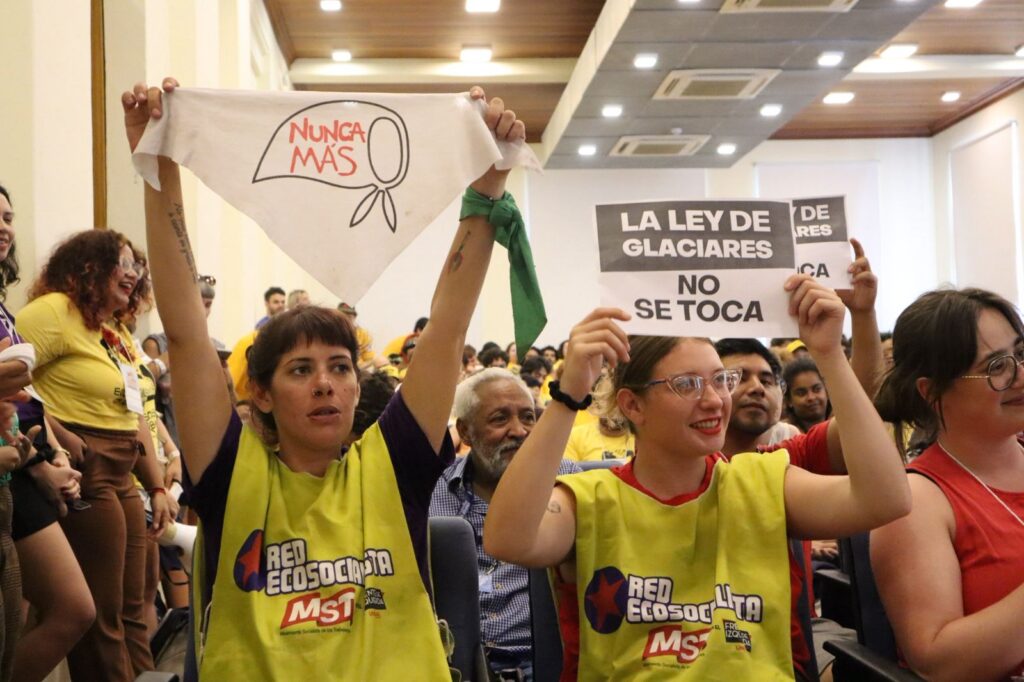
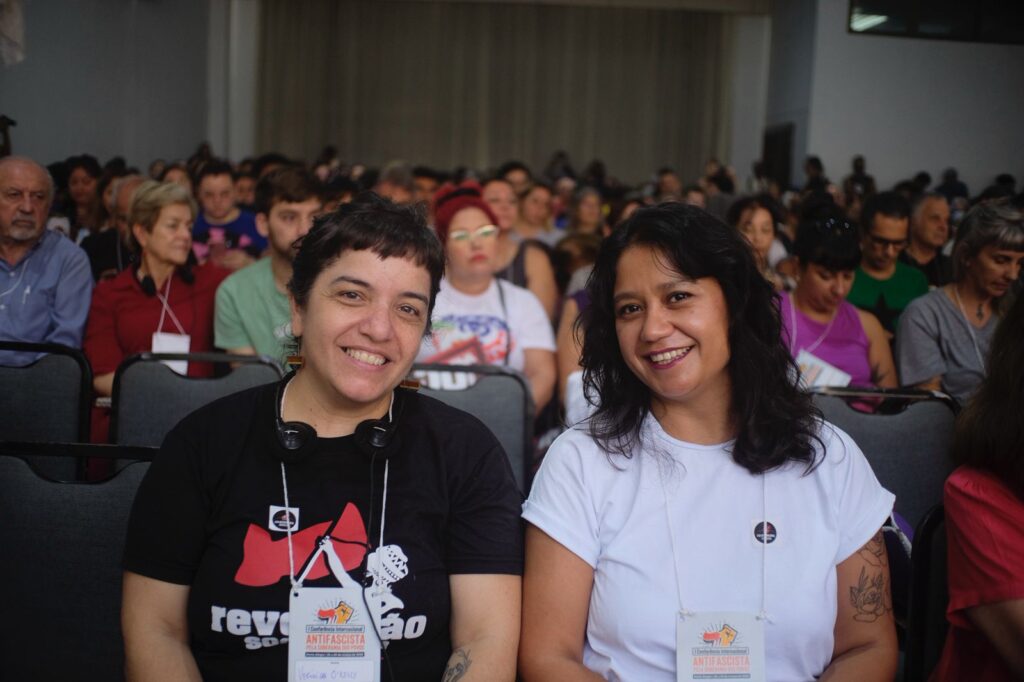
For the same reason, a considerable number of activists, workers and young people attended the Conference. They participated in its different central panels with hundreds of people in each one of them. There were members of DSA, La France Insoumise, delegations of ATTAC, the CADTM, the Rosa Luxemburg Foundation and different political and trade union organizations. There was also lots of participation in about one hundred and fifty panels self-managed and registered by different organizations. In these workshops there were social, cultural, trade union movements and political sectors such as the PSOL Alicerce and Ecosocialist currents, as well as the MRT (Brazilian section of the FT), the PSTU (LIT-CI), the CST (UIT-CI), among others.
The Conference, which brought together representatives from different countries and continents, thus evidenced the political urgency of debating and exchanging political and struggle proposals in the face of the rise of these extreme right-wingers, which are a phenomenon that is part of a central feature of the current world situation. These neo-fascist political sectors represent an enormous danger for the working class and humanity, even more so if they were to consolidate as fascist regimes, something that has not yet happened.
In this way the Conference went on, which finally defined a final statement presented by the organizers, its political content features quite a few limitations, and in this framework correct issues raised, for example defining that: “In the face of barbarism, we raise the banner of international solidarity, of the struggle of the peoples and of a socialist, ecological, democratic, feminist and anti-racist future”.
It also mentions the struggle for Palestine and against Zionist genocide, the support for the Global Sumud Flotilla with the presence of Thiago Avila and the denunciation of the atrocities of the State of Israel with US support have been part of the debates and the final resolutions, when denouncing: “the perpetuation of colonial situations which, in the case of Palestine, take the form of an explicit genocide in Gaza, orchestrated by the Zionist State of Israel, unconditionally supported by the United States, with the complicity of other imperialist countries. Moreover, Israel has criminally invaded and bombed Lebanon and claims it will annex the south of the country (…). Support the Global Sumud Flotilla, which again seeks to break the blockade and denounce the genocide in Gaza. The struggle of the Palestinian people – in Gaza and in the West Bank – is the cause of humanity”.
On these points with which we have agreements and others that are also in the final statement, such as the struggle against capitalist ecocide and the denunciation that “The capitalist-imperialist system is going through a profound crisis and a marked economic, social and moral decadence”, there is much to deepen and concrete tasks to develop in each country. Because as we expressed in our interventions in the Conference, the central thing to defeat these extreme right governments is a massive and powerful struggle in the streets, with the greatest unity of action, general strikes and all the tools that the working class and the peoples have to carry forward. Without this policy of united front and total disposition to struggle, going over the heads of bureaucratic leaderships that do not fight and negotiate, it is not possible to defeat a neo-fascist rise like the present one.
This type of meeting has an undeniable value: it allows the left to meet, exchange analyses, advance in mutual knowledge among organizations and confront positions with sectors of the center-left that also participate. In an international scenario marked by instability, the crisis of regimes, the offensive of the extreme right and the response of the masses, these spaces can contribute to shorten distances and generate conditions for common actions of struggle. In that sense, the construction of unity of action to confront the extreme right is a concrete necessity that we support and promote everywhere. Faced with the danger of the rise of reactionary and fascist currents, the tactic of the united front must occupy a central place.
Debates and political contradictions
It is evident from the final statement that there is a whole series of correct questions in the general denunciation of the neo-fascist forces and U.S. imperialism, something we share and consider a priority among the tasks ahead of us. At the same time, the very origin of the convocation to this Conference marks a political limit that can be glimpsed in the final declaration itself: the absence of any critical reference to the governments of the so-called progressivism, which have been and still are in the countries where they lead the power, administrators of capitalist adjustment without bringing about any substantial change in favor of the great majorities.
We believe that it is fundamental not to confuse the just unitary orientation in the anti-fascist and anti-imperialist struggle with the defense of political unity with bourgeois sectors or with social democracy -a position which, unfortunately, was present in a significant part of the organizations that called for and participated, particularly those linked to the PT and the PCdoB-. We maintain that political unity with these sectors not only does not contribute to stop the advance of the extreme right, but, on the contrary, tends to strengthen it. It is precisely the governments that administer and manage the capitalist states, applying policies of adjustment and conciliation with the bourgeoisie, which frustrate the expectations of the masses and feed the terrain on which the extreme right grows. And representatives of those governments such as the PT of Brazil or those of Colombia and Uruguay, who promote, with their representatives in this type of conferences, the attempt to lead the anti-capitalist left organizations, to a mistaken policy of support to these governments.
In countries like Argentina that action was the reason for a massive disappointment caused by Peronism, which led to the advent of Milei, as we developed in our intervention in the panel on the situation in Argentina. Something similar had happened in Brazil prior to Bolsonaro’s triumph in 2018, after the disappointing previous PT government. Between the rise of the extreme right and the failure of progressive governments there is a dialectical relationship that cannot be ignored neither in the present, nor in the political orientations towards the future.
The fact that this Conference had the PT of Porto Alegre as one of its main organizers prevents this debate from materializing into correct practical conclusions. On the contrary, all the conveners are working together for an electoral policy of voting for Lula in the first round, something wrong in our opinion. The PSOL could have had its own presidential candidacy to deploy a whole anti-imperialist and anti-capitalist project of substance, to dispute and attract to left-wing positions an important part of the population, and to leave a possible critical vote for Lula as an option for the second round.
To build an independent political alternative for the working class and popular sectors, among other things, is achieved by being able to say that the PT government has been applying austerity policies which are expressed, for example, in the so-called Arcabouço Fiscal; maintains alliances with agribusiness; promotes projects for the privatization of natural resources; denies wage increases to the public sector; and refuses to reverse the labor and social security counter-reforms. For this reason we denounced the actions of this government in our intervention at the youth assembly of the Conference. It is, therefore, a government that, despite its social base, acts within the framework of the interests of the bourgeoisie, attacking popular rights and expectations. And all this can be said while being at the same time in the front line of the struggle in the streets against any neo-fascist-Bolsonarist who runs in Brazil.
After the elections, these and other debates will surely be present in the PSOL, which has been losing its political independence and has been moving towards positions aligned to the PT, even having ministers in the PT government. Hence, it is facing a dilemma; it maintains this course, thus ratifying that it no longer plays a positive role, opening the need to build another alternative. Or if it should happen that Boulos and his sector take the step of leaving the PT after the elections, in that case it will be an opportunity and responsibility of the comrades of the MES to promote the possibility of the PSOL to resume a path of political independence, which is necessary and urgent. Something that we will see if it is still possible or not.
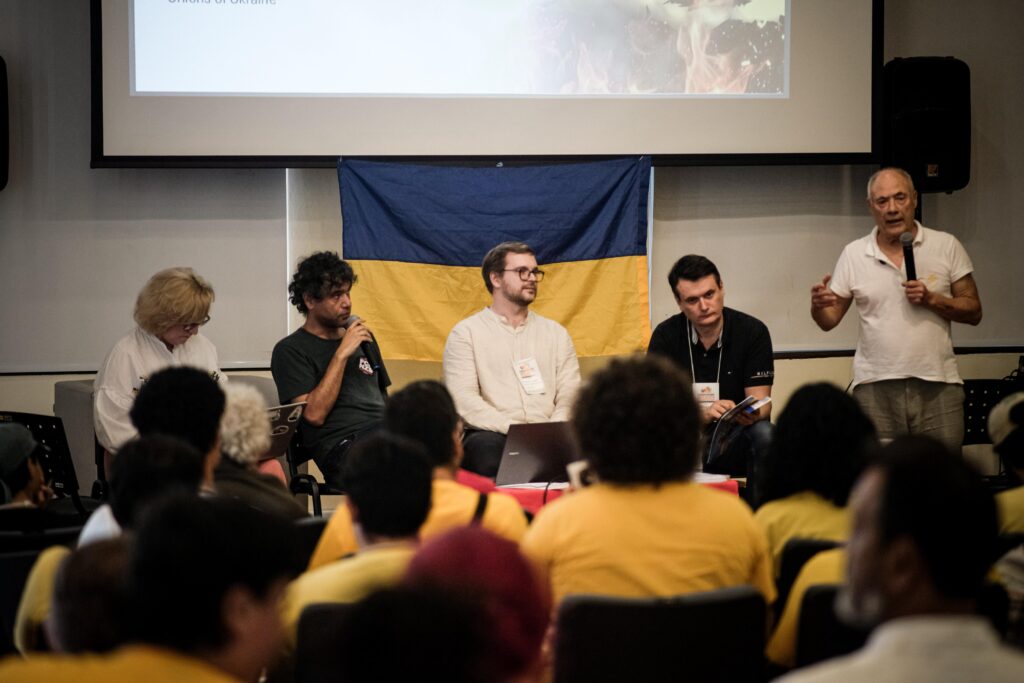
On the other hand, the diversity of conveners allows the participation of more sectors and different political and social expressions, and although we consider this amplitude essential for the struggle in the streets, in many occasions it does not contribute to positive results in terms of political definitions. In addition to what was said above regarding the absence of definitions on the role of progressivism in general terms, in reality the weight of the so-called campism among the conveners also prevented the expression of correct resolutions on current issues, such as the invasion of Russian imperialism on Ukrainian territory, which caused thousands of deaths and a war already years old in the heart of Europe. The absence of this denunciation in the initial convocation and in the final resolution was partly compensated for. First of all by the presence of the Ukrainian delegation, the Ukrainian Solidarity Network and Russian opposition activists. And by the support given to the ENSU Network in all its activities by MES-PSOL, by our delegation of the International Socialist League (ISL) and by other organizations of the SU, who pledged to continue to support the just right of the Ukrainian people to defend themselves against this aggression, while doing so independently and critically of the Zelenski government and denouncing the expansionist and militarist plans of NATO.
Incorporating in the final declaration the phrase: “We fight against all imperialisms and support the struggle of the peoples for their self-determination, by all necessary means”, is a brief advance, although at the same time it does not solve the central problem: the need to denounce the imperialist and aggressive role, in this case of Putin’s Russia. Something mistakenly absent in a text which pretends to describe the international situation and the tasks arising therefrom. Of course, political camp sectors have been bothered by the presence and activity of the Network of support to Ukraine. It is a question of further strengthening this presence in future events, for example by ensuring that the issue is part of a central panel, and not placing it in a lower dimension than other regional imperialist conflicts and wars.
These camp visions, accomplices of Putin’s massacres, were also expressed in the Conference in the sense that even when very correct things were denounced, such as the US and Israeli attacks on Iran, the Yankee incursion on Venezuela and the harassment of Cuba, it was always done orally and in the texts, without any kind of criticism or differentiation with the repressive and murderous regime of the Mullahs in Iran, nor with the highly authoritarian regimes of Venezuela and Cuba. When the need to confront the imperialist plans in those three countries is a priority, without this implying a synonym of silencing the internal responsibility of their current governments, in the face of the situation that their populations have been enduring for years.
Prospects and continuity
As we said at the beginning, the Conference was important. At the same time, the world we live in pushes towards the necessary continuity of this type of Conferences and others that may arise, under the objective of confronting and defeating these monsters of the ultra-right. Therefore we appreciate that we have been given the opportunity to participate as guests and express our positions in this event. The delegation of the LIS in the Conference, besides speaking in central and self-managed panels and being part of the youth assembly, we developed a very positive activity during the days of the Conference, in which we were able to share with comrades from different countries analysis on the international situation and the challenges faced by the revolutionary organizations.
Now, when raising in the final resolution the hypothesis of a Conference in Argentina, we will have to see with the comrades of MES-PSOL and with other forces of our country if better formats and objectives can be found towards a possible second instance. That overcomes contradictions and political problems that were raised in Porto Alegre. Without falling into a closed call that would not be useful, nor to promote a Conference that would be of a functional openness to political variants of the Argentine working class. On all this, we will have to think and exchange in the coming months.