By Douglas Diniz – Journalist, member of the leadership of Revolução Socialista (RS) and of the International Socialist League (ISL), Coordinator of the Info.Revolução website
BELÉM, PA – The Initiative for the Integration of Regional South American Infrastructure (IIRSA), a multinational program presented as the solution for the development of the continent, is actually the spearhead of a geopolitical project of capital accumulation that threatens ecosystems and communities.
Promoted by governments, led by the Lula/Broad Front government, the private sector, and multilateral banks such as BNDES and the Inter-American Development Bank (IDB), IIRSA builds its vision of “progress” on environmental devastation, the exploitation of natural resources, and the imposition of an extractivist model that destroys Indigenous peoples and traditional populations.
What is expressed as “physical integration” of South America is, in fact, the creation of logistical corridors for the export of commodities.
The program, born in 2000, does not seek development that benefits the people, but rather an “open regionalism” aimed at reducing trade barriers and guaranteeing the flow of goods to the global market, especially to Asia and Europe.
For social activists who advocate for an ecosocialist program, IIRSA is not a planning mistake, as claimed by groups that defend “sustainable development,” but a deliberate strategy to consolidate an economic model that subordinates nature and populations to the interests of capital.
The axis of exploitation: from the Amazon to the Pacific
The “Integration and Development Axes” of IIRSA reveal the logic behind the project. They are not just transport routes, but veins of exploitation that connect areas that are rich in natural resources to export ports of strategic geographic location such as the Port of Santarém-PA.
- Amazon Axis: Promising an “efficient transport network,” this axis connects the Amazon Basin to the Pacific coast, facilitating the expansion of resource exploitation and the flow of agricultural products. Highways such as the one linking Brazil to Peru open the way for land grabbing, predatory mining, and deforestation, in flagrant disregard for biodiversity and the rights of Indigenous peoples. The same occurs with the Cuiabá-Santarém highway (BR-163), which has a total extension of approximately 4,476 km, beginning in Tenente Portela (RS) and ending in Santarém (PA), spanning six Brazilian states.
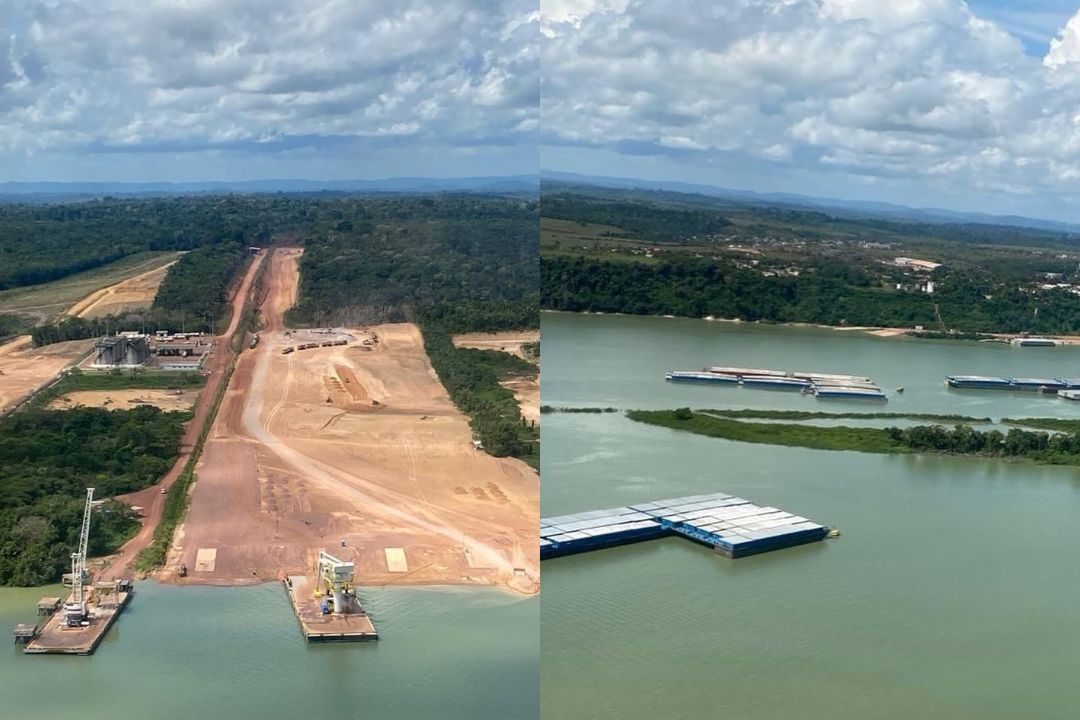
For the sake of transporting production, the Ferrogrão project is a planned railway of 933 km, running from Sinop, in Mato Grosso, to Miritituba, in Pará. Its objective is to facilitate the transport of agricultural production from Brazil’s Midwest to the Port of Miritituba, one of the main export routes through the so-called Northern Arc.
Another strategic component is the Tapajós River Waterway, which arises from the confluence of the Teles Pires and Juruena rivers. These rivers are strategically located in the connection of Mato Grosso, the largest grain producer in Brazil, with the Northern Arc.
The Tapajós River is fundamental for the transfer of grains, mainly from Mato Grosso, which are then transshipped at port facilities in Santarém and Barcarena, in Pará, and Santana, in the state of Amapá, a region that also hosts the oil exploration project in the Equatorial Margin.
It is important to note that commercial navigation on the Tapajós River already occurs, currently, only along a stretch of approximately 250 kilometers, from Itaituba to its mouth with the Amazon River, in Santarém.
It is crucial to stress that this is a region of remarkable hydroelectric potential and that, at the same time, it is home to several Indigenous reserves, the Alter-do-Chão Aquifer, the largest in the world, and conservation units of the Amazon.
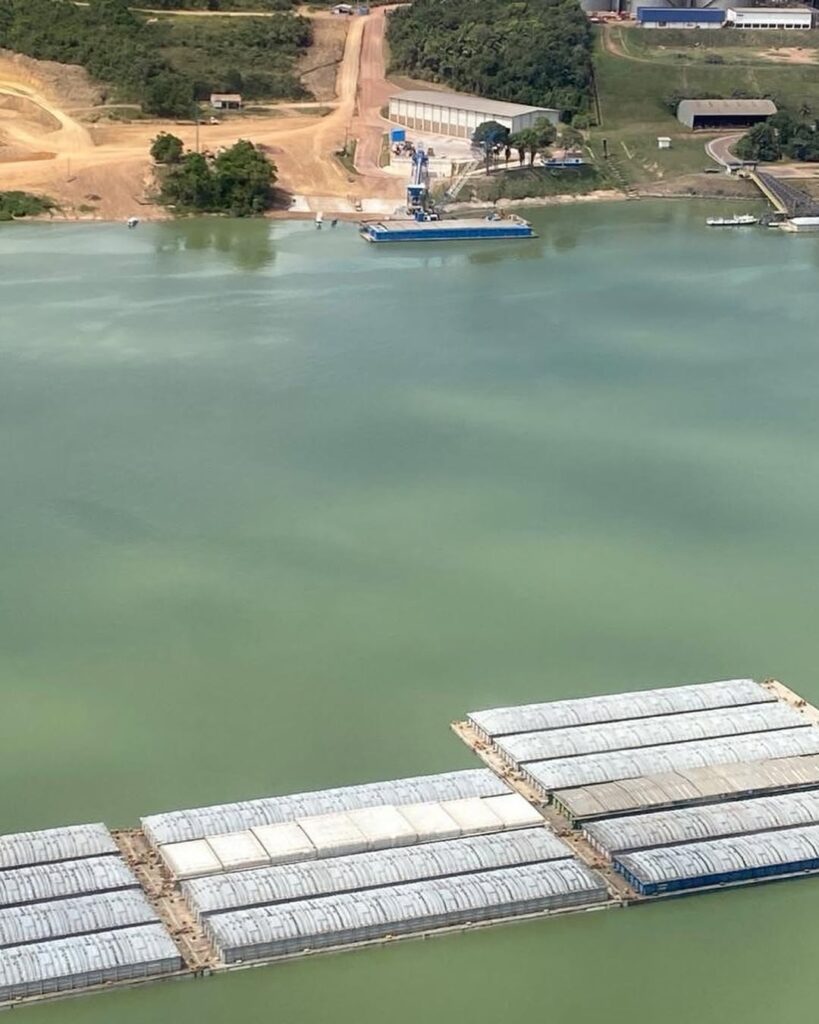
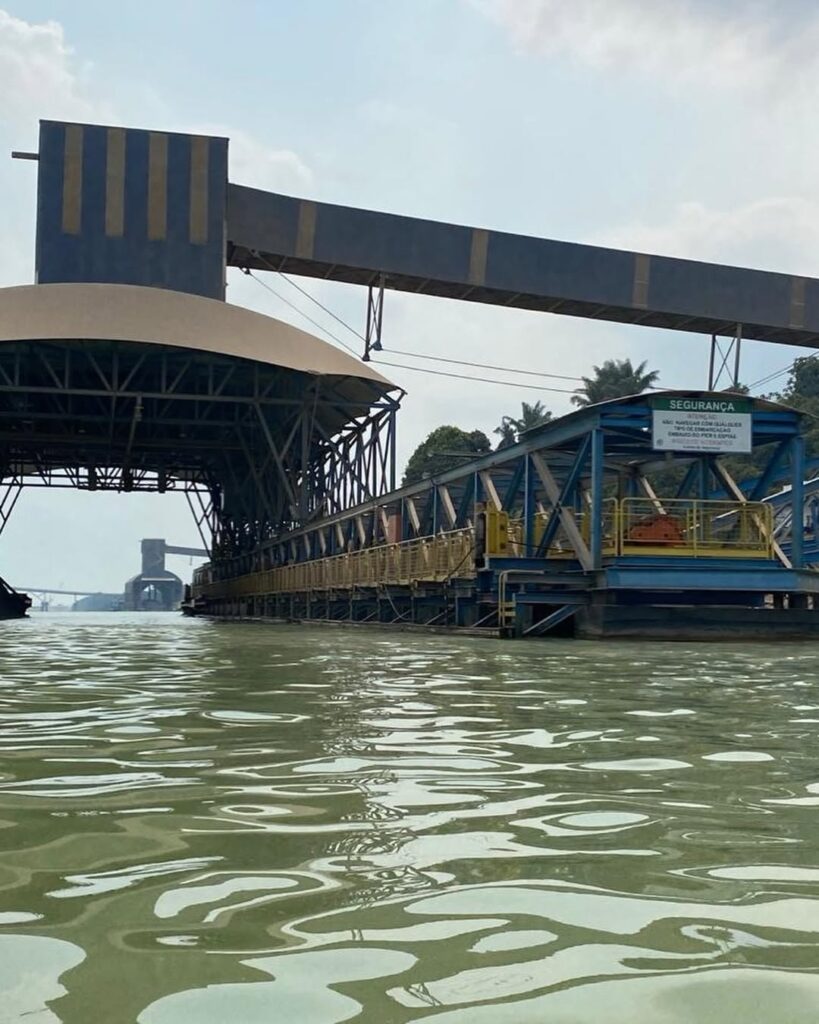
There already are hydroelectric plants in operation on the Teles Pires River, but they lack systems for transposing navigation obstacles. Moreover, other energy projects are planned for the Juruena and Tapajós rivers.
- Interoceanic Axis: This axis, which covers Brazil, Paraguay, Argentina, and Chile, is an example of the capitalist logic of IIRSA. Its main function is not the integration of peoples, but the incorporation of new lands into export-oriented agriculture and the production of biofuels, reinforcing the continent’s dependence on monoculture and external markets.
The financing of projects such as the construction of hydroelectric plants in Ecuador and Venezuela and gas pipelines in Argentina by BNDES and other multilateral banks shows that their priority is the viability of projects that, historically, cause irreversible social and environmental impacts.
The narrative of “development with environmental quality” is a veneer to hide the real cost of the initiative: the destruction of vital ecosystems.
False sustainability
IIRSA claims to be based on principles of “economic, social, environmental, and political-institutional sustainability.” However, a critical analysis of the project points to contradictions:
- “Social sustainability” is seen as a consequence of economic growth, ignoring that such growth comes at the cost of exploitation and the precarization of communities.
- “Environmental sustainability” is an empty concept, since the projects prioritized by IIRSA are those that cause the greatest impacts.
The attempt to disqualify the environmental opposition of ecosocialists to this project, suggesting that Indigenous, quilombola, and social movements such as the Movement of People Affected by Dams (MAB) would be financed by foreign governments to block “development,” is a tactic to silence the voices that questions their model.
Activism, which manifests and mobilizes against this project, is not a political maneuver, but the legitimate defense of territories and the rights of populations against a project aimed at looting South America’s natural resources.
IIRSA, with its Executive Steering Committee and Public-Private Coordination, is the greatest expression of neoliberalism through infrastructure, where the interests of capital systematically outweigh the well-being of peoples and the planet.
IIRSA STEP BY STEP
1. The hidden financial cost
- Although presented as a “development” initiative, IIRSA hides a high cost. The South American infrastructure integration program accounts for billions of dollars. It is pointed out that the promise of “environmental and social quality” does not hold up regarding their plans for megaproject construction.
- IIRSA is financed by multilateral institutions (IDB, CAF, FONPLATA) and by the Brazilian BNDES. The role of those banks is crucial, as they channel resources to projects that reinforce an extractivist economic model, prioritizing profit over conservation.
2. The environmental cost and power structure
- The project financed by BNDES causes significant environmental impacts, such as hydroelectric plants in Ecuador and Venezuela, the construction of new highways in Paraguay, and gas pipelines in Argentina. These projects are presented as the materialization of “development,” with irreversible impacts on rivers, aquatic life, and the hydrological cycle.
- Analyses point out that IIRSA ignores or minimizes the socio-environmental impacts of its works. The expansion of highways, far from being beneficial, increases pressure on forests and biodiversity, in addition to invading preservation areas and Indigenous lands without prior consultation (Convention No. 169 of the International Labour Organization – ILO). IIRSA, therefore, would strengthen a model that prioritizes commodity exports.
- The “Integration and Development Axes” (such as the Amazon Axis and the Interoceanic Axis), since they are fragmented, do not integrate peoples, but rather areas of natural resource production to export ports.
- IIRSA’s defenders point to the construction of the Madeira River complex as an example of development. Although the project is defended as vital for energy generation and transport, environmentalists highlight its enormous environmental and social impact.
- The structure of IIRSA (Executive Steering Committee and Public-Private Coordination) ensures the viability of projects that ultimately prioritize the interests of capital over real sustainability. IIRSA, from this perspective, is a project that imposes a vision of “progress” that South America and its peoples may not be able to withstand.
Our political standpoint and orientation
The Initiative for the Integration of Regional South American Infrastructure (IIRSA) will be one of the main debate topics at COP 30, which will take place in Belém, Pará, Brazilian Amazon. Being aware of this situation, urban workers, peasants, river and forest peoples have organized and promised strong mobilization in the city since the beginning of the year.
The demonstration will take place during the People’s Summit, an event that serves as a counterpoint to COP 30. However, due to the “interference of the Lula/Broad Front government,” the Summit risks being shut down before the heads of state even arrive in Brazil.
The movement articulates the creation of a political manifesto, which would be a “Charter of the Peoples of the City, the Countryside, the Waters, and the Forest against the Deforestation of the Amazon and Megaprojects.” The document would demand the Brazilian government:
- Support for family farming;
- A veto on the construction of hydroelectric plants, waterways, and Ferrogrão;
- The preservation of the Alter-do-Chão Aquifer;
- Stop oil exploration in the Equatorial Margin;
- The demarcation of all Indigenous lands;
- The protection of environmental activists and human rights.
The International Socialist League (ISL) and Revolução Socialista, its section in Brazil, will defend, during the mobilizations of COP 30 (November 10–21) and the People’s Summit (November 12–16), a socialist model of society as opposed to the “predatory capitalist model” and an ecosocialist program that preserves the environment, the ancestral knowledge of forest peoples, and life on the planet.