We, Socialistas en Lucha (SeL), reject the intensification of the coercive policies of the government of the United States against Cuba. The recent provisions aimed at penalizing countries that trade oil or petroleum products with the island constitute unilateral measures of economic extraterritorial pressure, which directly affect the material living conditions of the population. These policies are not instruments of democratization: they are mechanisms of collective punishment that transfer geopolitical disputes to the social field.
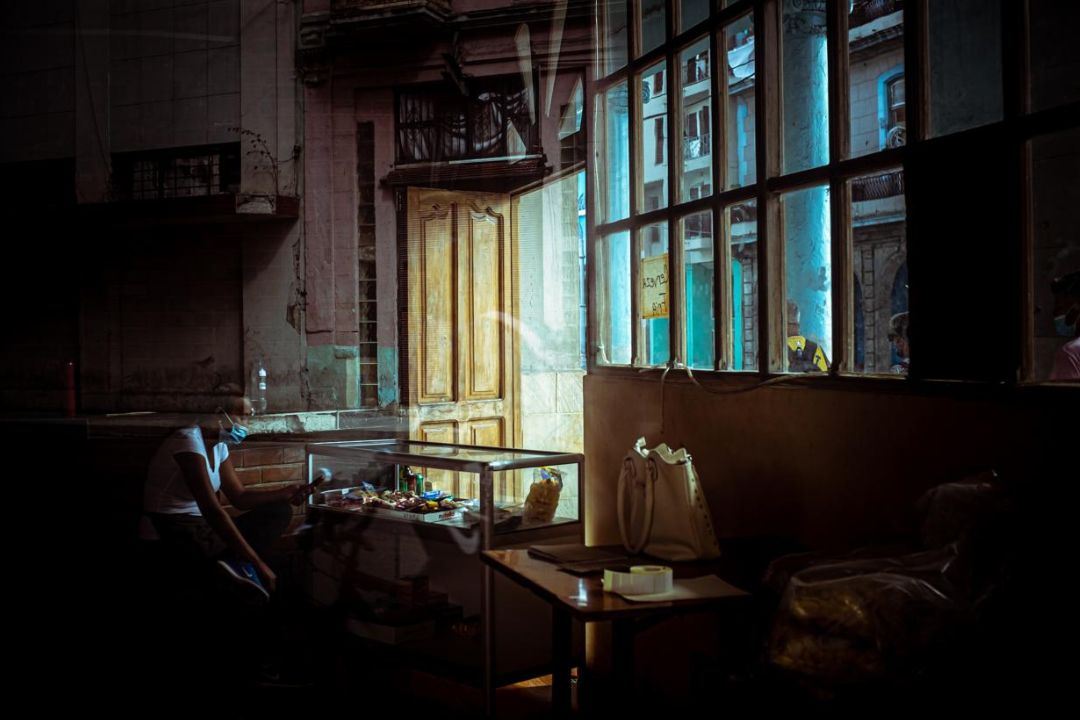
The implementation of these measures happens in a moment of extreme vulnerability. The interruption of energy supplies from Venezuela -around 30,000 barrels per day, between 30 and 40% of national needs- left Cuba without one of its main operational supports. In January, the country received only 84,900 barrels in a single delivery from Mexico, far below the daily average of 37,000 barrels recorded during 2025. The result is a deep energy crisis, with prolonged blackouts, deterioration of production and severe effects on basic services.
In this context, it is necessary to recognize an inescapable social fact: material and political exhaustion has led growing sectors of the population to perceive external pressure -and even intervention- as a possible way out. This perception does not arise from an adherence to foreign power, but from the absence of credible internal horizons, the closure of political debate and the lack of effective mechanisms to influence the course of the country. Understanding this drift is an indispensable condition to delegitimize it.
From a democratic left perspective, we clearly affirm that no emancipatory transformation can come from external coercion. The powers do not act in the name of the rights of the peoples, but of their own strategic interests. Latin American history shows that economic pressure and political tutelage generate dependency, social fragmentation and new forms of subordination, not democracy or social justice.
But by the same token, it would be politically sterile to attribute the Cuban crisis exclusively to external factors. The responsibility of the current ruling bloc is not to be ignored, but key. For decades, a highly centralized model of power was consolidated, with little accountability, hostile to political pluralism and increasingly disconnected from real social dynamics. The reduction of socialism to bureaucratic administration and political control emptied of content the emancipatory project that once mobilized broad sectors of society.
Sovereignty cannot be held only as rejection of foreign interference. Sovereignty is inseparable from political democracy, civil rights and effective popular participation. When citizens do not have real channels to deliberate, organize and dispute strategic decisions, sovereignty becomes a rhetorical formula administered from above.
The policies of sanctions, financial restrictions and trade isolation imposed by the United States are real and deeply damaging. But their impact is amplified by an internal blockade made up of economic rigidities, lack of transparency, penalization of dissent and a political culture that confuses stability with paralysis. This framework explains why broad social sectors do not perceive endogenous solutions and end up placing expectations -contradictory and desperate- in external factors.
Cuba now faces a multidimensional crisis: an aging population that exceeds 20%, pensions that do not cover the basic cost of living, a deteriorated health system, a declining education system, intermittent public services, collapsed infrastructure and a process of informal dollarization that deepens inequalities. Added to this is the persistence of political repression, with more than 1,185 people deprived of liberty for exercising fundamental rights, which further erodes social trust.
We, Socialistas en Lucha (SeL), state that the best way to close the way to foreign intervention is not immobilism, but deep democratization. Only a real opening of political rights, the recognition of social pluralism, the legalization of independent organization and the restitution of popular sovereignty can rebuild a shared horizon and restore legitimacy to the socialist project.
Cuba does not face a choice between external coercion or authoritarian continuity. The real alternative is between dependence and democracy, between bureaucratic administration and popular protagonism.
Our position is clear: we reject all forms of external domination and opposition to the internal order that has closed off social participation. We defend a democratic socialism, based on rights, public deliberation and popular control of power.
Neither imperial coercion nor bureaucratic closure.
For popular sovereignty, political democracy and socialism from below.