The advance of the death penalty against Palestinians in Israel marks a new leap in the policy of apartheid, repression and dehumanization sustained by Zionism. Far from being an isolated event, it is part of a systematic escalation of state and para-state violence that consolidates a true license to kill. It is, moreover, a profoundly racist barbarity: it does not establish the death penalty universally, but directs it against an oppressed community. It is urgent to redouble the denunciation, the active solidarity and the struggle for a fundamental solution that puts an end to the occupation and opens the way to a free Palestine.
Champagne, pitchforks and barbarism
Monday, March 30. Itamar Ben-Gvir, minister of the genocidal Netanyahu, graceful, grotesque in form and content, raises a bottle of champagne with a pitchfork on his chest. He celebrates the approval of a new license to kill, now institutionalized, towards the Palestinian people. Israel’s parliament(Knesset) once again took a qualitative leap in its repressive policy by advancing in the approval of initiatives that enable the death penalty against Palestinians accused of “terrorism”. It is the concentrated expression of a regime that, sustained on occupation, colonization and ethnic cleansing, permanently escalates its mechanisms of domination.
It implies not only the possibility of legal executions, but a general tightening of the repressive apparatus: trials with questionable standards, increased pressure on detainees to obtain confessions and an even more arbitrary use of the accusation of “terrorism”. In a context of occupation and structural inequality, where Palestinians already face detention without full guarantees, this measure deepens the total asymmetry before the law. Moreover, it sends a clear political message to the IDF and settlers: they have a license for everything, reinforcing in fact a dynamic where state and para-state violence is amplified under a cloak of legality.

It is not an exception, it is the rule
The institutionalization of the death penalty is part of a long chain of overtly discriminatory legislation. A turning point was the so-called Nation-State Law of 2018, which enshrines Israel as the “State of the Jewish people,” relegating Palestinians to the status of second-class citizens or outright a population with no rights in the occupied territories.
Added to this are laws facilitating the confiscation of land, the demolition of Palestinian homes and the expansion of illegal settlements. Administrative arrests, without charge or trial, became a regular tool, as did the criminalization of any form of resistance, even the most elementary.
Beyond the legal framework, Zionism’s actions against the Palestinian people are characterized by a systematic practice of human rights violations that are not even protected by its own legislation: extrajudicial executions, disproportionate use of force against civilians, collective punishments, arbitrary restrictions on movement and recurrent attacks on homes and basic infrastructure. In territories such as the West Bank and the Gaza Strip, these actions are deployed with a high degree of impunity, without real investigations or sanctions, consolidating a scenario where violence is not only structural, but also openly illegal even under the Israeli State’s own rules.
The current approval of the death penalty in Israel is not an isolated or exceptional event, but the continuation of a historical policy of exclusion and violence against the Palestinian people. It confirms its deeply discriminatory character: in practice, this law applies only to Palestinians, not to Israelis, prolonging and deepening already existing practices.
Settler impunity in the West Bank and occupied territories
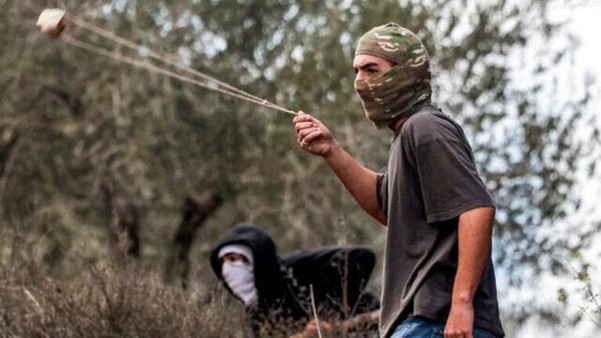
In the West Bank and other occupied territories, Israeli settler violence has reached alarming levels. Organized attacks on Palestinian villages, burning of homes and crops, physical assaults and even assassinations are occurring with chilling regularity.
These groups act, in fact, as para-state forces advancing the colonization of Palestinian territory. They are not only armed and protected, but in many cases with the direct support of the Israeli army.
Impunity is the norm: investigations are either non-existent or end up being shelved, while the thousands and thousands of Palestinian victims are left completely unprotected. This double standard, extreme repression for the Palestinians, total leniency for the settlers, reveals the structurally racist character of the regime.
License to kill
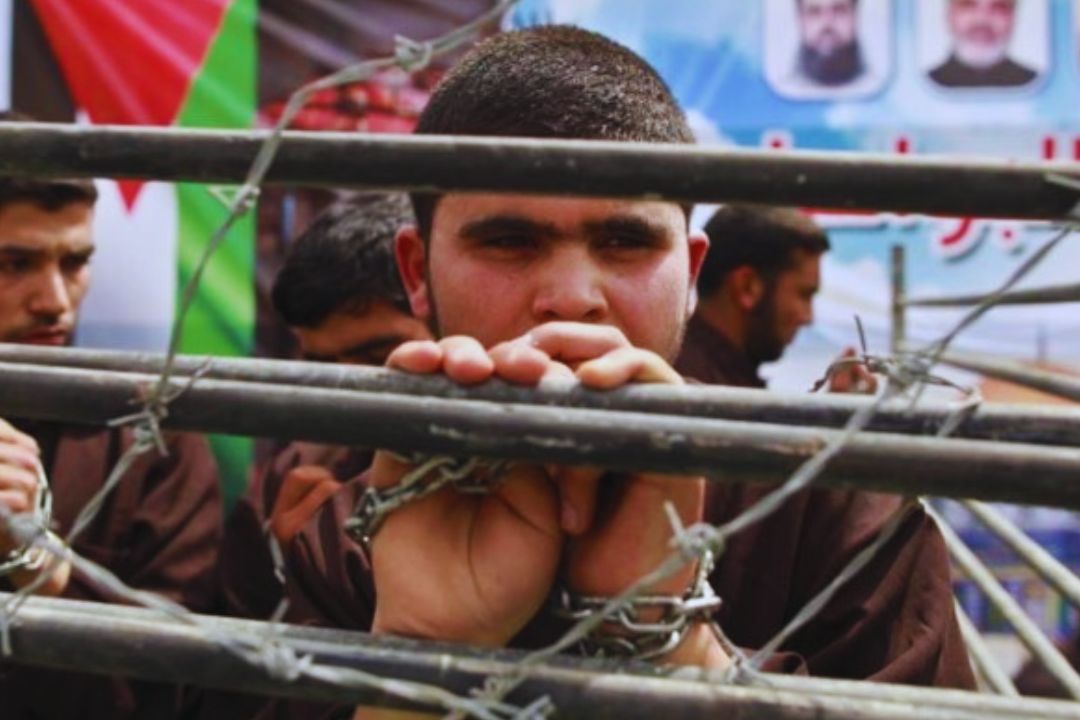
The introduction of the death penalty seeks to deepen the dehumanization of the Palestinian people. By legitimizing the ultimate punishment against an oppressed population, the Israeli state reinforces the idea that Palestinian life is disposable. Soldiers, policemen and settlers receive a new clear signal: violence against Palestinians is not only permitted, but promoted from the highest echelons of power. A true “license to kill” is thus consolidated, where the thousands and thousands of Palestinian prisoners in Israeli jails can be legally killed. According to information from human rights organizations, more than 9,300 Palestinians are currently incarcerated in Israeli prisons, including at least 350 minors and 66 women. Lives that today are doubly at risk.
This new measure was widely questioned by international organizations, which consider it a serious violation of human rights. The United Nations has reiterated in multiple resolutions its opposition to capital punishment under any circumstances, while entities such as Amnesty International and Human Rights Watch denounce that its application in a context of occupation and structural inequality further aggravates discrimination against Palestinians. Regional organizations and independent experts have warned that this measure not only violates basic standards of international law, but also deepens a justice system already widely questioned for its partiality. International pronouncements can mark a position, but it is necessary to move from words to deeds: without concrete actions, they become empty gestures in the face of a reality that demands urgent responses.
Let’s not stop talking about Palestine
In the face of this scenario, international solidarity once again plays a central role. In the Palestinian territories, a general strike was held in rejection of the measure, accompanied by demonstrations in the West Bank, where the protests were repressed by Israeli forces. The response was not limited to the region: there were actions of repudiation in Syria and in cities such as Manchester and Milan, to which more will surely be added in the coming days. These expressions, diverse in form but coinciding in content, are evidence of a growing global rejection of a measure that deepens the persecution against the Palestinian people.
In April, a new humanitarian flotilla is preparing to set sail for the Gaza Strip, defying the criminal blockade imposed by genocidal Zionism and denounced by multiple international organizations. From the International Socialist League we will once again be part of this mission. Today, more than ever, it is essential to redouble these campaigns, strengthen the solidarity movement and demand an immediate end to the occupation. Because while the State of Israel advances in legalizing death, the task of the peoples of the world is clear: break the silence, confront the complicity of governments and stand on the side of those who fight for their liberation.
A fundamental solution to so much barbarism demands the defeat of the Zionist State of Israel, its imperialist partners and regional allies. Only a profound transformation, driven from below by the mobilization, organization and struggle of the peoples, can open the way to a different perspective: a single, secular, non-racist, democratic and socialist Palestine. It is an enormous challenge, which requires rebuilding an international political tool capable of unifying these struggles and taking them to the end.
Oda Accounts