After the recent defeat of Viktor Orban in the Hungarian elections, some considerations are in order, avoiding as much as possible the noise of the bourgeois media.
By Elia Spina
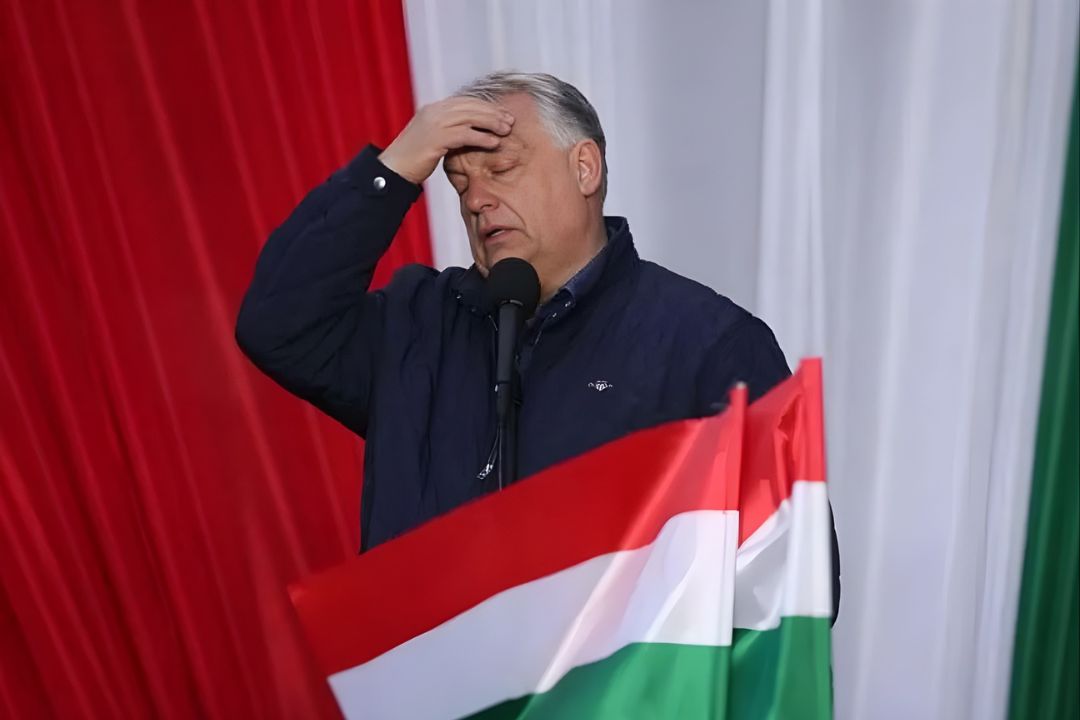
The defeat of the Hungarian warlord should be neither minimized nor overestimated. It is worth remembering that Orban, who had been in power since 2010, had molded the Hungarian state in his own image, and that he explicitly said he wanted to remain in power at least until 2030. Throughout his sixteen years in power, the results he obtained have been considerable, and it will be difficult to reverse them even if the new government the intention to do so (which, as we shall see, is rather doubtful).
Taking advantage of the inconsistency of the left, Orban instigated the worst nationalist instincts of the country, used an explicitly xenophobic, homophobic and Christian fundamentalist rhetoric, modified the Constitution countless times, packed state institutions (starting with the judiciary) with his own loyalists, acted as a sort of agent of Vladimir Putin within the EU and NATO, spoke of “peace” while increasing military spending and flooding society with militaristic propaganda, and was one of the most blatant advocates of genocide against the Palestinians. Perhaps the greatest paradox of Orbán’s xenophobia was the conspiracy fantasy, widely spread by the regime’s media, according to which Hungary (one of the European countries with the fewest immigrants) would be at risk of being invaded by Muslim immigrants sent by a Jewish banker (obviously, George Soros).
First of all, we should take note of who defeated Viktor Orban, by how much, and why. The Tisza party, founded by Peter Magyar (a former member of Orban’s party) only two years ago, obtained about 52% of the votes, with more than three million votes. Orban, on the other hand, was left with 39%, about 2.3 million votes. In the previous legislative elections (2022), Orban had obtained just over three million votes. All in all, it is clear that, although support for Orban has decreased, the drop in absolute terms has not been as great as one might think. This confirms that the Fidesz party still has solid roots in the country and has a very consistent hard core of voters. Orban was not defeated by the old pseudo opposition, which all but disappeared in these elections, but by a particularly astute former party colleague who focused his campaign on opposition to corruption and Russia, and was careful not to distance himself from Orban on some fundamental points; quite the contrary.
Another fundamental fact is that the turnout in these elections was very high, over 77%. In short, Orban was defeated not so much because he lost support, but because Peter Magyar managed to channel many votes from the former “opposition” as well as many votes from people who usually abstain. Indeed, the fact that so many people have only now become aware of the corrupt and undemocratic character of the Orban regime is puzzling and not easy to explain.
As for Peter Magyar’s promises of democracy and the fight against corruption, we will have to wait for the facts. Magyar may have had the support of many who were tired of the pro-Russian position of the Orban government, which tried to support Russia’s imperialist aggression against Ukraine by all means, even employing the most grotesque rhetoric (not only blaming Ukraine for the war, but also presenting Volodimir Zelenski as an internal public enemy). Undoubtedly, Vladimir Putin, considered a “comrade” by certain campist leftists, will be somewhat displeased by Orban’s defeat, but that will not loosen the imperialist pressure on Ukraine.
But another key to understanding the success of Magyar (who, by the way, has been accused in several places of harassment and violence against women) is to note in what respects he has not distanced himself from Orban’s program, but quite the contrary. The anti-immigration rhetoric of the election campaign was particularly repugnant. Both parties, Fidesz and Tisza, explicitly accused each other: “Don’t vote for the other, or he will bring in immigrants!”. Tisza declared that as of June 1, no immigrants will enter, and Magyar went on a rampage claiming that the wall of infamy built on the border with Serbia by Orban (and the scene of many acts of violence against those trying to cross it) will be maintained. There is no doubt that a figure like Magyar will maintain the wall. As for a total closure to immigration, it will naturally not be possible, because even Hungary needs a small but growing foreign labor force, both because of the demographic crisis and the strong emigration of Hungarians abroad. Still, this rhetoric, not only equal to Orban’s but trying to surpass it, should give pause.
A similar phenomenon occurred with the rhetoric against multinationals. It is true that foreign multinationals do in Hungary what they want, offering local workers relatively high wages but paying very little taxes and exploiting them with disregard even of the permissive local laws. Here too, in the rhetoric against multinationals, Tisza is no different from Orban’s party. Beyond words, it is very difficult for the new government to take concrete measures to protect workers, whatever company they work for. A good start would be to at least enforce the existing laws, but that will certainly not happen.
Finally, Magyar has made very timid statements on civil rights. It is not clear whether he will repeal Orban’s homophobic laws, or any of many other shameful laws, nor does it appear that he will take a substantially different position on the genocide of the Palestinian people (perhaps he is a little less blatant in his support for Israel, but here too it is important to distinguish between words and deeds).
In conclusion, the jubilation with which some on the international left have greeted Peter Magyar’s victory is, to say the least, excessive. On many – too many – fundamental issues, Magyar has not distanced himself from Orban; rather, he has tried to surpass him (and, unfortunately, to a large extent, he has won precisely because of this). If Magyar really does restore greater democratic freedoms, it will be the task of the truly alternative political forces – which, admittedly, are very weak today – to take advantage of those freedoms to try to strengthen their forces and to demand and obtain concrete changes, however small they may be at first.