By Asif Rasheed
Today, as imperialism and Taliban brutality continue their naked dance in Afghanistan, the significance of the Afghan Saur Revolution that erupted 48 years ago has grown more than ever before.
The Impact of the 1917 Russian Revolution
In October 1917, the Bolshevik Party in Russia, armed with correct theory, program, and method, led the working class to overthrow capitalism. This revolution had a profound impact on working-class movements across the world in general, and on national liberation struggles in the colonial world in particular. However, the later Stalinist degeneration of the Russian Revolution also had negative consequences for communist parties globally. As a result, revolutions failed one after another in different countries. Although colonial countries formally achieved independence from imperialism, poverty, disease, and backwardness in their societies deepened further. The bourgeoisie of these countries failed to accomplish even a single task of the national democratic revolution. The weakness and incapacity of the bourgeoisie granted a degree of autonomy to military juntas, leading to repeated coups in these countries.
Military Radicalization and Global Context
The army reflects the class contradictions present within society. At the global level, the movements of the working class and the unprecedented development in the Soviet Union had a deep impact on lower-ranking officers and ordinary soldiers in these countries. On the one hand, they were frustrated with the inability, incompetence, and corruption of their rulers; on the other, they were eager to rid society of feudal and capitalist decay. In 1952, progressive officers in Egypt, led by Gamal Abdel Nasser, overthrew the monarchy through a military coup and carried out radical reforms and nationalizations on a large scale. Similarly, in Libya, Ethiopia, Mozambique, and Syria, officers and soldiers with progressive or left-leaning tendencies overthrew decaying monarchies and corrupt dictatorships, abolishing capitalism and feudalism. However, these revolutions did not occur in the classical mold of the October 1917 socialist revolution, nor did these revolutionary officers organize the working class as a conscious force in carrying out these revolutions.
Proletarian Bonapartism and Its Limits
The fundamental teachings of Marxism tell us that without the active participation of the working class, a healthy workers’ state cannot be constructed. Therefore, these states were not built on the model of the workers’ soviet state of October 1917, but rather on the model of the later Stalinist Soviet Union. Ted Grant described such states as “proletarian Bonapartist states”—states in which capitalism and feudalism have largely been abolished, but power does not lie in the hands of the working class; instead, it rests with the state bureaucracy or a military junta. Despite all their shortcomings, these developments were progressive steps, as the nationalization of the means of production and the introduction of planned economies led to significant social and economic development. However, at a certain stage, the bureaucracy itself becomes an obstacle to further development of both society and the productive forces. Thus arises the need for a political revolution to bring power and the means of production under the democratic control of the working class. This phenomenon of proletarian Bonapartism also indicated that the world revolution was being delayed, and that colonial countries could not wait for revolutions in advanced capitalist countries, as their own crises were far deeper and could not be resolved on capitalist foundations.
Conditions in Afghanistan Before 1978 and the Formation of PDPA
The Afghan Saur Revolution of 27 April 1978 can also be understood in light of these factors. Afghanistan had an almost non-existent proletariat and lacked a significant industrial base. Various monarchies, whether under Zahir Shah or later under Sardar Daoud, ruled the country for decades but delivered nothing except corruption and subservience to imperialism. The literacy rate was below 10 percent, and 50 percent of all arable land was owned by just 5 percent of the population. Under such conditions, development on a capitalist basis was not possible.
Amid this atmosphere of unrest and instability, Noor Mohammad Taraki founded the People’s Democratic Party of Afghanistan (PDPA) in January 1965. The party largely consisted of various groups of youth engaged in Marxist study circles. Another key leader of the party, Comrade Hafizullah Amin, succeeded in influencing many officers within the Afghan army toward revolutionary ideas. This shift was also inspired by the remarkable development of the Soviet Union under a planned economy and by global political developments.
From Crisis to Revolution
On 17 April 1978, the government of Afghan President Mohammad Daoud Khan had PDPA leader Mohammad Akbar Khyber assassinated, while denying responsibility. Nevertheless, the party leadership concluded that Daoud intended to eliminate the entire leadership. On 19 April, the party organized a rally of 30,000 people in Kabul during Khyber’s funeral. The rally chanted anti-American slogans outside the U.S. embassy. This display of strength enraged Daoud, who, within a week, arrested seven party leaders, including Noor Mohammad Taraki. Hafizullah Amin was initially placed under house arrest and later imprisoned on 26 April. However, before his arrest, Amin had already issued instructions to Khalqi officers within the army to initiate a military uprising against President Daoud.
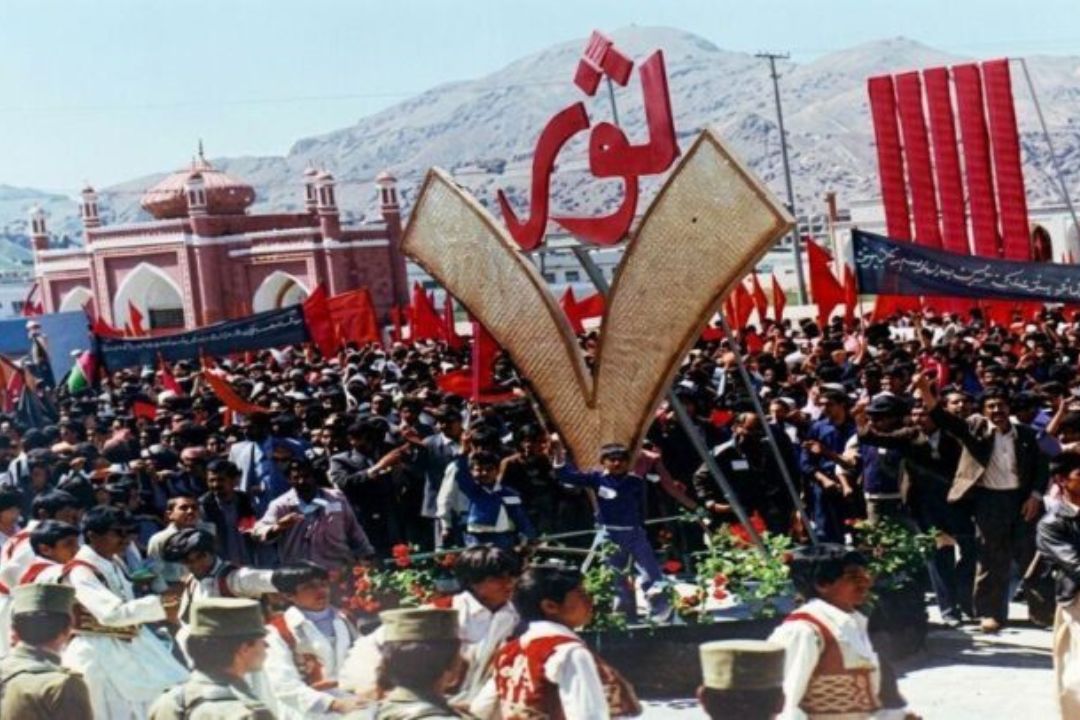
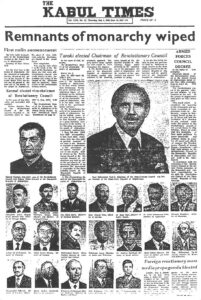
On the morning of 27 April 1978, Air Force Colonel Abdul Qadir ordered the bombing of the presidential palace. President Daoud was eliminated along with his family. Simultaneously, on the ground front, Mohammad Aslam Watanjar, a tank brigade commander, entered the city of Kabul with tanks and armored vehicles. In this way, the revolutionary military uprising brought an end to Daoud’s dictatorial regime. At 7 p.m., the fall of the Daoud dictatorship was announced over the radio. Power was immediately transferred by the armed forces to the party’s 35-member Revolutionary Council. This became possible due to the support of revolutionary officers within the military, and the credit for winning over the army in favor of the party and the revolution largely goes to Hafizullah Amin. It is called the “Saur” Revolution because this uprising took place in the second month of the Afghan calendar, “Saur.” Noor Mohammad Taraki described the Saur Revolution as a continuation of the Bolshevik Revolution of 1917 and as part of the global struggle of the working class.
The Revolutionary Council elected Noor Mohammad Taraki as President, while Hafizullah Amin was appointed Foreign Minister and later also assumed the position of Prime Minister. On 10 May, Taraki announced the program of the revolutionary government over the radio. This included the largest land reforms in Afghanistan’s history (including redistribution of land to tenants and landless peasants), the abolition of usury, free education and healthcare, gender equality, a ban on the buying and selling of women under the guise of marriage, and the nationalization of all sectors deemed suitable for nationalization. A process was initiated to pull Afghanistan out of centuries of backwardness, illiteracy, tribalism, poverty, and deprivation—aiming to bring it into the twentieth century and build a modern society. Thus, even in a distorted form, the Saur Revolution validated Trotsky’s theory of permanent revolution. It had a highly positive and encouraging impact on the working classes and oppressed nationalities in neighboring countries, particularly in Pakistan, alarming U.S. imperialism and the Pakistani ruling class. However, the Soviet Union was also uneasy with this revolutionary transformation in Afghanistan. This was no longer the Soviet Union built by Lenin and Trotsky, but one dominated by a Stalinist bureaucracy that prioritized its national interests, privileges, and “balanced” relations with U.S. imperialism over revolution, socialism, and Marxism. This bureaucracy drowned revolutions across the world in blood in the name of maintaining its authoritarian rule and the counter-revolutionary doctrine of “peaceful coexistence” (derived from the Stalinist theory of “socialism in one country”). Communist parties worldwide were often reduced to instruments of its foreign policy. The Afghan Saur Revolution, therefore, came as a shock to the Soviet bureaucracy, which was fundamentally opposed to such an independent revolutionary development in its neighborhood.
Imperialism and Stalinist Betrayal
The Soviet Union initially attempted to bring the newly formed revolutionary government under its control. However, the leadership of the revolution supported Afghanistan’s independence and sovereignty. They were committed to crushing counter-revolutionary uprisings against the Saur Revolution and took concrete steps in this regard. Meanwhile, the Soviet bureaucracy continued pressuring them to compromise with mullahs and other counter-revolutionary forcses. When this failed, efforts began to remove the revolutionary leadership altogether.
Ruling-class historians and intellectuals often deliberately conflate the Saur Revolution with the later Soviet invasion. The fact is obscured that Soviet troops entered Afghanistan 18 months after the revolution, on 29 December 1979. The first two leaders of the revolutionary government, Noor Mohammad Taraki and Hafizullah Amin, harbored no illusions about the bureaucratic nature of the Soviet state. Both leaders firmly opposed any political or military intervention in Afghanistan by the Soviet Union or any other country. An independently developing revolution in Afghanistan posed a threat to the political interests of the Soviet bureaucracy, making the elimination of its genuine leadership necessary. On 9 October 1979, Noor Mohammad Taraki was found mysteriously dead in the presidential palace. Several attempts were made to assassinate Hafizullah Amin by poisoning him, but these failed. Finally, on 27 December 1979, more than 600 Soviet commandos attacked the Tajbeg Palace under “Operation Storm-333,” killing Hafizullah Amin along with his son and around 200 guards. Two days later, Soviet troops formally entered Afghanistan, providing U.S. imperialism with an open opportunity to intervene and crush the revolution.
The Counter-Revolution and Proxy wars
Marxists at the time also condemned the Soviet military intervention, as it pushed the revolution backward. Even before the Soviet invasion, imperialism and its allies had already initiated efforts to crush the Saur Revolution. Six months prior to the entry of Soviet troops, the CIA had launched “Operation Cyclone,” funneling billions of dollars’ worth of weapons and thousands of so-called mujahideen into Afghanistan via Pakistan. This counter-revolutionary intervention involved Saudi Arabia, Israel, the United States, Britain, Egypt, China, and Pakistan. China, blinded by its hostility toward the Soviet Union, also provided significant military assistance and support to the mujahideen and allied groups.
Babrak Karmal of the Parcham faction was brought to power by the Soviet Union, but he too failed to meet the standards of the Soviet bureaucracy. He was removed and replaced by Dr. Najibullah as President. This was the period when Mikhail Gorbachev, in an attempt to preserve the rule of the Stalinist bureaucracy in the Soviet Union, initiated political and economic reforms under the banners of Perestroika and Glasnost. Najibullah, in the later phase of his rule, attempted to adopt similar “soft” policies in Afghanistan. By that time, the internal conditions of the Soviet Union had significantly deteriorated, and Najibullah’s government was steadily weakening. Consequently, a policy of reconciliation with counter-revolutionary forces and so-called “national harmony” was pursued—an approach whose failure was inevitable.
Najibullah established a National Reconciliation Commission, which contacted thousands of counter-revolutionaries. In July 1987, these forces were offered 20 seats in the State Council (formerly the Revolutionary Council), along with 12 ministerial positions in the government. However, these fundamentalist counter-revolutionary forces exploited these opportunities not for peace or compromise, but to intensify efforts to crush the revolution. Clearly, imperialism’s objective was not only to preserve its system but also to send a message to the Afghan masses, and the revolutionaries worldwide about the consequences of challenging it. Thus, these so-called reform efforts only accelerated the disintegration of the revolution.
After the October Revolution, the Bolsheviks defended the nascent workers’ state against imperialist invasions by building a Red Army of millions of workers and peasants, while simultaneously appealing for revolutionary solidarity from the working classes across the world. This led to uprisings within imperialist countries themselves, weakening them from within. Many workers and soldiers in the invading countries refused to support the counter-revolutionary war, which played a decisive role in defeating more than a dozen invading imperialist armies. In contrast, in Afghanistan, the ruling party itself was divided into the Khalq and Parcham factions, which remained in constant conflict not only with counter-revolutionary forces but also with each other. There was no leadership comparable to Lenin and Trotsky. After the removal of Taraki and Hafizullah Amin, the Parcham faction—brought to power with the backing of the Soviet bureaucracy—adopted a narrow, backward, and predominantly “national” outlook rather than an internationalist one. All these factors played a key role in the decline of the Saur Revolution.
Reaction and Barbarism
With the withdrawal of Soviet forces under the Geneva Accords of 1988–89, the fate of Najibullah’s government became increasingly clear. Opportunists such as Shahnawaz Tanai and Abdul Rashid Dostum openly turned to betrayal. Despite this, the revolutionary people of Afghanistan, even amid internal fragmentation and setbacks, continued to defend the revolution with immense sacrifice for several years. However, following the collapse of the Soviet Union, when the counter-revolutionary, pro-imperialist government of Boris Yeltsin completely cut off supplies of arms and fuel, Najibullah’s government finally fell in 1992. This period laid bare several realities: while ruling classes divide workers along lines of race, ethnicity, language, religion, nationality, and borders to maintain their dominance, they unite when their system is threatened by revolutionary movements. Thus, U.S. imperialism, in alliance with Gulf monarchies, Pakistan’s right-wing forces, the state apparatus, and other allies, drowned the Saur Revolution in blood. Ultimately, all these so-called democrats, liberals, secularists, and fundamentalists serve the same system—one that guarantees their property, wealth, and profits.
The counter-revolution pushed Afghan society back by centuries. After the fall of Najibullah’s government, the devastating and bloody civil war among jihadist factions reduced the country to ruins. Various mujahideen groups—essentially proxies of competing imperialist powers—fought each other for control of Kabul. This endless chaos became a problem for both the United States and Pakistan, leading to the imposition of the Taliban regime, whose brutal and repressive rule soon created new challenges even for its backers. After 11 September 2001, a new phase of imperialist aggression began. However, despite its immense economic and military power, U.S. imperialism failed to resolve even a single fundamental issue of Afghan society. Former mujahideen factions and warlords were repackaged as the face of a so-called democracy. Yet, despite overwhelming technological and military superiority, the NATO alliance failed to subdue the Taliban. During this period, the Taliban continued to receive strategic and military support from Pakistan’s deep state. Unlike the 1990s, however, they also benefited from indirect or tacit support from powers such as China, Russia, and Iran.
According to a report by Al Jazeera, the United States spent around $2 trillion on military operations in Afghanistan over two decades. Despite this, it was ultimately forced to negotiate with the Taliban and withdraw in a manner that amounted to a loss of prestige. The agreement signed with the Taliban in Qatar effectively signified an admission of defeat by the United States. U.S. imperialism failed comprehensively in achieving its objectives in Afghanistan. Notably, during negotiations with the Taliban, the puppet government of Ashraf Ghani was kept largely uninformed or sidelined, revealing the true hollowness, corruption, and lack of legitimacy of the Afghan state constructed by the United States over twenty years.
After the Taliban’s reactionary victory, a new era of suffering and misery has begun for the Afghan people. If U.S. imperialism, with all its vast resources, failed to construct a stable and viable state in Afghanistan, what can possibly be expected from a reactionary force like the Taliban, which thrives on a shadow economy of narcotics and extortion? These custodians of darkness seek to push society back into a figurative “stone age.” However, the Taliban’s return to power has produced outcomes contrary to the expectations of the Pakistani state. The Taliban are either unwilling or unable to act against groups like the TTP involved in terrorism within Pakistan, turning the situation into one of growing tension and confrontation.
The Taliban are attempting to assert greater autonomy from Pakistan by tilting toward powers such as China and India. Yet these states are not allies of the Afghan people; rather, they pursue their own imperialist and strategic interests. India seeks to counter Pakistan through Afghanistan, while China’s focus lies on Afghanistan’s valuable mineral resources. Similarly, Gulf states such as Qatar and the UAE, along with Turkey, maintain relations with various Taliban factions based on their own interests. Meanwhile, internal contradictions within the Taliban—driven less by ideology and more by financial interests and proxy alignments—are increasingly visible and could erupt under certain conditions. As a result, the situation has taken on new layers of complexity, contributing to ongoing instability, violence, and terrorism across the region.
Revolution Is the Only Salvation
The reality is that the very forces responsible for Afghanistan’s destruction cannot rebuild it. And as long as Afghanistan remains devastated, lasting peace in Pakistan will remain elusive. A historical problem cannot be resolved without eliminating its historical causes. In this context, not only in Afghanistan but across South Asia as a whole, the eradication of fundamentalism and terrorism—and the establishment of a peaceful, stable, and prosperous society—is only possible through the revolutionary overthrow of the imperialist capitalist system. For this reason, the history of the 1978 Saur Revolution retains its enduring significance even today.
This article originally published in Urdu on www.struggle.pk