By Alberto Giovanelli
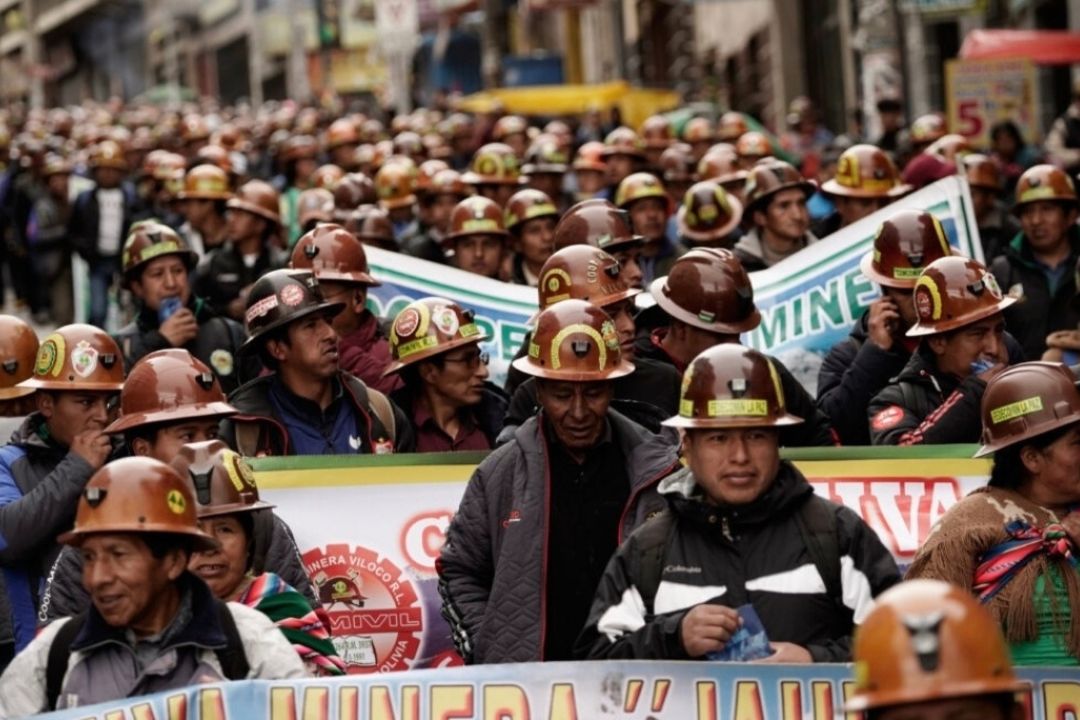
The political and social crisis in Bolivia is accelerating by leaps and bounds. From the International Socialist League we have described the different processes that have been resisting the measures that President Paz has tried to apply since the first day of his inauguration, a little more than 6 months ago. From the rejection of the indigenous communities to the Land Reconversion Law together with the mobilizations of transporters due to problems of adulterated and expensive fuel, he has advanced in a spiral of conflicts that today, May 16, encompasses almost all the workers and peasants of the Plurinational State. Hundreds of blockades are expressed in the streets of the main cities of the country, where the powerful COB, teachers, peasants and other social sectors converge.
Although the Government is trying unsuccessfully to negotiate with the different mobilized sectors, it has not been able to deactivate the conflicts. On the contrary, the indigenous, peasant and popular organizations denounce that each government proposal is a trap aimed at preserving agribusiness interests and gaining time in the face of a mobilization that continues to expand.
Crisis non-stop
In recent weeks, social unrest has spread rapidly. One of the most immediate triggers was the scandal of adulterated or low quality gasoline, denounced by different transportation sectors for causing mechanical damage to thousands of vehicles. To make matters worse, not even the fuel increase prevented the shortage and the queues continue at the gas stations. The government’s weakness in solving the problem deepened the political erosion and fueled a climate of discontent and social anger.
This was followed by the conflicts of the teachers and the health sector, with national strikes and mobilizations demanding salary increases and answers to their sectoral demands.
The indigenous and peasant march, which began almost a month ago from peasant communities in Pando and Beni and arrived in La Paz on May 1, continues to receive expressions of solidarity from communities, unions and workers’ organizations, including the FSTMB and the COB.
It was the pressure from below, from the mobilized grassroots sectors, that pushed the leaders of these organizations to demonstrate and include the demand for Paz’s resignation in their demands.
From the “March for the defense of the Amazon forests and the legal security of the indigenous native peasant territories”, they join the demands for prior consultation of indigenous and peasant communities before passing laws that affect these sectors.
There are currently more than 70 blockade points on strategic routes in the country and the trend continues to increase. Although production is not yet completely paralyzed, the effects of the partial shortage of meat, poultry and other basic products are beginning to be felt in several cities.
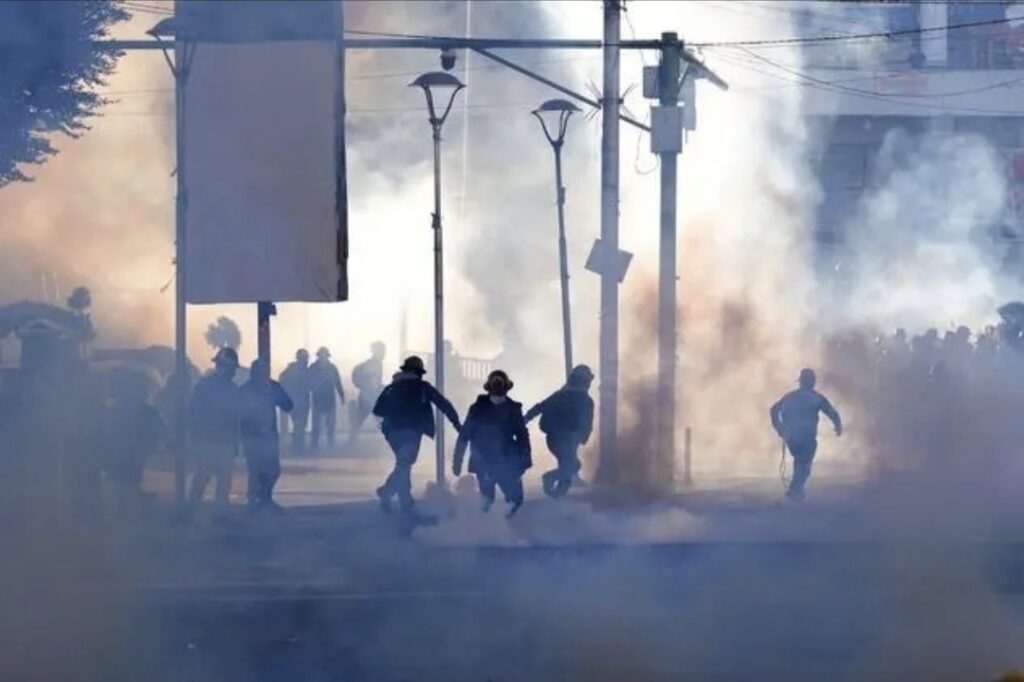
The growth of the conflict led the government to take a leap forward in its repressive response. During the last hours, blockade operations with military participation began, which caused two deaths of mine workers yesterday, Friday 15. At the same time, rumors grew about a possible declaration of a State of Siege, fed by the increasing presence of the Armed Forces on highways and at points of conflict.
Last night there were also reports of heavy gassing at blockade points in El Alto, such as in the area of Río Seco. However, despite the attempts of the repressive apparatus to clear the blocked routes, far from deactivating the protests, the repression seems to be deepening the radicalization of sectors that are now beginning to demand with greater force the resignation of Rodrigo Paz from the government.
We have already pointed out that in this whole process there is a strong tendency towards self-organization, although it has not yet resulted in the formation of a unified leadership of the whole process of resistance and mobilization.
So far, the COB, the CSUTCB and the Tupaj Katari Federation and neighborhood councils have established commitments of unity, in the face of grassroots pressure, to achieve Paz’s resignation. In concrete terms, there is a strengthening and revitalization of the trade union and popular organizations, which are once again appearing as political references in the face of governmental erosion.
In the immediate term, everything seems to indicate that the discontent tends to expand and the government, on the defensive, does not manage to recover the initiative, which increases the effective possibility of Paz’s fall. Let us also remember that his possible successor, Vice President Edman Lara, broke with Paz himself just hours after he assumed the presidency, and in that case he would be in charge of calling for new elections within 90 days.
But these speculations about the institutional solution being discussed by the Bolivian bourgeoisie will not solve the structural and terminal crisis the country is going through. On the contrary, it brings to the forefront the need that we have already expressed in other articles and in the actions of the Bolivian sympathizers of the ISL, for the construction of an organization that unites the totality of the Bolivian anti-capitalist sectors, overcoming the traumatic experience of MAS and Evo Morales, capable of confronting the model of plunder and dispossession, and the external indebtedness of the country under the guidelines of the IMF.
In this situation there are no moderate alternatives, we must take advantage of this process to begin to discuss how to establish a government of our own, that begins to discuss how to take into its own hands a solution that must be anti-capitalist, revolutionary and socialist.