By Ali Hammoud
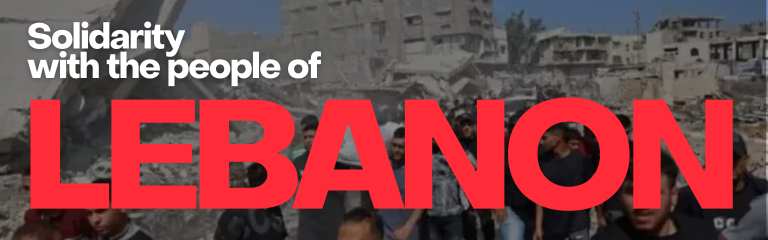
Despite the repeated discourse about a supposed “truce” in Lebanon, the situation on the ground confirms that what is happening is not a cessation of the war, but a redefinition of it through the game of political and media terms. The war never stopped, and the Israeli enemy continues its daily aggressions, while expanding the occupation of new Lebanese territories.
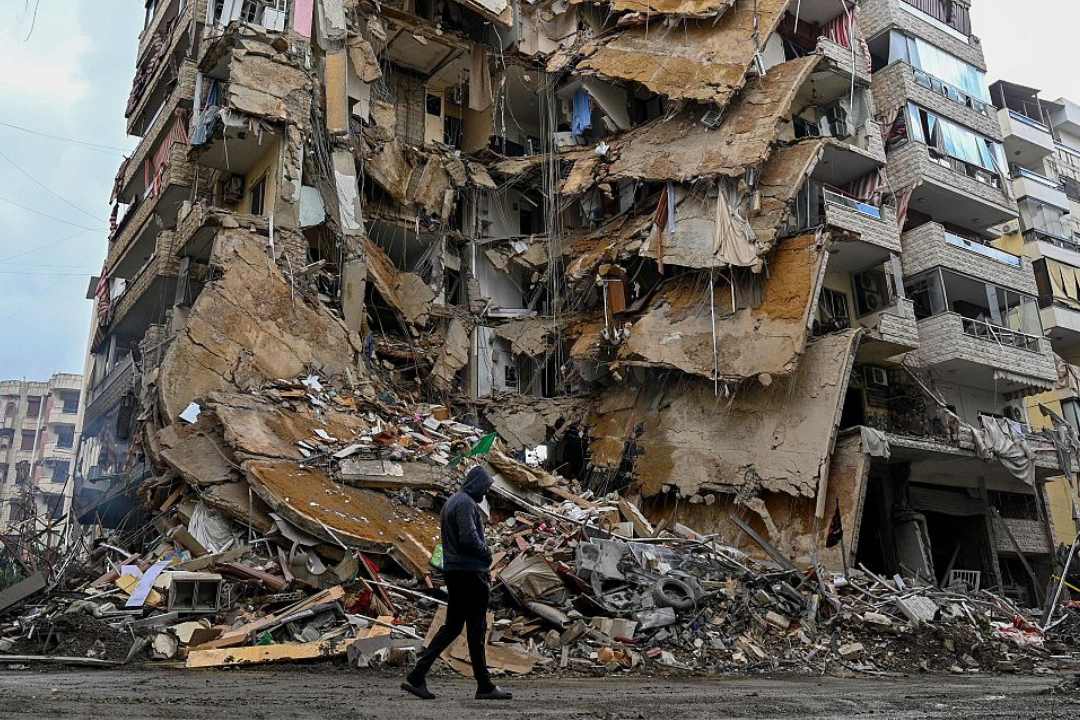
To speak of a truce in this context seems to be an attempt to misinform and cover up the continuity of the aggression under different forms. South Lebanon is not experiencing a truce, but an open war with multiple expressions: daily bombardments, selective assassinations, continuous occupation of the territory and a progressive expansion of the areas over which the enemy imposes its direct military control.
What is happening is not simply isolated violations on the ground, but a clear project of displacement and colonization that seeks to redesign the geography and demography of the Lebanese south. The occupation works systematically to transform border villages into destroyed and uninhabitable areas by burning agricultural land, destroying homes, demolishing infrastructure and attacking all bases of social and economic resistance. It is the same scorched earth policy applied in Gaza: mass killings, forced displacement and urban and environmental destruction aimed at driving people off their land and making return an almost impossible option.
Meanwhile, the Lebanese political power finds itself in a position of impotence and complicity at the same time. A power completely subordinated to US impositions and Israeli blackmail. Instead of confronting the aggression, this authority is dedicated to offering political concessions and seeking ways out that preserve its place within the existing system, even if the price is normalization with the enemy, something that began to become evident with the beginning of the direct negotiation process.
We must call a spade a spade: direct negotiation with the Zionist entity is not a “diplomatic solution”, but the political door to normalization. And normalization is not peace, but a form of surrender and reproduction of colonial domination through political, economic and security tools. Every Arab experience that moved towards normalization showed that the promised so-called “peace” was nothing more than a deepening of dependency and an expansion of the enemy’s hegemony over sovereign and economic decisions.
The US administration does not hide the nature of its project. It openly declares that the problem in Lebanon is not the continued occupation of Lebanese territory or the daily aggressions against civilians, but the existence of a resistance that refuses to submit to the Israeli project in the region. What is being sought from the United States is a Lebanon without political will, without defense capacity and completely open to Western economic and security domination projects.
The Lebanese authorities, instead of confronting this project, are gradually joining it. And it does so not only through negotiations, but also by tightening internal security control and trying to repress any opposing voice. As popular anger grows, the system is increasingly transformed into a police power that considers the protesters a greater danger than the occupation itself.
As for Hezbollah, it continues to confront the occupation within the available possibilities, but it is clear that the nature of the confrontation changed due to regional complexities and negotiations, especially after the détente between Iran and the United States, which indicates the existence of new rules of engagement that set the limits of the confrontation. Among these unstated rules is a tendency to keep Beirut and its southern suburb, a Hezbollah stronghold, on the sidelines in exchange for avoiding attacks on major Israeli cities. This reality calls for a serious debate on the limits of betting on regional forces and on the need for an independent decision based, above all, on the interests of the Lebanese population and not on the calculations of the great powers and their conflicts.
But today’s battle is not only military; it is also social and class-based. More than a million displaced people face extremely harsh conditions, while crisis merchants seek to profit from people’s suffering by raising rents and hoarding basic goods. Here appears the true face of parasitic capitalism that invests in war just as it invests in economic collapse.
It is the duty of the popular forces to impose on the State the protection of the right to housing, to prevent the exploitation of the displaced, to guarantee free education for their children and to ensure medical care and basic services. Resistance cannot be left solely to individual initiatives or charity; it must be transformed into a clear struggle for social rights.
In this context, it is no longer enough to organize occasional solidarity campaigns or to issue statements of rejection. What is needed today is to build a broad front, politically active and present on the ground, bringing together workers, students, unions, progressive forces and all those who reject normalization and surrender. A front that confronts the occupation, opposes subordinate power and proposes a liberating national project based on social justice and popular sovereignty.
The battle in Lebanon today is not only against the Israeli occupation, but against an entire system of external colonialism and internal exploitation. And it is a battle that will not be resolved through secret negotiations or agreements drawn up in embassies, but through the ability of the people to organize and impose their own national project of liberation.
There is no peace with occupation.
There is no normalization with colonialism.
And there is no way out for Lebanon outside of popular resistance, liberation and social justice.