By Gérard Florenson and Gustavo García
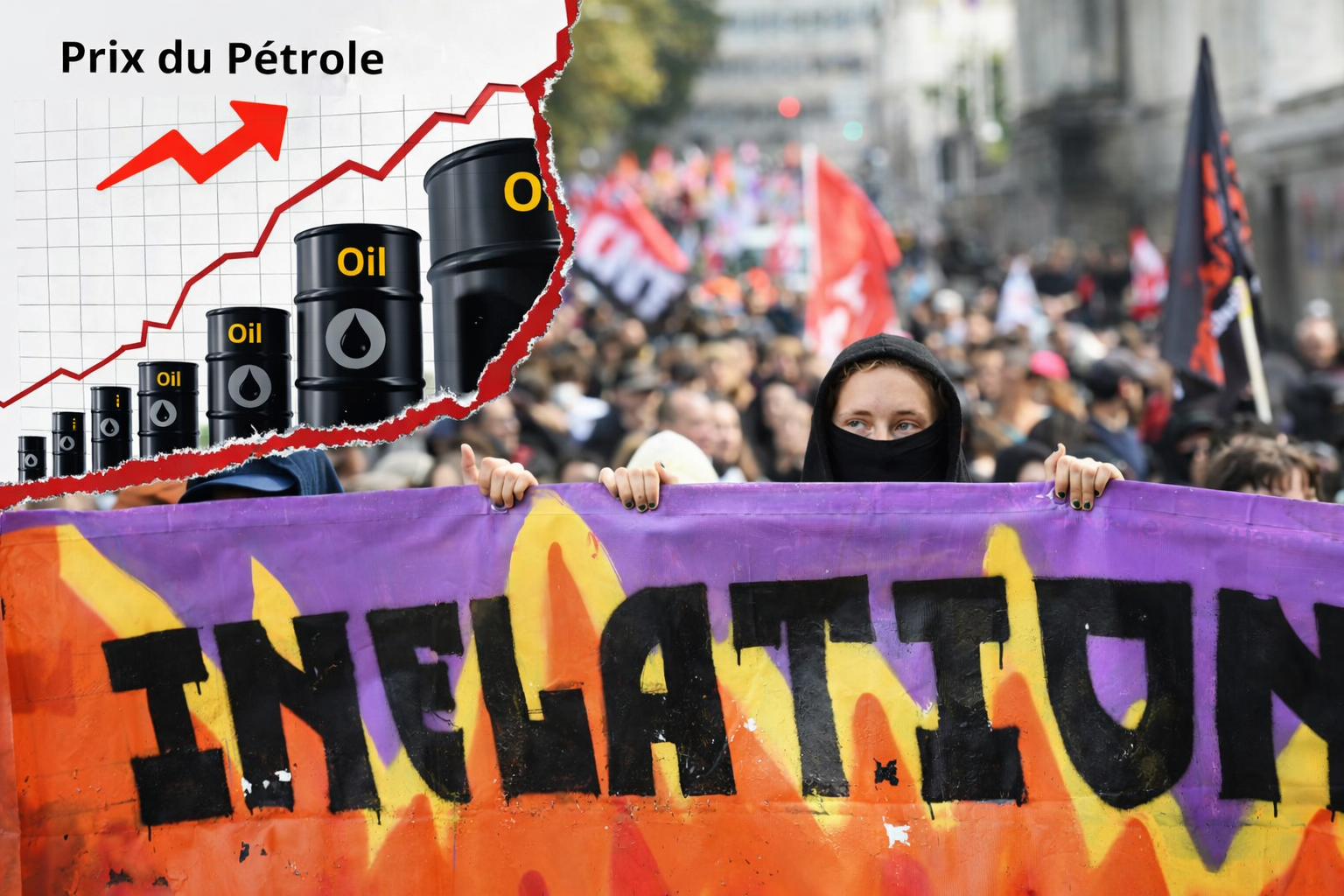
The significant rise in fuel and diesel prices is yet another blow to the economy of workers, retirees, and the working class in general, forcing them to reduce their fuel consumption. This is particularly difficult given the challenges they already face with basic expenses such as food and healthcare due to the inflation we are experiencing and the lack of wage adjustments.
Another sector that has been severely affected is rural areas, where residents must travel to get to work, go shopping, attend medical appointments, and complete administrative procedures—usually in their old, gas-guzzling vehicles.
Given the government’s initial proposal to shift toward remote work, it is clear that this is not an option for everyone.
Small farmers and artisans are also affected, which further weakens their situation.
Of course, our dependence on fossil fuels is unfortunate, we condemn the closure of local public services, and demand more public transportation. However, these immediate solutions must be accompanied by public policies that address the underlying problem.
For an immediate pay raise and a reduction in fuel prices
First and foremost, we demand an increase in wages, pensions, and social benefits that are indexed to inflation. The price of crude oil is a global factor and has skyrocketed due to the imperialist attack by the U.S. and Israel on Iran, compounded by the conflict in the Strait of Hormuz, but it is only one component of what we pay at the gas station. If we break it down, of course there are transportation, refining, and distribution costs, but the largest portion consists of taxes: TIPP and VAT.
A reduction in these taxes would immediately lead to lower prices, provided that capitalists do not take advantage of the situation by raising prices and thereby increasing their profit margins. Only genuine workers’ and popular control—that is, control by consumers in collaboration with oil industry workers—can prevent this.
We must enforce these measures—against the government’s attempts to make us foot most of the bill by pretending to implement some “relief” measures that are merely symbolic—and expropriate without compensation those who refuse to comply.
Tax the profits of oil companies
The National Rally (Rassemblement National – RN), always eager to portray itself as the defender of the people and seeking to capitalize on public discontent, is also calling for a reduction in the VAT. However, it says nothing about the profits of the oil giants… we mustn’t scare the rich!
However, taxing their profits is just as urgent a measure as lowering gas prices at the pumps, and both must be done at the same time. We know full well that a decline in tax revenue would not lead to cuts in military budgets, but it could result in further cuts that would affect essential public services and social assistance—which would be yet another way of making us pay for their crisis. This is a good opportunity to show that our interests and those of the bosses are incompatible: We should not be the ones to pay for the crisis—it should be those who have the most, the powerful, the millionaires: the inhumane capitalist class.
We can enforce these measures
Together, workers across the country—in cities and in rural areas, regardless of origin or nationality—we have the power to take on this fight and win it. Macron is not so powerful that we cannot force him to adopt measures that are essential to us.
In the past, various movements—such as the Yellow Vests, despite their contradictions and limitations—had initially raised the issue of rising diesel prices.
A movement of equal or greater magnitude led by the majority sectors—the poorest people who keep the world turning, the workers—could prevail against a weakened government, especially on an issue where the need to “make the rich pay” is evident.
We revolutionary organizations must not let this opportunity pass us by. We have nothing to lose by taking up the struggle against Capital alongside sectors of the working class, as well as others who are not strictly proletarian but are nonetheless affected by the ravages of this pro-employer economic policy. It is a shared struggle in which consciousness can be raised, but above all, it is a struggle to advance paths of self-organization with the working class at the forefront and to reclaim the unions—tasks that are more necessary than ever today.