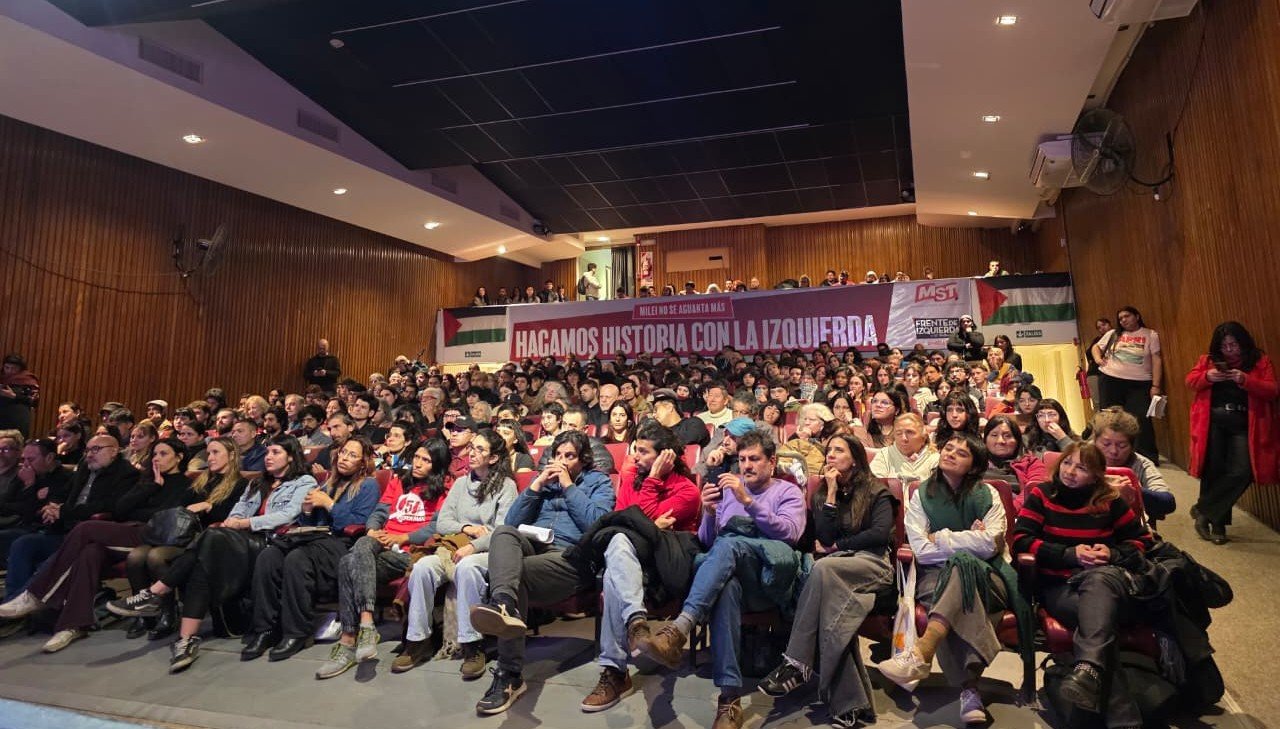
BySergio García, originally published in Periodismo de Izquierda
Our country’s political landscape is being reshaped by the government’s crisis, the fragmentation of a Peronist movement that has failed to live up to expectations, and the emergence of the left as a leading and rising political force. Several months after a significant segment of the population began shifting to the left, it is no longer surprising that Myriam Bregman and the Left Front appear in every poll and opinion survey with over 10% of the intended vote. In Myriam’s case, she enjoys higher levels of positive public perception than other figures in Argentina’s political establishment. This suggests that the left’s rise has not yet reached its peak.
There is no way to act effectively in the present and future without first fully grasping the full magnitude of this highly positive change that is taking place—a change that could very well be just the beginning of a major qualitative leap forward. For our part, we view this situation as unprecedented, highly progressive, and as the driving force behind the greatest challenge the revolutionary left has faced in decades: the possibility of bringing together our militant development and political clout in conjunction with upcoming leaps in the class struggle. This process, if it develops and crystallizes over time, could bring about the scenario of a contest for political power. This is what we are talking about—not merely a leap limited to the electoral sphere, which would already be positive, nor a slight increase or decrease in militancy and political influence. That is why the general scope of what we propose sets the bar at the level that reality indicates is achievable. Any proposal falling short of that can only be made if one fails to grasp the magnitude of the phenomenon currently unfolding.
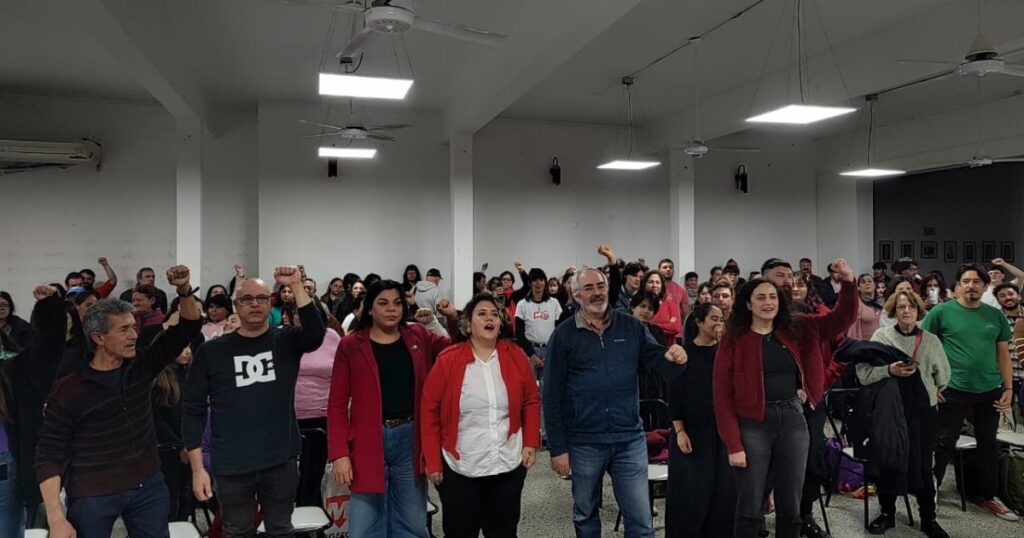
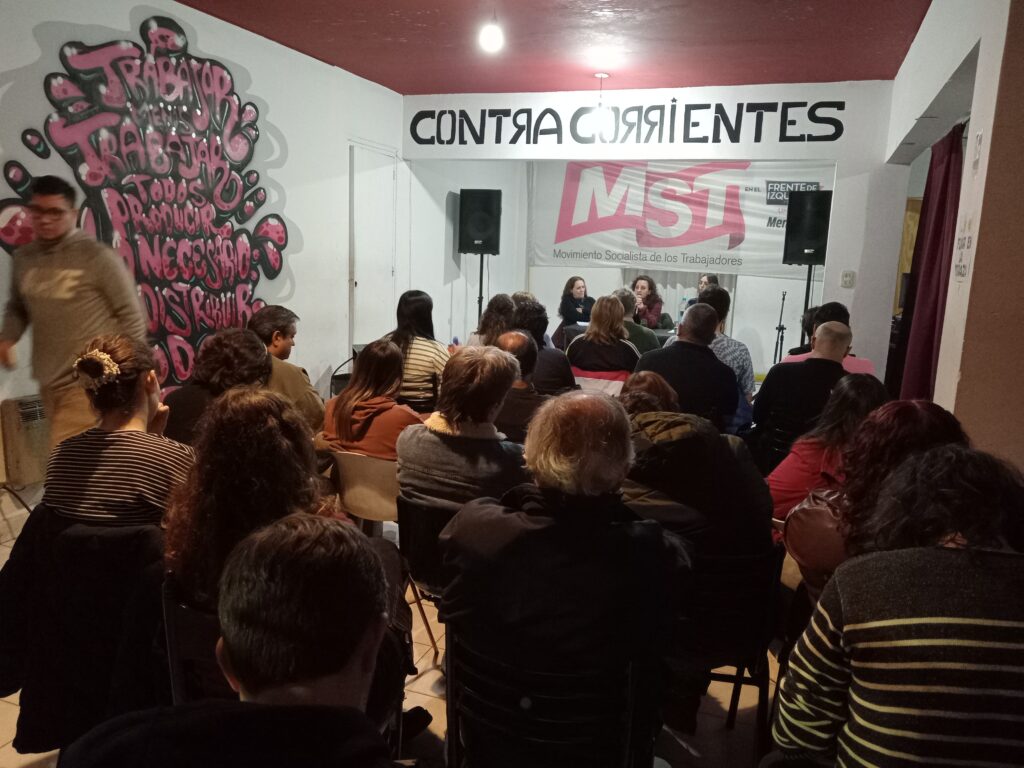
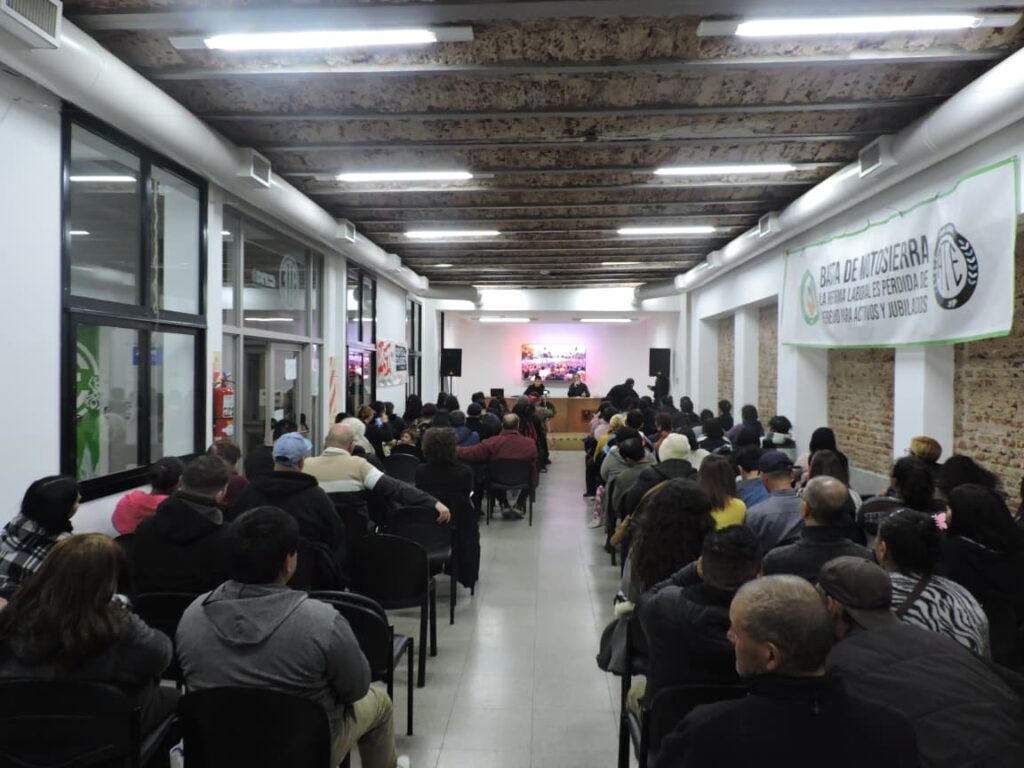
It is this exciting and rapidly evolving context that fuels a whole series of debates sweeping the left—debates in which leading figures, intellectuals, activists, and thousands of left-wing supporters participate, attending all kinds of events with their eagerness to engage and share their views. As various MST leaders have been touring the country and organizing events, we have observed this situation and the growing desire among sectors of the working class and youth to join the political organization. These events feature a high level of participation by independents and supporters, demonstrating the appeal that left-wing ideas—and the presence of their leaders and spokespersons—are generating these days.
Faced with this new and growing situation, if there is one thing we cannot do, it is to carry on as before or simply cling to past achievements or organizational forms that—if they were already limited—are even more so in this new scenario. To give an example regarding the Left Front (FIT-U)—a unity we value and defend as a necessary continuity, even though we have long argued that its electoral format is an obstacle to addressing political needs—those very obstacles and electoral formats are even more so today. Hence, in the face of the new situation, we cannot simply respond by defending the FIT-U as it is, but must use that defense as a starting point to strive for much more. In this regard, we do not share the assessments of the PO and IS, which center on the FIT-U as it currently stands: limited to a purely electoral agreement. As if it did not need to change or be qualitatively improved.
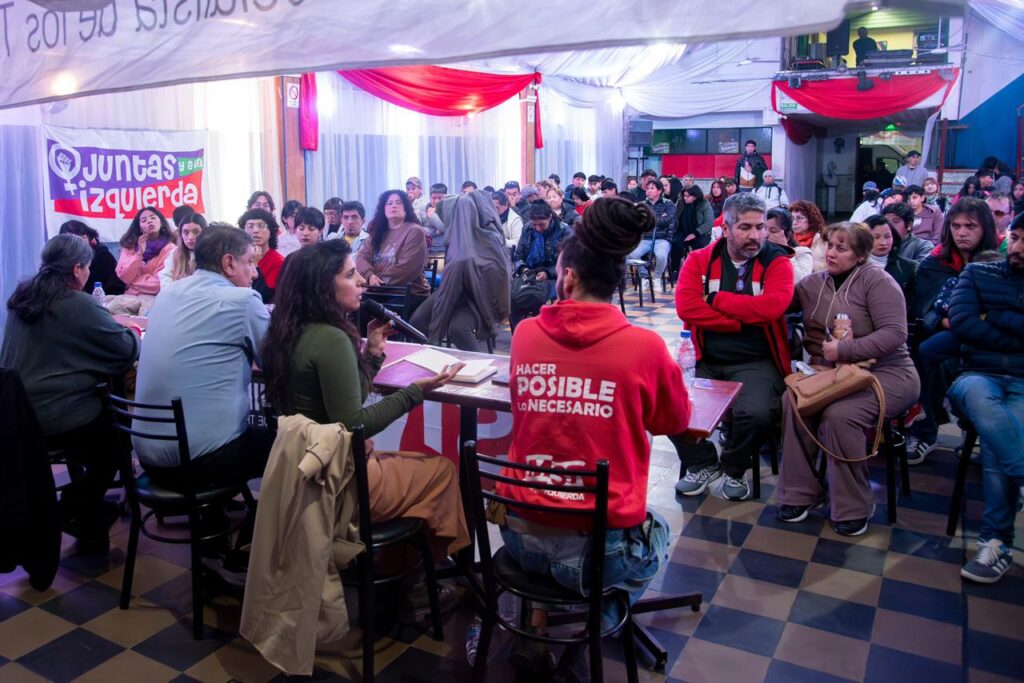
In our view, defending our united front of the left must always go hand in hand with seeking ways to improve it and transform it into something far more positive than it is today. The shift to the left that we are witnessing—and in which we are actively engaged—requires much broader political agreements that integrate electoral participation with unity in the class struggle and in every sphere of political contestation. And the political organization that needs to be built must take on the challenge of responding collectively to all these real-world issues. In this regard, we consider it very useful and appropriate for the FIT-U to organize a series of forums on various topics to open them up for debate, because this helps, in part, to focus attention on issues of greater significance.
Strategy and the Revolutionary Party
For these reasons, we believe it is important to thoroughly address the debate on the need to politically capitalize on this shift in the left’s position, in order to attempt to build a large, militant, and revolutionary political organization of the working class and the youth. In fact, this is the most strategic debate of all, since history shows that if revolutionary processes are to advance, they obviously require the objective existence of very high levels of class struggle, organs of dual power, and a revolutionary leadership that, from within its party, advances a correct line in the class struggle and within those organs of self-organization that may exist. There is no example in contemporary history that has shown that progress toward socialism and revolution has been possible without a revolutionary party. That is why we are not debating something minor or tactical, but rather pure and decisive strategy.
In this regard, our comrades in the PTS have proposed building a movement for a party of the new working class and forming committees throughout the country to achieve that goal. As we have already stated publicly—and in particular, as we have expressed to the comrades promoting this initiative—we in the MST are in favor of jointly promoting these committees, and we are also in favor of developing, in unity, this strategic debate we share toward the formation of a large party with thousands of members. To achieve these goals, it would be ideal if our comrades in the PTS would soon make it possible for us to come together in joint committees—something that thousands of comrades are hoping for and that is clearly a necessity at this moment.
Precisely because we believe that the situation presents us with a historic and unprecedented challenge, we are starting by making every effort to reach substantive political agreements on these tasks and objectives. It is clear that, if we look back, we will find significant points of agreement, nuances, and differences throughout the revolutionary left. At the same time, this should never be an impediment or an obstacle to reaching substantive agreements—both now and in the future—which is ultimately what matters most. Political leaderships that have the revolution on their political horizon must always make every effort to reach substantive agreements that serve as a positive lever and a qualitative impetus for moving forward.
As for the possibility of moving toward a unified party, there are naturally debates about the best way to go about it. The first step, in our opinion, is to agree on what we want to build. In this regard, we believe and propose taking steps toward the formation of a new and great revolutionary party that brings together—for political struggle and class struggle—thousands of new activists and the membership of those parties willing to take this step together. We are not talking about a tactical front, nor a broad-based party, nor an electoral organization. We are talking about building a revolutionary party, with a revolutionary and socialist program, with the strategy of the working class seizing power and establishing its own government, and with democratic centralism as its method of operation.
Indeed, to achieve that goal, there must be transitional provisions that can be enshrined in the party’s bylaws for as long as necessary, given that we come from different backgrounds and have different political experiences. Hence our proposal that this party must allow for internal tendencies to reflect and accommodate that reality and facilitate full inclusion and the resolution of any debates or differences that may exist. This approach does not run counter to democratic centralism, since the existence of factions does not preclude the party from operating through voting and the implementation of the majority line adopted on each issue and at each moment.
Something similar—which takes into account background and prior experience—can be addressed in the context of international affairs. In this arena, neither political lines nor organizational structures can be imposed overnight. Everything can be debated, and positions can be adopted by majority and minority vote. Likewise, we should democratically allow these positions to be expressed and ensure that everyone has the freedom to join international organizations. This should continue until time allows us to see if there are broader agreements to be developed in the realm of internationalist and revolutionary organizing.
In short, we are discussing these and other issues with our comrades in the PTS, and we want to do so with everyone who supports moving forward together to build a new, great party of thousands of members. This is the most strategic and decisive task. It requires a very in-depth debate, as well as a great deal of patience and understanding of what it means to work together among those of us who come from diverse political backgrounds within the revolutionary left. For this process to succeed, it must begin with listening to one another, working loyally, and truly believing that a single force cannot solve problems that require the contribution and strength of diverse leaderships and organizations. A process that brings together organizations, leaders, and cadres, combined with the incorporation of thousands of new members, to create a far superior political tool for the enormous challenges ahead. Is such a complex goal possible? Of course it is. It depends, first and foremost, on the revolutionary will to truly try to achieve it. As for us, that’s exactly what we’re doing.
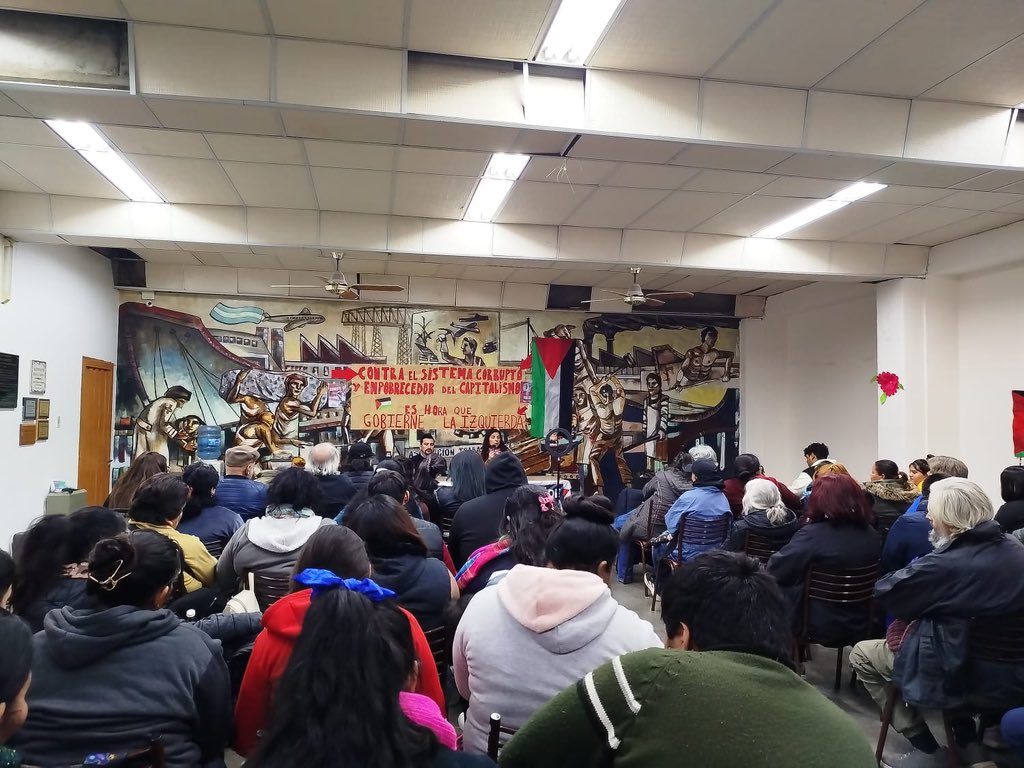
*The cover photo is from the MST’s recent event in Córdoba, featuring Alejandro Bodart and Luciana Echevarría