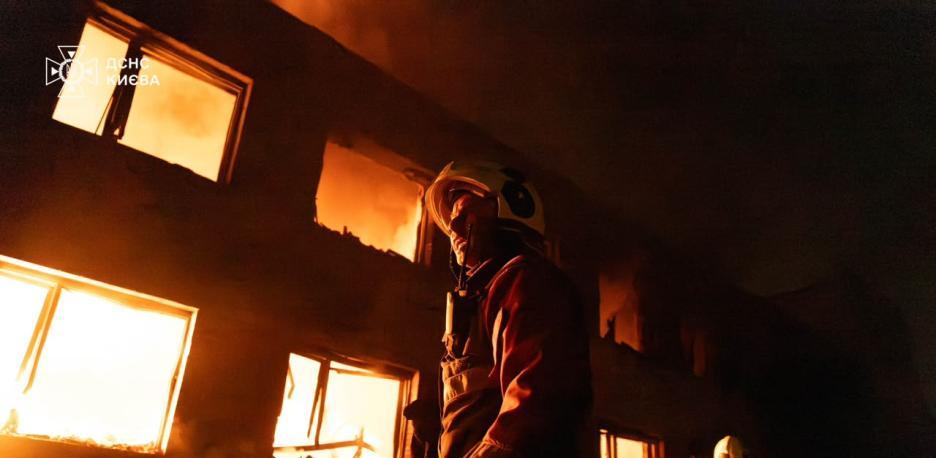
I am writing these lines at night, immediately following a Russian missile attack on Kyiv, on the 1,626th day since the start of Russian imperialism’s full-scale aggression against Ukraine.
By Oleg Vernyk, President of the Independent Ukrainian Trade Union “Zakhist Pratsi” – Ukrainian Socialist League (LSU).
These lines are being written at night, immediately following a Russian missile attack on Kyiv, on the 1,626th day since the start of Russian imperialism’s full-scale aggression against Ukraine. It is astonishing that, after 1,626 days, a Ukraine of 25 million people continues to heroically resist a power of 140 million people, equipped with nuclear weapons and “the world’s second-largest army.” The spirit of Ukrainian resistance has not been broken.
No matter how barbaric the missile attacks Russia has recently unleashed on Kyiv and Ukraine’s major cities may have been, the spirit of popular resistance from below has not been broken. The working class firmly and steadfastly asserts that the fate of Ukraine and its people will be decided by the Ukrainians themselves, and not by Russian “liberators” in tanks or by Western imperialists, who are terrified of the upcoming parliamentary elections.
Situation on the Front
First, it should be noted that over the past six months, there have been no significant changes along the line of contact. For the fifth year in a row, the Russian military has been attempting to conquer the Donetsk region in order to offer the Russian people at least one tangible result from the so-called “Special Military Operation” launched by Putin on February 24, 2022. Putin and his inner circle prefer not to mention the other objectives of the aggression, which are entirely fleeting and false. “Denazification, ” “demilitarization, ” “protection of the Russian language,” and other propaganda clichés were long ago consigned to the dustbin of history by the Kremlin. That is why the false slogan of the “liberation of the Donbas” remains the only more or less achievable objective, according to Putin, and he is sparing no effort or resources to achieve at least this goal.
It should be noted that, in many sectors of the Russian-Ukrainian front, the line of contact has not changed substantially for a long time. At great cost, the Russian army has been waging a fierce battle for more than three months to achieve the complete and definitive capture of the city of Kostiantynivka in the Donetsk region.
If Kostiantynivka falls for good, the Russian army will have a new task—though by no means its last: the capture of the key cities in the Ukrainian Donbas, Sloviansk and Kramatorsk. A fairly strong Ukrainian defense line has been established there, and capturing these cities will cost Putin dearly and take a very long time. Many military analysts, in principle, doubt that the Russian military has the necessary resources to carry out military operations of such a scale.
The question of declaring a general or partial mobilization in Russia is becoming increasingly important for the continuation of the war. But Putin will not be able to decide on such an unpopular measure before the parliamentary elections on September 18–20, 2026, are over.
We understand that, under Putin’s dictatorship, we will not see any honest election results and that all the final figures will be fabricated in the Kremlin’s offices. However, Putin’s own Kremlin team will be able to obtain a true snapshot of the Russian people’s mood and, based on that, make a final decision on whether to fully mobilize Russians for the war in Ukraine or abandon this risky plan.
The Drone War
It is important to note that, since early 2026, the tactics and strategy of the war in Ukraine have undergone significant changes. Unmanned aerial vehicles—combat drones—have taken center stage in the war. And it should be noted here that Ukraine has proven to be quite competitive against Russia in this arena. Throughout 2026, the Ukrainian “Unmanned Systems Forces” have managed to carry out targeted attacks on numerous oil refineries deep inside Russia, triggering a fairly severe fuel crisis there. Russia even had to resort to importing gasoline from Kazakhstan and Belarus.
On June 25, 2026, Ukrainian President Volodymyr Zelenskyy approved the so-called “40-Day Operation to Exert Influence on the Aggressor State with the Goal of Inducing It to Make Peace.” Ukrainian combat drones struck infrastructure and military targets in Crimea and other occupied territories, as well as numerous Russian ships of the so-called “ghost fleet” in the Sea of Azov. Despite the significant quantitative results of these attacks, their overall outcome remains a matter of debate. In any case, there are no signs from Putin that this attack has “induced him to make peace” in any way.
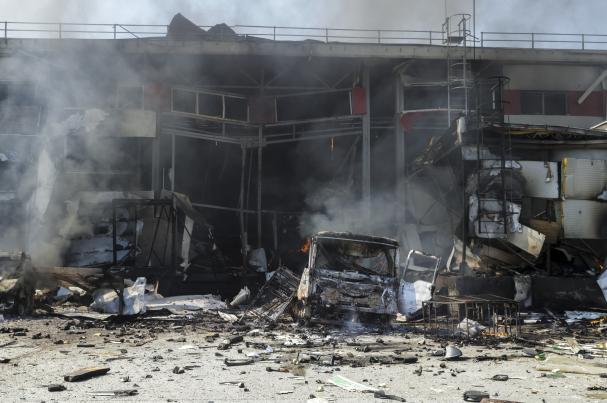
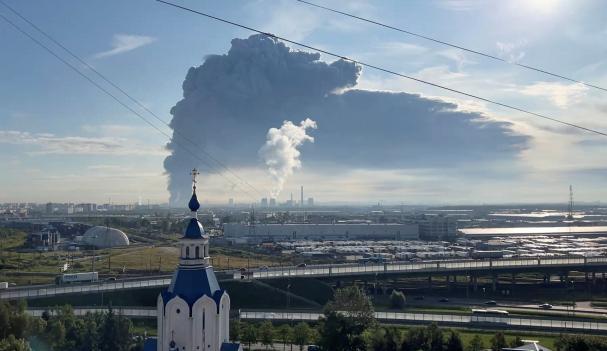
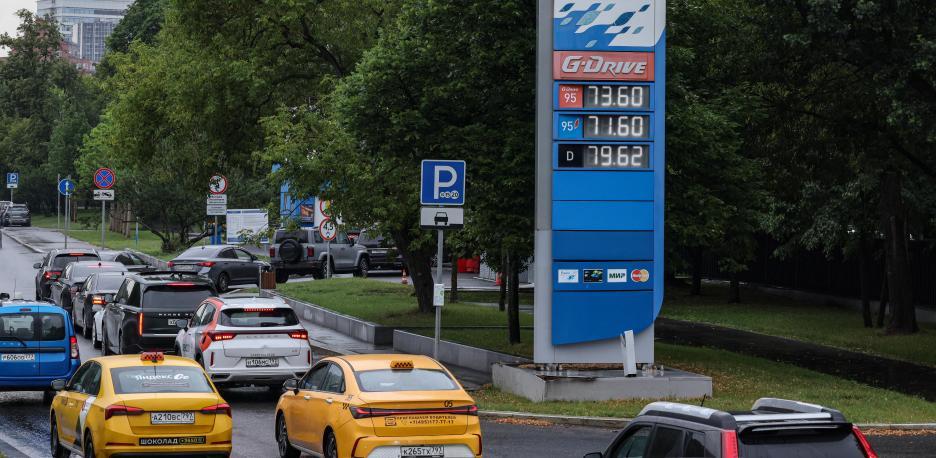
Russia, for its part, attacked Ukrainian Black Sea ports and numerous ships carrying cargo from Odessa and other Ukrainian ports. And following the prolonged attack by Ukrainian combat drones against the Russian “marketplace” network Wildberries, a very harsh response came on August 5 in the form of a nighttime ballistic missile strike against major companies, retailers, and their logistics centers in Ukraine: “Epicentr,” “Silpo” (Fozzy Group), NOVUS, Rozetka, Liqui Moly Ukraine, and others.
It is important to note one key aspect here to understand the situation. Ukrainian drones carry an explosive payload of between 30 and 70 kilograms. They fly for long periods at low speeds, which means Russian air defense forces can shoot them down with relative ease; to achieve any results, it is necessary to launch hundreds of drones simultaneously.
At the same time, the Russian “Iskander” ballistic missile can fly from Russian territory to Kyiv in just a few minutes and carries a 500-kilogram warhead. North Korean ballistic missiles of the KN series (Hwasong-11), which Russia is currently actively using, can carry significantly heavier warheads, ranging in mass from 400–500 kilograms to as much as 1,000 kilograms (1 metric ton). It is clear that this standoff in “Deep Strike” tactics does not provide an unequivocal advantage to either side. However, over the past two months, a very serious and troubling factor has emerged that significantly influences the situation.
The Lack of Anti-Ballistic Missiles in Ukraine’s Air Defense System
As early as the spring of 2026, Ukrainian authorities acknowledged for the first time that Ukrainian air defense forces had virtually no anti-ballistic missiles left at their disposal and that, in practice, they no longer had the means to shoot down Russian ballistic missiles. It is already known that Donald Trump, during his absurd “imperialist adventure” in Iran, depleted a massive stockpile of “Patriot” anti-ballistic missiles and cannot even theoretically transfer them to Zelensky. Trump first assures Zelensky that he will provide Ukraine with the technology to manufacture “Patriot” missiles and then backtracks on his words, leaving Zelensky even more mired in a situation of absolute dependence and uncertainty.
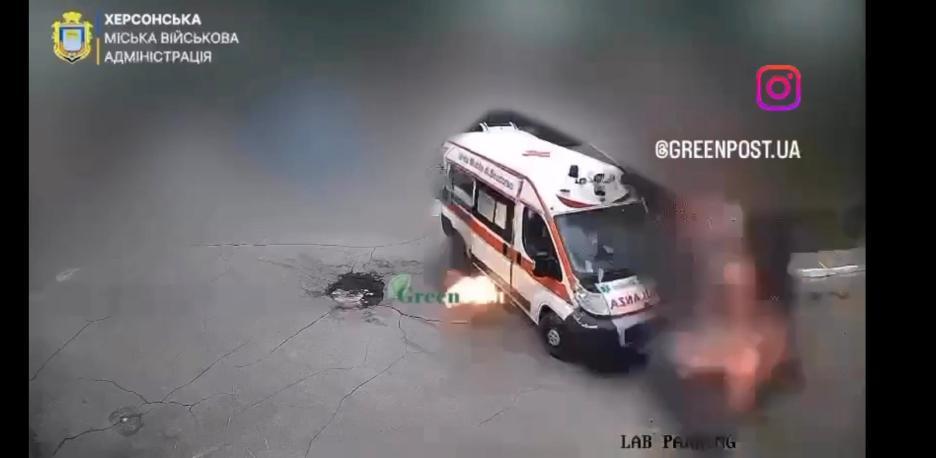
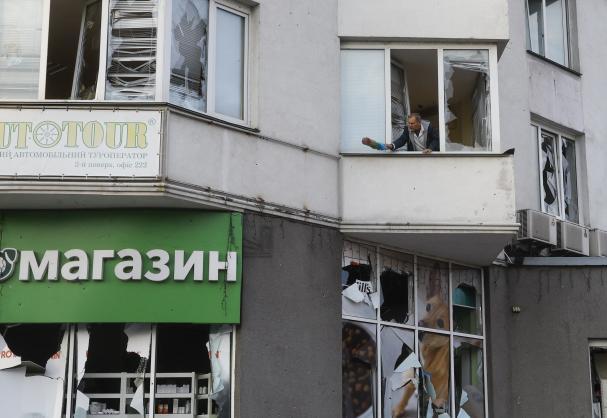
Meanwhile, Kyiv and all other Ukrainian cities remain completely unprotected against Russian ballistic missile attacks. Neither Russian nor North Korean ballistic missiles are accurate enough to hit their targets when used against densely populated Ukrainian cities. As a result, the number of civilian casualties among the Ukrainian population increases severalfold with each missile strike. And, for the time being, it is by no means clear how this problem will be resolved in the near future.
After five years of war, Ukrainian civilians have grown accustomed to living under Russian bombardment and risking their lives every minute amid the rubble of their own homes. However, this situation is worsening every month. Two issues remain constant: first, Western imperialism—the U.S., the EU, and NATO—provides limited military support for defensive purposes, which is increasingly insufficient and contingent on its own expansionist economic and political interests. The second is that while Trump and Putin come and go with their plans for Ukraine, behind the backs of the Ukrainian people, the U.S. president continues to make clear his colonial interests in critical minerals through the agreement signed with Zelensky, which allows him access to rare earth minerals “at any time.”
Ahead of us, we Ukrainians face a harsh and cold winter, and it is already clear that Putin will attempt to permanently destroy all electricity, heating, and water supplies in Ukrainian cities, as well as to take out the sewer systems and water treatment facilities. The objectives of the imperialist beast Putin are, in fact, clear, transparent, and obvious. But what will Zelensky’s new government—recently reappointed—do in the face of this situation? It raises far more questions than it answers.
The political struggle in Ukraine takes to the streets
Throughout the full-scale war, Ukraine has been rocked by corruption scandals involving President Zelensky’s inner circle. Yermak, Mindich, Tsukerman, Galushchenko… These names—belonging to the highest echelons of Ukrainian power and to those who provide business services to these elites—are now known far beyond Ukraine’s borders.
Of course, everyone understands that a situation in which all of the president’s closest associates turn out to be thieves and corrupt officials is impossible without protection from the highest levels of government. However, the president, in his capacity as Ukraine’s supreme commander during a defensive war, is exempt from criminal liability under Ukrainian law.
The inability to hold elections under martial law seemed to indicate that the political process would remain at a standstill for a long time. Zelensky managed with relative ease to suppress the main and traditional bourgeois parliamentary opposition—Poroshenko, Tymoshenko, Boyko—which was, and remains, no less corrupt and thieving than the current parliamentary majority led by the presidential party “Servant of the People.”
Personal sanctions were imposed on the leaders of the bourgeois opposition, criminal cases were opened against them, and subsequently, efforts were made to buy their loyalty and neutralize them. However, in this context, new political and personal opponents of Zelensky began to spring up like mushrooms, both from within the military and security structures—Generals Zaluzhny and Budanov—and from within the government bloc itself—former Defense Minister Fedorov.
Zelensky is attempting to neutralize the first two by appointing them to sinecure positions: Zaluzhny was sent as ambassador to Great Britain, while Budanov was appointed head of the Office of the President, replacing the discredited and indicted Yermak. Of course, this is only a temporary solution and an equally temporary truce. Each of these political heavyweights is now defining their own strategy and tactics in the struggle for supreme power.
As for former Defense Minister Mikhail Fedorov, the situation began to unfold in a completely different direction. He gained widespread notoriety and popularity thanks to his innovations in the digital sphere, his involvement in developing the concept of “drone warfare” and ensuring its full material implementation, as well as his agreement with Elon Musk to cut off Russian troops’ access to Starlink systems along the line of contact. However, when Mikhail Fedorov attempted to reform a highly corrupt centralized military procurement system, he encountered strong resistance from Zelenskyy’s inner circle.
It turned out that military contracts were not awarded based on the best quality and lowest price of the products, but rather on the proximity of the owners of military industries to the highest echelons of power and on the size of the so-called “bribes.” Fedorov tried to break this corrupt system, but it proved to be much stronger than he was.
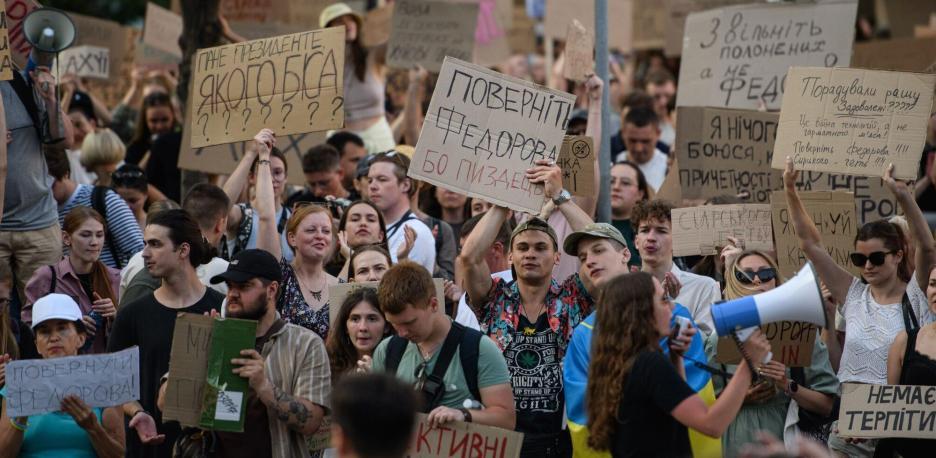
Zelensky could not directly dismiss the popular Fedorov and had to dissolve Prime Minister Sviridenko’s government without any clear reason in order to conceal this plan. Fedorov was prepared for this possibility and sent his supporters out onto the streets of Kyiv, having previously received some discreet support from Western governments.
In any case, the police did not dare to disperse the protests demanding Fedorov’s reinstatement as defense minister, even though all demonstrations and street protests are prohibited by law in Ukraine during wartime. The protests in Kyiv and many other cities across Ukraine gained momentum, and Zelensky was forced to make some concessions to the protesters.
Specifically, on July 22, 2026, Aleksandr Sirski—who was close to Zelensky but but extremely unpopular in the media, was removed from his post as Commander-in-Chief of the Armed Forces of Ukraine, and the young and popular Major General Mikhail Drapaty was appointed in his place. In late July and early August, the protest demonstrations in Kyiv began to turn into massive marches. However, Zelenskyy is no longer making any further concessions to Fedorov’s supporters.
Fedorov himself maintains an ambiguous stance: he is not participating in the protests and is trying, through behind-the-scenes negotiations, to convince Zelensky to take his side. It appears that, as of this writing, the protests are beginning to lose momentum, but the trajectory of this situation is not yet entirely clear.
The Labor and Trade Union Movement in Ukraine. The Solidarity Convoy.
I have already pointed out on numerous occasions that Putin’s imperialist large-scale aggression against Ukraine forced us to put certain aspects of the workers’ struggle and our union work on hold. Many activists from our All-Ukrainian Independent Union “Zakhist Pratsi” were mobilized, and many volunteered to join the front lines. Unfortunately, several of our leading activists were killed on the front lines, and some went missing in action.
At the same time, Putin’s aggression gave Zelensky’s neoliberal governments free rein to attack labor and union rights, using the war and martial law as a cover. But now a situation is emerging in which the new and prominent international initiative “Solidarity Convoy with Ukraine” could give a second boost to labor and union activism in Ukraine.
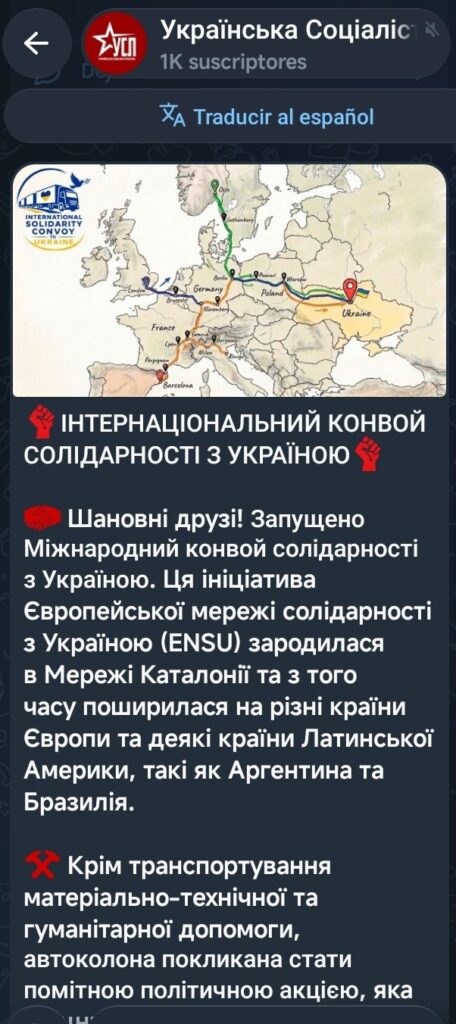
This initiative by the European Network of Solidarity with Ukraine (ENSU) originated in the Catalonia Network and has since spread to various countries in Europe and some countries in Latin America, such as Argentina and Brazil. Our International Socialist League and the Ukrainian Socialist League are actively participating in it. The online presentation of the initiative was attended by labor activists, social movements, and political parties from various countries, including Ukraine.
The goal of the “Convoy” is to organize an international initiative coordinated and led by representatives of grassroots organizations. Its cargo will consist of medicines, electric generators, vehicles, and other necessary supplies that can be purchased or obtained through donations. In addition to transporting material, technical, and humanitarian aid, the convoy aims to become a visible political action that strengthens international solidarity from the grassroots level, coordinates initiatives—many of which have already taken on a life of their own—and contributes to broader participation by grassroots organizations from different countries.
The convoy will travel more than 3,000 kilometers through various cities and capitals of European Union countries before entering Ukrainian territory and arriving in Kyiv. Along the entire route, there will be activities, gatherings, and demonstrations involving solidarity committees and political groups committed to supporting the Ukrainian people. The first events as part of the “Solidarity Convoy” will take place on August 19, World Humanitarian Day, established by the UN to recognize the work of those who provide aid in crisis situations and to honor the memory of humanitarian workers who died in the line of duty.
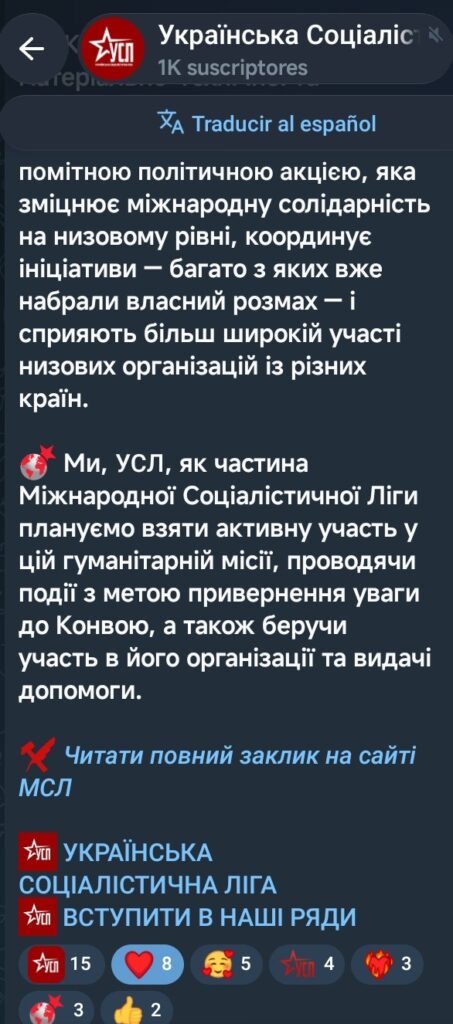
On that day, events will be held in various countries to draw attention to our “Convoy” and to strengthen international solidarity with the Ukrainian people in their struggle and with their working class.
The Ukrainian resistance continues. We simply have no choice but to resist…
You may also be interested in: “Politically opposed to Zelensky, but offering unconditional support for Ukraine”