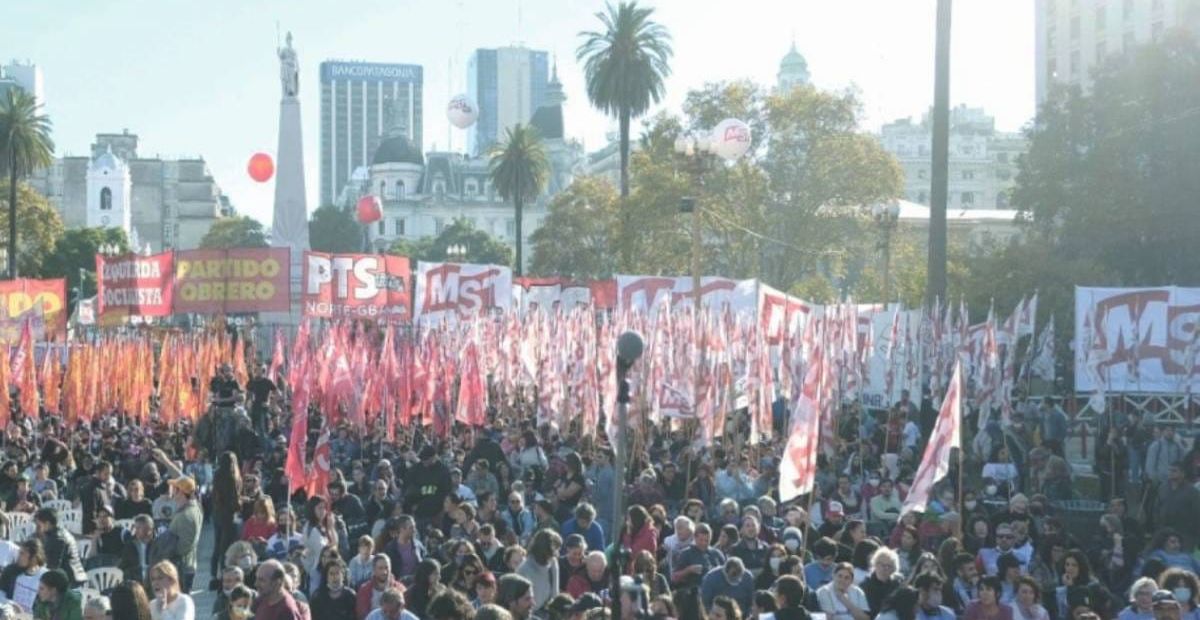
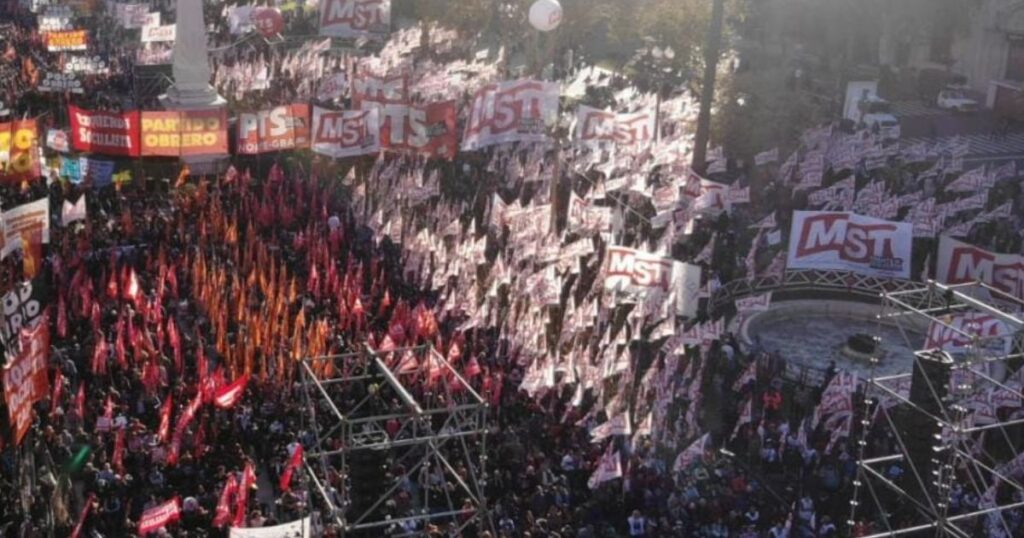
One of the main aspects of the political developments currently taking place in the country is a notable political advance by the left, expressed in higher levels of social and political support, as reflected in increasingly frequent polls and opinion surveys. This is also evident in the sympathy that a significant segment of the population has been expressing in workplaces and schools, particularly toward our comrade Myriam Bregman as a leading figure and toward the Left Front in general. Our comrades Cele Fierro and Alejandro Bodart, who have been touring the country, are also receiving these expressions of support as a reflection of a highly progressive political process and phenomenon that is in full swing—one we are a part of and are determined to contribute to with all our strength.
To push the left forward further, we must start by understanding that an unprecedented, extraordinary situation began to take shape months ago. We are not facing merely a slight increase in support for the left, nor are we facing a problem limited to the electoral or parliamentary sphere. We are facing the expression of a specific situation that combines the weakening of Milei’s government, the deep crisis within Peronism, and the existence of an anti-capitalist and socialist left-wing force that has consistently confronted successive governments over the years and supported the struggles. The result is that right now a very significant segment of the working class and youth—numbering several million people—is siding with the left and against everyone else. And that segment could continue to grow in the coming months.
The unfolding of this situation—which embodies both a historic challenge and an unparalleled opportunity—would have required a common policy by the Left Front, something that clearly did not happen at the outset of this political shift, a fact that has only served to accentuate the differences over the course of the last few months. For in the face of momentous events, every political structure is put to the test and comes under strain. And that is what the Left Front is experiencing today: significant differences over what to do, combined with the emergence of strategic debates surrounding the political struggle, the nature of the front, the relationship between political and union struggles, and—very regrettably—conflicting positions on how to act within the labor movement, where the Workers’ Party (PO)—through its leadership of the SUTNA tire workers union—has been demonstrating an approach that runs counter to the best traditions of class struggle. There is a crisis within the Front, because on the political and union fronts there are strategic differences, and the profound changes in the situation are making them more visible.
A key divergence stems from politics. The fact is that both the PO and Izquierda Socialista fail to grasp the scope of the political changes underway, which is why they vacillate between conservative and routine positions, proposing more of the same and advocating that the FITU remain merely an electoral front that does not participate in everyday political life alongside the people, has no strategy for acting in the class struggle, and does not consider how to jointly organize tens of thousands of new activists—who would be indispensable for any substantive political struggle. Consequently, they also attach no importance to participating in a serious debate regarding the possible formation of a major political instrument or a new party. That is why, time and again, in articles and speeches, they simply repeat that we already have the FITU, and that there is no need to discuss other matters. This is an ultra-conservative and simplistic view, precisely at a time when the enormous limitations of our front in responding to such a change in the situation and to the challenges and opportunities it presents are glaringly obvious. Our current front does not include—nor is there room for—the hundreds of thousands who are gravitating toward the left, yet this highly visible fact does not merit even the slightest reflection or new idea on the part of these comrades.
That same approach—so misguided and ineffective on the political level when it comes to addressing the tasks facing the left in the midst of an extraordinary and exceptional situation— coexists—and not by chance—with a similar and equally misguided approach at the union level, where both the PO and the IS insist that nothing be changed simply so they can continue operating from within the limited and stagnant space of the PSC (Militant Unionism Plenary), where decisions are made solely through top-down agreements among two or three leaders, while the reality of the major struggles that have taken place in recent times has passed that space by.
This policy also prevents the FITU from jointly debating the realities of the class struggle, under the fallacious argument that it seeks to supplant the sectors in struggle or tell them what to do. None of this is true; what needs to be done is very simple: do not separate the political struggle from the labor struggle, and ensure that the Left Front debates these struggles, supports them, proposes ideas, and puts all its strength at the service of their victory. Of course, this must always be based on respect for those involved in each struggle, without supplanting anyone or imposing anything. But denying our front—as our comrades in the PO and IS mistakenly do—the possibility of debating intervention in the class struggle is to reaffirm an electoralist and limited view of their own concepts. This runs counter to a truly unified strategy on the political, union, and social levels.
Political Misunderstanding and Approaches That Differ from Classism
In recent months, all of this has been exacerbated by the conflict at FATE—in which we have been involved since the beginning—and for which we must all continue to make every effort to defeat the policies of management and the government. It is a struggle that, now more than ever, requires broadening solidarity and surrounding it with support, through actions that should be highly unified. And our views on this matter stem from a desire to support the FATE workers; the criticisms we have of their leadership are made precisely in support of the workers as a whole, because we want the struggle to win. Unfortunately, in this conflict, the SUTNA leadership headed by the Black Slate of the PO has been playing a deeply misguided role, one that has not contributed positively to the development of a very important struggle—a struggle that required a working-class strategy and approach diametrically opposed to the one the leadership has been pursuing.
It is for this reason that the current crisis within the Left Front is now focusing its debates on the conflict involving the FATE factory and SUTNA, since it is there that very profound differences in policy and method are expressed and played out, including issues of strategy and workers’ principles that cannot be ignored. We are facing a conflict that has reached its worst point, because its leadership never developed a genuine united-front policy or broad unity of action around the struggle—unlike, for example, the iconic Garrahan struggle, which was headed by the APyT union and resulted in a victory over the government.
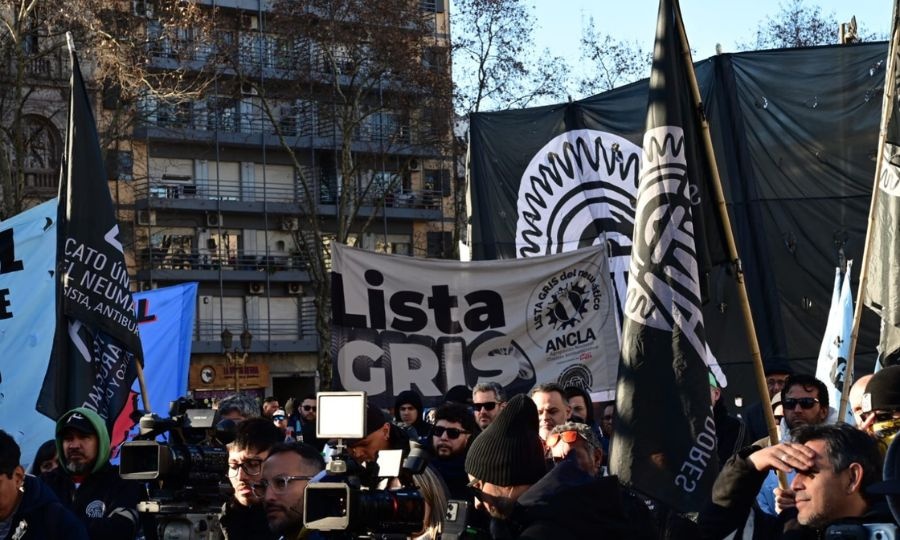
We believe it is a major political mistake that the PO has done the opposite: failing to adopt broad, unified policies, while simultaneously harassing and attempting to isolate any group within the union that holds different opinions and proposals. In a distinctly bureaucratic manner, a single line of thought was promoted throughout the conflict, which has only served to weaken the struggle, demoralize workers, and drive away more and more workers who see no future in it. All of this is carried out through the absence of genuine general assemblies, by denying opponents the right to speak, and through attacks on comrades who are supporting the conflict. To further entrench this course— which we insist is deplorable and contrary to class struggle—they burned a flag in front of PTS comrades who are part of the struggle, threatened a female activist, and carried out unjustifiable acts of intimidation against a delegation from Suteba Tigre, teachers union which had merely come to propose a public class in support of the struggle. These events touch on central issues within the labor movement; they go beyond the bounds of political debate, differences of opinion, or a circumstantial confrontation. We are facing a methodology that runs counter to the working-class and class-based culture that we on the left must uphold in our relationships within a struggle; that is why what has been happening is reprehensible. These attitudes persist to this day. In fact, after a long period without any militant action, a press conference was held to mark the six-month anniversary of the conflict, and once again, the leadership of the Black Slate de PO decided not to allow other opposition and left-wing groups to speak, nor any representatives from two of the FITU parties.
It is important to understand that the extent of the disagreements over how to act within the labor movement is not merely a union issue; these are essentially differences in political strategy. Because if the leadership of a workers’ struggle harasses, uses violence against, and attempts to silence opponents—who are also workers and members of the left—we are faced with an undeniable problem of political conception. How would that same leadership act if it were in charge of a workers’ government? That is how profound the debate is. That is why we believe it is time for the Workers’ Party to pause and reflect on these actions, come to terms with the situation, think through what has happened, and try to draw some conclusions that will help it get back on track. And may this have a positive effect on relations within our front.
Slander is also foreign to the left
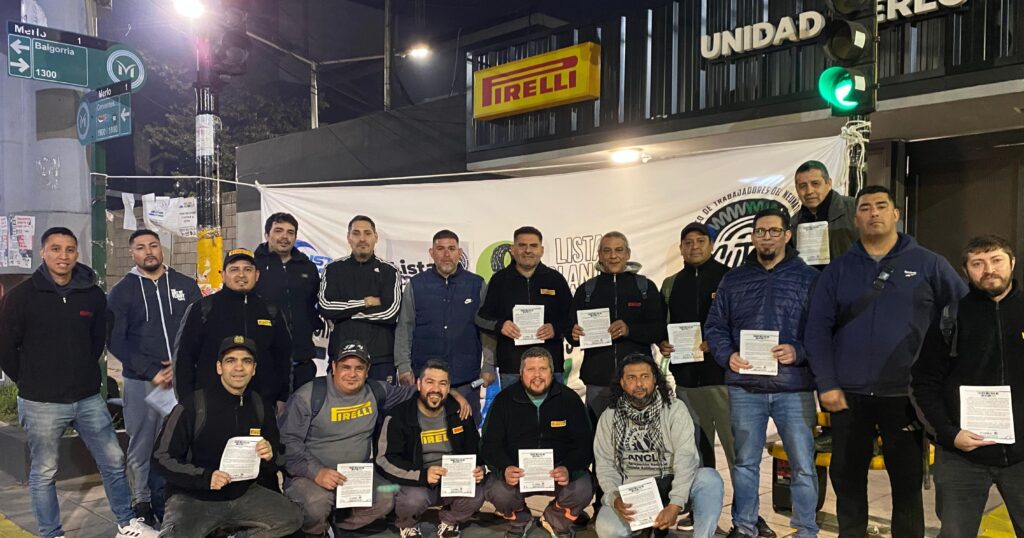
For the time being, and unfortunately, our comrades in the Workers’ Party have shown no sign of engaging in this necessary reflection. They act as if all these public and obvious facts do not exist. Worse still, they are trying to divert attention with smear campaigns against activists who oppose La Negra and her policies. Thus, according to them, those who were attacked and had their flags burned are provocateurs, outliers, and divisive figures simply because they criticize the union leadership. In the PO’s view, those who were attacked are to blame for the violence themselves; they committed the “sin” of criticizing the union leadership instead of toeing the line. Something similar is happening in the specific case of our comrades from the Grey and Multicolor slates factions at Pirelli, who—for speaking their minds and acting independently and critically toward the Black Slate—are accused by PO leaders of being “pro-management.” This is an unjustifiable slander that can only be spread by someone who has completely lost their way and, on top of that, is utterly unaware of what is happening inside Pirelli. A factory where the SUTNA leadership also threatens and harasses opponents and denies them the right to elections—thereby leaving the workers without representation and thereby favoring management, which takes advantage of this situation to change working conditions. And the PO and the Black Slate cover up their own responsibility by accusing those who fight the bosses day in and day out of being pro-management—while, at the same time, they have to demand, in an unprecedented move, that their union leadership call for democratic elections. And we say “unprecedented” because it is—if we start from the fact that the Black Slate considers itself part of the class-based movement. Calling for the rank and file to elect their representatives should be obvious, and there should be no need to demand it. But elections are not being called, and in the meantime, opponents are being slandered to divert attention. It is a truly unspeakable tactic. And, unfortunately, our comrades in Izquierda Socialista say nothing about any of this and thereby justify it. Because they have only spoken of a general condemnation of violence, without mentioning either who is carrying it out or the specific incidents in question. In other words, it is a condemnation so general and devoid of substance that it does not name those responsible, while they continue to stand alongside them in a political bloc within the FITU and the PSC.
A path that doesn’t help
This entire context of deep political and union divisions explains the current situation of intense tensions and debates, as well as the complex outlook for the Left Front. Sadly, the PO and IS’s united front approach—rooted, as we’ve said, in a failure to grasp the magnitude of the changes underway—leads them to insist on solutions that are unhelpful. On the one hand, they are inventing so-called “unitary” and “FITU” committees—which are, in fact, an initiative of just two parties—and using them as a platform to advance a misguided policy. Consequently, these small gatherings actually serve as a factor of division, not unity, within our front.
For our part, we have always been in favor of promoting united committees; that is what we voted for at our MST Congress months ago, because it was the right thing to do to try to agree on the objectives for which they should be formed and how to move them forward. However, for that to happen, there had to be political agreement among the four forces of the FITU, and there wasn’t. This didn’t happen before, and it’s even less likely to happen now amid the current crisis and the deepening of political and methodological differences.
At the same time, in light of these debates and the crisis triggered by the reprehensible events at SUTNA, it became impossible to make progress in just a few days toward establishing a joint slate for the upcoming elections in Bariloche, because the circumstances simply did not allow for it. We in the MST hope that better conditions can be created in the future to get back on the path to unity. It does not help this possibility—to which we must all contribute—to further exacerbate the problem by waging a sort of campaign about the “breakup of the Left Front,” as the PO and IS are mistakenly doing in their search for someone to blame and in their attempt to create a sense of unease among activists and left-wing supporters. We call on them to put an end to these divisive positions and attitudes.
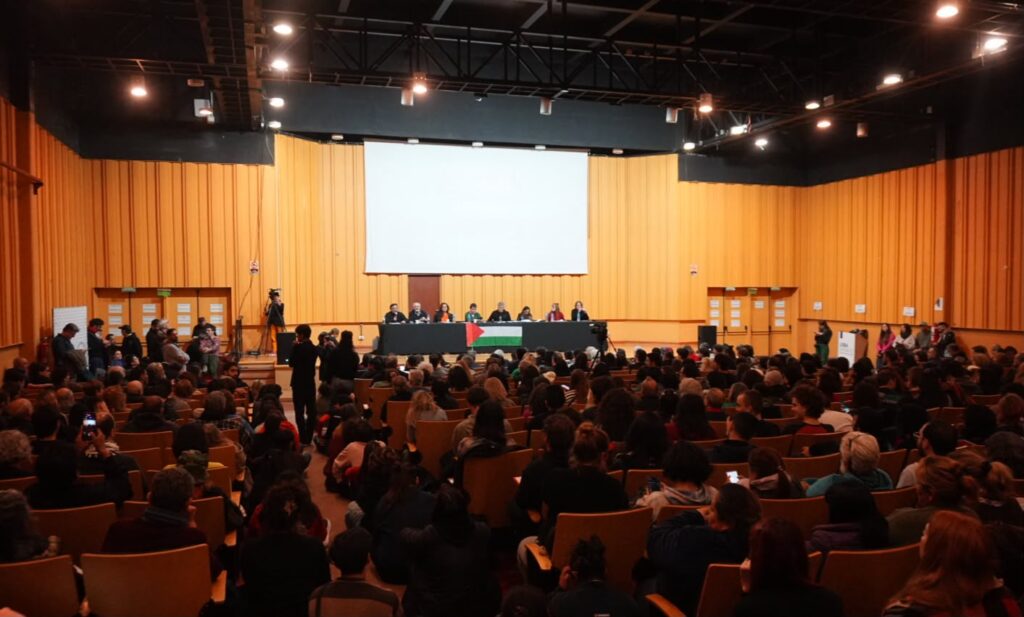
The Left Front that we value and defend must find a way to overcome this moment and strive to remain united—something we believe is necessary and toward which we will always strive. We recognize that contributing to the necessary unity is also achieved by rethinking the policies that underlie the current impasse and that have only ensured that the FITU as a whole has been unable to assume the responsibility and seize the opportunity to transform itself into something far greater. For our part, we would like to be debating other issues and taking other actions on the front lines. We regret that the situation has reached this point, from which the way forward lies in efforts to reach common political agreements—not in false and meaningless campaigns.
For a New Historic Movement from the Left
At the beginning of this article, we highlighted the unprecedented opportunity we are facing and the challenge we cannot ignore. Faced with such a situation, we cannot respond with more of the same. It is time to do something new, and the Left Front, if it wishes to play a positive role, should promote this collectively. Since it is not doing so—and, evidently, will not do so due to deep-seated differences—its future lies amid political tensions, from which the way out lies precisely in common policies and substantive agreements, not in misleading campaigns.
Until that happens, we will continue to insist on the need to foster, among those of us who do agree, an in-depth debate on how we can contribute to building a militant organization of tens of thousands. Because reality demands that we not prioritize petty squabbles that delay the real tasks at hand, nor speculations limited solely to the electoral arena—which is an important political struggle to wage—knowing that, at the same time, there are highly strategic debates we must address and respond to correctly.
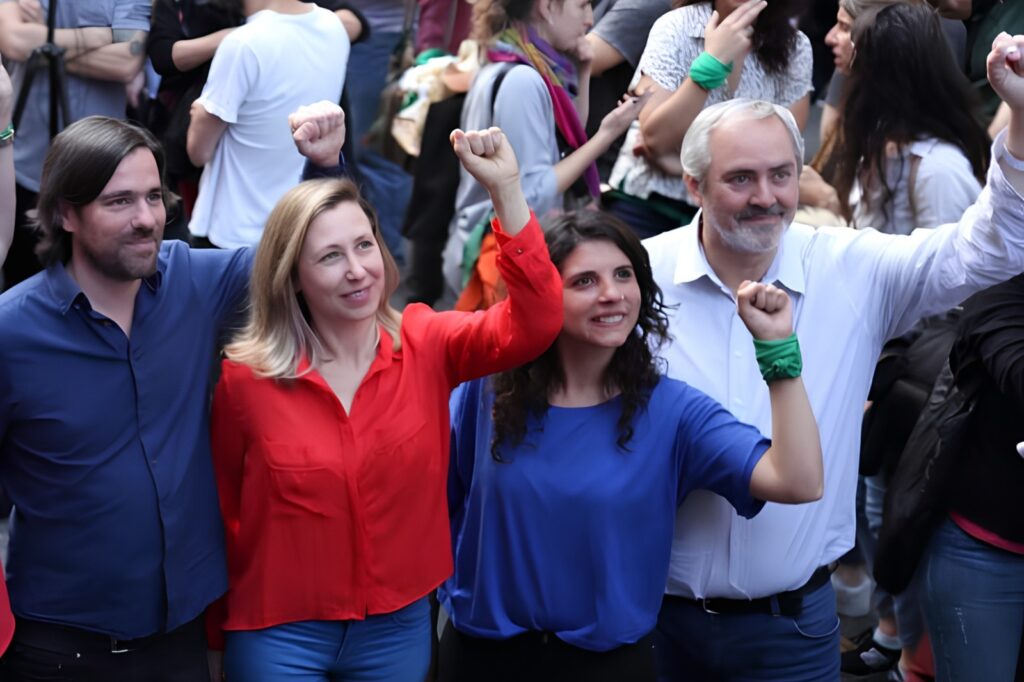
For these reasons, we have been moving forward in a discussion with our comrades in the PTS, who, like us, see the need to build a movement toward a new party and share our view that we are facing an opportunity to be the architects of a new historic movement from the left. In this context of agreement, over the past few months we have also had some natural nuances or specific differences with them regarding how to move forward; there are ongoing debates and exchanges between our organizations, and we will continue to develop them, always seeking to move forward. Patience is needed to make the greatest efforts to build a new political movement—one that, for our part, we are striving to build collectively and together with thousands of workers and young people who join us. In the drive to build a new and great revolutionary party with a common program and strategy, where everything is thoroughly debated democratically and then decided upon, and we move forward together to act in the real world. Allowing, in its internal functioning—at least temporarily—for the possibility of existing as a current or faction until pre-existing nuances or differences are clarified and channeled.
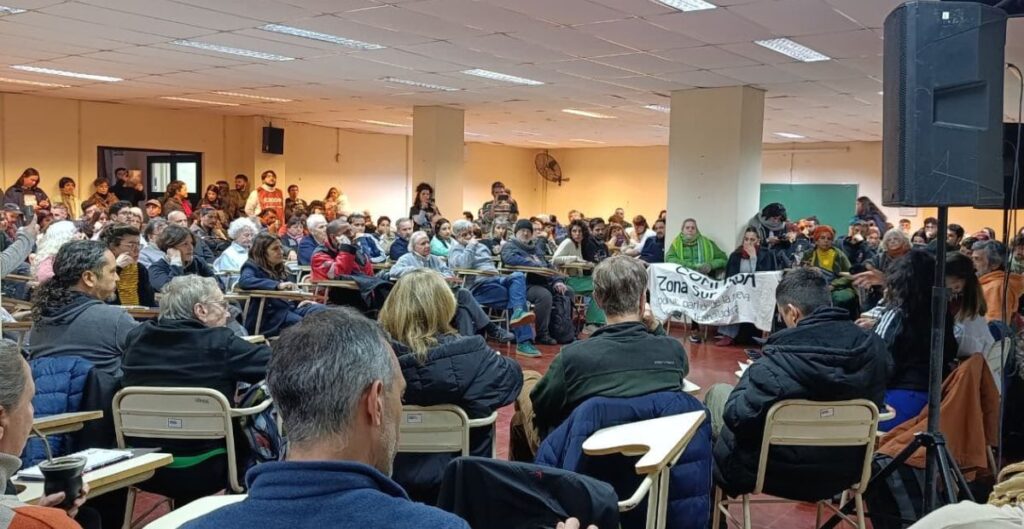
As we continue these discussions with our comrades in the PTS, we also we share a common view regarding the bureaucratic approach taken by the SUTNA leadership, and we are promoting regional coordinating committees in various locations as another way to help advance the struggle against Milei, the employers, and the union bureaucracy. We are also presenting a joint slate for the elections in Bariloche so that it can advance this political orientation, and, together, we have just helped organize the planning meeting for the “Marcha de la Bronca,” which turned into a very broad and positive event and will likely culminate in a major demonstration in September against Milei and his entire plan. In our view, this must also serve to strengthen the political visibility of this anti-capitalist and socialist left, which we aim to position as a real political alternative for millions, on the path toward challenging for political power in the country to establish a workers’ government.
As we advance all these initiatives, we will continue to organize each of these debates and create new political and programmatic forums and gatherings to exchange ideas collectively. We are convinced that the political and social struggle takes place everywhere—and today, in particular, in the streets against Milei—because we must defeat him now. The significant support that Myriam has been receiving must serve as the driving force and unifying axis for organizing a national political struggle that challenges them on all fronts and mobilizes the struggle and thousands of activists across the country—something essential to defeating this decaying capitalist system and its corrupt parties and institutions. This is the political task before us, and we must respond to it boldly and in a united manner. As part of this enormous struggle—well in advance of the elections—we must integrate the political-electoral struggle, which will be another opportunity to act in a united manner, in the service of the broader struggle to win mass influence from the left, as a decisive step toward achieving our fundamental revolutionary goals.