By José René Tamariz
Automatically translated by AI.
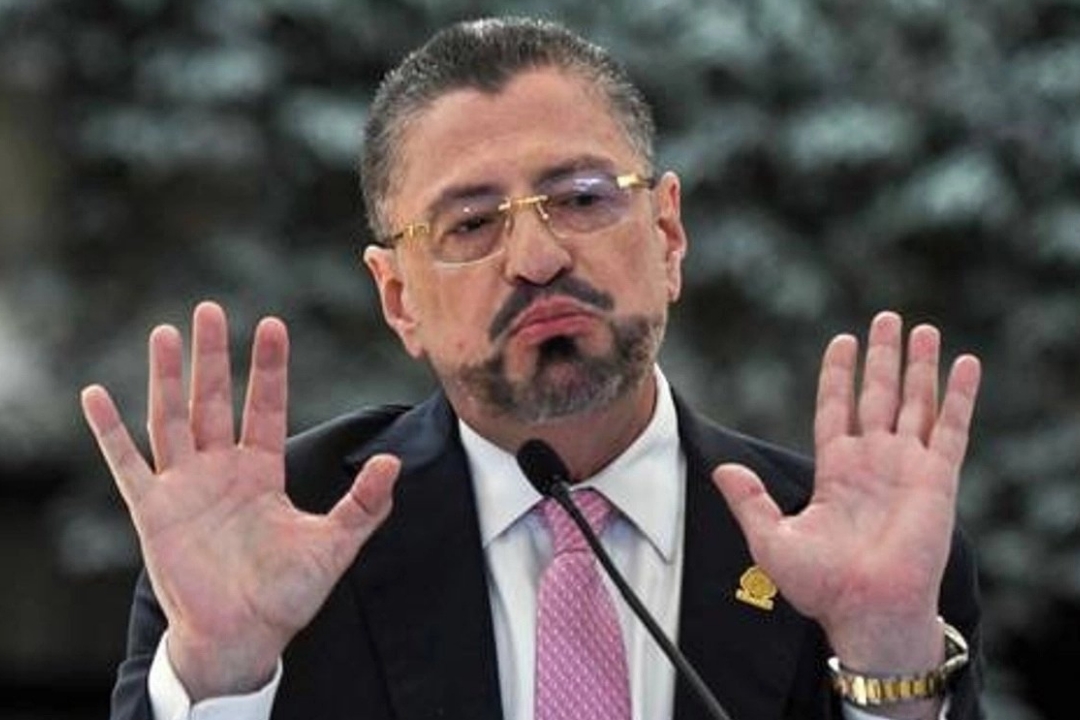
The political phenomenon of Chavism emerged with Rodrigo Chaves’ rise to power in 2022 as President of the Republic and has continued under the new government of Laura Fernández, whom he anointed as his candidate and who, upon winning the 20226 election, became President of the Republic for the 2026–2030 term. This article analyzes the phenomenon of the Chavista social and political movement, both from the perspective of its organized and unorganized social composition and in terms of its political and ideological platforms.
The Chavista Movement
The Chavista political movement is very diverse. Rodrigo Chaves is the founder of this movement. Chaves emerged in 2022 as an outsider, critical of traditional political parties, certain economic and media power groups, and, overall, the status quo imposed by the traditional ruling elites. He promised the masses political, social, and economic change that would lead to a supposed transformation of Costa Rica.
At first, he harshly attacked certain media outlets for reporting on the sexual harassment he had committed while working as a World Bank official. He called those media outlets the “scoundrel press” and urged his supporters: “I ask that we become the tsunami that will sweep away and cleanse this country of its trash. We are a tsunami, and we’re going to destroy the corrupt structures at *La Nación* and Channel 7. Listen up, Ignacio Santos (director of *Telenoticias*), René Picado (owner of Channel 7), Armando González (director of *La Nación*).
Later, he claimed he had to take on several agro-industrial conglomerates, pharmaceutical importers, and rice importers. In this regard, he initially stated, “Do you know who we have to take on to benefit five million Costa Ricans? “With four agro-industrial companies in the case of rice, 20 importers in the case of medicines, and four other importers in the case of agrochemicals.” (El Financiero, April 9, 2022).

And later, while in power, he stated: “We must change the model of our institutions now; it has long since come to an end. We must not rescue the institutions; on the contrary, we must rescue the people from the abuses and arbitrary actions of those who have hijacked our institutions.” (Ibid.) The boldface is ours. Later, he issued the following appeal : “Fellow citizens… I am speaking to you to tell you that the possibility of decisive change lies in your hands.” And later, he said , “Because the enemy… hides in judicial offices, in certain legislative seats, in certain offices where privileges are handed out, positions are traded, and who knows what else…” (Annual Report 2024–2025)
“My greatest wish and goal with today’s accountability report is to convey a simple and clear message: the Costa Rican government, in all three of its branches, must undergo a profound transformation if we are to continue moving forward toward the common good.” (Ibid.)
However, in the end, neither Rodrigo Chaves nor Laura Fernández nor Chavismo as a whole has managed to “destroy the corrupt structures” of the rogue media, nor have they “ taken on the fight” by stripping away the power of the oligopolistic rice agro-industrial groups, medicine importers, and agrochemical companies; much less have they achieved a supposed “profound transformation” of the State in its three branches. In reality, what Chaves has done is destroy small rice producers, benefiting a few large rice importers who financed his election campaign.
The Social Base of Chavismo
Chavismo’s social base of support consists mainly of broad, impoverished segments of the population in coastal areas such as Limón, Puntarenas, and Guanacaste, as well as in rural areas and poor neighborhoods of the Greater Metropolitan Area (GAM). For example, in the province of Limón, Chavismo swept the seats, winning four out of a total of five—an 80% share; in the province of Puntarenas, out of a total of six legislators, they won four, representing 66.7 percent; and in Guanacaste, they won three seats out of a total of five, representing 60 percent. Another characteristic of Chavismo’s social base of support is its low educational levels.
It is important to note that the majority of the middle classes and the intelligentsia do not support the Chavista movement; rather, they oppose and fight against it. Indeed, it is precisely these middle social sectors that still uphold and defend the democratic regime in Costa Rica. They are the social sectors that have mobilized against the governments of both Chávez and Fernández.
The leadership of the Chavista movement. Laura Fernández’s executive branch and her legislative caucus are made up of a variety of opportunistic and chameleon-like figures, ranging from a handful of political defectors from various traditional political parties seeking positions and wealth (former members of the PLN, PUSC, PAC, and other minor political parties); a large group of opportunistic evangelical pastors; a sizable group of people with no prior party affiliation—including lawyers, educators, and members of other professions—as well as other individuals with mafia-like characteristics.
On the other hand, the leadership of the Sovereign People’s Party (PPSO) includes some individuals with mafia-like characteristics. The president and founder of the PPSO is Mayuli Ortega Guzmán, currently a member of the National Congress. She lived in Mexico for 30 years and was married to the PRI mayor of Tecolutla. She was implicated in a case involving the alleged forgery of documents to run for municipal office in Veracruz. Upon her return to Costa Rica, she worked as an advisor at the Presidential Office during the Chaves administration and, from there, founded the PPSO.
On the other hand, the current secretary general of the PPSO, Freddy González Rojas—a cooperative leader—is a political defector from the PLN, a former supporter, activist, and organizer of political and electoral activities for Oscar Arias and other PLN candidates. According to the Semanario Universidad , “On August 13, 2016—almost ten years ago—Freddy González was working hard as part of the organization of the march to Oscar Arias’s home to ask him to run again for president of Costa Rica for the third time.” (Semanario Universidad, week of June 17–23, 2026).
This notorious political turncoat and chameleon later worked tirelessly on the election campaign of Laura Chinchilla and Antonio Álvarez Desanti. He was barred from holding public office for five years by the Comptroller General’s Office (CGR) for committing “… a serious offense by approving a proposal containing mathematical errors, which jeopardized the financial stability of Infocoop.”(Semanario Universidad, January 10, 2025). INFOCOOP stands for National Institute for the Promotion of Cooperatives. Later, he devoted himself body and soul to the Chavista movement, to which he contributed his skills as an activist and organizer of party, electoral, and logistical activities—skills he had acquired in the PLN.
Thus, the Chavista political movement, at its social base, is made up of broad sectors of the impoverished populace across the seven provinces, though these sectors are not structured into organized groups. Within its party structures and state power apparatus, it is made up of a large group of careerists, opportunistic evangelical pastors, political turncoats, and mafia figures who sought—and continue to seek—a position within the government and the legislature and, from there, attempt to amass fortunes or secure other types of perks.
Pending Criminal Cases Involving Chavistas
Several members of Laura Fernández’s cabinet, as well as some pro-government legislators, have multiple pending criminal cases that have not been prosecuted because they enjoy immunity. In fact, these individuals were appointed as government ministers and elected as legislators specifically to evade justice. In this regard, news reports indicate that “A total of 71 criminal cases weigh on the cabinet serving President Laura Fernández, with a total of 13 high-ranking officials under investigation or even already charged with various crimes, including treason, embezzlement, influence peddling, malfeasance, and even rape.” (Semanario Universidad, June 24–30, 2026).
It is important to note that Rodrigo Chaves tops the list of pending criminal cases, as he has 45 active cases involving various alleged crimes ranging from dereliction of duty to treason. Next in line after Chaves in terms of the number of accumulated criminal cases is the Vice President of the Republic, Francisco Gamboa Soto. There are some cases, such as that of former Foreign Minister Manuel Tovar Rivera, who is no longer part of the Fernández administration and would have to answer for his pending criminal cases, since he has lost his immunity. This is also the case for former Congresswoman Pilar Cisneros, who no longer has immunity.
Furthermore, within the government’s ruling party caucus, there are 12 representatives with more than 50 pending criminal cases. Topping the list with the highest number of such cases is Representative Marta Esquivel Rodríguez, who has 14; she is followed by the leader of the PPSO caucus, Nogui Acosta Jaén, with 11 pending cases; and the list continues with representatives facing fewer criminal cases.
As can be seen, there are some 25 members—including government ministers and pro-government legislators—who face a large number of pending criminal cases and who were, in fact, placed in those posts and positions precisely to protect them with immunity and, thus, evade the course of justice. Undoubtedly, this reflects the level of social, political, and ethical decay and degeneration among the figures who make up the Chavista political movement.
The Chavista Movement: Does It Have an Ideology?
The Chavista political movement has no document setting forth its ideological, political, and economic positions. Rodrigo Chaves, as the founder of that movement, has only a few political ideas scattered throughout various speeches and political rallies. But in reality, Chavismo lacks anything resembling a political ideology, much less a social paradigm. Therefore, Chavismo has no body of political, social, or economic beliefs and concepts. Consequently, it has no vision for Costa Rican society nor any plan to build a new model of society. Both Chaves and Fernández have stated that they want to establish the so-called Third Republic, but in reality, there is no known document that describes or outlines what this political construct they propose actually consists of.
Politically speaking, Chavismo is known for its approach of seeking to gain control over the three branches of government: the executive, legislative, and judicial branches. It already has complete control of the executive branch; in the legislative branch, it holds a majority, albeit a simple one rather than an absolute majority, which limits its ability to gain control of the judicial branch. From this perspective, its goal is to achieve absolute control over state power, which would lead to the establishment of an authoritarian political regime. However, its political ambitions are not feasible given its incomplete control of the legislative branch and, consequently, its inability to exercise even minimal control over the judicial branch.
Economically speaking, Chavismo—whether under the government of Rodrigo Chaves or that of Laura Fernández—has been implementing and intensifying the neoliberal policies inherited from the government of Carlos Alvarado, which are enshrined in the Law on the Strengthening of Public Finances and the draconian fiscal rule contained within that law. Hence, its economic and fiscal policy consists of imposing severe austerity measures, which take the form of drastic cuts to social spending.
For example, during the administrations of Rodrigo Chaves and Laura Fernández’s first term, investment as a percentage of GDP in the education sector has been declining year after year. Let’s take a look. In 2020, that investment was 7.2% of GDP; in 2021, it stood at 6.2%; in 2022 it fell to 5.5%, in 2023 it dropped to 5.3%, in 2024 it fell to 5.2%, in 2025 it fell to 4.9%, in 2026 it rises slightly to 5%, and in the Republic’s budget for 2027, under the Fernández administration, that investment will take a sharp nosedive to 4.4%.
In addition, there will be a reduction of more than 37 billion colones in current transfers for social assistance to the Joint Institute for Social Assistance and the National Children’s Trust. Another significant social spending cut will be to the Non-Contributory Pension System, which will receive 48% less in 2027 compared to 2026. The same has occurred with regard to social investment. In the sector known as Public Order and Security, the decrease is quite sharp, as the percentage will drop from 2.1% in 2026 to 1.6% in 2027.