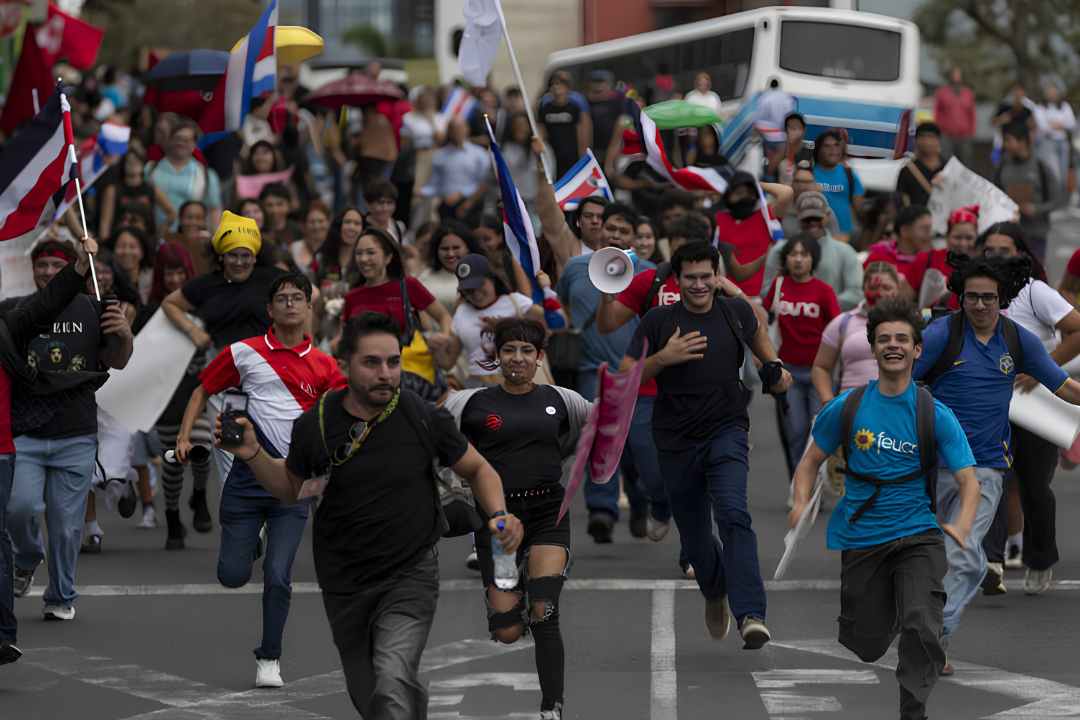
Active strike at all public universities until the Chávez and Fernández administration’s austerity plans are defeated.
We call for assemblies and action committees at all headquarters, campuses, and workplaces to prepare for a general assembly and define a plan of action
By Adrián Jaén España and David Morera Herrera
The motions presented by the ruling faction of the Sovereign People’s Party, led by former Finance Minister Nogui Acosta, aim to cut ₡26,000 million from next year’s budget for public universities and to stop paying ₡64,000 million in arrears from this year’s budget.
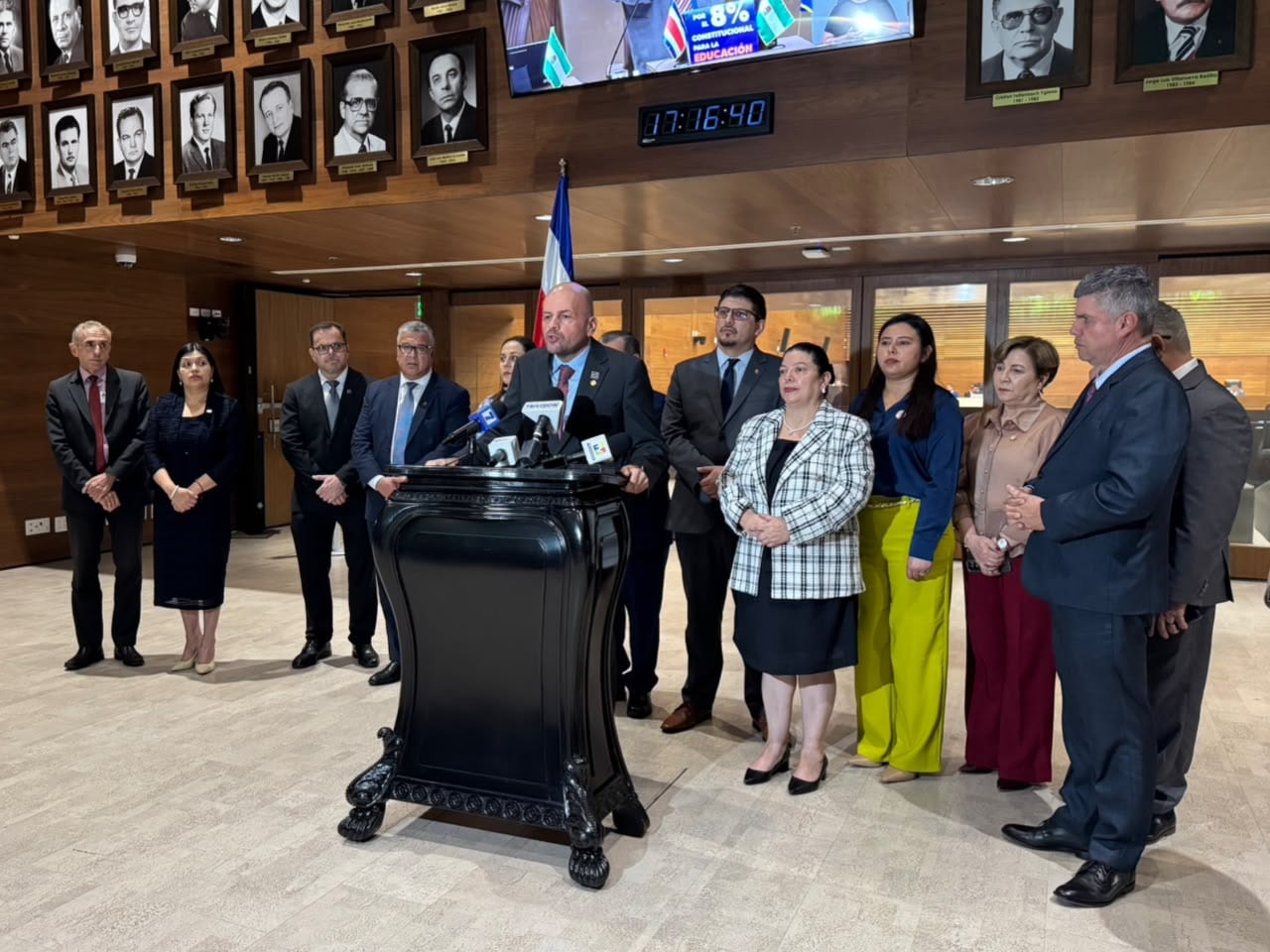
This latest blow to the university budget—as denounced last Thursday at a press conference by the presidents of the five public universities—would result in the technical closure of university campuses, such as the TEC campus in Limón and the UCR’s Paraíso campus. The cut means that a significant number of new students cannot be admitted next year; it jeopardizes key programs at all universities, the maintenance of specialized laboratories, and scholarships for a vast number of students.
It is clear that these cuts promoted by the ruling party and its legislative caucus are intended to drive students out of public universities to benefit the private university sector, which charges students exorbitant tuition fees, pay teachers starvation wages, and in many cases fail to guarantee the quality of education. These cuts expose the government’s true intentions: they want to bankrupt public universities, just as they seek to bankrupt the social security system to favor private healthcare companies.
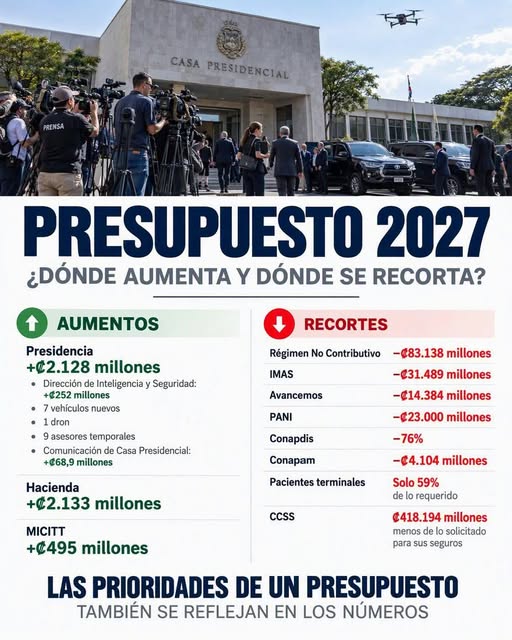
The budget priorities of the Sovereign People’s Party government are clear: massive increases for the Ministry of the Presidency and the Ministry of Finance, along with a hefty budget for communications from the presidential office, in an attempt to continue deceiving the public; while cutting funding for health care, education, pensions, IMAS, PANI, and other social institutions. They prioritize the payment of external and internal debt—as Rodrigo Chaves learned at the World Bank, from which he was expelled for sexual harassment—and they apply the IMF’s formula, yet they fail to collect the taxes owed by the wealthy and large corporations.
The Special Fund for Higher Education (hereinafter FEES) was previously negotiated with the governments in office on a five-year basis, which allowed public universities to plan their projects and ensure their continuity. The five-year plans have not been implemented since 2016. Since then, negotiations have been held annually, which has created uncertainty and conflicts in higher education planning. This blow to public universities occurred under the so-called “progressive” government of Luis Guillermo Solís of the Citizen Action Party (now CAC), and was carried out with the collusion and acquiescence of the National Council of University Presidents (CONARE) and the majority of university officials—many of whom were aligned with and beholden to that political project—which, during Solís’s first term, but more severely during that of Carlos Alvarado—with his “progressive” facade—took the opportunity to launch an all-out offensive against labor rights and imposed severe fiscal austerity, following the guidelines of the World Bank and the IMF.
It was no coincidence that Carlos Alvarado had the disastrous Rodrigo Chaves and Nogui Acosta as his finance ministers. The former astutely resigned to launch his political project and win the presidency four years ago—a right-wing initiative that continues today under the name Partido Pueblo Soberano (PPSO).
In this context, year after year, CONARE has increasingly yielded to the restrictions imposed by the governments in power. One or, at most, two marches are held, and then unfavorable agreements are signed, in line with the deterioration of the university budget.
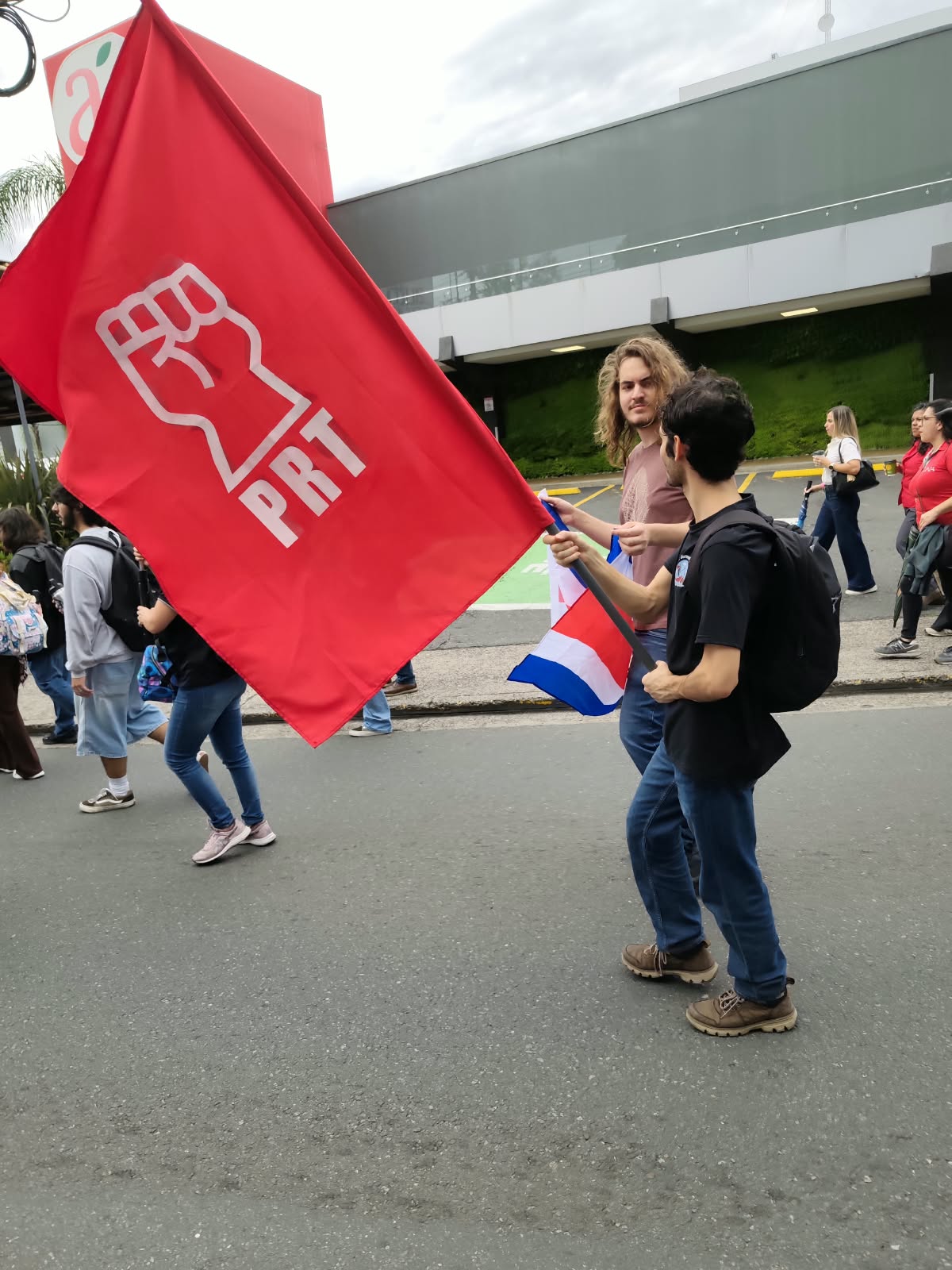
Below, we present some guidelines to help lead the struggle to victory.
First: Without absolute independence from university authorities, we cannot move forward. A serious problem plaguing some student unions and federations is cronyism and dependence on one faction or another within the university authorities and the rector’s office. The working class and the student movement need to work in unity to force university administrations to consistently uphold the struggle for the budget.
Second: The UCR administration has not even been able to call for an active strike and is more concerned with saving face in light of the previously reported acts of corruption and the dispute with other university officials who harbor hopes of taking over the presidency at this juncture. At the UNA, a two-week work stoppage was previously declared (insufficient, but the most significant action taken so far). The call to action must be for an indefinite work stoppage at all five universities, so that the focus of all academic activity (which is not suspended) is on mobilization, raising awareness, outreach, and working with communities to defend a fair FEES that strengthens public universities so that there are, truly provide more educational opportunities in rural and coastal areas.
Third: We must denounce and prevent the various university administrations from ultimately becoming embroiled in the internal struggle among public universities over the distribution of FEES funds, which is precisely the divisive tactic of this disastrous government.
Fourth: Hold unified, cross-sector assemblies of students, faculty, and administrative staff at each academic unit, campus, and workplace, where participants democratically adopt action plans and form working committees to multiply our efforts and strengthen the movement on a large scale.
Fifth: In this context, going from classroom to classroom to raise awareness among students and involve them in tasks and working committees is essential. This is what was done in the struggles against the ICE “Combo” and against the FTA; we must draw on that experience of struggle and put it into practice to defend the budget today.
Sixth: Hold a democratic debate in an Open, Intersectoral, and Interuniversity General Assembly: What is the actual amount and percentage of the FEES that is truly necessary (the 1% proposed by CONARE is barely enough to scrape by)?
Seventh: Seek agreements with teachers’ unions on a plan of action with the shared goal of fighting for 8% of GDP for all public education.
Eighth: Visit secondary schools to try to recruit secondary school students.
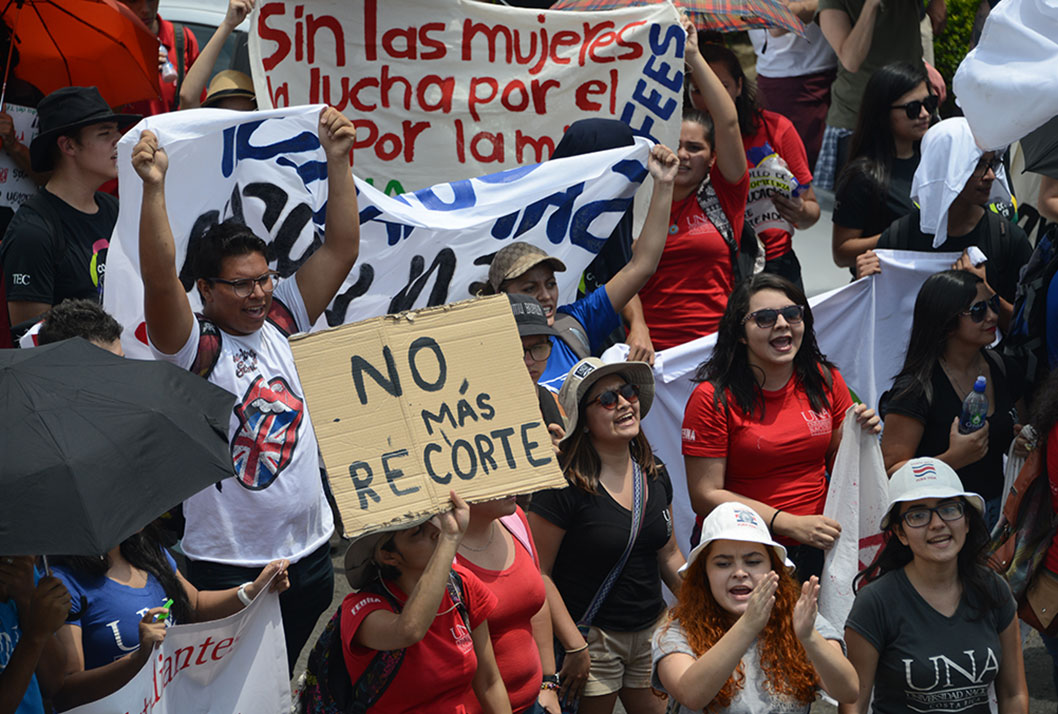
Here are some ideas and suggestions we’d like to share. If members of the university community are interested in discussing and expanding on these proposals, we invite you to contact the editorial staff of Bandera Roja by phone at 85110038 or by email at adrianjaencr@gmail.com.
Students and young people in France are leading the way. The student struggle to defend the public education budget—as the spearhead of the fight to defend social guarantees— marks the beginning of the unification of all struggles—for health care, education, electricity, water, and security—and against the corruption of this government, which reveals its true colors through all its proposed cuts to the most pressing needs of the people and the working class.
Worker-Student Unity in Defense of the University Budget and Public Education
Cross-sectoral, unified assemblies of students, faculty, and administrative staff, organized by each academic unit, campus, location, and workplace
Unity across all sectors of society to promote joint mobilization, with a view to developing a plan of action to prepare for a major national strike against the austerity and anti-people policies of the Chaves-Fernández government