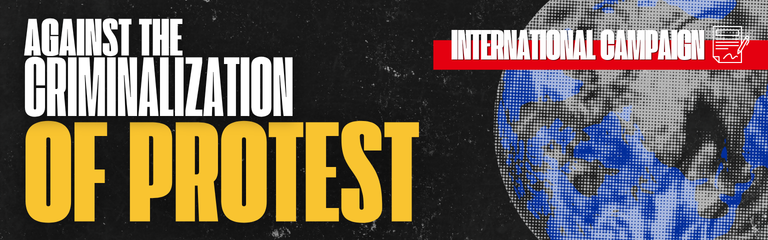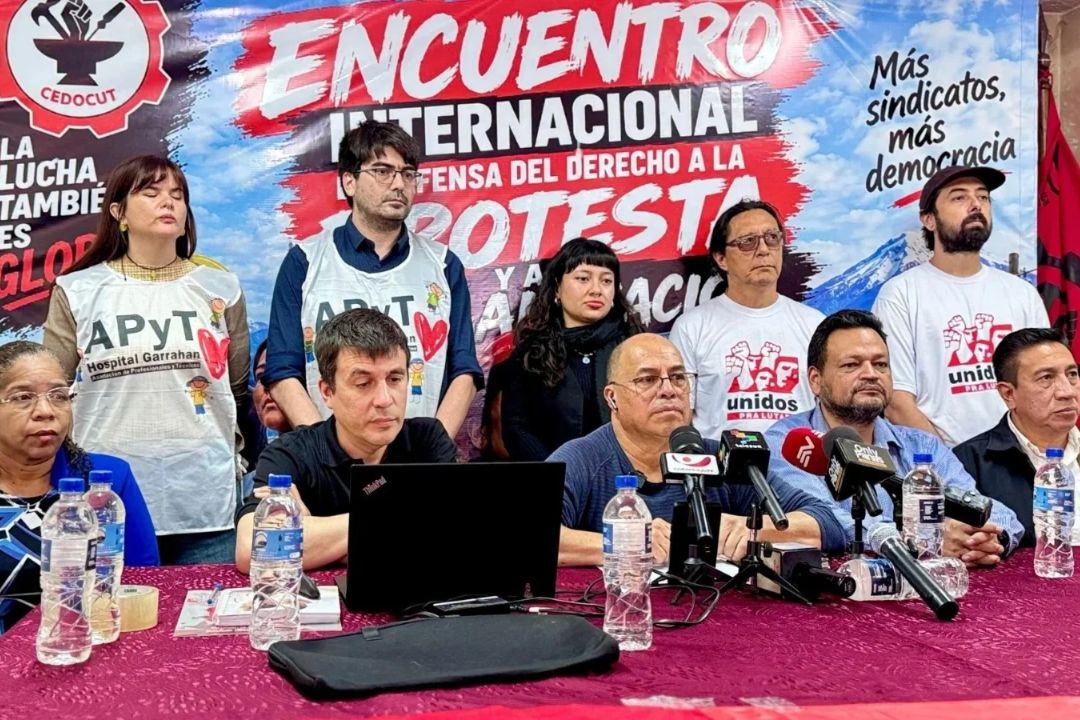
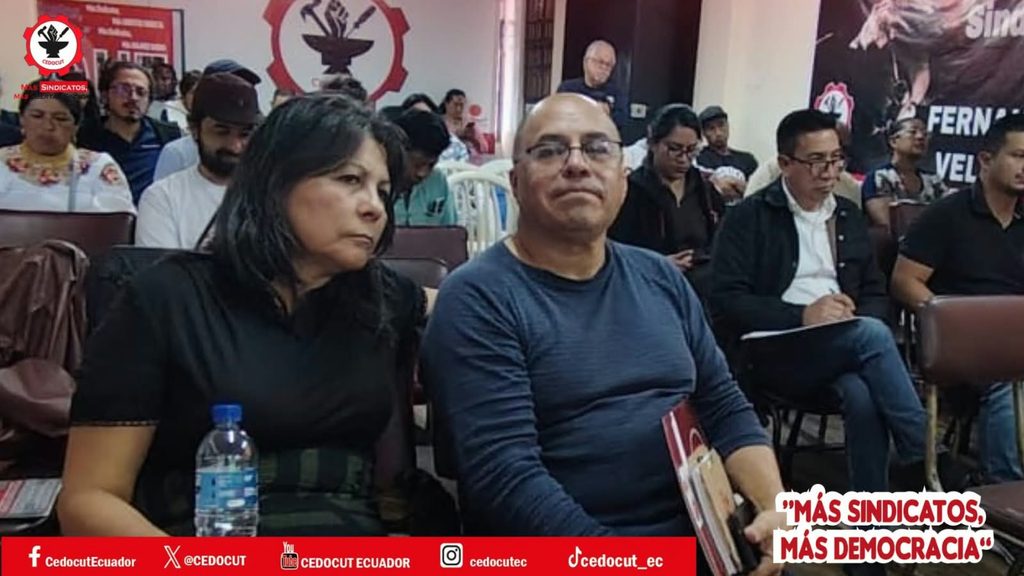
On October 23 and 24, dozens of union leaders, social movement leaders, peasant leaders, human rights leaders, and political figures gathered in Ecuador’s capital. International representatives from 15 countries and delegations from across the country provided the backdrop for the event. An International Network Against the Criminalization of Protest and Organization has been launched. We are calling for a Global Day of Action on December 10.
By Mariano Rosa
Capitalism at this stage of history is more incompatible than ever with the economic, social, and political rights of the majority. The civilizational crisis of this project is manifested in disputes between the U.S. and China over a new distribution of global wealth and hegemony on the planet. This fact is central: U.S. imperialism, in its declining phase under Trumpism, is unleashing a war against the workers and peoples of the world. To regain ground in the global economy, it must increase the profitability of its corporations—which means greater exploitation of workers, the plundering of our peoples’ wealth, and the consolidation of strategic geopolitical and military positions. In Latin America, this is directly a plan for re-colonization, even using the arrogant slogan of the Monroe Doctrine. But it is not just U.S. imperialism in Latin America. It is China in Africa and various powers in what they consider their spheres of influence. The capitalist world is creaking, and social tensions are deepening polarization. In fact, the existence of a far-right movement with the U.S. president at its helm is one part of the picture. The other is the massive reaction of workers, youth, and peoples in every region of the globe rising up against the violence of capital, its governments, regimes, business leaders, and complicit judges. Within this global context, we must situate the repressive strategy of state, employer, and judicial criminalization of social protest and workers’ and popular organizations. For this reactionary “business plan,” capital needs to crush resistance. This explains the international playbook it applies in every country.
Building on the best traditions of the labor movement
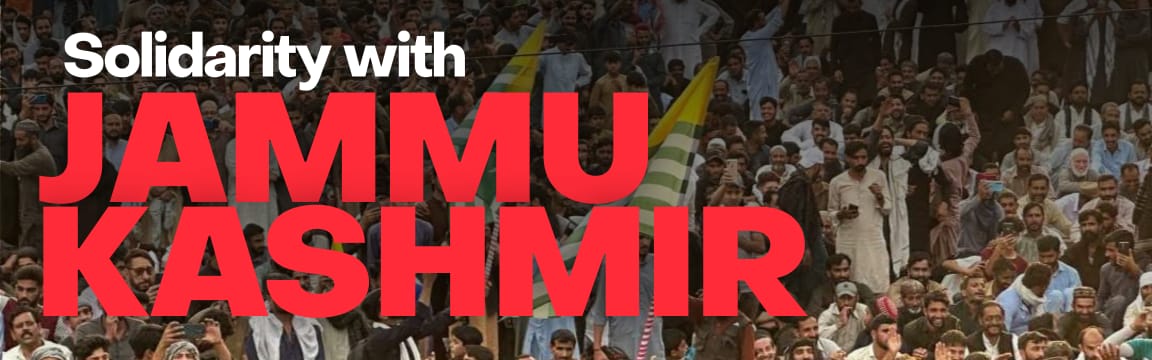
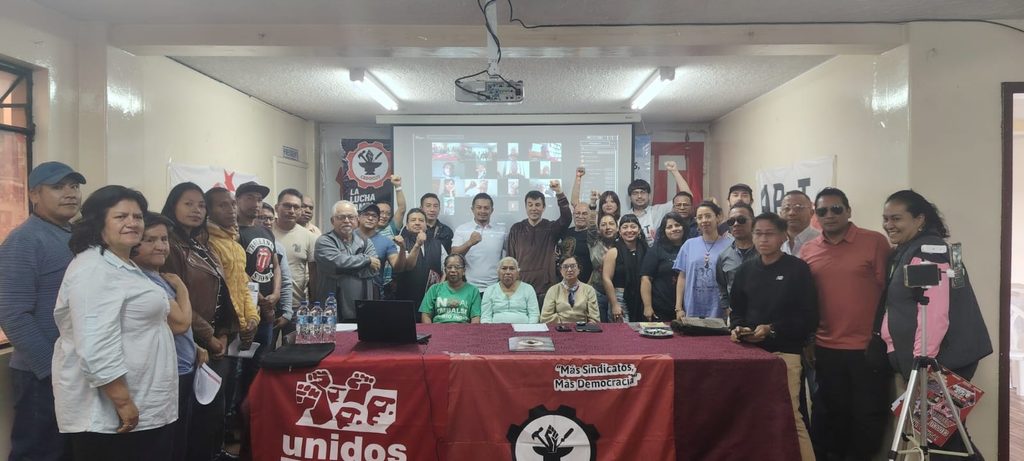
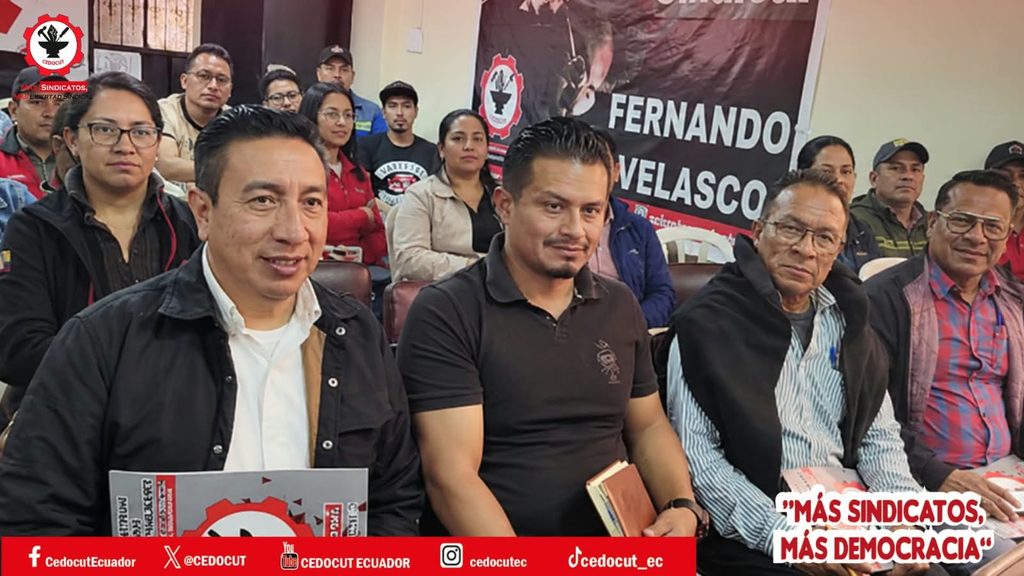
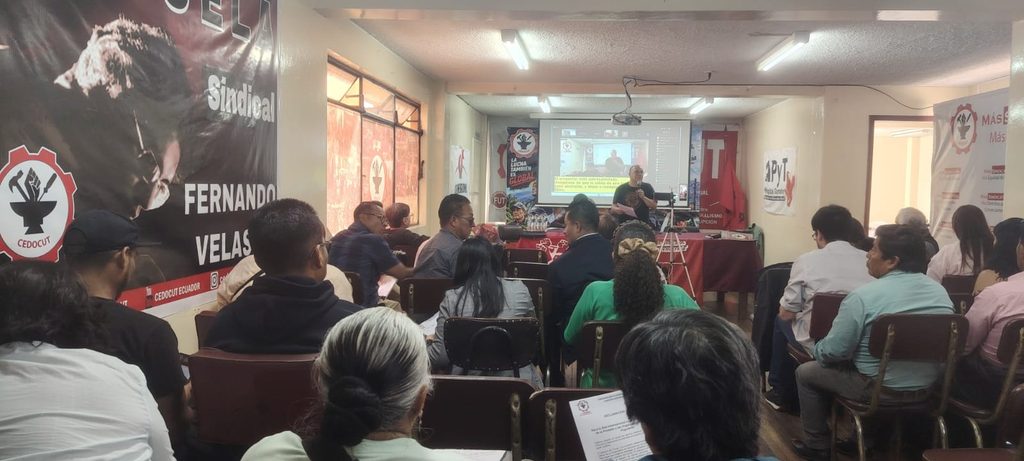
The working class was born internationalist. Its identity, forged in the face of corporate exploitation, was built across borders. In 19th-century Europe and throughout the world in the early 20th century—spurred by the Russian Revolution—its transformative potential was expressed in this way. The event we organized in Quito a few days ago reflected that same need: to coordinate a response to the offensive by the ruling 1% on an international level, transcending national borders. Unions, peasant organizations, Indigenous groups, human rights organizations, Black people, migrants, youth, and political forces deliberated collectively in a horizontal manner and made progress in recognizing the urgency of this coordination we are building. Because in Ecuador, Noboa is attacking CEDOCUT, refusing to register its grassroots organizations, and economically suffocating the union. Because in Argentina, Milei is lashing out at the healthcare staff of the massive Garrahan Pediatric Hospital and the leaders of its flagship union, the APyT. In Kashmir, Pakistani occupation forces are persecuting the activists of that people who are demanding their rights, imprisoning them, and harassing them. Because Trump-style McCarthyism in the U.S. removed professor and activist Tom Alter from his position for participating in a conference on socialism. Or the dismissal and prosecution by the Mulino government of hundreds of educators in Panama—organized under ASOPROF, among other sectors. And the austerity and authoritarian policies of the regime governing Costa Rica. To confront all of this, a global and unified response is needed now more than ever. That is what we discussed in Quito with the combative, class-conscious, and autonomous CEDOCUT, in coordination with our International Socialist League, the MRT of that country, and dozens of unions and grassroots organizations.
International Network and Debut on the Streets: December 10, World Day
The Quito Meeting made progress on several key issues and outlined a very clear roadmap:
*Launching the International Network Against the Criminalization of Social Protest and Workers’ and Grassroots Organizations.
*Creating a working committee led by lawyers from various countries will be formed to develop an International Map of Criminalization.
*Carry out several presentationsbefore the Inter-American Commission on Human Rights as well as before the UN
*Calling for a Global Day of Action against Criminalization on December 10, International Human Rights Day.
This newly formed network is open to organizations and activists from around the world who wish to join it. It is a unified, diverse, and broad-based starting point.
Changing the world is a task for many people. We need you, wherever you are in the world, to be willing to keep fighting and get organized.