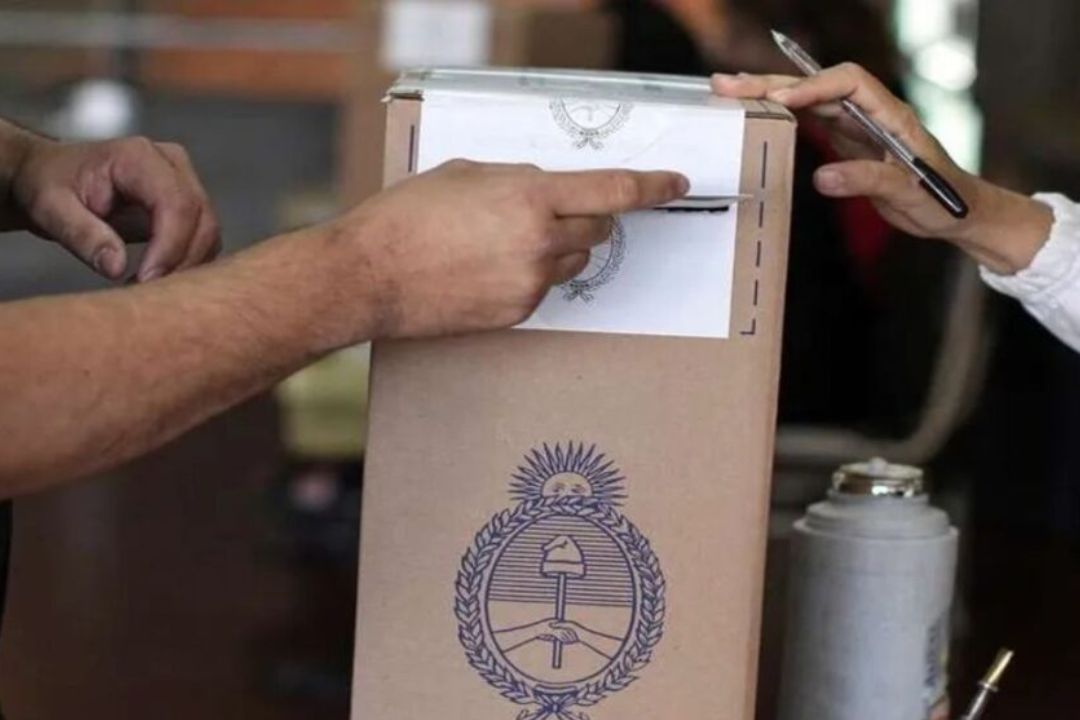
The national crisis comes across different scenarios. Province of Buenos Aires Elections will take place on September 7th and have already turned into a national debate and dispute, featuring the intervention of all political actors in the run-up to October national elections. Here we analyze the opportunities and challenges of the FIT-U and MST proposals.
By Santiago Ledesma
The vast and contested Province of Buenos Aires
We shpould first consider that, as these elections are split from the national ones, the results will be uneven. Each section will become an open trench, a space of dispute for the reconfiguration of the parliament of the province of Buenos Aires. Provincial deputies and senators will be voted for, along with Deliberative Councils members of each municipality.
Argentine political perspective is progessively shifting according to the electoral calendar and particularly by the elections in the Province of Buenos Aires, the country‘s main district. It has 13,361,359 voters, and its First Electoral Section has total of 4,732,831, surpassing the Third Electoral Section, which reaches 4,637,863. Both sections accumulate 70% of Buenos Aires electoral roll and have a substantial difference with the others. The Fifth Section is closer, but only with 1,290,948 eligible voters.
Cristina Fernándéz de Kirchner as candidate in the Third Electoral Section was Peronims’s attempt to “nationalize” the provincial election, emphasizing her as opposed to Javier Milei. This was frustrated when courts banned her candidacy and sentenced her to house arrest for the so-called “Causa Vialidad”, a judicial decision that we denounce, being at the same time critical and opposing to CFK and PJ’s capitalist project. Even without Cristina as candidate, Buenos Aires elections have already been nationalized. Milei is strongly attacking the provincial government of Kicillof (PJ) while the latter tries to respond nationally while also giving away privileges regarding provincial issues which are of his electoral interest in this dispute.
Crisis and erosion of libertarian officialism
Milei and his government are far from enjoying peace of mind. In addition to the electoral apathy of previous elections, where due to general discontent around half of the population didn’t vote, there’s an ongoing economic-social crisis and polarization and disapproval of the libertarian officialism is growing because of it. A recent poll by the consulting firm Zuban Cordoba shows a disapproval rate of 56.8%, with only 0.4% abstaining from giving an opinion.
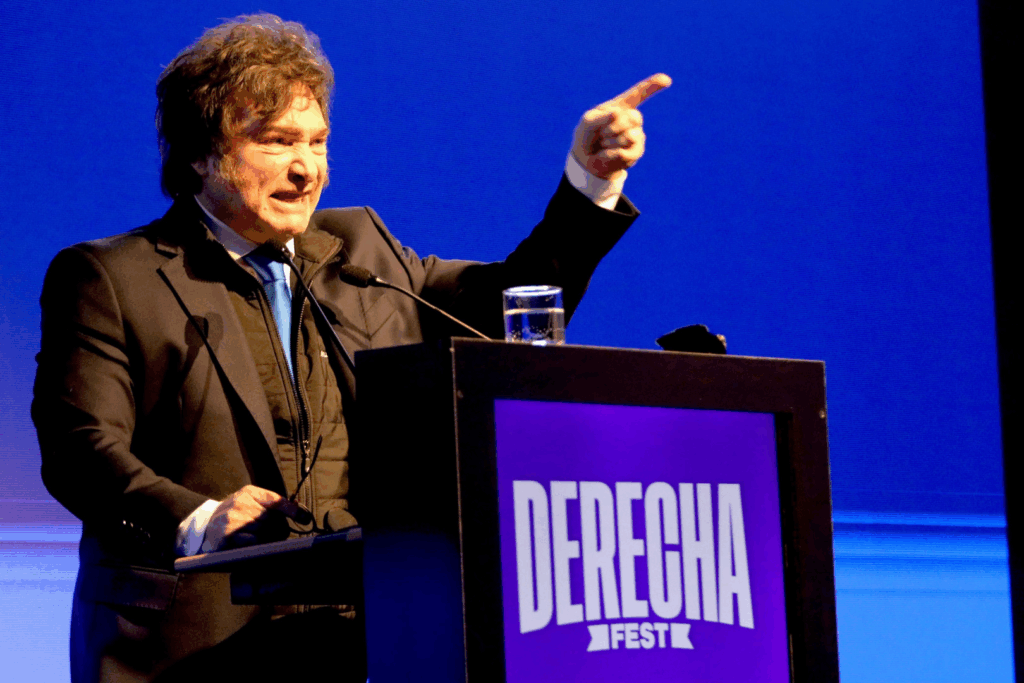
The economic, social and political tension is increasingly eroding Milei’s government as it seeks to strength the libertarian and ultra-right homogeneity that it once again promoted and showed at the recent event: Right-wing Fest in Córdoba. The President, supported by bootlickers, felt emboldened and stated that “many will be shocked with October results“. In any case, his threat is no more than that, a threat. However, the electoral forecast is still open since the deterioration of the ruling party is a combination of different elements. Millions of people stepped aside from old parties that have previously governed. In this context, the government is affected, and along social discontent, it has been loosing allies within the parliament, which led it to suffer successive political defeats during the last month.
Before October, the president will need to measure his strength in September, in a context where unofficial dollar price is dangerously close to the band limit, one of the reasons that forced the government to take on debt through the contracting of three new loans for a total of US$1.5 billion with the Inter-American Development Bank (IDB) and the World Bank (WB).
An economic structure that even earned it a warning from an International Monetary Fund that had been very permissive with the government’s unfulfilled goals. “Net international reserves are still critically low and sovereign debt spreads, although they have drastically decreased, are still high,” said Kristalina Georgieva, head of the organization. Even so, concerned that the government does not continue to wear itself out in the run-up to the elections, the IMF would be making available a new batch of money to help the government out of its predicament.
Tensions at the bottom and top
As we were saying, at the same time, the government also loses control in its parliamentary disputes. This is how the last sessions in the Senate brought a strong headache for the Executive, which is analyzing the way to annul the laws that bring with them improvements for pensions, disability emergency and provincial funds. While the session was taking place, the rupture with the Vice-President Victoria Villarruel, who is directly and publicly called “the traitor” by the Presidency, became even more evident.
However, the control lost by the government is not only in the Parliament, but also in the temperature of the streets. With huge struggles such as that of the Garrahan, which has just staged a huge mobilization to Plaza de Mayo where it received strong social support from different sectors, while the retirees continue to mobilize every Wednesday in front of the Congress. In these processes and in others in different parts of the country, the working class makes active its discontent, raises its claims and demonstrates its capacity to react to the ultra-right attacks.
In short, the government is going through winding curves and, no matter how much it may want to present a posture of strength, reality is leading it to a scenario where it is fighting a certain erosion that is leaving in the past the promises of the end of inflation and placing in the present the problem of miserable salaries and pensions, at the same time that unresolved fronts are accumulating, such as the $LIBRA case, among others.
Libertarian crises in Buenos Aires
On the other hand, the closing of the lists in Buenos Aires became an element of tension and crisisof the so-called “iron triangle“, formed by the Milei brothers and Santiago Caputo. Karina Milei relied on the armador Pareja and the Menem clan for the lists, leaving aside Caputo’s henchmen and causing tensions that will last for a long time.
The internal collisions also prevented it from being able to absorb the whole PRO structure, and several yellow mayors caused a last minute exodus, even though they had accepted an almost total subordination, where the content of the PRO was not expressed in the name of the alliance or even in the colors of the ballots. This resulted in the strengthening of another electoral alliance, SOMOS Buenos Aires, together with the UCR and the Civic Coalition.
Karina Milei synthesized against dissidents within the libertarian front: “The person who questions the president’s candidates is questioning the president”.
The strongest candidates presented by Alianza La Libertad Avanza are Diego Valenzuela in the First Electoral Section and Guillermo Montenegro in the Fifth Section. Both of them, former members of PRO, radicalized their profile and assimilated to “the forces of heaven”. In addition, both candidacies will be testimonial, since neither of them leaves the office they currently hold.
In the populous Third Section, the candidate is Maximiliano Iván Bondarenko, who was inspector commissioner of the Bonaerense Police. He is from Florencio Varela and his political background includes a period in the PRO, and he was also Facundo Manes’ candidate.

The Peronist ruling party in the province
What a priori seemed to be a somewhat calmer election for Peronism, ended up being very complex and on the verge of rupture, to the point that they had to cut the power to force an extension in the presentation of the lists of candidates, which still did not close their crisis, although it did define a more than hard-worked common list.
There are several reasons that lead to the fact that today Peronism is lost without a compass. Some of them can be found in the disappointment of the last government, which had Alberto Fernández at its head in the framework of an agreement with the IMF, and where those who today believe they have the solution to the ills of our country: Massa, Kicillof, Máximo Kirchner and CFK herself, had a position of power.

None of them expressed an alternative path and their conclusions were, to a great extent, to blame the population for Milei’s growth. Two years later, and having gone through a lot of water under the bridge, the Peronist leadership ended up letting the measures of the ultra-right program run and did not confront Milei’s adjustment and chainsaw plan either in the trade union or politically. On the contrary, in the Province of Buenos Aires it managed the general adjustment with its own stamp. A Peronism that talks about being a shield against Milei and that in reality does not stop any of the libertarian plans.
That is to say, it ends up being an opposition that does not even manage to unify its own votes to dispute parliamentary matters and is engrossed in an internal debate that is losing more and more weight every day. Today, Kicillof, with the Movimiento Derecho al Futuro; Máximo Kirchner, with La Cámpora; and Sergio Massa, with the Frente Renovador are disputing the pen .
The tribal dispute within Peronism not only led to the need to make a show to postpone the delivery of lists, but also brought frictions and last minute communiqués between factions, where, for example, the Movimiento Derecho al Futuro demanded the Frente Renovador to open the lists in Tigre or in municipalities where Peronism is presented with several lists.
Since there is no Cristina as an option to, from the Third, drag provincially, the PJ will have to measure itself section by section. For this purpose, it will use testimonial candidacies such as Verónica Magario and Gabriel Katopodis, in the Third and the First, respectively, both of them the governor’s minions who will try to attract votes in the most populated areas of the country.

They are not the only testimonial candidates of Fuerza Patria, but there are others on the lists, such as the mayor of Quilmes, Mayra Mendoza, or the mayor of La Matanza, Fernando Espinoza.
In a scenario where a certain electoral apathy prevails, we will see how it translates that there are so many candidates who are not really interested in assuming the office for which they are running. This strategy, which has been used in other elections, may have other dangerous results due to the particular characteristics of this election and the crisis of the political regime itself.
The Left Front, Potentiality and Challenges
The difficulties of the bosses’ forces to be able to lead the drawing up of their lists emerge and are a symptom of a deep crisis of the two-party regime that they wanted to recycle with Kirchnerism and the PRO. Regime that collides without having yet a clear course in its future, because neither the government defeated the working class, nor we defeated it.
This vacuum and growing social discontent was channeled through absenteeism, and that is how we saw that in the last provincial elections the turnout barely exceeded 50%, really low numbers in our country. This situation is unlikely to change in the upcoming provincial elections, since no force has developed a proposal that will enthuse the population.
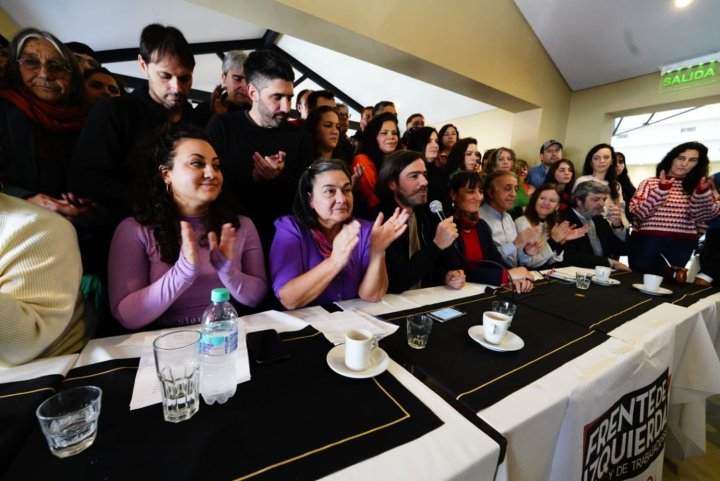
In this sense, the Frente de Izquierda y de los Trabajadores-Unidad (Left and Workers’ Front-Unity) will once again present itself throughout the province, fighting in the Buenos Aires conurbation, as well as in the interior of the province, with Alejandro Bodart as candidates in the First Section, together with Romina Del Plá, as well as Ana Paredes Landman and Guillermo Pacagnini in the Third Section, together with Nicolás del Caño and Leonel Acosta in the Eighth Section, among other candidates throughout the province.
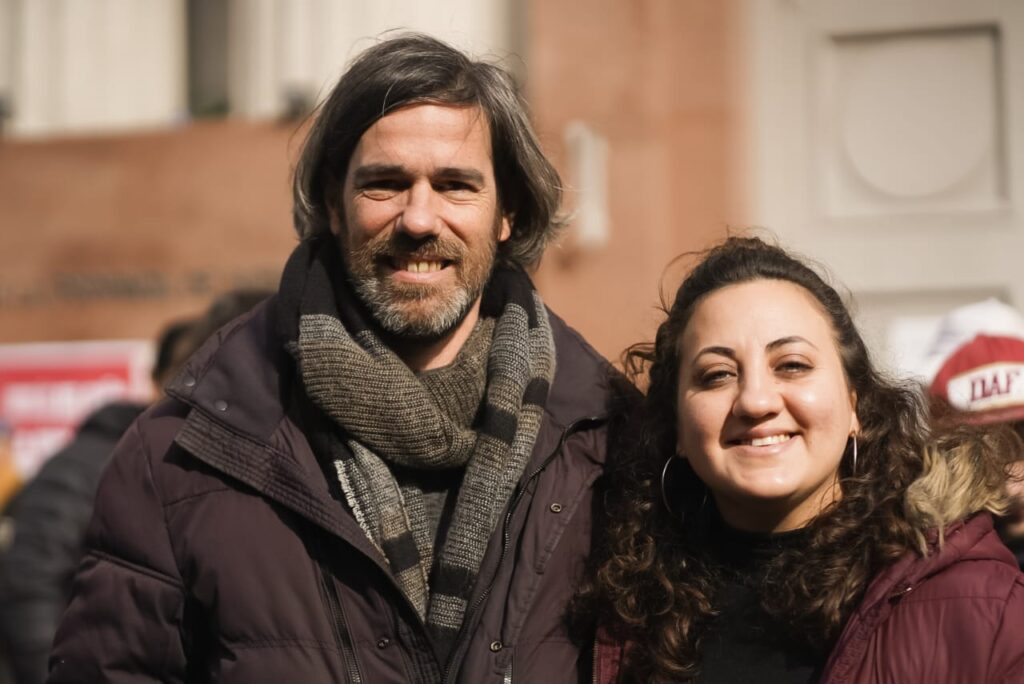
The left has the potential and the opportunity to be able to capitalize to some extent on the discontent that today manifests itself through other channels, and the Frente de Izquierda Unidad has the responsibility to try to do so, fighting to win new seats of deputies and city councilors in Buenos Aires, and above all trying to organize thousands politically and calling workers and youth to join its ranks. The new presentation of its lists is a valuable step, but at the same time it is not enough in the face of the tasks set.
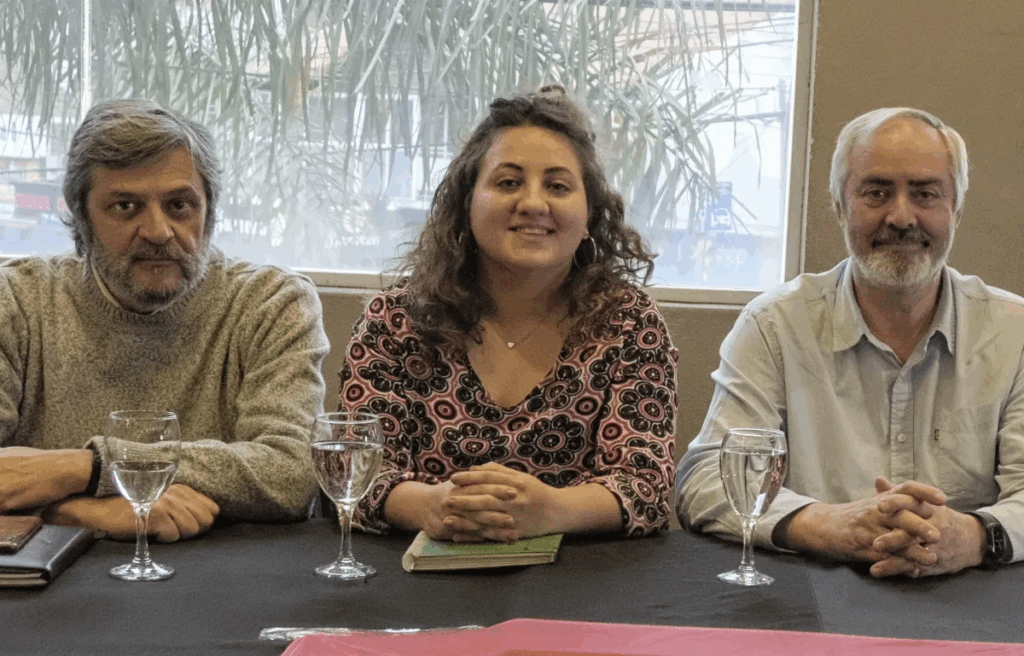
As we have been proposing from the MST, it is necessary to advance to a profound change in our front, in a political logic that is not limitedly electoral, as unfortunately and mistakenly, forces such as PTS or PO have been doing for years. We need to transform our front into something much higher, with its anti-capitalist and socialist program and at the same time open and inviting to intellectuals, social referents and friendly organizations and voters of our front.
To promote this necessary political organization of thousands and the collective debate of all the militancy, congresses, forums or open conferences of our front can be held. Even to debate the possibility of forming a unified party with democratically organized tendencies within it, which not only acts electorally, but can intervene as a whole in the political and class struggle and in the events that impact the political reality on a daily basis.
This important and necessary course is the one that can provide the Left Front with the necessary vitality to be able to really be an alternative of power beyond the next elections and in the face of a scenario of increasing political crisis and cracking of the political regime. From the MST we will promote this electoral campaign in depth , at the same time that we will continue to put forwardthese fundamental proposals and these perspectives, challenges and opportunities that lie ahead of us.