By Raymar Aguado Hernández
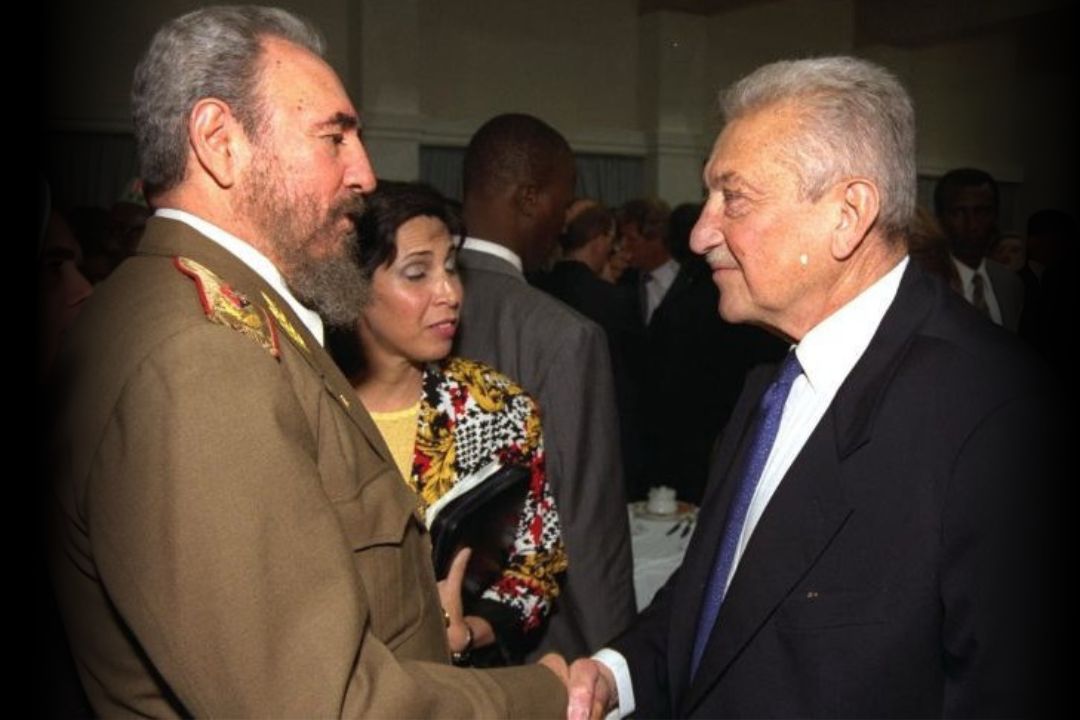
Fidel Castro was a perfect manipulator. Few doubts remain about his hypocritical capacity to always position himself according to the circumstances, where no ideological game was more powerful than his methods to hold on to power. In times of post-truth it is common to stumble over the fragility of words, especially when they carry the regrettable stench of convenience. But Fidel was an artist of disguise, a chameleon who knew how to use the right words at the right time, always in exchange for guarantees that would feed his pantomime of imperfectible leader. He played so many cards that, generally, he had the poker in his favor. That is why measuring him from such hollow molds -although not for that reason strange- as those that dominate the Cuban political space, is an innocent blunder, because from there it is impossible to ascertain how much he concealed behind his discourse.
The back-and-forth of the Castro narrative always sustained undercurrents with very marked economic and political interests. From the surface, much of the left found in Fidel the “anti-imperialist revolutionary who fought for just causes”, as much as the right found in him the “communist dictator at the service of the USSR and enemy of freedom”, two standardized and shallow visions that served in an inexplicable way to sustain over time the political regime that still rules Cuba. Not many parties explored the Fidel Castro phenomenon from his incursions into realpolitik, moving away from the discursive pattern that placed him in the favorable area that granted him the debate of extremes in which his name is found. Understanding that zone of action from which Fidel expanded his political and, above all, aesthetic regime, makes it possible to complexify the analysis of an essential figure in the history of Cuba and its future democratic scenario.
Fidel did not skimp on who to negotiate with if it was a matter of giving oxygen to the always emaciated national economy: fascists, genocidaires, self-proclaimed dictators. In order to guarantee his position as an autocrat for life, he was even capable of romancing with his most declared enemies. There never existed a “revolutionary ethic” or “ideological stubbornness”. His ace up his sleeve mutated in such a way that between spades and sword there was rarely any evident difference. This characteristic condensed the mythology around his image to the point of being admired by many of his most fervent detractors.
It is clear that for authoritarian statesmen like Fidel, sustaining his pragmatism in inflexible positions – as sometimes attributed to him – was never an option. On the contrary, one of the most solid links in his dictatorial chain was the versatility of his alliances, something that undoubtedly guaranteed the good health of his tropical totalitarianism. One of the most illustrative examples of this was his dedication to economic pacts with Israeli businessmen and transnational corporations, which to a great extent helped the regime to correct the economic debacle suffered by Cuba in the years following the fall of the USSR and the so-called “socialist camp” and which consolidated an economic policy that for decades brought in multi-million dollars to the regime and opened the doors to new lines of investment and international markets.
The State of Israel and the Cuban Revolution
Although it is an aberrant cause for the vast majority of the extreme right wing that recognizes itself as a Zionist project, the State of Israel was born from the hand of a party and a Prime Minister self-perceived as “socialist” and very close to Soviet Stalinism. So much so that the USSR played a key role in the birth of the new State through strong diplomatic pressure within the United Nations Organization (UN), which favored the idea of the Palestinian partition project. Likewise, with shipments through Czechoslovakia and in order to circumvent the call of the United States not to send armaments to the Middle East, by strict order of Yósif Stalin, the USSR became the largest supplier of military supplies to Zionist paramilitary groups such as the Haganah during the so-called “war of independence” in 1948 and the subsequent conflict unleashed against the Arab countries. In addition, the self-styled “socialist Zionism” represented the dominant political force in Israel for thirty years through the Workers’ Party of the Land of Israel (Mapai) and later the Labor Party.
When the revolution triumphed in 1959, one of the first states to recognize the new Cuban government was Israel, since a large part of its political spheres identified favorable allies in the new leaders. Thus, during the summer of that year, the then Captain José Ramón Fernández traveled to the Zionist state to negotiate the purchase of light weapons and artillery as well as to promote collaboration in the agricultural area. Although Israel refused to make the arms sale, it provided civilian assistance in different areas during the following two lustrums. Also around that time, while Che Guevara was visiting Nasser’s Egypt, part of his entourage, among them José Pardo Llada, visited Israeli territory to offer the cordiality of the Cuban leadership. According to historian Margalit Bejarano “in the eyes of the Israeli government, the enthusiasm surrounding Castro’s revolution was similar to the atmosphere of the nascent Israel in 1948”.
So much so, it seems, that during those years, the then Chancellor and future Prime Minister Golda Meir offered cooperation alliances in several branches, a gesture that from Bejarano’s point of view was not only a diplomatic tool, “but because she felt an ideological affinity with the Cuban socialist revolution and was committed to developing countries”. Added to this is the visit in 1961 of special ambassador Mordecai Arbell to Havana for the signing of several agreements for agricultural and livestock cooperation, which concluded in agreements for Cuban Jewish migration under “advantageous conditions” that favored the growth of new settlers’ settlements. This search intensified between 1963 and 1965 when Ambassador Haim Yari with the support of the Zionist Union of Cuba carried out multiple events to encourage emigration to Israel, with the promotion of charter flights of Cubana de Aviación destined for that purpose.
Since the birth of Israel in the late 1940s, a key figure began his avatars to establish the nexus between Zionism and Cuban “socialism”. This was Ricardo Subirana Lobo, a German Jewish scientist who settled in Cuba after the First World War. He was born Richard Wolf, although after his engagement to Cuban Francisca Subirana he decided to adapt his name to the Caribbean climate. By 1948, Lobo financed the trip of several delegations of experts from the Israeli “socialist kibbutzim” who forged deep ties with the island’s “left”, especially those closest to Stalinism. After the armed struggle against the Batista regime began in 1956, the scientist, who amassed a considerable fortune, was one of the main sponsors of the 26th of July Movement (M-26-7) due to his affinity with the figure of Fidel Castro.
Lobo defended and supported from different flanks the insurrectional process prior to 1959, which earned him great prestige within the revolutionary government from where he was proposed to occupy the Ministry of Finance, a post he turned down to request to be appointed Cuban ambassador to Israel. Subirana Lobo, who was already in his seventies when the revolution triumphed, presented his credentials as ambassador to Meir and occupied the diplomatic post from 1961 to 1973, when during the Algiers Summit, Fidel Castro announced the rupture of bilateral relations. After that date, he abandoned his diplomatic duties and continued his life as a “leftist Zionist” in Israel, where he gave birth to the Wolf Foundation in 1975, the cradle of the Wolf Awards, very relevant awards in the field of science and art and which greatly favor the legitimization and whitewashing of the Zionist state before the intellectual community of the world.
The presence of commitment to “socialist Zionism” in much of the Cuban revolutionary groups was symptomatic of the enormous propaganda coming from Israel and Zionist communities around the world. The kibbutzim movement played a fundamental role, especially within the left that sought examples of equity and self-management in the face of the onslaught of post-war imperialist capitalism, although a large part was affiliated to the Soviet model. In Cuba, relevant personalities such as Fernando Ortiz, Juan Marinello, Carlos Rafael Rodriguez, Ofelia Dominguez and Angel Alberto Giraudy with strong influence within the authentic, orthodox communist bloc and other branches close to the “left”, were among the main Zionist spokesmen. Although the “staunchest ally of the Zionist cause in Cuba” – as described by Zionist scholar Arturo López-Levy[i] – was Eduardo Chibás, who since the creation of the Cuban People’s Party (Orthodox) in 1947 and with the support of other relevant names such as Manuel Bisbé and Pardo Llada, embraced the lines of Zionism with his affiliation to the Comité Pro Palestina Hebrea (Pro-Hebrew Palestine Committee). From the orthodox ranks emerged a large part of the bulk of the M-26-7, with great relevance of Fidel Castro, who according to the activist Moises Asis in the documentary Havana Naglia (1995) by Laura Paul, served on occasion as a speaker for the Pro Palestine Hebrew Committee and in May 1947 gave a speech from the university hill during an act of “solidarity with the creation of Israel”.
The revolutionary government’s relations with Israel reached their “historical climax” between 1959 and 1967, a period in which, as López-Levy points out, “were extraordinarily positive”. Even so, after tensions between Israel and the Arab countries increased in 1967 and during the Six-Day War the Zionist state illegally occupied the Syrian territories of the Golan Heights, the Egyptian Sinai Peninsula and took military control of Gaza and the West Bank -Palestinian territories conferred by the UN with Resolution 181 of 1947- the Cuban government, in addition to certain tensions, maintained diplomatic ties with Tel Aviv. At that time, only Cuba and Romania, within the “communist” bloc, did not break ties with the self-proclaimed “Hebrew” state. This position taken by Fidel Castro generated disputes with allies of the Cuban government who demanded a position. According to Bejarano, Shlomo Levav, head of the Israeli diplomatic mission in Cuba, even reported that Subirana Lobo had informed of Fidel’s rejection of Soviet pressure to break off relations[ii]. Castro himself would declare to journalist K. S. Karol that “the socialist countries have not maintained the principle of breaking off relations with aggressor countries. If that were the case, they would have already broken off relations with the American aggressors in Vietnam”[iii]. Something similar happened in 1963, when after the death of President Yitzhak Ben Zvi, Fidel decreed three days of official mourning, a matter that was not well assimilated by the then Prime Minister of Algeria, Ben Bella, who questioned the decision causing Castro to cancel a scheduled flight to the Arab nation. According to the aforementioned Levav, prior to the 1967 war, Fidel Castro drew parallels between “Cuba’s struggle against American isolation and Israel’s situation in the Middle East”[iv].
The “rupture” of diplomatic relations and the change of paradigm
Castroism’s position could not last long, since its main commercial and geopolitical allies demanded a position. Thus, and after a little lobbying, Havana intensified its anti-Zionist discourse, which did not break down the framework of cooperation in the agricultural-livestock and fish farming areas, although Israel stopped buying Cuban sugar in order not to provoke the United States, its main ally after the Six-Day War and which has maintained an economic blockade against Cuba since 1962. This new stage was permeated by the settlement of disputes with the USSR after the death of the increasingly anti-Stalinist Che Guevara and the tense period of microfraction. Also, Cuba’s entry into the Council for Mutual Economic Assistance (CAME) in 1972 meant a substantial change in its international economic relations, joining the “socialist bloc” led by the USSR and Eastern European countries. This allowed the Cuban government to receive loans on advantageous terms, import consumer goods and technology, as well as technical and scientific assistance for economic and industrial development. In addition, Cuba received preferential treatment as a less developed country within the bloc, promoting its industrialization and incorporation into the international division of labor. However, it implied a strong economic and political dependence on the USSR and other “socialist” countries.
In September 1973, during the IV Summit of the Non-Aligned Movement (NAM) in Algiers, Fidel Castro announced the severance of Cuba’s diplomatic relations with the Zionist state. After several years of constant friction between Castro’s position towards Israel and the demands of the Soviet bloc and allied Arab countries, the Algiers Summit was seen as the most favorable scenario for a change of policy towards Tel Aviv. Under pressure from leaders such as Muammar Gadhafi and Hazfez al-Assad, as well as the gradual deterioration of Israeli interests on the island, conditioned by the United States, a rupture was inevitable. Fidel aspired to the presidency of the NAM and knew that his cordiality with Israel was recognized among his allies as a danger to the interests of the member nations. A country that maintained relations with a state that the organization considered a latent enemy could not become president. On the other hand, Fidel’s decision also responded to the Cuban government’s interest in continuing to receive fuel from the Organization of Petroleum Exporting Countries (OPEC), who, in order to curb Western support for Israel on the eve of the Yom Kippur War, decided to cut off the delivery of crude oil to countries that still maintained relations and did not recognize the status of aggressor.
From the presidency of the NAM, the Cuban government sought to appear as a hinge country between the different regional blocs in dispute, while at the same time it was trying to model new forms of recognition in the new economic order by means of diplomatic pressure from a privileged position that would provide guarantees. To achieve this, one of its objectives was to gain access to the UN Security Council and thus circumvent the sanctions of the U.S. government and the Organization of American States (OAS). That is why Algiers had to play its cards right. Thus, after Gadhafi publicly questioned the Cuban delegation and questioned the nature of its positions and its servility to the USSR after the Arab bloc proposed the thesis of “two imperialisms”, Fidel would change the “moderate” tone of his first intervention for one of absolute rupture with the Zionist state, which generated ovations and a symbolic embrace between Fidel and the Libyan ruler. According to López-Levy “the rupture was due to Cuba’s aspirations for multilateral leadership in contexts where Israel’s enemies acted as actors with veto power”, who later adds that the decision “lacked reciprocity”. A note published in Granma on September 16 of the same year points out that “as a response to the demands of the nations represented in Algiers” Cuba broke its ties with the Zionist state.
Everything seems to indicate that, in addition to safeguarding core interests for the maintenance of vital support for the Cuban economy, the decision to break off relations arose in the heat of the moment during the Summit, and had not been a strategy designed as a response to the Zionist colonization in Palestine or its escalation of war in the Middle East. Ambassador Ricardo Subirana Lobo himself was disconcerted when he heard the news and declared that although political ties were not strong, economic relations were always in good health and the dynamics between the two governments were harmonious. Although, according to data from 1959 to 1965, commercial exchange never exceeded two million dollars for both parties, an issue that would change radically in the years of “rupture”[v].
After Algiers, the Cuban government would assume a completely different position towards the State of Israel and Zionism, if we compare the years prior to 1973. During Yom Kippur, it would send troops and equipment to Syria. Approximately 800 to 4000 Cuban troops took part in that war, equipped with Soviet T-54 and T-55 tanks. The fighting took place from the Golan Heights mainly against Israeli forces, in support of Syria in a strategic military context for Fidel Castro. The contribution included helicopter pilots, communications operatives, intelligence and counterintelligence officers, a whole contingent prepared to operate directly on the ground. The government kept the operation secret and without officially declaring war on Israel, although Cuban troops remained in Syria until 1975. During the seventies and eighties, Cuba’s position on the Israeli state was firm and if it were not for a history of preceding opportunism, it might even appear to be an act of coherence and political dignity on the part of the Cuban government towards a colonizing and genocidal entity. But the double standards of Castroism were never long in coming and during the 1990s, history would change exponentially.
In 1978 the government ordered the closure of the premises of the Zionist Union of Cuba due to the proximity of the Non-Aligned Summit to be held the following year in Havana, where Castro assumed the presidency. Earlier, in 1975, he sponsored Resolution 3379 declaring “Zionism equals racism”, which would not be repealed until 1992, Cuba being the only non-Arab country to oppose it. Coincidentally and according to Jack Rosen of the American Jewish Congress, during his visit to Cuba in 1999, Fidel Castro confessed his ignorance of the position taken by the Cuban delegation, which he attributed to irritation at the fact that “Israel consistently votes on the side of the US and against Cuba on every issue they discuss at the United Nations”[vi]. Cuba’s positions during those years with respect to the United States and, by transitivity, to its main enclave in the Middle East, Israel, were more frontal than those of the great majority of Arab or Islamic countries, who were already favoring new approaches to the Zionist state. Thus, as López-Levy points out, Cuba positioned itself in a more heated zone with respect to Israel than Turkey or Jordan and opposed the Camp David agreements more firmly than members of the Arab League such as Morocco, Saudi Arabia or Hussein’s Iraq, to the point of proposing, albeit unsuccessfully, the expulsion of Egypt from the NAM during the Havana Summit.
Even so, political rapprochements between Cuba and Israeli organizations did not stop. The Communist Party of Israel made an appearance at congresses of the Communist Party of Cuba (PCC), as well as Zionist “left” groups such as MAPAM frequented the island. By the 1990s, the story would change greatly. In 1990, following the visit of Dov Avital, head of MAPAN’s Latin America department, the official Cuban press reported for the first time after the “rupture”, the presence on the island of an Israeli politician with Zionist affiliation. Thus, Cuba’s contacts with the Zionist left were reactivated with invitations to events, congresses and conferences. Thus, in the wake of the Soviet collapse and the ensuing crisis, Cuban foreign policy changed tremendously, focusing its efforts on attracting foreign investors and new commercial partners. This made possible the beginning of a new process in bilateral relations between Cuba and Israel, which during that decade led to the establishment of Israeli companies and capital on the island, mainly in the agricultural, textile, tourism and real estate sectors.
Israeli support after the Soviet collapse
By the end of the century, the bond would become stronger and stronger, an issue that gave way to a process described by Monica Pollack, head of international relations for the leftist Zionist Meretz party in this way: “The end of the Cold War has freed Castro from the anti-Israeli straitjacket.”[vii] She added that the Cuban government showed that the Cuban government had become increasingly stronger. He added that the Cuban government showed interest in re-establishing relations and in publicizing the freedom of emigration to Israel for Cuban Jews as a gesture to those from other geographies. This was done through the resumption of the Jewish emigration agency program, whereby between four and six hundred Jews from the island were authorized by the Cuban government and supported by Israel to settle in illegal settler settlements in the occupied Palestinian territories. This movement, developed between 1995 and 1999, was called Operation Cigarette, and was made possible through Canada’s diplomatic offices in Havana. The deal between the Jewish Agency for Israel and the Castro government was kept secret for years. In December 1998 Fidel visited the Patronato Synagogue in Vedado, where he helped light the Chanukah candles. Today photos of that day are displayed on the walls of the Patronato.
This sign of rapprochement between Castroism and Cuba’s Jewish community, which always maintained in its majority firm Zionist positions, more than a gesture of religious tolerance on the part of the government, meant a window of opportunities and guarantees before the ever closer and more present Israeli market that since the beginning of the decade had taken root in several economic sectors of the Island. In the same year 1999, the congress of the Inter-Parliamentary Union was held, attended by a large Israeli delegation headed by Minister Meir Sheetret and Zeev Boim, vice-president of the Israeli Parliament (Knseet) and deputy for the extreme right-wing Likud party, which is currently in power under the hand of war criminal Benjamin Netanyahu. Also in that year, Meretz youth attended the International Solidarity Festival sponsored by the Young Communist League (YCL). Likewise, during the visit of the Ashkenazi Chief Rabbi of Israel in 1994, he insinuated that he had messages from the then Minister of Foreign Affairs, Shimon Peres, to Fidel Castro, probably linked to the possibility of resettling Cubans in Israel in exchange for perks for some sectors of interest. The then director of the Department of Religious Affairs of the PCC, Caridad Diego, informed Rabbi Lau that “Cuba” accepted the approaches referred to and that they considered the aid provided by Israel with great empathy[viii]. In 1997, the visit of the Cuban Vice Minister of the Fishing Industry, Enrique Oltuski Osaki to Israel, at the invitation of the right-wing politician and Minister of Agriculture Rafael Eitan, opened new windows between Havana and Tel Aviv in different economic areas, which would be extended to the sports branch with the visit of the President of the Israeli Sports Committee with a view to signing new sports collaboration agreements between that body and the National Institute of Sports, Physical Education and Recreation (INDER).
The 1990s was the wide door for Israeli investments in Cuba, mainly in the agricultural sector, where experts went to Havana to initiate the joint investment for the citrus cultivation plan in Jagüey Grande. At the same time, about six hundred Cuban technicians traveled to Tel Aviv to receive advice and training, as well as to meet with the then Minister of Agriculture Ya’akov Tsur. This impulse was led by a very relevant character in the history of Israel: Rafi Eitan, former Chief of Operations of the Mossad and later Minister of Social Security of Ariel Sharon for the Gil-Gimla’ey Yisrael LaKnesset Party of retirees until 2009. Eitan, together with other Israeli or Zionist Jewish investors, established in Cuba the GBM Inc. Consulting & Trade Company, which reported multimillionaire figures for Castroism and helped greatly to cope with the situation during the Special Period. At the same time, the Israeli group promoted real estate businesses that resulted in the creation of Inmobiliaria Monte Barreto S.A., a joint venture with the state-owned Cubalse S.A., responsible for the construction of the multipurpose buildings of the Miramar Trade Center. In this new GBM bet, a key player was the Argentine-Israeli Enrique Rottenberg, a visual artist who is also a shareholder and owner of the second floor of the Cuban Art Factory (FAC). It is estimated that since 1993, Jagüey Grande’s business has brought in more than six hundred million dollars, as well as the rent of the Miramar Trade Center office complex for around four million dollars in 1998 alone, when it was not even halfway through its construction.
GBM and Israeli capital dominated the Cuban economy at the end of the century to later consolidate themselves as indispensable partners of the Castro administration. Their power was such that they soon expanded into the telecommunications sector, where they covered so much that they soon reached the point of managing the entire computer infrastructure. The Cuban government awarded this company the first place among all those operating in the country at that time. According to Eitan, “thanks to the trust placed in us, our honesty and our contribution to the country’s economy”. According to various sources and Rafi Eitan’s own testimony about GBM “outside the tourism business, for years we were the second largest foreign company in Cuba in terms of the scope of our activities there”[ix]. But for this part, we will need another installment.
[i] López-Levy, Arturo. 2010. “Cuba-Israel relations: awaiting a new stage.” Cuba in Transition, ASCE.
[ii] Bejarano, Margalit. 2009. “A Diplomatic Account of an Inevitable Divorce: Relations between Cuba and Israel, 1959-1973.” Paper presented at the Cuban Studies Conference of the CRI-FIU.
[iii] Karol, K. S. 1971. Guerrillas in Power. London: Jonathan Cape.
[iv] Halperin, Maurice. 1981. The Taming of Fidel Castro. Berkeley: University of California Press. Accessed through interview with Shlomo Levav.
[v] López-Levy, “Las relaciones Cuba-Israel.
[vi] Baum, Phil. “American Jewish Congress Perspective on Cuba.” *Judaism* 49, no. 194 (Spring 2000): 217.
[vii] Michael S Arnold, 1999, “Castro’s Jewish bargaining chip,” Jerusalem Post, October 15, 1999.
[viii] Yehezkely, Zador. 2004. “400 of Cuba’s Jews Want to Emigrate to Israel.” Yediot Ahronot, February 8, 6.
[ix] Eitan, Rafi. Capturing Eichmann (Barnsley, UK: Greenhill Books, 2022), chapter 30.