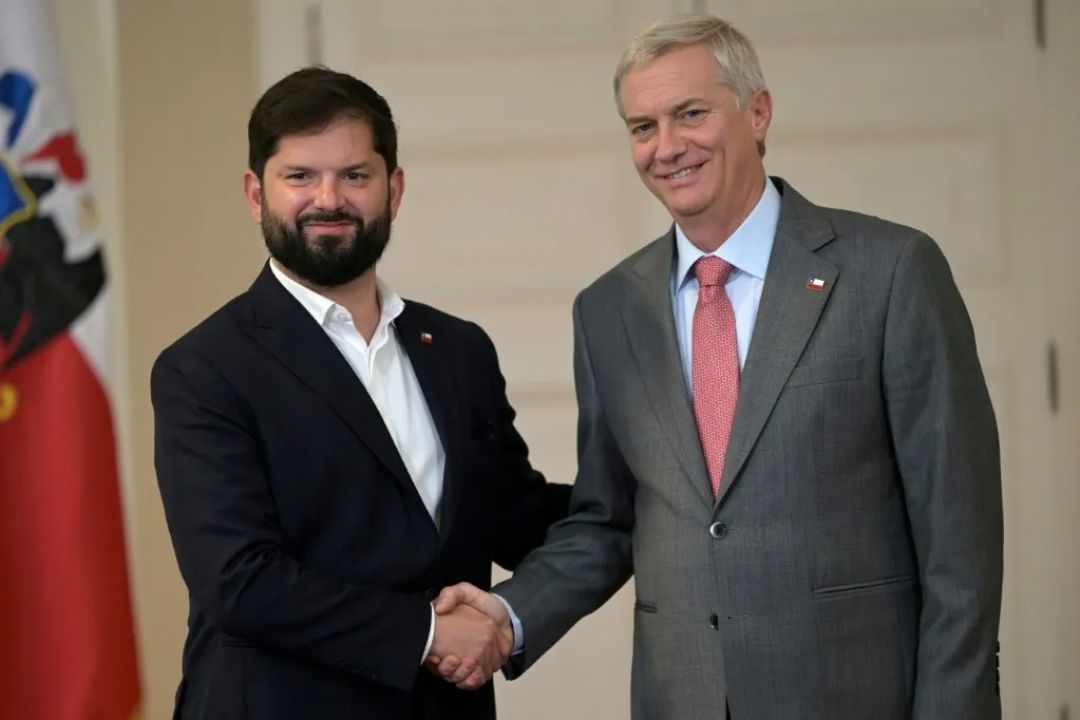
There is a revolutionary maxim that never fails: what does not go forward goes backward. Last Sunday, December 14, 2025, Chile had the presidential election run-off. According to official data, a total of 12,473,294 valid votes were casted, that is 92.93%. The far-right candidate, José Antonio Kast, was elected president with 7,254,850 votes, that is 58.16%, while the candidate of the ruling party, Jeannette Jara, obtained 5,218,444 votes, 41.84%. The result was likely to happen, as we have already analyzed in previous articles and characterizations, however, it is necessary to examine the huge failure of Chilean reformism and reflect on the actions required to confront Pinochetism 2.0 that, in spite of specific moments where it dressed in liberal garb, never left its authoritarian soul.
By Camilo Parada, Movimiento Anticapitalista (Chile)
One of Kast’s particular features is the effort invested to pose as a figure that represents a new right wing. Nothing in it is actually new, it is rather the return to old Pinochettism and its complexities, contradictions and infighting. Kast tries to presenting it as something new, a strategy used in several places where the far-right has come to power or to hold parliamentary seats in different governments of the world since the Financial Crisis of 2007/2008. In the case of Chile, this new right wing combines certain elements of neoliberalism with reactionary, authoritarian and anti-rights components, let us remember that Chilean neoliberalism was implemented by the Chicago Boys, central pillar of the counterrevolution of the Pinochet dictatorship regarding the economic model of capitalist restoration, during the 1970s, articulated by this group of Chilean economists who were trained at the School of Economics at the University of Chicago, disciples of Milton Friedman, Arnold Harberger, whose measures were imposed, aided by repression, control and atrocious crimes against humanity, committed by agents of the Pinochet regime and with the full imperialist support of the CIA. On the other hand, Kast’s social base combines elements of the middle strata bombarded by a constant propaganda on insecurity, criminality, robberies, delinquency, assimilated by the mass media, to migrants; sectors of the bourgeoisie that see in Kast the necessary figure for the reproduction of capital, in moments of an international crisis that offers few glimpses of a way out; popular sectors, gradually abandoned by the center left and the ruling party, where the revolutionary left, due to its own weaknesses, is unable to make sense and where, after years of work, the extreme right and a network of evangelical churches, have managed to reach and change the “common sense” of many neglected sectors and certainly, disenchanted with the unfulfilled promises of a reformism that has dedicated itself to administering, in many cases perfecting it, providing it with greater tools of reproduction and disciplining, and enlarging the margins of deregulatory action, at the service of the great international private owners, with free trade agreements.
A new foothold for Trumpism in South America
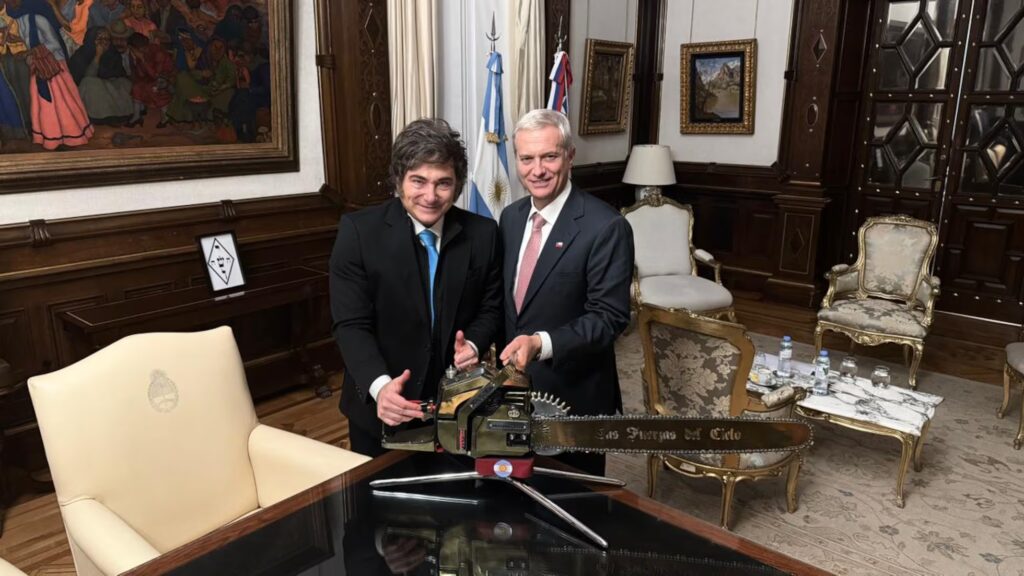
Kast promises security and order, simplifying his promises to these two axes, arguing that his government is an “Emergency Government”, facing a perception of insecurity unleashed and manipulated by an incessant television noise and bombardment of social networks, where a story about an uncontrolled migratory “crisis” is imposed, which is ipso facto associated to criminality, with examples such as the Venezuelan criminal gang Tren de Aragua. Faced with this narrative, the ultra-right offers an iron fist, expulsion, bullets and jail, that is to say, solutions in practice, fictitious and quick, extremely populist and dehumanizing; it also represents nationalism and claims the Chilean tradition, defenders of the old triad God, Homeland and Family, and Chilean values, which absurdly, are the values that the ultra-right defends everywhere in the world, facing the “ideological” threats of feminism, gender dissidence, migrant movements, the struggle of indigenous peoples, workers’ organizations, etc. To all this, it is labeled with the epithet of “woke” used without concrete relation with its original definition and as a pejorative adjective, to attack everything that goes out of the good manners, according to a reactionary parameter. On the other hand, taking advantage of the abandonment by progressivism of the popular sectors, the extreme right is positioning itself as the defender of the people against the “elites”, something like Milei’s anti-caste tactic, more nuanced in the Chilean case, since Kast’s origin is well known and evident. The evangelical component is one of the reasons worth analyzing in future writings, since it is a phenomenon common to several Latin American countries, especially the Pentecostal currents, increasingly stronger in popular sectors, with a strong conservative and anti-rights agenda, what is known as “religious neoconservatism” whose origin is in the United States, but which has managed to consolidate successfully in Chile, Brazil, Peru, Guatemala and many other countries.
From rebellion to frustration with Boric: window of opportunity for the far-right
Another crucial point, with its own internal dialectics, is the growing depoliticization and disaffection with politics after the October Rebellion, the Peace Pact and the New Constitution and the resounding failures of the constituent processes promoted by the reformism of the Frente Amplista, provoking a palpable fatigue in the everlasting promises and betrayals of reformism, and the impossibility of carrying out real and structural changes without breaking with the political regime. Kast’s ultra-right is not original in this sense, it capitalizes on the fear and frustrations of broad sectors of Chilean society, disillusioned in large part with the experience of the reformist cycles, but it has the particularity of a rise that is inscribed in the ebb of the wave of the Rebellion of 2019, culminating point of a process of accumulation of struggles, which was defeated by a series of determinisms, the lack of revolutionary leadership of course, but also the cupular pacts to channel the demands of the streets, where the outgoing president Gabriel Boric, played a central role. To all this it is important to add as a determinant to the unappealable triumph of the ultra-right in the margins of liberal democracy, its strong links with the business community, with local and international conservative networks, which see in Kast, the necessary pawn to play on a board that offers to reduce taxes to the great wealth and to the business community, reduction of the State (with massive layoffs a la carte), and obedience to the dictates of the international capitalist institutionality and Uncle Sam, who is evidently once again getting his claws out to try to regain his influence in our continent, in the face of the imperialist competition of the Asian giant. Now, in reality, these postulates should be qualified, although the ultra-right emphasizes “pro-market” policies, the gear for the application of this type of policies has been greased for more than 35 years by reformism, which has attempted lukewarm reforms without changing the central structure of the model, some of these reforms were the central axis of Jara’s campaign, For example, the 40-hour reform, where at the same time as projecting a laudable and necessary (but not sufficient) reduction of working hours, it allows an extreme labor flexibilization, to the detriment of the rights of our class and to the satisfaction of the exploiters, which is why the law was voted for by an important part of the right wing; on the other hand, the pension reform, voted with a broad agreement, from the PC to the pinochetist UDI, a reform that although it symbolically increases some miserable pensions, it does not substantially change the amounts (taking into account the high cost of food and services) and much less the structure of the obligatory pension savings system, On the contrary, it perfects the model, with the consequent celebration of the AFP bosses, who use public resources to increase their private coffers, without providing more dignity to retirees. At the end of the day, what changes is who administers the model, a model oiled by the policies of reformism and of a center left enclosed in its own lukewarmness, which even made itself available to dialogue and facilitate the government of the Pinochetist ultra-right, but this administrative change is not minor, it has determinants and responsibilities, which for the left it is important to discuss, and for the revolutionary and anti-capitalist left it is fundamental to study, to adjust our tactics in the face of the reactionary ultra-right at world level, and thus nourish our international with important elements to generate answers in these times of asymmetric polarization, but with great possibilities of a rebound of the class struggle and acceleration of outbursts and social political conflicts in different parts of the world. Kast means an accelerationism in the Chilean ultra capitalist drift, with his proposals to dynamize investment and reduce regulatory burdens, practically copied from his neighbor and new ally Milei, his promises to maintain basic social rights but under conditions of focalization and fiscal discipline (which means cuts in public spending and more privatization of services), will quickly collide with the reality of his great campaign leitmotiv: fiscal cuts of 6.It is necessary to emphasize that throughout the campaign, he was unable to explain in a rational way how he was going to make these cuts. This is coherent with a project that seeks to protect the 1% profit rate through the containment of social spending and the adjustment of the social majorities and the working class.
Pinochetism, repudiated in the streets, was never translated into fundamental changes.
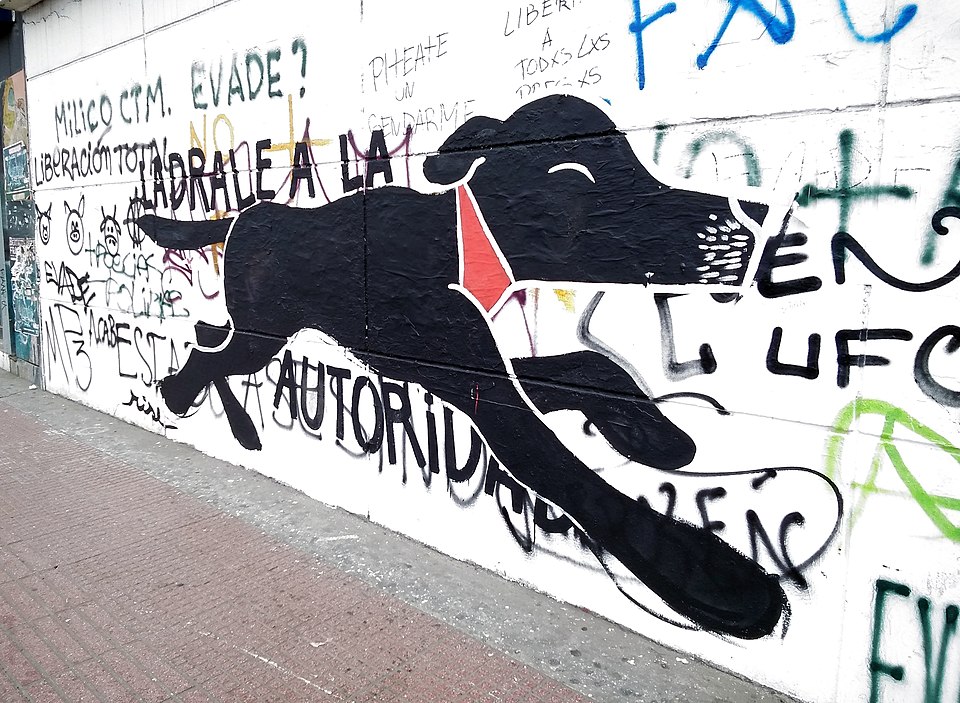
The scaffolding or oiled gear we referred to above, also entails a whole legal framework that has been prepared in these years of government of the FA+ PC + Democratic Socialism (ex Concertación, including DC), to repress the protest and the street that we have to take against all these expressions of the ultra-right, that directly hit our class, our organizations, our leftist politics, this legal framework, trigger-happy, grants greater legal guarantees to the carabineros and agents of the State, to repress without counterpoints, any social demonstration. The road was paved for the ultra-right to come to power, with frustrations, with unfulfilled promises, with a repressive and disciplining legislative framework. This allows the language and political promises of “iron fist” to find fertile ground and clear rules of the game to be applied, beyond the semantic game and the proposals of massive expulsions, border ditches, maximum security prisons, criminalization of poverty and migrants and zero tolerance measures. These are state mechanisms to discipline the subaltern classes and shift attention from structural problems (inequality, lack of stable jobs) to security. The conceptual and political juicer of this strategy of the Chilean Pinochetist ultra-right is a combination of discursive authoritarianism, adjustment, deregulation and repressive measures, a mix that means the erosion of democratic rights, something that the center left has been careful to criticize, today conciliatory with the new president, and silent before an immediate future that is approaching with giant steps of control of protests, criminalization of poverty, pressures on civil liberties, which facilitate the imposition of pro-capitalist reforms. Our task in the face of this is to generate the greatest unity of the revolutionary left to respond in the streets, to respond to a Kast who is not ashamed to show all his sympathy for the civil-military dictatorship of Pinochet and for contemporary authoritarian leaders, sharing a well-known narrative that appeals to order, family, religion and rejection of the left. These narratives reinforce moral legitimacy for repressive measures and economic reforms. In addition, Kast’s family biography and his connections with technical cadres of the dictatorship and the business community configure a political heritage that facilitates alliances with the entire arc of local, regional and international reaction.

What to do from our left?
It is not necessary to be a political scientist or a great analyst to understand the social and political risks that everything means, nobody is fooled by Kast’s attempt to moderate discussion once elected: Setback in civil rights and freedoms for protest, greater criminalization of poverty and social demonstrations; pressure on the fragile institutions of the post-dictatorship era, weakening of the counterweights of liberal democracy (if the political and institutional conditions allow it) to accelerate economic reforms, brake on ESI policies, on the rights of sex-generic diversities, of women, of the historical claims for land of the Mapuche People-Nation, etc. All this inscribed in the asymmetric polarization of which we have already developed previously and of the reconfiguration of the political field, where a hard right is consolidating, which can encourage authoritarian responses in the region and push the popular field to refine tactics and to organize itself in a much more solid way at regional level, with networks, coordination and shared experiences, something that we have already been developing from the parties and movements of the International Socialist League, present in most of the countries of South America. Faced with this it is important to strengthen the anti-capitalist organization and the revolutionary left, avoiding at all costs to fall into futile sectarianism for the times we live in, to strengthen the territorial organizations and the class union independence, to protect labor rights, democratic rights and to be the active resistance to the disciplinary measures. Militarize and put the energies in the regroupment of the revolutionaries and the popular sectors, showing materially superior alternatives to repression and political alternatives decided by the left to the lukewarm reformisms. We must monitor and denounce internationally any attack on human rights, using documentary evidence and international networks. Our tools and tasks are the mobilization and regroupment of anti-capitalist, socialist and revolutionary forces to prepare a political alternative that gives a way out of the structural crisis from and for the workers and the people.