By Alberto Giovanelli
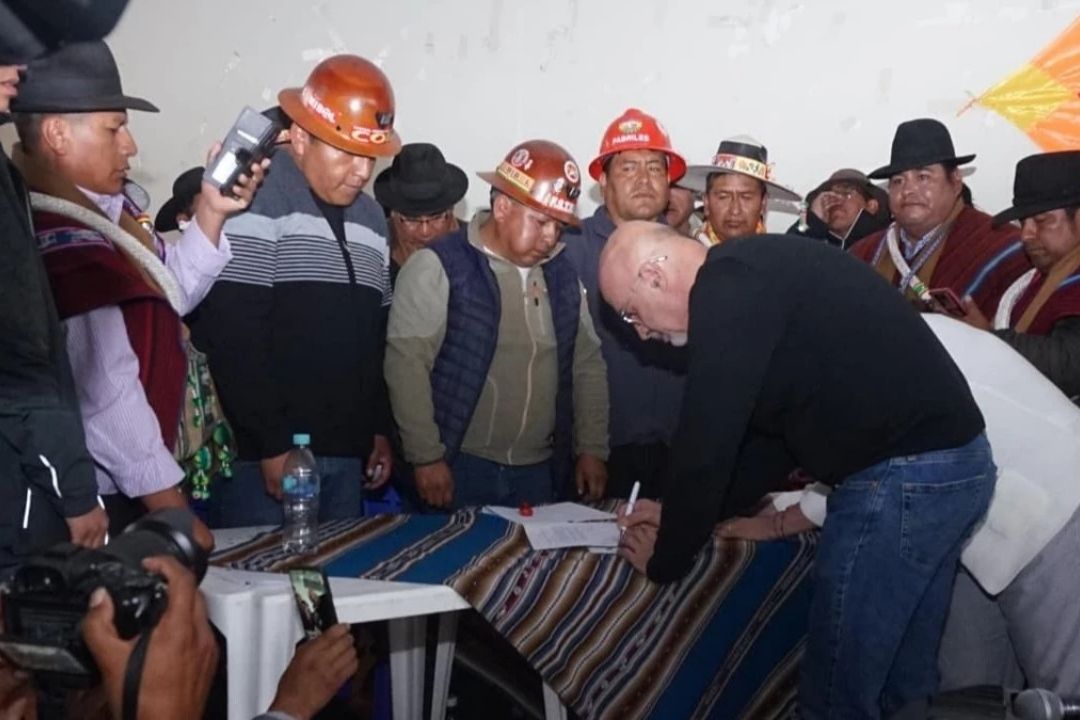
When both the government and the COB announced last Sunday an agreement in principle on the abrogation of the controversial decree 5503 -which essentially eliminated fuel subsidies consequently raising the prices of all basic consumer products-, hundreds of grassroots organizations distrusted it and maintained their blockades.
The strength of the mobilization of workers, peasants and indigenous peoples against neo-liberal austerity and imperialist plundering has left important lessons, regarding the need for unity of the struggles and self-organization and the indispensable internal democracy for decisions to be taken collectively and have a mandate. It was the power of the demand that made the COB leadership, 24 hours after signing the agreement with the government and “ordering” the lifting of the blockades, come out and denounce the “non-compliance” of the government.
Although the government seems to be backtracking by eliminating the decree in question, it announced a new decree that ratifies the suspension of fuel subsidies, the central and most questioned measure, although it commits to increase social aid through bonds and the maintenance of subsidies on accessory products for transportation.
The scope of the new decree is not yet known and there are still around 40 blockades of different sectors that will not comply with the COB’s indication until the total abrogation of decree 5503 is effected.
The recently elected leadership of the COB, in spite of its promises, once again reiterates the errors of the old bureaucracy, taking measures behind the backs of the majority. For this reason we call for a strong continuation of the democratic decisions made by the grassroots organizations. However, already last Monday night, the COB itself included as a condition that the new decrees be approved by the Parliament, opening an escape door to a government that was cornered.
It has been demonstrated that this first fight against the Paz government, less than 60 days after its inauguration, is of great importance for the subsequent development of new confrontations that will inevitably occur, but that for now it is counting on the agreement of the COB to implement its plan.
Paz comes to apply an adjustment plan demanded by the IMF and the bosses. Only organization from below and the greatest unity of action in the mobilizations will be able to defeat these objectives, at the same time that we reiterate the urgent need to advance among the revolutionary anti-capitalist and socialist sectors that will allow us to find the fundamental solutions that the situation of the country demands of us.
We must thus overcome both the frustrating experience of the MAS and now the betrayal of the COB. The crisis and corruption of both have opened the door to the right wing, frustrating the hopes of millions of Bolivians who trusted in a project that proved to be insufficient and finally integrated to the institutionality of the powerful.
From the International Socialist League we will struggle together with our sympathizers in Bolivia on the road of unity of action for the struggle and in the organization of a political alternative, which overcomes the absence of a revolutionary leadership that aims to achieve the government of those who never governed: the Bolivian workers and people.