By: Alberto Giovanelli
The fuel increase unleashed the first major crisis of the recently assumed government. Massive protests followed, culminating in repression, as described in previous articles.
One day after the Central Obrera Boliviana (COB) ratified the state of mobilization and declared an “indefinite general strike”, the Bolivian government of Rodrigo Paz Pereira confirmed its economic reform plan, which includes the questionable Decree 5503 which, among other measures, eliminates fuel subsidies, generating a sharp increase in prices.
The ratification was made by the Minister of the Presidency, José Luis Lupo, on social networks, and concluded: “Bolivia has begun to stand up, no matter who it hurts”.
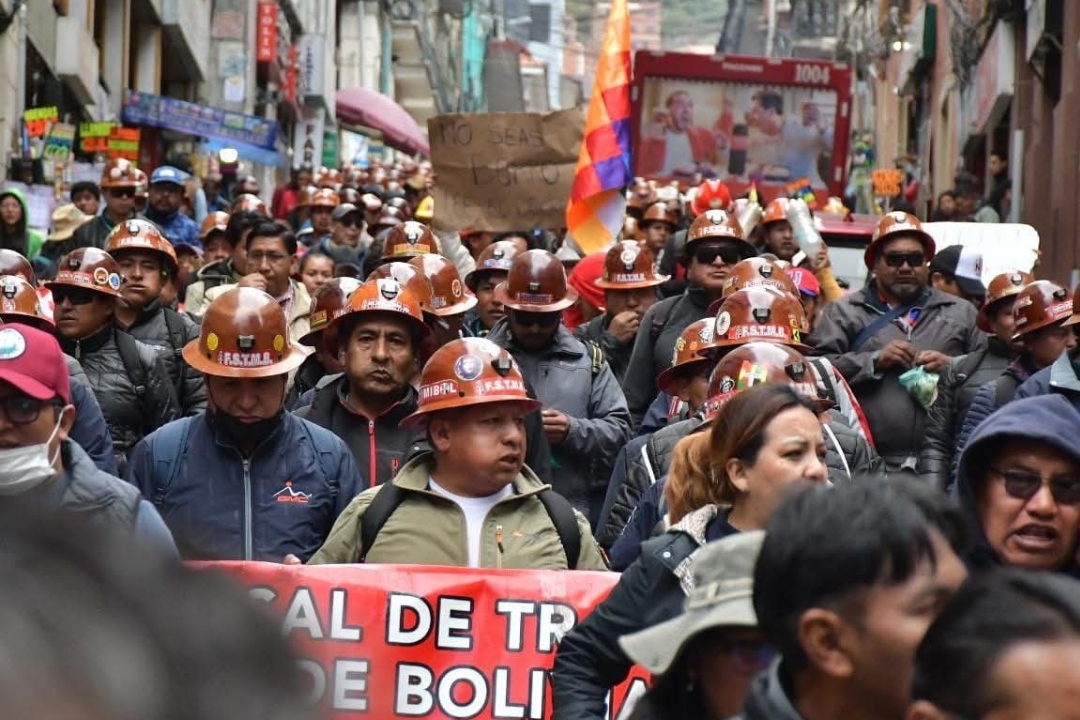
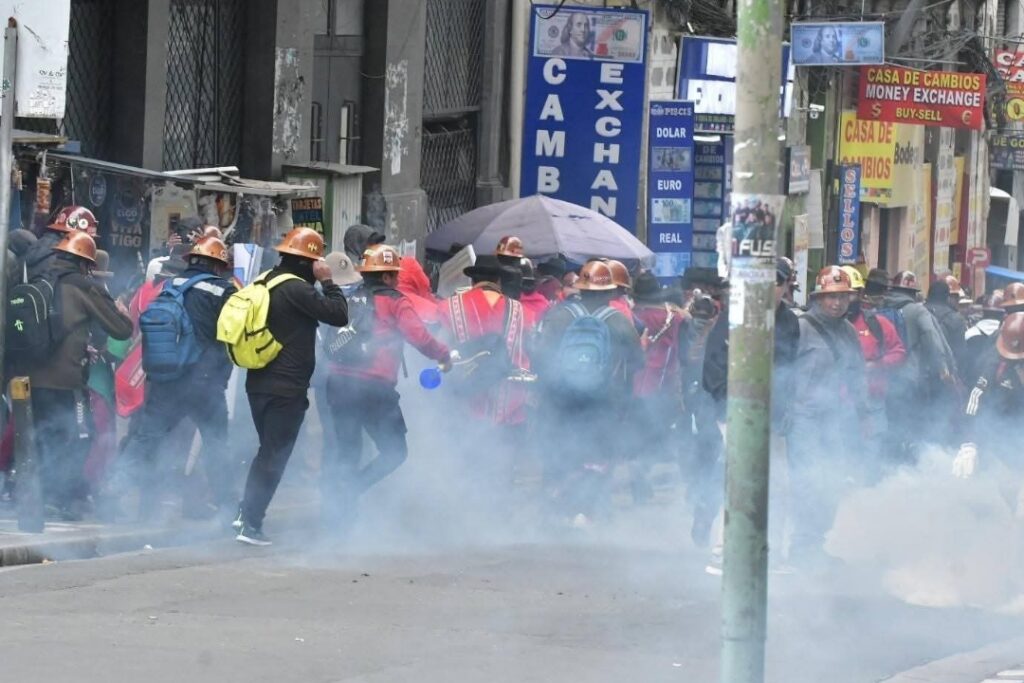
Days before, the COB staged days of demonstrations in the city of La Paz which culminated in repression, the last one during the afternoon of December 24. After failing in a meeting with the president, the unions affiliated to the entity decided to implement a “staggered” strike, as stated to the media by its maximum leader, miner Mario Argollo. The mobilized unions, made up mostly of miners, will continue to rally in La Paz, even “on holidays” at the end of the year, as long as the decree, considered by economists as “a redesign of the State”, remains in force.
The conflict with the COB is a new front for the right-wing government of Bolivia, which besides assuming the social protest it causes with its measures, must deal with the rupture within its own government: the estrangement of its vice-president, Edmand Lara, deepened in the last days to the point of declaring himself openly “opposition”. Lara said in a video that “there are people who say that I am no longer part of the government and that I am opposition. Well, how right are they? I am opposition, but constructive opposition. From the moment Rodrigo Paz pushed us aside and decided to govern for the rich and decided to surround himself with corrupt people who only look out for their interests,” he said.
Even the former policeman Lara, addressed words of support to the demonstrators who occupy public spaces in La Paz, asking them to be “strong” and assuring them that “tyrants will fall” and that “better days are coming”. He also emphasized his differences with the president: “I want you to understand, Rodrigo, that you are wrong. The advisors you have and the ministers you have are assholes, and we have to provide certainty”, he said through the networks, the only possible communication channel with his running mate, according to what he said.
The marches promoted by the COB since Monday maintain a high level of compliance among state miners.
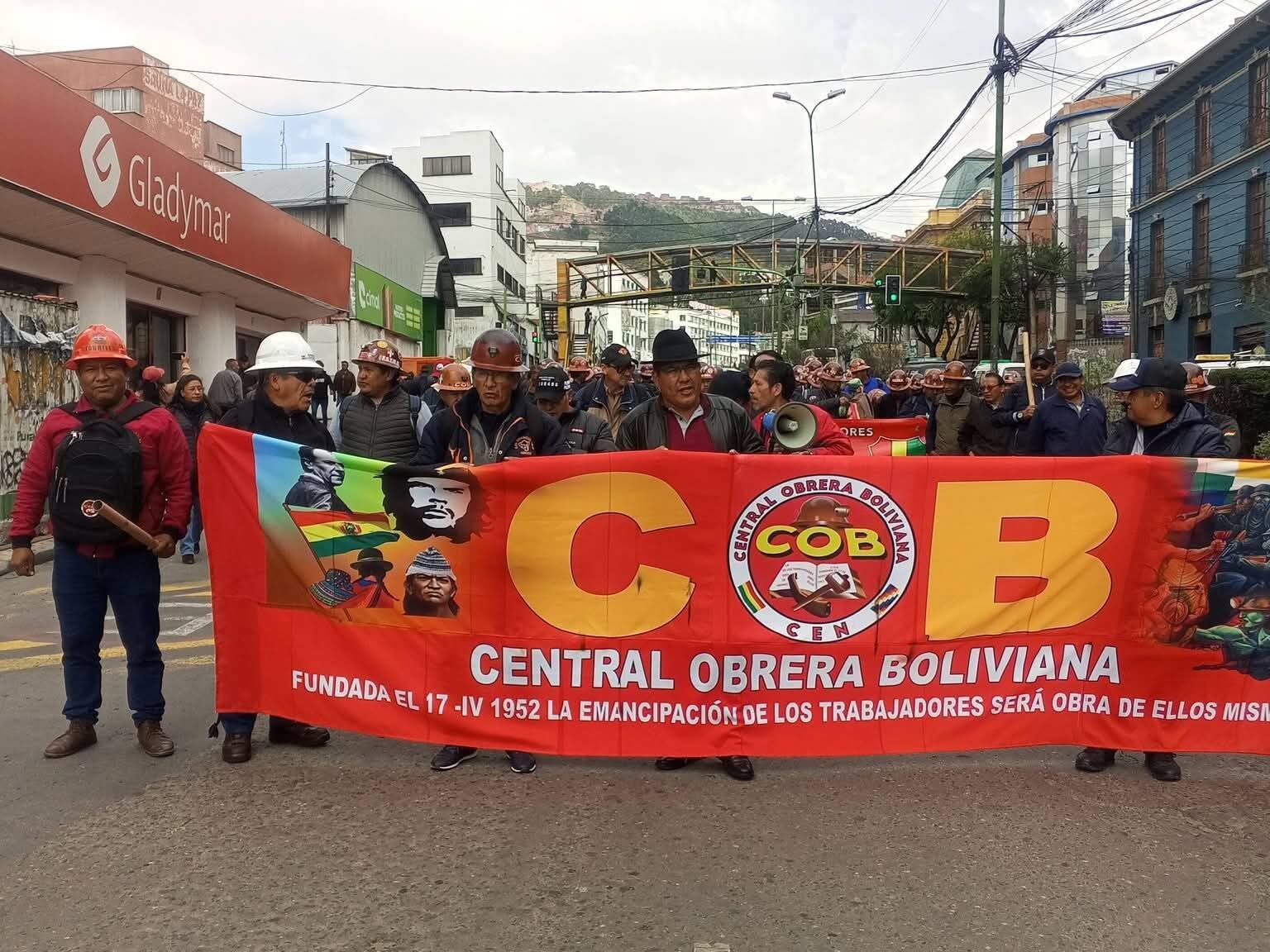
On Tuesday there was an attempt at rapprochement with President Rodrigo Paz in a meeting with the main leaders of the COB, but the meeting ended without agreements. The reason is that the central remains inflexible regarding its demand for the repeal of the decree that Paz considers “historic”. Two evidently irreconcilable positions.
Meanwhile, after Friday’s union meeting, the COB resolved to organize marches in nine regions of the country and to initiate a campaign to publicize the content of the decree, which it considers “neoliberal” and “harmful to the workers and “to the country’s economy” not only because of the direct impact on prices, but also because it allows the “alienation” of Bolivia’s natural resources and is the first step to approve privatizations and other measures that clearly anticipate the plan in favor of the privileged sectors of society, in line with the demands of the IMF.
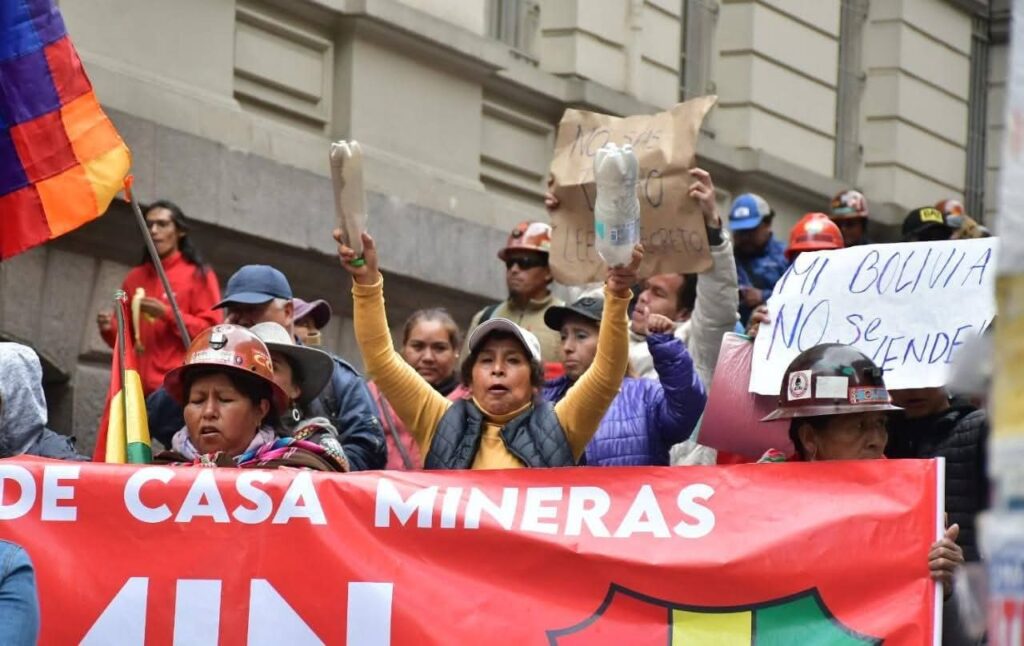
Decree 5503 established new fuel prices, with increases of 86% in gasoline and 162% in diesel in relation to the subsidized values that prevailed for more than 20 years. It is part of an economic package of the Executive that also includes cuts and liberalization of trade in agricultural and import sectors. “We see day by day that more sectors are joining in, that are realizing that this damned decree is putting our Bolivian people up for sale,” said the COB’s top leader, Mario Argollo, during a march in the city of La Paz. Argollo announced that a group of women miners began a hunger strike this day “until the decree is repealed”.
Beatriz Choque, representative of the Porco mining district, in the Andean region of Potosí, stated that together with her colleagues she began a hunger strike. “We will fight standing up until triumph my dear Bolivians, for our children and for our grandchildren”, she added.
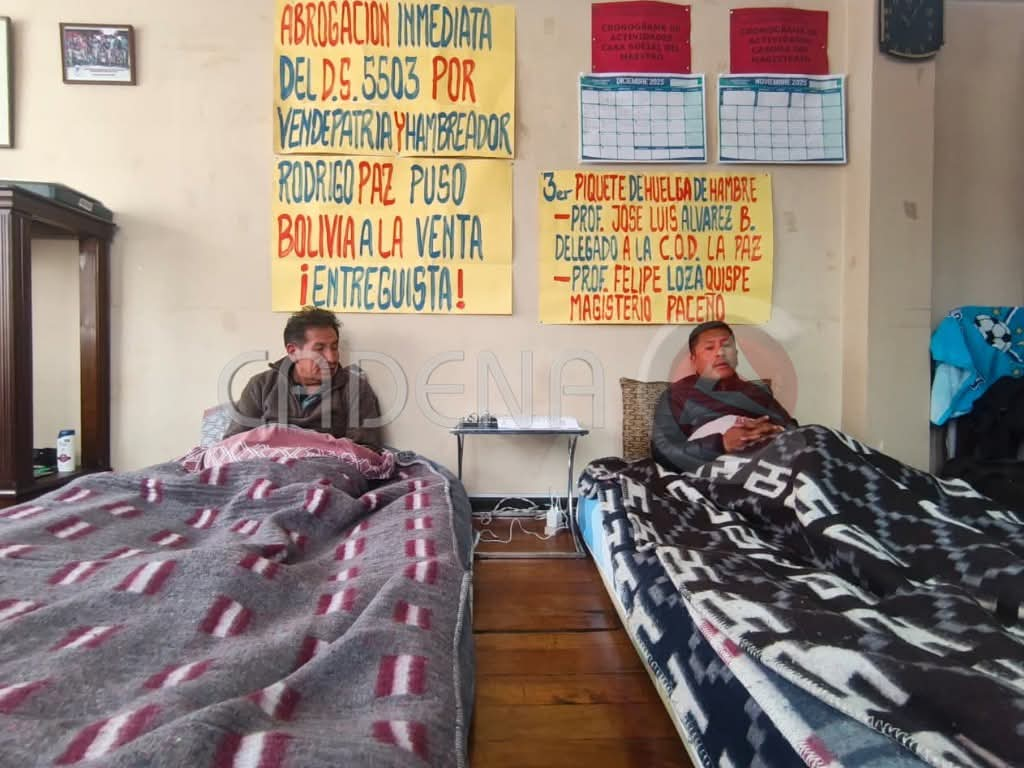
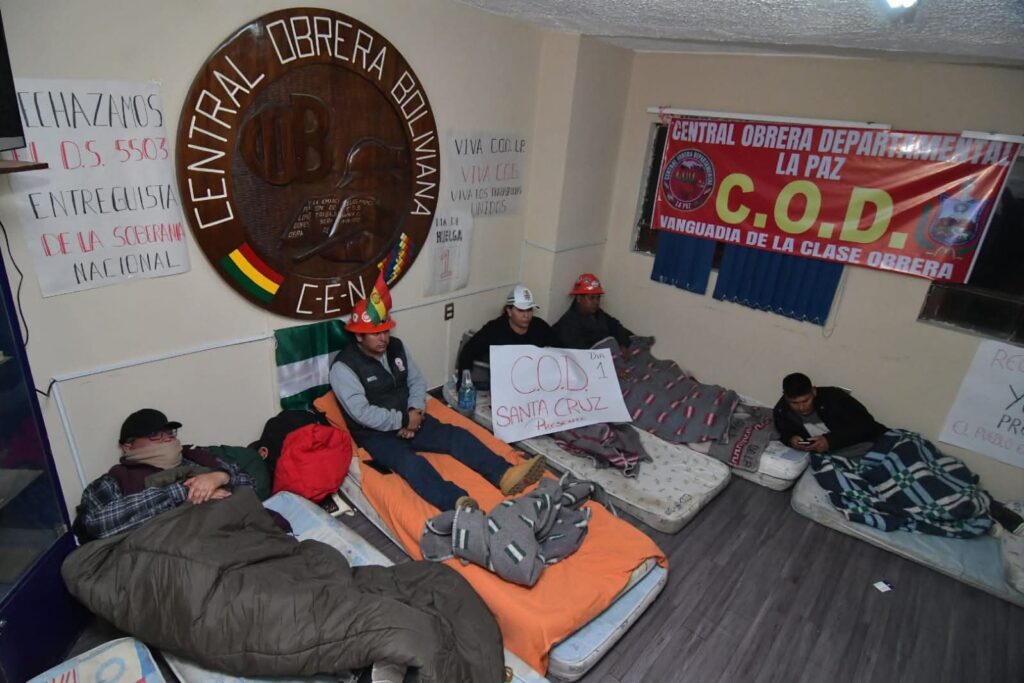
In Cochabamba (center) a group of miners from the Departmental Federation of Mining Cooperatives (Fedecomin) also marched through the main streets of the city against the decree. The mobilizations are going to be indefinite until the decree is repealed. The Government is calling for dialogue but does not want to go back and repeal the decree, we are going to go to the last consequences”, said the leader Praxides Castañón.
Once again, we reiterate the need for the most absolute unity in support of the mobilizations and the plan of struggle that should be extended to all the populations. Rejecting this decree and achieving its abolition will be a very important step in the rejection of the whole anti-popular economic package that comes after this first decree. Simultaneously, we reiterate the urgent need for the Bolivian anti-capitalist and revolutionary sectors to begin to debate, without pettiness, an in-depth solution for the country that will come from the hand of a government of workers, indigenous communities, young students and the people as a whole in transition to socialism.
From the International Socialist League we assume this commitment.