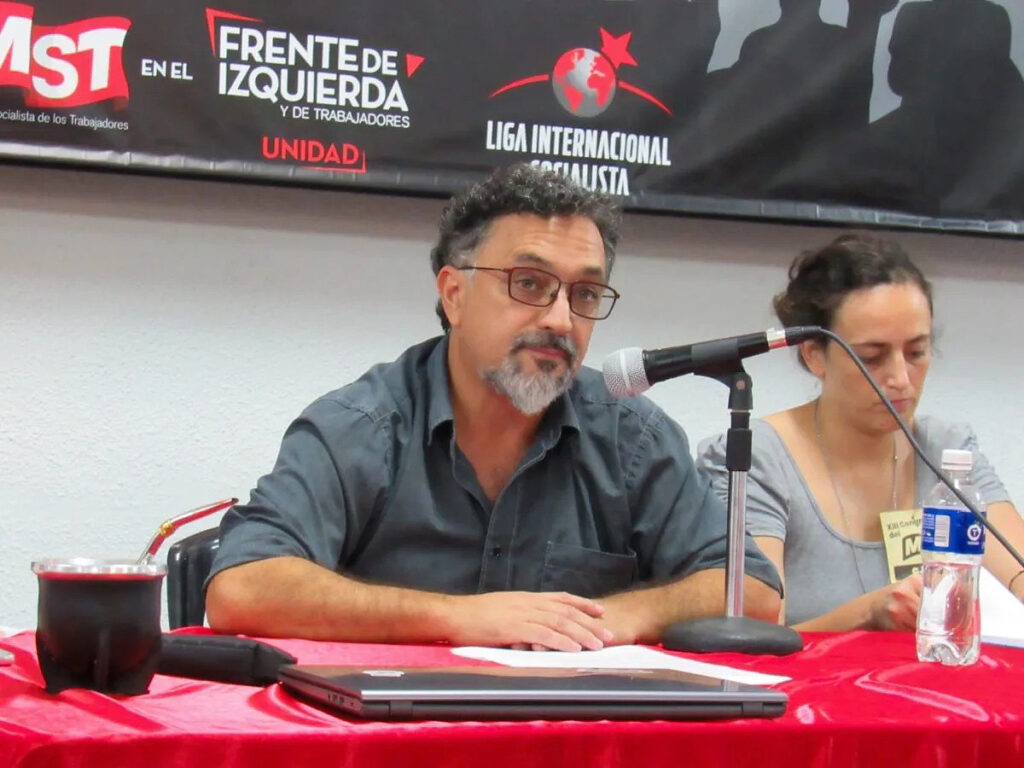
On March 26-29, an anti-fascist conference will be held in Porto Alegre, Brazil. The conference is organized by the MES-PSOL, together with organizations of the USFI from different countries, the PT of Porto Alegre, the local PCdB, the Landless Workers Movement (MST) and other local trade union and social sectors. Different organizations and referents from other countries will also participate as guests. We will do so from our Argentine section, MST in the Left Front-Unity (FITU). We have received the invitation to participate and will attend to put forward our proposals and opinions on what to do in the face of the rise of new forces and governments of the extreme right with neo-fascist tendencies. We should not underestimate them, on the contrary, we have to understand the danger they pose. At the same time, we should not consider them invincible. There are many experiences and ongoing debates and an urgent need to defeat these far-right projects. In this article, we share some opinions and proposals in this regard.

The reasons for an extreme political rise
In recent years, the rise to power—or the possibility thereof—of far-right political forces in various countries has become almost commonplace. This process has its origins in the prior crisis of traditional parties and regimes, both in core and peripheral countries. In other words, the emergence of disruptive figures at the helm of far-right, neo-fascist movements is a byproduct of the broader crisis of the global capitalist system, beginning with the 2008 financial crisis. It also stems from the brutality of the austerity measures and corruption with which established political forces responded in the following years, and from the disillusionment experienced by millions during that period, leading them to seek new experiences opposed to everything that came before. The recent rise of this far right, which is gaining electoral traction among masses in some countries, is part of an international situation characterized by this and other features, such as asymmetrical polarization in a class struggle—a struggle that resists and confronts the far-right and other bourgeois powers that govern the world—that has strong expressions in various countries, but lacks a political leadership with mass appeal that proposes an alternative to capitalism.
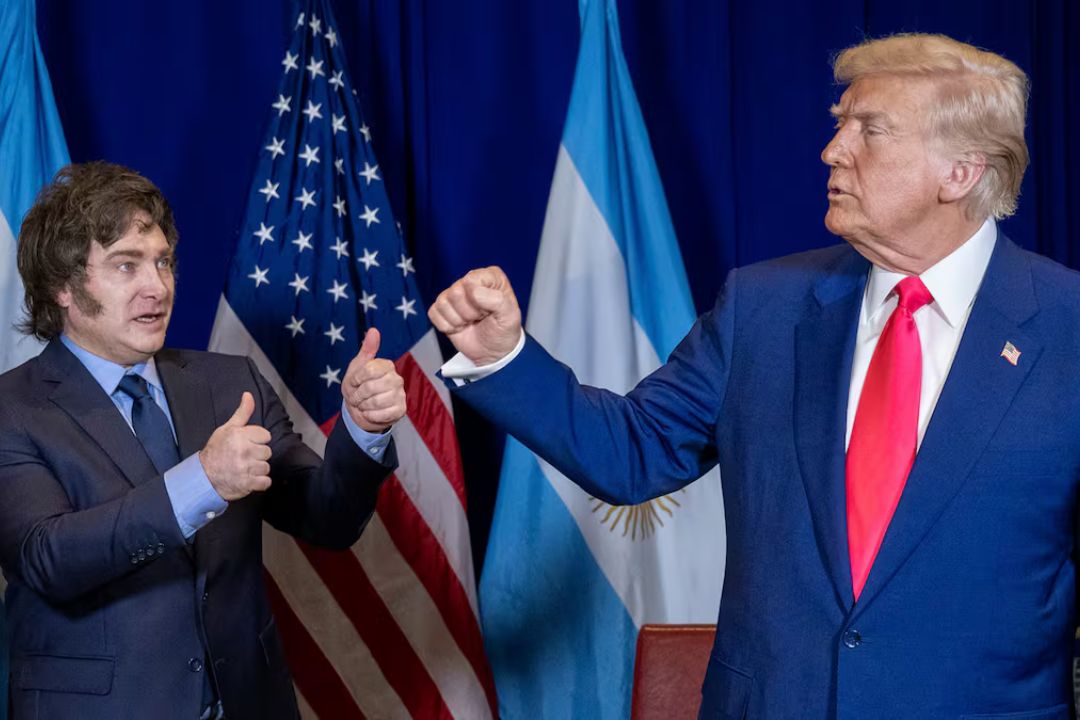
The existence of movements led by figures like Trump, Milei, Modi, Meloni, and Bolsonaro, among others, places the need for the working class and youth to confront and defeat them in the streets under a state of political and social urgency, to prevent them from advancing their plans of direct attacks on social and democratic rights. It is becoming clear that their program is to dismantle labor and social rights, facilitate the profits of the most concentrated imperialist corporate economic power, and solidify far more authoritarian regimes as an indispensable repressive support for the development of their fundamentally ultra-reactionary plans. This panorama includes Netanyahu and his government and regime of fascist characteristics, with the genocide and ethnic cleansing it perpetrates against the Palestinian people.

It is in this context that the urgent need arises to thoroughly debate how to confront and defeat these forces, and to recognize the strategic importance of building anti-capitalist and socialist left-wing alternatives, distinct from all the pragmatic-reformist models of the preceding period. This is particularly crucial because we cannot ignore that in the years prior to the emergence of these extreme right-wing phenomena, there was a cycle of do-called progressive, possibilist-reformist governments, including the Bolivarian movement in our continent. These governments reflected in the political superstructure an initial search in the left of sectors of the population. Once in power, however, most of them merely managed capitalism and its austerity, or at best, lacked the courage to implement far-reaching anti-capitalist measures. Consequently, they ultimately played the negative role of deepening the disillusionment of millions, thus fostering confusion and hindering the development of a significant portion of the population’s consciousness. This process culminated in the rise of neo-fascist alternatives that capitalize on the criticism of all previous experiences to develop the nefarious policies and ideologies we face today. Venezuela serves as a prime example, where we now repudiate and confront Trump’s intervention and his offensive against Venezuelan sovereignty, while keeping in mind that the Maduro regime had already mutated in a highly regressive way long before the US attack, sowing authoritarianism, persecution, misery, and the loss of previous social gains, also generating a situation of weakness, demobilization, and lack of social support to confront the imperialist onslaught.
Causes of the imperialist offensive in the region
The challenged US hegemony—which has been deteriorating in recent decades, taking a major leap after the 2008 global crisis—enabled a new imperialist attempt, through Trump in his second term, to reconfigure the entire framework of the international political architecture, supported by new foundations to guarantee US hegemony. What we saw in 2025 and are seeing in 2026 is the implementation of this attempt, which is only halfway through and whose final and lasting results are uncertain. This policy is now spearheaded by the most visible element of this rise of the far-right, due to the specific weight of being the main imperialist power, in dispute with the emerging empires of China and Russia.
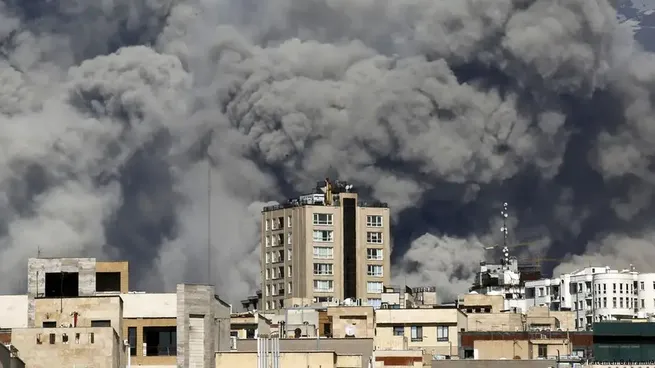
Trump is directly involved in different regions and their conflicts, such as in the Middle East, first in Gaza and now with his criminal bombings alongside Israel in Iran. He gets involved in negotiations in Ukraine, over Greenland, intervened directly in Venezuela, and simultaneously harasses Cuba. The nefarious US president strikes, advances, and at the same time retreats and negotiates, because he is also aware of his limitations. In this context of seeking to consolidate his objectives and defend his interests, he needs to rebuild his regional control over the Latin American continent. Hence his need to control the entire Venezuelan oil business; his ambition for total control of the Panama Canal; his threats against Colombia, where he maintains military bases that Petro allows; his full support for Milei so that US products can flood Argentina without tax obstacles, while US corporations seize our common resources, plunder, destroy, and acquire rare earth elements. For this regional policy, in addition to Milei in Argentina, he has governments and direct allies in countries like Ecuador, Paraguay, Panama, and Honduras, among others, which reflect regional political shifts in line with the international situation. The need to confront all of their political and economic plans is a banner and an urgent task, which is paying out in the streets of every Latin American country, and to a large extent in the streets of the United States itself.
The house is not in order (1)
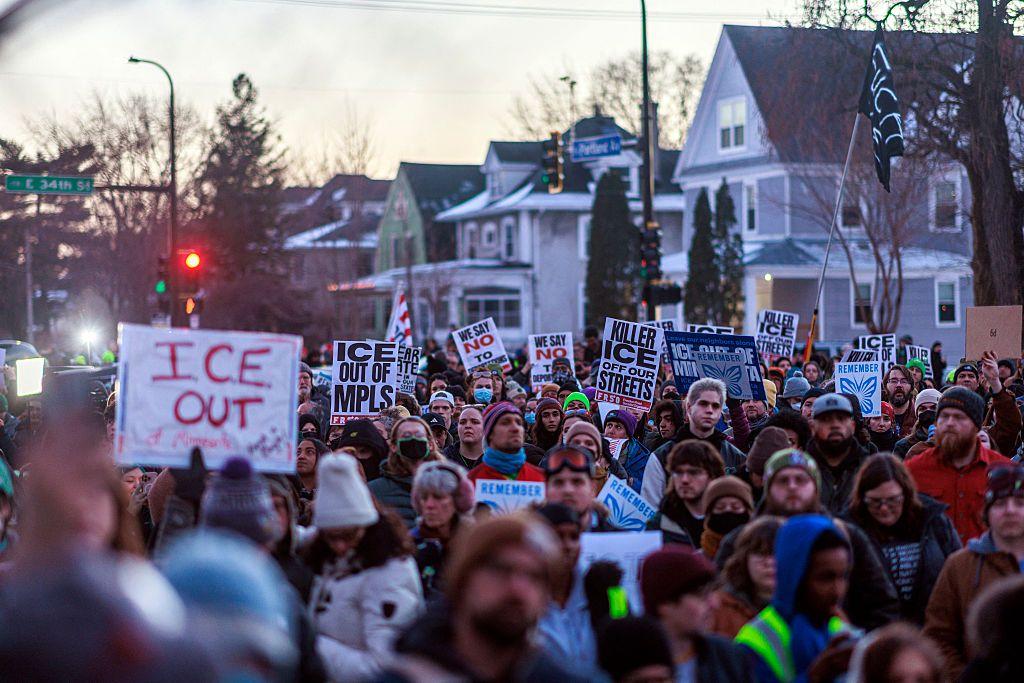
Amid Trump’s attempts to encroach on what he mistakenly considers his backyard, a particular and encouraging situation is emerging: the people of the US are raising hell at home. A strong rise in struggle centered against ICE and other conflicts has increasingly radicalized and is tending to nationalize, with significant working class participation, activism, and the influence of left-wing positions. This marks an objective situation in the class struggle in that country, with very progressive elements that define its current situation as a response to Trump’s profoundly reactionary and imperialist policies. Trump is experiencing moments of crisis and weakness at home, which could also have future repercussions on the electoral front. The US regime needs to sustain the government’s international policy while creaking from within with uncertain prospects and increasing social tensions and polarization. A movement of struggle is preparing for a May Day that will be emblematic and highly combative, amidst assemblies that are preparing for this and other actions. This whole situation makes it essential to deploy strong international support and solidarity with the workers and young activists who are fighting against Trump and his project in the United States, where it may be possible for our class to deliver a decisive blow to the entire MAGA plan. It is also necessary, as our Socialist Horizon in the ISL comrades propose, to strengthen a revolutionary organization and a united front of socialist organizations in the US.
The importance of this discussion
In these times we live in, calls for events to debate these far-right phenomena, especially faced with Trump’s aggressions—such as the upcoming conference in Porto Alegre, other previous forums in which we have also participated, and others that will surely take place in the coming years—are necessary expressions of this urgent need for political exchange to clarify the political path we must take. For this reason, the MST in the Left Front Unity of Argentina, as part of the ISL, will attend every opportunity to express our opinions, knowing that we will always find points of agreement that allow us to connect and coordinate tasks, as well as nuances and differences with most of the participating organizations, since the debate will express different policies and strategies.
We consider collective debates essential and therefore encourage them. We are proponents of in-depth exchange and discussion of all issues related to figuring out how to confront and defeat all far-right movements that pose an enormous danger to humanity. This does not eliminate the need to also confront other capitalist governments in countries that, in one way or another, attack the rights of the working population, while promoting actions with the greatest unity against any aggression that the US decides to carry out in our continent or elsewhere in the world.
Against the far-right: two different and related tasks
The struggle against new neo-fascist governments and expressions requires, first and foremost, a strategy of struggle in each country where they have come to power and are implementing savage austerity plans, structural changes, and shifts toward new, highly authoritarian and repressive regimes. These plans cannot be stopped with isolated measures, actions lacking mass mobilization, or by old labor and political leaderships that feign confrontation while negotiating parts of the implemented plan. Faced with the monstrosity of the extreme right, the working class needs to play a leading role, using its weapons such as the general strike, calls for active general work stoppages, promoting genuine self-organization, and carrying out necessary mass mobilizations that also include youth and marginalized popular and middle sectors. In short, it is necessary to harness the strength of the entire working class and the greatest possible unity of action to defeat them, as well as to promote the united front tactic in every circumstance where it is necessary.
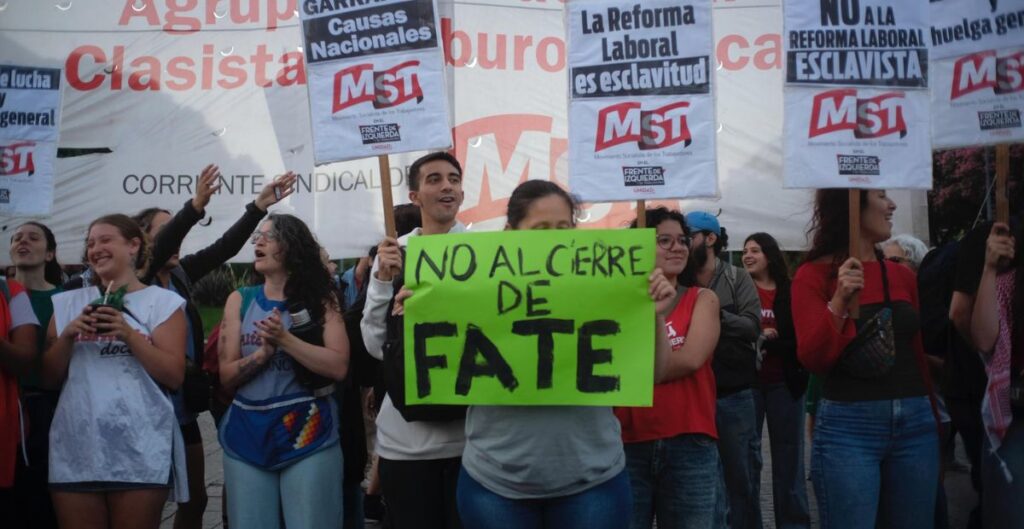
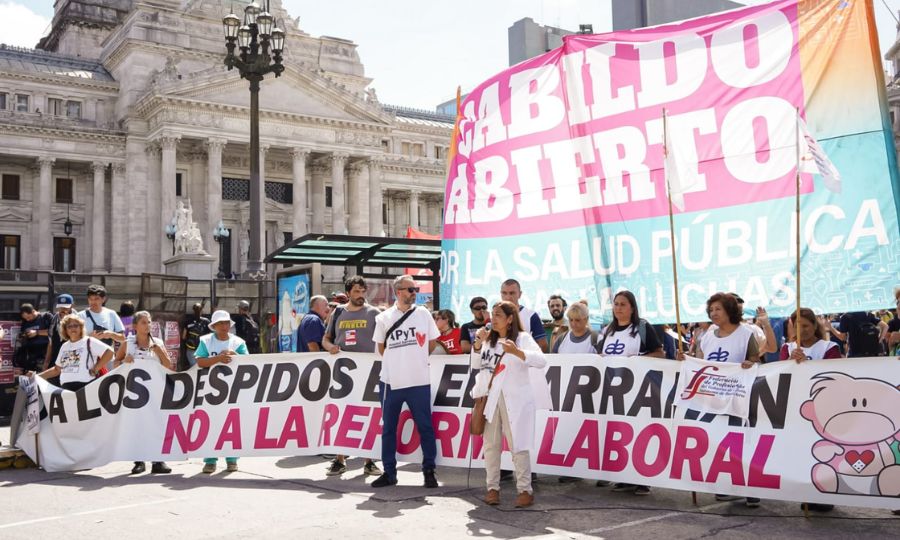
The recent example of Argentina serves to highlight the real problems that exist and go beyond the mere existence of the far-right. In our country, most union leaderships, particularly the bureaucratic leaders of the CGT, openly negotiated Milei’s exploitative labor reform. They allowed the first vote in Parliament to proceed, then only called for a strike without mobilization during the second session. Finally, on the last day of the third session in Congress, they called for no action at all. Meanwhile, a dissident sector called for a mobilization that day, but without the 36-hour strike it had previously threatened to call. Thus, a day of roadblocks and street protests took place, primarily driven by the left—a positive development, but certainly weaker than necessary to stop Milei, who was logically able to advance his labor reform that strips away decades of rights. We will now have to confront its attempted implementation. Once again, old union leaders politically grouped in Peronism allowed the advance of the far right, confirming for the umpteenth time the direct relationship that exists, in this case very negative, between union and political leaderships that are no longer viable and need to be superseded by something new.
The second task before us, which will naturally be a topic of debate and discussion at the Porto Alegre Conference and at every event of this era, stems from and is intertwined with the conclusions of the first, but it has its own distinct paths and objectives. We are talking about the urgent political need to build and strengthen anti-capitalist and socialist political alternatives that strive to gain traction among the masses and achieve strong social integration. There is no possibility of rekindling enthusiasm among segments of the working population and youth if the political recipe is to return to the same programmatic and project-based steps of the parties that have been part of capitalist regimes and have previously disappointed millions, whose living conditions worsened under their governments. Taking the Argentine example again, senators and representatives who answer to Peronist governors have just given Milei the quorum and votes he needs to pass his labor reform. This is what we are talking about. In this sense, we believe that the worst thing the left can do is become politically entangled in alliances with these sectors that share responsibility for the situation millions are suffering today across the continent.
Those of us who continue to believe in the need to build revolutionary parties and organizations worldwide are also striving to develop strong political alternatives alongside those who also consider it necessary and urgent. Greater unity of action in the streets against the new far right is crucial, but this does not imply a carbon copy of that unity on the political level. What determines a movement’s ability to play a progressive role is its political and programmatic content, which at this stage must be transformative, anti-imperialist, and anti-Trump, with the necessary anti-capitalist component given the nature of the measures that must be taken if we want not only to defeat them but also to establish a new project in each country and throughout the continent.

In this sphere, different conceptions and orientations coexist in the left. Some tend to dissolve within alliances where possibilist policies prevail that fail to address the current situation and act as a obstacle. Others remain entrenched in sectarianism, vegetating in closed structures, unwilling to boldly summon the millions who are breaking with the old parties and give them an active and leading role. For our part, we advocate a different path: based on an anti-imperialist, anti-capitalist, and socialist program, we must promote the unity of forces that share such a project. We must forge alternatives that engage in political struggle on all fronts of the political and class struggle, not just in the electoral arena. In Argentina, the MST is conducting this debate within the Left Front, an electoral front that occupies a significant political space, but it should be much more than that, evolving into a common party of democratically organized tendencies, open to intellectuals, social leaders, and other sectors of workers and youth who support us. Specifically, the antifascist unity we need and are promoting combines street activism, class struggle, and political struggle. These tasks are related yet distinct. Ultimately, the decisive factor will be whether we on the left can build alternatives that resonate with large segments of the population and compete for power. That is the goal we fight for: so that one day, working people govern. And we continue to believe this is possible.
(1) A historical phrase uttered by Argentine President Raúl Alfonsín on April 19, 1987 from the presidential palace balcony.