With the escalation of war in the Persian Gulf and the easing of sanctions by the US, the Russian war economy finds a functional relief to the continuity of the invasion of Ukraine, which needs internationalist solidarity to continue resisting.
By Oleg Vernyk – Ukrainian Socialist League
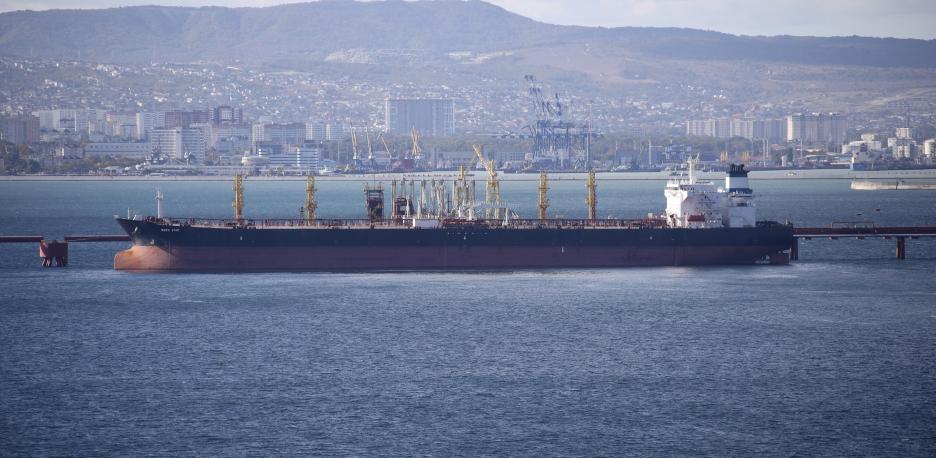
The war in the Middle East as a result of US and Israeli aggression against Iran, Palestine, Lebanon and other countries, is generating collateral effects that benefit Russia. The rise in oil prices -driven by instability in the Strait of Hormuz and the fear of supply disruptions- allows Moscow to sell its crude oil at market values, easing Western sanctions.
Added to this is the recent temporary easing of U.S. restrictions allowing Russian oil to flow with U.S. authorization. The result is an extraordinary revenue stream: every $10 increase in the price of a barrel means billions more for the Kremlin, essential to sustain its war economy against Ukraine.
Winks and favors among imperialists
In this context, Donald Trump’s gesture towards Vladimir Putin -by allowing crude oil shipments to leave the country and partially alleviating sanctions- acquires global significance. The reasons combine economic pragmatism and strategic calculation in an attempt to avoid a global energy shock in the midst of the conflict with Iran and to stabilize international markets. Ukraine is weakened, as its counter-attacks on the Russian energy infrastructure lose effectiveness in the face of the renewed inflow of foreign currency. The measure also generates tensions within the Western imperialist bloc, as it contradicts the policy of economic isolation that had been applied against Moscow.
It is not the first time that there are gestures and measures of US imperialism towards Russian imperialism, which enhances the perception that besides saving his own skin, Trump wants: to separate Russia from the imperialism of China, its great strategic rival; and he does not aim at Ukraine winning the war, but wants Ukraine to limit Russian expansionism in Eastern Europe, while – negotiation through – accepting to cede territories, natural, economic and political sovereignty resources in favor of Russia and its own. The “campers” pretend not to see the growing points of contact between the U.S. and Russia, even though they also dispute.
With instability and uncertainty as signs
The revival of Russian exports boosts its trade links and strengthens the war economy, as a consequence, it favors aggression against Ukraine. However, the outlook is far from stable. Although higher oil prices strengthen Russia’s public accounts, a prolonged escalation in the Gulf could lead to a global recession that reduces energy demand and drives prices down. In that scenario, the current windfall would quickly reverse. Russia capitalizes on the momentum, but its advantage depends on a fragile balance: that the war in the Middle East is intense enough to support prices, but not so intense as to sink the global economy.
Ukraine should not be forgotten
Beyond the geopolitical movements of the powers, whose dispute for hegemony does not deny the approaches, negotiations and pacts, the fundamental thing is to sustain the resistance to the Russian imperialist aggression, with political independence from the Zelensky government and without placing expectations in the imperialisms of the US, the European Union and NATO, which are guided by their own interests of domination and plunder rather than by the needs of the Ukrainian working people.
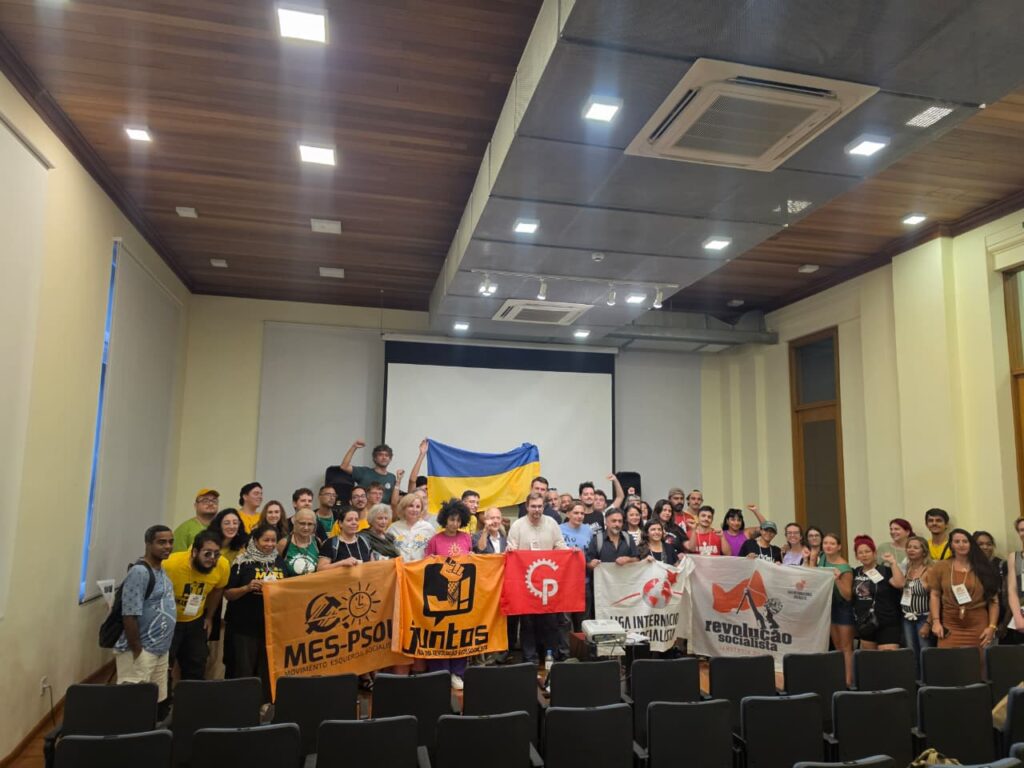
The resistance, which has been going on for more than four years, needs mobilization, internationalist solidarity and that nobody forgets Ukraine. In this sense, it is worth valuing the realization of a workshop of diffusion and debate at the Anti-Fascist Conference of Porto Alegre, at the initiative of the European Network of Solidarity with Ukraine, in which participated delegations of the MST-Argentina and Socialist Revolution – Brazil, in representation of the International Socialist League (ISL) and comrades of the MES of Brazil.