By Imran Kamyana
It has now been a month since the war of aggression by the United States and Israel against Iran began. Iran’s retaliatory actions against Israel and the Gulf states have transformed it into a regional war. However, when viewed in terms of its global repercussions and the indirect involvement of other international and regional powers, it is far more than merely a regional conflict. It has already produced profound and lasting transformations in the Middle East and has shaken the already fragile global economy to its foundations.
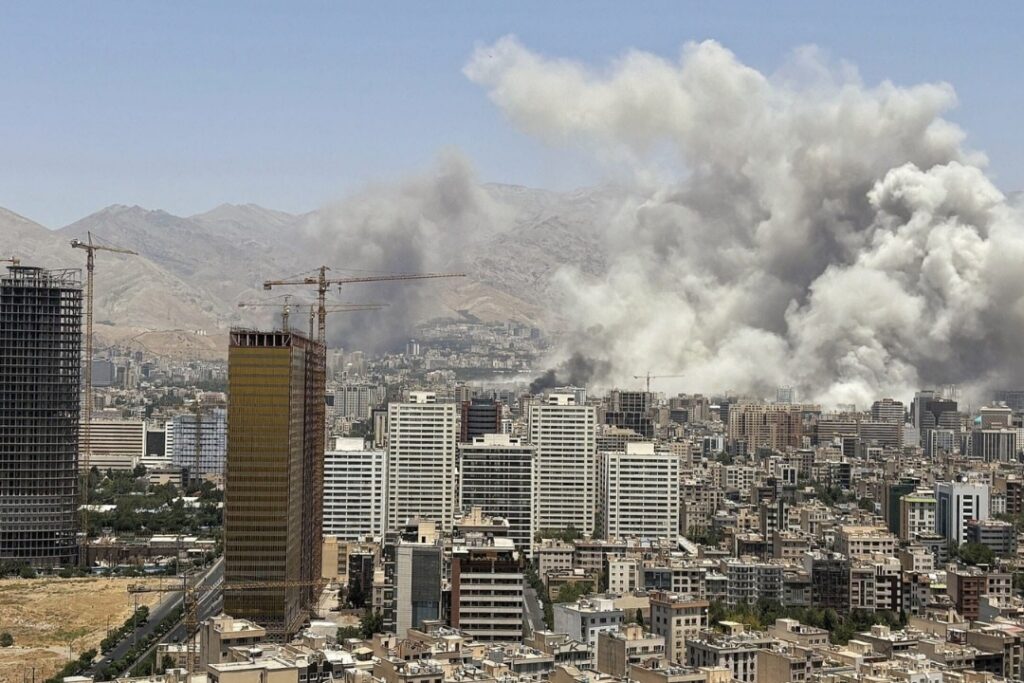
Events are unfolding at a rapid pace, watched by the entire world with bated breath. During this period, Donald Trump has repeatedly announced the imminent end of the war. In reality, there is intense pressure on Trump—both within the United States and internationally—to bring this madness to an end. At the same time, through such statements, he is also attempting to stabilize the continuously declining global markets (while simultaneously profiting handsomely from their volatility alongside his clique). Yet the nature and general trajectory of events point toward an escalation in the intensity of mutual attacks. Oil and gas facilities, water and electricity infrastructure, and even highly sensitive nuclear installations are now being targeted. Indeed, the situation has reached the point where even universities are coming under attack.
In this regard, Israel’s role has been particularly destructive and destabilizing. In effect, it has the United States acting at its behest, and has adopted a pattern of further provocation to eliminate even the slightest possibility of de-escalation. In response, Iran is compelled to retaliate in a similar manner—targeting sensitive installations and infrastructure in Israel and the Gulf states. This, in turn, establishes new precedents, further intensifying the scale and severity of the conflict.
At the time of writing, reports are circulating about efforts toward negotiations and a ceasefire with the mediation of Pakistan, Egypt, and Turkey. However, the situation is highly complex and unlikely to be resolved easily. Recently, the Houthis have begun launching missile attacks on Israel, adding yet another dimension to the conflict. In what follows, various aspects of recent developments and the current situation are examined. This is essentially a continuation of the analysis and framework presented at the onset of the war, through which it becomes possible—at least to some extent—to anticipate the outcomes and future trajectory of this imperialist onslaught.
From a strategic standpoint, the ambiguity of the United States regarding its war aims is becoming clearer with each passing day. When one enters a conflict without a clearly defined objective, exiting it also becomes exceedingly difficult. Despite the elimination of much of Iran’s top leadership in the initial strikes, the Iranian regime has neither collapsed on its own nor has any mass uprising emerged. This represents a serious setback for the war planning of Trump and his American and Israeli henchmen. It also reveals the extent to which the affairs of the world are in the hands of ignorant and fanatical individuals. Accordingly, Trump continues to make incoherent, contradictory, and often absurd statements in a (failed) attempt to project an image of victory. However, he at least possesses enough sense to recognize that such tactics cannot provide a real face-saving exit.
In general, the destruction of the enemy is not an end in itself in war, but rather a means to achieve specific objectives. These objectives may be defensive or offensive in nature. There is no doubt that this is a highly asymmetrical war in which Iran is suffering—and will continue to suffer—heavy human and material losses. The recovery from such losses may take years, or even decades. In contrast, the losses of Israel, the United States, and its Gulf allies appear comparatively limited.
However, it is important to bear in mind that the Iranian regime has chosen to fight this war after considering all other available options. In other words, from their perspective, there is no alternative but to fight. Consequently, they appear prepared to go to any lengths, as is becoming increasingly evident from recent developments. Moreover, in line with their particular strategy, they are likely to use the prolongation of the war itself as a tactic and a weapon—since its greater cost will ultimately be borne by American imperialism and its allies.
In this context, an observation attributed to the American statesman Henry Kissinger—known for his paradoxical formulations—regarding the Vietnam War remains highly relevant: Vietnam is winning because it is not losing, and we are losing because we are not winning.
Under Benjamin Netanyahu, Israel has effectively transformed into a completely unrestrained and rogue state. It is therefore not only intent on utterly devastating Iran, but is also seeking to exploit the war in order to occupy as much of Lebanon as possible. However, this could mark the beginning of a catastrophe whose potential consequences even the Americans fear. For instance, radiation released from the destruction of Iran’s nuclear facilities could affect multiple countries. Likewise, Iran possesses approximately 450 kilograms of uranium enriched up to 60 percent. While this may not suffice for a nuclear bomb, it could certainly be used to construct a “dirty bomb” and, in conditions of anarchy, could slip out of state control.
Moreover, a Libya- or Syria-like scenario in Iran could trigger an unprecedented refugee crisis for the West and create endless instability for neighboring Gulf states. Any long-term or irreversible damage to Iran’s oil production capacity would also bode ill. Israel, however, appears determined to escalate both the duration and intensity of the war at every stage. This indicates that even if the Americans reach some form of accommodation with Iran, restraining Israel will itself become an additional challenge for them.
From a purely military standpoint, much depends on what might be called a “calculus of missiles.” The United States is undoubtedly the most powerful military force in history—one before which even powers like China and Russia appear comparatively weaker. However, this military capacity is not unlimited. A substantial portion of advanced American weaponry has already been expended over the past several years in the Ukraine war. Now, in the war against Iran, these weapons—particularly missiles used for offensive operations and air defense—are being consumed at such a rapid rate that it has deeply alarmed imperialist military strategists.
For example, around 25 percent of the stockpile of Tomahawk cruise missile (approximately 850 missiles) has reportedly been used within just four weeks of this war. Air defense systems such as THAAD and Patriot are being depleted even more rapidly. This is why the United States is now being compelled to redeploy such weapons from Japan and South Korea to the Middle East, or to divert supplies originally intended for Ukraine. As a result, considerable anxiety is emerging among those American allies facing North Korea, China, and Russia.
At the same time, the large-scale consumption of such weaponry is weakening the United States’ own position vis-à-vis China and Russia. It is worth noting that each of these missiles can cost several million dollars, and despite efforts to accelerate production, replenishing stockpiles to pre-war levels will take not weeks or months, but many years. In contrast, Iran—and its allies in Lebanon, Iraq, and Yemen—possess drones and missiles that are far cheaper. Evidence suggests that Iran can sustain their use for a much longer period (in some cases indefinitely, so long as production infrastructure remains intact).
In light of these concerns, the United States and its regional allies are attempting to acquire relatively inexpensive anti-drone systems from Ukraine, which has gained significant experience countering Iranian-made Shahed drones (and their Russian variants). However, these anti-drone systems are ineffective against missiles. Even against Iran’s cluster munitions—whose submunitions disperse over several kilometers—expensive American and Israeli defensive systems appear inadequate.
Furthermore, Iran’s attacks are becoming more sophisticated over time, employing more advanced missiles and improved tactics. Meanwhile, its allied groups—following the model of the Ukraine war—are targeting Israeli and American forces using extremely cheap quadcopter drones. There is also evidence that Hezbollah has deployed advanced Russian variants of the Shahed drone and facilitated their transfer to Iran.
In light of these points, it becomes clear why, despite a reduction in the number of Iranian attacks, their success rate is increasing, and how even in its present form and from a purely military standpoint, the prolongation of this war is becoming a growing source of concern for the Americans.
Iran has continued its attacks on American military bases across the region. Unlike the largely symbolic or limited strikes of previous years, these attacks are far more substantive. The United States maintains 19 military installations across ten Middle Eastern countries, of which 13 are confirmed to have sustained “significant” damage. In other words, it can be stated with confidence that no major American military base in the region has remained unscathed.
This includes extremely expensive radar systems used for air defense—one reason why advance warning times for Iranian strikes have been drastically reduced. Most personnel have been relocated from these facilities (Iran has justified some of its attacks on civilian structures in Gulf countries on the grounds that American troops were being housed there). Similarly, U.S. embassies and consulates in Baghdad, Riyadh, and Dubai have also come under attack. As a result, diplomatic missions have been shut down in most Gulf countries, while American banks have curtailed or suspended operations due to security concerns.
Thus, this war is proving highly damaging to the military credibility of the United States. Many of these permanent installations were established after the 1991 Gulf War, ostensibly to protect allied states—whose reactionary monarchies have since paid trillions of dollars to the United States. Yet, when the moment arrived, these bases not only became targets themselves but also exposed host countries to greater danger.
This situation is likely to compel American allies—not only in the Gulf but in other regions as well—to reconsider their strategic alignments. Saudi Arabia’s recent defense agreement with Pakistan is not without significance. There is also growing speculation about new defense arrangements or military alliances involving China, Pakistan, Egypt, and Turkey. Regardless of whether such alliances materialize, these discussions alone reflect the deepening crisis of confidence in American imperialism and its military dominance.
So far, 25 American aircraft—including 13 highly advanced drones—have been destroyed or severely damaged. Among them are three F-15 fighter jet jets reportedly lost to “friendly fire,” as well as an aerial refueling tanker believed to have crashed. The remaining losses, however, were inflicted by Iran, either in the air or at airbases. Iranian-aligned groups in Iraq have even released footage showing helicopters being targeted by drones while stationed at military bases.
However, a significant development has been the reported mid-air damage to the United States’ most advanced fighter aircraft, the F-35 Lightning II—widely considered nearly invisible to radar—by an Iranian rocket. This appears to be the first incident of its kind and has undermined the perception of the invincibility of American stealth technology, with potentially far-reaching military implications.
Unlike the wars in Afghanistan and Iraq, NATO has not participated in this conflict. Even individually, European countries have limited themselves to rhetorical support or token assistance, with most outright refusing to join the war. This is a clear indication of NATO’s paralysis and the deepening fractures within the Western imperialist alliance.
Since coming to power, Donald Trump has missed no opportunity to humiliate his European allies—whether through complaints about NATO funding, the public disparagement of Volodymyr Zelenskyy, threats regarding Greenland, overtures to Vladimir Putin, or the constant menace of tariffs. His list of provocations toward Europe is extensive. Yet now that they have refused to extend support, he has responded with further insults and denunciations.
However, the issue is not merely Trump’s behavior or NATO’s formal rules. European states are reluctant to enter a war that they were not even consulted about before its initiation. Beyond this, several factors contribute to their hesitation: concerns over already crisis-ridden economies, fears of resource depletion affecting the Ukraine war, the risk of mass public unrest, growing frustration with Israel’s unchecked aggression, and fears of Iranian retaliation and further escalation.
It is a reality that, with Trump’s rise and the increasing fragmentation of the existing imperialist order, European states are moving toward military self-reliance and rearmament. These policies impose a heavy burden on their already stagnant economies—costs that will ultimately be borne by the working classes of Europe. Yet, from their perspective, continued dependence on the United States is an even worse option. The Iran war has only deepened mistrust and contradictions among the Western imperialist powers.
However, it is necessary here to examine not only the condition of the Zionist state, but the crisis of Zionism as a whole. Since October 7, 2023, the atrocious course adopted by the Israeli state (which in reality represents a qualitative leap in a long-standing process) has firmly established Israel’s identity at a global level as an illegitimate, rogue state founded not merely on racial discrimination but on ethnic cleansing. Indeed, hatred for the entire Zionist project has reached unprecedented heights. For every conscious individual across the world, Israel has become synonymous with abuse. Even within Western right-wing circles, sentiments of aversion and contempt toward Israel are emerging—often expressing themselves in various forms of antisemitism.
Within the American state and media itself, there are growing perceptions that Israel is becoming more of a liability than an asset, exerting undue influence over U.S. policy. In this regard, the Epstein files have added fuel to the fire. At the same time, Israel’s internal situation also raises serious questions: How long can an advanced society sustain a permanent state of war? Even from a purely economic standpoint, such a trajectory cannot be maintained indefinitely.
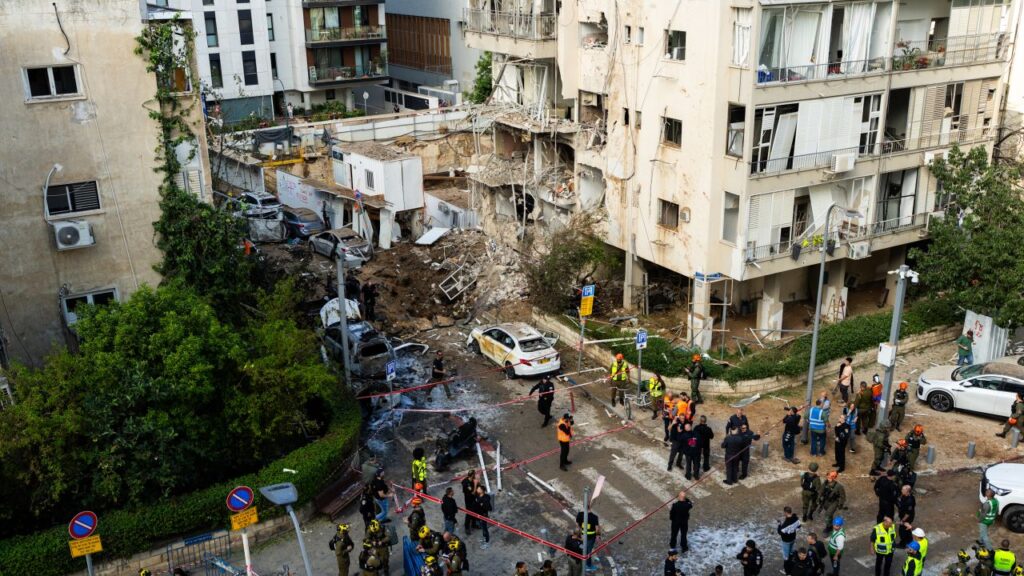
It is official Israeli policy to conceal war losses as much as possible. However, in the current war, this censorship has taken on a near North Korean character. It is nevertheless clear that Israel has suffered significant human and material losses as a result of Iranian strikes and Hezbollah’s operations—losses of which perhaps not even a fraction is being reported in the mainstream media.
No matter how strong public support for a war may be, prolonged conditions of siege and the feeling of being dragged into an endless conflict inevitably compel people to reassess. Reports are already circulating of rising unrest in Israel, anti-war protests, looting, and riots. But the issue is not confined to the general population; within the Israeli military itself, demoralization, fatigue, and frustration are increasing.
What could be more alarming than a situation in which a military chief, in the midst of war, warns of internal collapse? A few days ago, Israel’s army chief Eyal Zamir issued an extraordinary warning during a cabinet meeting, stating that without immediate measures, the Israeli military could face internal disintegration. He reportedly raised “ten red flags,” emphasizing the severity of the situation and warning that reserve forces are losing the capacity to continue fighting, thereby undermining military effectiveness.
Similarly, former Israeli Prime Minister Naftali Bennett expressed concern, stating that the country is facing a shortage of approximately 20,000 soldiers and that the war was initiated without a comprehensive strategy, adequate resources, or sufficient manpower. According to opposition leader Yair Lapid, despite having been part of the security cabinet for many years, he had never witnessed such grave warnings before.
Such statements reflect the mounting pressure within Israel’s military and political leadership. The faction around Benjamin Netanyahu appears determined to open one conflict after another, as its political survival is tied to continuous bloodshed and escalation. However, the contradictions accumulating within Israeli society and the state may erupt in an unexpected and explosive manner. Under such conditions, even the possibility of Netanyahu being violently removed cannot be ruled out. Conversely, in a situation spiraling out of control, figures like Netanyahu may resort to extreme measures. In this context, the possibility of Israel resorting to nuclear weapons cannot be entirely dismissed.
The Gulf states have suffered severe and potentially irreparable damage from this war in multiple respects. Foremost among these is the collapse of their image as safe hubs for employment, investment, and tourism. For example, real estate transactions in Dubai have reportedly declined by 51 percent, while the stock market has fallen by 15 percent. Shares of the major Emirati real estate company Emaar have dropped by up to 40 percent. Capital flight is accelerating (prompting the imposition of unofficial restrictions), while disruptions in oil supply are causing additional economic strain.
If the war continues for even a few more weeks, these economies could contract by up to 20 percent—a catastrophic decline that would mean the closure of millions of businesses, severe austerity, and the loss of tens of millions of jobs. For the already impoverished and fragile economies of South Asia—home to over two billion people and heavily dependent on Gulf employment and remittances—the social and political consequences of such economic devastation are not difficult to imagine.
It is also important to note that much of the Gulf’s petrodollar wealth is reinvested in the United States. Thus, a crisis in the Gulf that disrupts this cycle would also have negative repercussions for the American economy.
Despite persistent pressure from Donald Trump, the Gulf states have refrained from direct participation in the war. There are several reasons for this. First, what military objective remains that the United States and Israel have been unable to achieve, but which could be accomplished by the artificial and unreliable militaries of these grafted states? Such an intervention would amount to little more than a firecracker in comparison to an explosion.
Moreover, they fear that entering the war would invite indiscriminate Iranian retaliation, potentially devastating their oil and gas infrastructure permanently (a glimpse of which was seen in the Iranian strike on Qatar’s gas facilities). There is also concern that the United States might entangle them in the conflict only to withdraw later. Additionally, Saudi Arabia fears that in such a scenario, the Houthis could block the Bab al-Mandeb Strait—linking the Red Sea to the Indian Ocean via the Gulf of Aden—which serves as an alternative route for Saudi oil shipments in the event of a closure of the Strait of Hormuz.
Some analysts suggest that an informal understanding exists whereby the Houthis will not disrupt this route in exchange for Saudi non-participation in the war. In any case, the potential costs of entering the war far outweigh any benefits for the Gulf states. However, if the Iranian regime survives this war, its continued presence will also remain a perceived threat to these states, negatively affecting investment and tourism prospects in the region.
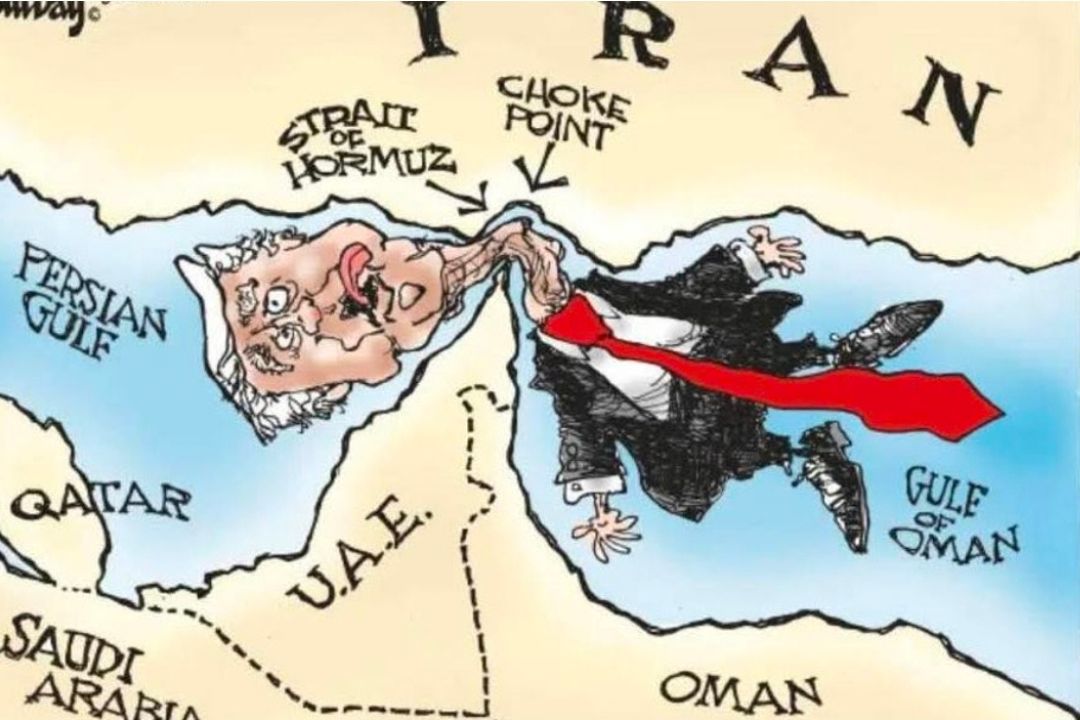
Iran has used the “closure” of the Strait of Hormuz—through which 20–25 percent of the world’s oil and up to 30 percent of its gas flows—as a key strategic lever. However, rather than fully closing it, Iran has effectively asserted control through selective attacks on shipping. Passage through a war zone is inherently risky, and insurance costs for vessels rise sharply. In such a context, even a threat is sufficient to deter traffic. But Iran has gone a step further by destroying several oil tankers. Regardless of how many times Trump claims to have destroyed Iran’s navy, the atmosphere of fear and uncertainty will persist. The very idea of “reopening” the Strait of Hormuz through military means is both absurd and impractical. Sending naval forces would simply provide Iran with additional targets. The idea of deploying troops on Kharg Island or attempting to ‘take control’ of it by any other means is equally problematic. Even sporadic attacks would suffice for Iran to maintain deterrence, given its wide array of methods and capabilities.
Reports indicate that Iran is allowing vessels from “friendly” countries to pass while charging others up to $2 million per ship as a form of “toll.” This sets a dangerous precedent—not only for Hormuz but for global maritime routes—one that may haunt imperialist powers in the future. As long as the war continues, Iran will effectively keep the Strait “closed” to varying degrees, sustaining upward pressure on oil prices.
Beyond oil and LNG, Gulf states supply between 27 and 44 percent of global fertilizer products. A disruption through Hormuz would halt shipments of urea, sulfur, ammonia, and phosphates—products for which, unlike oil, there are no strategic reserves. This could trigger a global agricultural and food crisis.
The global economy—particularly Western economies—has been in a prolonged slowdown since the 2008 crisis. Following the COVID-19 pandemic, this slowdown, combined with high inflation, evolved into stagflation. Before this trend could stabilize, the Russia–Ukraine war erupted, followed now by this new insanity.
As a result, crude oil prices have already risen by up to 50 percent. Rationing of oil and gas is either underway or under consideration in many countries, and the situation will worsen if the war persists. If energy infrastructure in the region suffers severe damage, price increases could become permanent. Even in the event of a ceasefire, restoring supply chains could take months.
Estimates suggest that the war has already led to a global increase of 1.36 percentage points in inflation and a reduction of 1.26 percentage points in GDP (approximately $1.4 trillion). If the situation continues for three months, these figures could rise to 2.80 percentage points in inflation and a 3.15 percentage point contraction in GDP (around $3.5 trillion). In simple terms, this will mean slowdown in most economies, stagnation in already struggling ones, and outright contraction in those already in decline. The global economic situation was already fragile—this war will only make it worse, bringing further increases in inflation, deficits, debt, unemployment, and poverty.
Interestingly, this is the most unpopular war in modern American history, reflecting both changing public sentiment and objective conditions. Unlike the wars in Vietnam, Afghanistan, and Iraq—which initially enjoyed public support before losing it—this war has lacked public backing from the outset. Approximately 61 percent of Americans opposed it at its beginning, while 74 percent oppose the deployment of ground troops in Iran. Support for the war continues to decline.
Trump’s popularity (or lack thereof) is closely tied to the war. His electoral promises centered on reducing inflation and avoiding new wars—both of which have been undermined. Despite all his prior controversies, his unpopularity has surged more in the past month than in the previous year—even before the arrival of large numbers of American military casualties. This is why he and his associates repeatedly claim that the war will end soon. Ironically, while waging war against Iran, they are also allowing it to sell oil in order to contain inflation.
On March 28, more than three thousand “No Kings” protests were held across the United States against Trump, drawing tens of millions of participants. Internal divisions are becoming increasingly visible within Republican circles, the Trump administration, and military leadership. With midterm elections approaching in November, Trump’s recent behavior—marked by incoherent, contradictory, and profanity-laden speeches—suggests a deteriorating mental state, drifting from erratic behavior toward outright instability.
Yet he is surrounded by figures such as Pete Hegseth, who view global conflict and mass violence as part of a grand religious mission. The grotesque scenes of prayer rituals recently witnessed in the White House illustrate the nature of these individuals and the superficiality of the bourgeois secularism. According to Trump’s latest statement, Cuba is next after Iran. Clearly, when dealing with such fanatics, extreme outcomes cannot be ruled out—but confronting them may also require crossing significant thresholds.
For the United States, deploying ground forces in Iran would be akin to stepping into a quagmire. Iran is more than twice the size of Pakistan, with a population of around 90 million and armed forces exceeding one million personnel (including regular troops, the Revolutionary Guards, Basij militias, and reserves). Geographically, Iran is a “natural fortress,” dominated by rugged and mountainous terrain.
Moreover, Iran’s military structure is designed to continue functioning autonomously even in the absence of central leadership. No matter how intense aerial bombardment may be, its effectiveness remains incomplete without a ground campaign. Yet ground warfare—especially on foreign terrain—is far more complex and difficult than air operations. No one understands this better than the United States.
Even Israel is relearning this lesson once again in southern Lebanon, where despite heavy losses, Hezbollah continues to target its troops, armored vehicles, and tanks on a daily basis. This is why the United States has so far refrained from deploying ground forces, and the likelihood of such a move remains low. As Marco Rubio stated on March 27, the U.S. intends to achieve its objectives without ground deployment (though he did not specify what those objectives are).
Limited, symbolic operations remain possible, but any such adventure could end in humiliation—much like the failed Operation Eagle Claw of 1980. Ultimately, this is not merely a military question but a political one. Trump also fears that a ground war—and the resulting large-scale casualties—could transform existing unrest within the United States into outright rebellion.
There has been a prevailing impression that China and Russia wish to remain distant from this conflict, as appeared to be the case during last year’s Twelve-Day War. However, given the nature and scale of the current confrontation, such an assessment no longer seems convincing. Evidence is emerging that both countries are providing at least some military assistance to Iran. Even if limited or indirect, this support is significant and potentially mutually beneficial—ranging from intelligence sharing, provision of military-grade raw materials, Chinese or Russian alternatives to GPS, drone technology, strategic advice, and the exchange of information through which even non-belligerent states seek to identify the weaknesses of their adversaries.
It appears that, having become confident that the Iranian regime is not on the verge of collapse, they have shown some willingness to act. For instance, Iranian Foreign Minister Abbas Araghchi has stated that Iran enjoys “good cooperation” with China and Russia, including in “political, economic, and even military” spheres. He further noted that Russia is assisting Iran “in various ways,” and that this partnership is “no secret.”
However, contrary to the simplistic black-and-white formulations of campist left politics, caution is necessary in this regard. It must always be remembered that, despite rhetorical condemnations, both China and Russia maintain significant relations with Israel as well. Thus, their policy essentially amounts to maintaining a balance between Iran and Israel—although such balances tend to become extremely fragile in moments of crisis. One may compare this to Pakistan’s attempt to maintain “balanced” relations with Saudi Arabia and Iran, and with China and the United States.
According to the American think tank CNA Corporation, while the Chinese government emphasizes the need for diplomacy to end the conflict, it also plays a role in perpetuating it. Although China’s involvement is less direct than Russia’s, there are concrete examples. In early March, two sanctioned Iranian vessels obtained chemical materials from the Chinese port of Zhuhai, possibly including sodium perchlorate used in rocket fuel. Similarly, according to French intelligence experts, China has provided Iran access to its BeiDou navigation system—an alternative to GPS—which is considered more advanced in certain respects and may explain the improved accuracy of Iranian missile strikes compared to last year. It is also possible that China is testing certain elements of its military hardware in Iran.
“At the same time, this conflict has also exposed real differences between these two strategic partners (China and Russia). Russia has stronger economic and political incentives to support Iranian resistance. In contrast, China faces greater economic and political risks if the war continues. Despite a shared political stance against U.S. and Israeli intervention, the practical realities of the conflict have revealed underlying fissures in China–Russia relations.”
For many, it may be surprising that China is currently better positioned to withstand disruptions in energy supply. It reportedly holds oil reserves sufficient for approximately four months and is steadily reducing its dependence on fossil fuels. It also possesses abundant coal reserves and is expanding its capacity to convert coal into gas. Additionally, it has imposed certain restrictions on energy exports.
However, disruptions in the Persian Gulf are not limited to energy alone. China also relies on this route for raw materials essential to semiconductor production. Previously, Chinese firms sourced these materials from the United States, but due to supply concerns, they have increasingly turned to Qatar. Similarly, nearly half of China’s sulfur imports come from the Gulf, and any disruption would affect fertilizer production—particularly at a time when the agricultural season is beginning. In contrast, Russia does not face such constraints. Moreover, the United States and Europe remain major markets for Chinese goods; thus, the negative impact of war on the global economy directly affects China’s export-driven model. In this sense, while U.S. entanglement in Iran may benefit China in the short term, prolonged conflict ultimately poses challenges for it.
For Russia, on the other hand, the war is more advantageous both militarily and economically. Demand for Russian oil has surged, allowing it to generate substantial profits in a short time. Meanwhile, U.S. attention and military resources have shifted away from Ukraine toward the Iran conflict, strengthening Russia’s bargaining position. However, even for Russia, risks remain. Ukraine has begun assisting Gulf states in countering Iranian drones, potentially improving its international standing while potentially straining Russia’s relations with those states. The collapse of the Iranian regime would also represent a major strategic, economic, and military setback for Russia. Likewise, uncontrolled escalation and a deep global economic crisis would not serve Russian interests.
In any case, it must be understood that neither China nor Russia are anti-imperialist forces; rather, they themselves pursue imperialist ambitions. It is on the basis of these interests that Russia has aligned with people like Al-Sharaa in Syria, that Donald Trump maintains overtures toward Vladimir Putin despite the Ukraine war, and that he could, in his characteristic deal-making style, attempt a similar arrangement with China in the future.
Thus, “imperialism” does not refer to a single bloc or camp, but to an entire system of exploitation and domination structured around shifting alliances and rivalries. Exploiting contradictions among imperialist powers is one thing—a matter of strategy—but offering political or ideological support to, or acting as a lackey of, any of these camps is entirely another. Even the case of Iran is not so simple. Despite being subjected to imperialist bullying and aggression, it stands above the level of typical semi-colonial countries, and is governed by a reactionary theocratic state that does not hesitate to go to any extent to repress its own population. Therefore, while imperialist aggression against Iran must be condemned and opposed, no political support or ideological justification can be extended to the Iranian regime.
Opening a war is easy; ending it is the real challenge. The conflict is expanding not only in intensity but also in scope. As of March 28, reports indicate that, following Ukrainian involvement, the Houthis have also formally entered the conflict through missile attacks on Israel. Iran, meanwhile, has targeted a warehouse in Dubai storing Ukrainian anti-drone equipment.
The Pakistani state is walking a tightrope, attempting to maintain balance while seeking a rapid end to the war. Despite its deep dependence on Gulf monarchies and American imperialism—and regardless of its fluctuating relations with Iran—the collapse of the Iranian regime and the emergence of a pro-Israel government on its borders would be unacceptable for Pakistan. This must be understood in the broader regional context, particularly with respect to Afghanistan, Balochistan, and India. In this regard, recent expressions of gratitude from Iranian officials toward Pakistan are both unexpected and significant. Pakistan hosts the second-largest Shia population after Iran and also maintains a joint defense agreement with Saudi Arabia. Sectarian tensions between Sunni and Shia communities have already intensified since the beginning of the war. Following the reported killing of Ali Khamenei, riots have occurred in certain areas. One must consider: If Saudi Arabia were to enter the war—whether through direct attacks on Iran or renewed conflict with the Houthis—what position would Pakistan take, and how might its internal situation evolve?
The assassination of Ali Khamenei and other senior Iranian leaders by the United States and Israel is not only vile but also militarily foolish. It has strengthened hardline elements within Iran and sent a global message that moderation and diplomacy are futile. Ironically, a war ostensibly launched to prevent Iran from acquiring nuclear weapons has reinforced the perception that Iran is being punished for not possessing them—and that any country wishing to avoid a similar fate must acquire such weapons. Consequently, nuclear proliferation is likely to intensify, or more states will seek protection under the umbrella of nuclear powers.
Following the decimation of much of the political leadership, effective control of the Iranian state now appears to lie with the Revolutionary Guards, who if not intent on prolonging the war indefinitely are at least determined to end it on their own terms. Iran may also possess weapons or tactics not yet revealed, possibly unknown even to its political leadership. Support within Iran for nuclear weapons and long-range missile development is also likely to grow.
The Iranians are unwilling to trust Trump, as it is now widely believed that he uses negotiations as a cover to buy time for aggression. Similar perceptions exist regarding figures like Jared Kushner and Steve Witkoff, who are seen as unserious and little more than swindlers. However, the case of Vice President JD Vance appears somewhat different; reports suggest he is opposed to the war and has remained relatively out of the spotlight.
According to recent reports, Pakistan has proposed that Vance represent the United States in negotiations—a suggestion to which Iran has shown some openness. However, tensions are so high that the two sides are unwilling even to sit in the same room, requiring Pakistani officials to shuttle between them. There are also rumors that Saudi Crown Prince Mohammed bin Salman favors the continuation of attacks on Iran. It remains unclear whether consensus can even be achieved within the Trump administration itself, or between the United States and Israel. In such an atmosphere of uncertainty, nothing can be said with confidence. It is entirely possible that negotiations may collapse before they even begin, leading to a more dangerous and prolonged war.
Even if the situation improves, this war will leave behind lasting transformations and dangerous precedents at both regional and global levels—precedents likely to be repeated in the future. Regardless of the outcome, this adventure will accelerate the decline of American imperialism and the disintegration of the existing imperialist order. However, if the Iranian regime survives—even in a weakened state—it would constitute a defeat for the United States more humiliating than Vietnam, Afghanistan, or Iraq. It would be a severe blow to American imperial prestige: unable to defend its bases, protect its allies, deploy ground forces, or defeat a sanctioned semi-developed country.
Trump will ultimately have to pay the price for his utter recklessness. Opposition and resistance among the American population will intensify, and calls for his impeachment within the political establishment will grow. However, placing hope in the Democratic Party would be an illusion. The problem of this Epstein clique is not confined to the United States; it is an expression of the historical obsolescence and crisis of the capitalist system on a global scale.
As Leon Trotsky observed, ruling classes of systems that have exhausted their historical role cannot act rationally. Their decline drives them into a frenzy and madness in which they are prepared to annihilate the entire world. In this existential crisis, the path to the survival of humanity lies in putting an end to capitalism through socialist revolution.