By Roni Turus
The Labour Party is paralyzed in a political coma. A state of brain death since Tony Blair and his associates, who transformed it into a half-conservative, half-centrist, pro-corporate, pro-imperialist entity aligned with a narrow and professional elite. In an effort to distance himself from the historical roots of the Labour Party, Blair and his circle renamed it “New Labour”. One of the main architects of New Labour, Peter Mandelson -current UK ambassador to the United States- gathered a room full of super-rich and media owners and assured them: “New Labour is here for you to become filthy rich.”
Since the Second World War, the Labour Party has been part of the British establishment. It has backed military deployments to crush the Republican movement in Northern Ireland, supported the US invasion of Vietnam, backed the wars in Afghanistan and Iraq, pushed for aggression against Iran and participated in the ongoing genocide of the Palestinian people. Each of these actions bears the signature of the Labour Party.
The legitimacy of establishment parties like Labour began to crumble after the 2008 financial crisis. Instead of holding banks accountable, Labour funnelled billions of dollars to financial institutions whose executives had looted through uncontrolled speculation. While wages, employment, living standards and the welfare state deteriorated drastically, the architects of the crisis became even richer. The crash of 2008 should have been the death certificate of the traditional parties, but in the absence of a genuine alternative, they have continued to survive, struggling to breathe long after they should have disappeared.
It’s remarkable that the Labour Party hasn’t already fallen into irrelevance; it’s long past its sell-by date, but somehow it’s clinging on for dear life. This resistance is largely due to the lack of viable alternatives on the left, the unions’ unfounded hope that the Labour Party can return to its founding principles, and the general fragmentation of the left.
A new party
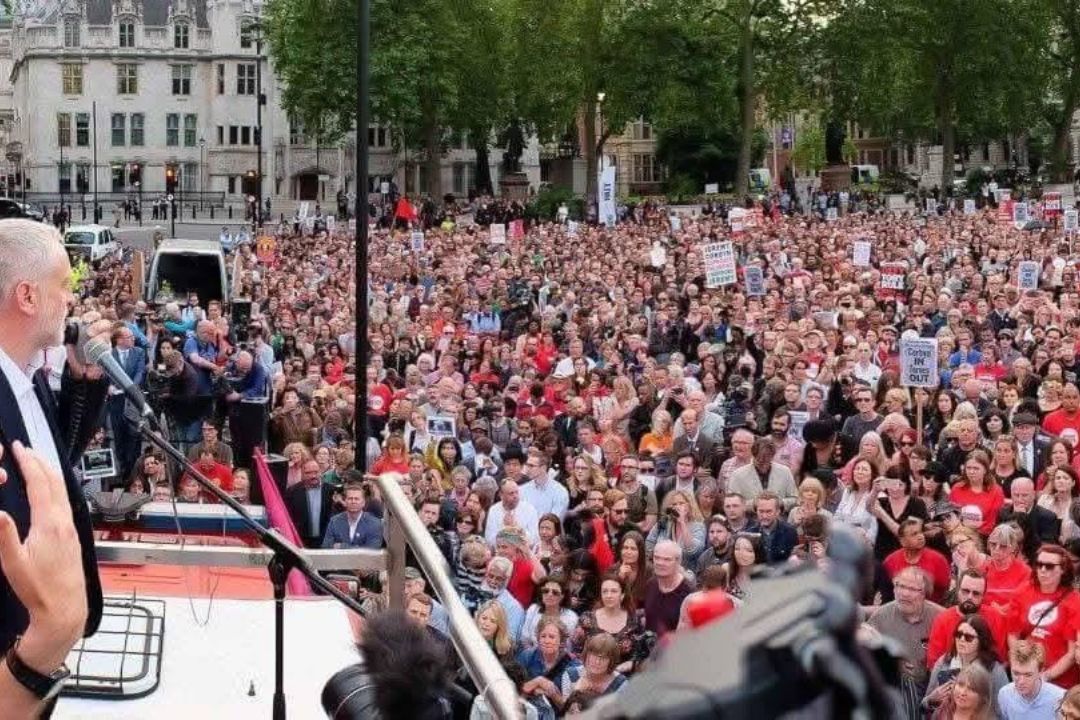
The recent statements by Zarah Sultana and Jeremy Corbyn have rekindled hope and enthusiasm across the country. Zarah Sultana, a principled young voice in British politics, has announced her departure from the Labour Party. She was already sitting as an independent PM after Labour leader Keir Starmer MP stripped of the Labour whip.
On July 23, Jeremy Corbyn launched a new party. Corbyn said the new party seeks to “fight the rich and powerful.”
In just 36 hours since its announcement, more than 300,000 people had signed up to join a new political force, tentatively called “Your Party,” a provisional name that is likely to change. Regardless of the name, the response has been extraordinary. Attracting hundreds of thousands of people in less than two days indicates a significant change in people’s mood and their desire for real change.
The UK is currently immersed in a multifaceted crisis.
Socially, the nation is fractured: between young and old, north and south, urban and rural communities.Politically, the mainstream parties have lost all credibility. Neither the Labour Party nor the Conservative Party offers serious solutions to the growing problems facing workers.
In economic terms, life has become much more difficult for most people since 2010: average real wages have fallen by around 35%, job insecurity has skyrocketed, zero-hours contracts and the informal economy have become widespread, and the cost of housing, food, transport and education has drastically risen as well. Meanwhile, corporate profits have soared.
And these are not just opinions of the political left; even establishment voices are sounding the alarm. Martin Wolf, a senior editor at the Financial Times, recently wrote: “The UK suffers from three shortcomings: a poor policy, a poor state and a poor economy.“
The early signs for the new party are encouraging. Polls suggest that, if elections were held today, it could get between 15% and 18% of the national vote. Some unions are starting not to argue that it’s time to stop supporting the Labour Party and support this new formation.
It should be a new political alternative organized from below, with assemblies to democratically debate the program, actions and everything that involves putting a left-wing tool on its feet.
Based on the working class and in support of their demands and mobilizations.
The younger generation, in particular, seems eager to join and participate.
This emerging party deserves support, solidarity and active participation. It represents a key opportunity for the working class, marginalized communities, anti-racists, anti-imperialists, the LGBTQ+ community, women, students, youth and the international socialist movement to have a meaningful voice in English politics. A new party based on socialist and democratic values is urgently needed.
The opportunity to do so exists. Whether the leaders and personalities from Labour who made the first announcements concretize them to the height of the circumstances; if they are diluted – as happened on other occasions – or they stay halfway is yet to be seen.
But this struggle cannot remain isolated. International socialist solidarity is essential. The upcoming elections in the UK will be, mainly, a battle of ideas between this new party and the reactionary, xenophobic and imperialist agenda of Reform UK.
We have seen it before, during Jeremy Corbyn’s leadership of the Labour Party: the entire establishment mobilized against a genuine left-wing alternative. From the Labour hierarchy itself to the mainstream media, the military establishment, Zionist organizations and centrist and right-wing forces alike. We should expect an equally violent reaction this time.
That is why international participation is crucial. Building a global socialist movement requires more than moral support: it requires coordinated action. The defeats of leaders like Modi, Erdoğan, Orbán, Meloni, Trump and Milei are key steps to build a powerful international socialist front.