By Jacques Charlemagne1
The “Slave Route” project launched by UNESCO in 1994 cannot continue to just be a memory related initiative. It is a call to stand up, understand, denounce and combat all forms of domination, whether they come from the slave system or persist today in modern shape. The title of the project: “The Slave Route: Resistance, Freedom, Legacy”. Here is a critical and revolutionary analysis of its meaning, since, unrelated to the struggle of the masses, it will be nothing more than a washing of hands followed by drying them on the floor.
UNESCO claims its intentions are documenting and sharing the memory of slavery and slave trade all over the world, especially in the Atlantic area, where millions of Africans were kidnapped, chained, transported in the holds of ships and sold as merchandise;
- Honoring the resistance of enslaved peoples and valuing the contributions of the African diaspora;
- To educate against racism and discrimination, exposing the consequences still in force of the slave system.
They build museums, place commemorative plaques, organize international conferences… But if all these efforts are not articulated around an anti-capitalist, anti-imperialist and anti-colonialist struggle, then this project simply becomes an aestheticized memory for the elites, without a real transformation for the affected peoples.
Being a revolutionary means to say that the Slave Route cannot be a closed chapter of the past. It is a historical knot that connects directly with the current exploitation systems:
- Workers reduced to poverty wages;
- Black people still facing structural racism;
- Women being exploited and abused in a patriarchal capitalist system;
- Young people condemned to unemployment, exile or crime;
- The neocolonial governments that instrumentalize the “memory of slavery” while serving the interests of multinationals and Western imperialism.
We don’t want a nostalgic memory, we demand revolutionary urgency!
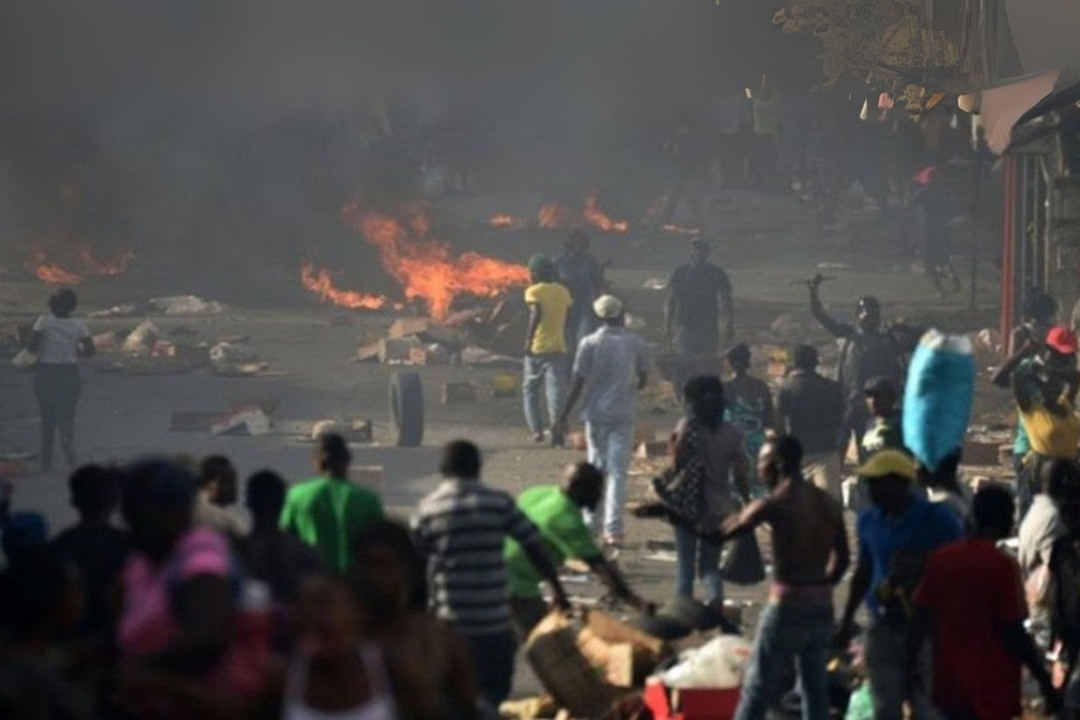
The Slave Route is that of the insurrection of 1791, that of a Haitian people who rose up against colonial France. It is this model that we must update in order to break all the modern chains, be it economic, political, cultural or digital, that still strangle the popular masses.
Slavery cannot be commemorated and its contemporary forms tolerated!
We have to organize, denounce, mobilize and revolt.
Yer to memory, but for freedom, not for bourgeois decoration!
For another Haiti. For the liberation of the peoples of the world.
Port-au-Prince, August 27, 2025
- Member of the Network of Organizations of the Western Zone (ROZO) and the Solidarity Effort to Build a Popular National Alternative (ESKANP) ↩︎