Automatically translated by AI.
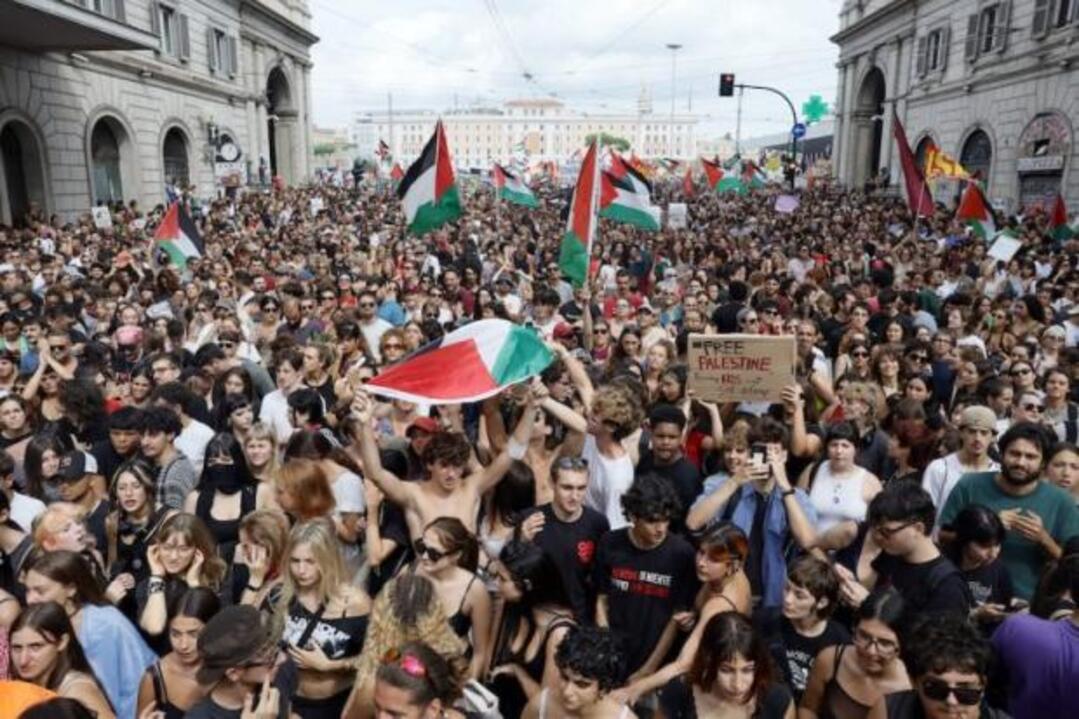
he day of the general strike for Palestine, promoted by the Union of Rank and File Trade Unions, CUB and SGB, was an undoubted political success. The eighty demonstrations held in as many large and small cities were exceptionally well attended. A participation above all of young and very young people, high school and university students, who invaded streets and squares, in several hundreds of thousands, bringing a combative and radical charge.
In Rome, Milan, Turin, Naples, Bologna, even the turnout data provided by police headquarters far exceeded all initial forecasts. As an example, the Rome headquarters, which had expected 8,000 demonstrators, was forced to acknowledge a turnout of more than 20,000 people.
The pressure on the streets was translated into multiple direct and mass actions: rallies, occupations and blockades of railway stations, highways and port nodes. In some cases the police charged and made arrests (Milan, Bologna), but in most situations, despite repressive laws on public order, they were able neither to prevent nor to counteract the blockade actions. This also measured the strength of the demonstrations.
Not only that. The bourgeois press itself was obliged to bear witness to innumerable cases of solidarity reception of the demonstrations and blockades by motorists, passers-by and people leaning out of balconies. The flag of Palestine flew everywhere throughout the day.
The pro-Palestinian sentiment is plebiscitary in Italian society. The eighty demonstrations of September 22nd gave it an expression and a face.
True, the actual number of striking workers was modest. The CGIL bureaucracy openly sabotaged the strike, fearing its success. That is why on Friday 19 it had called its own day of mobilization on the Palestine issue, with differentiated characteristics according to territories and categories: the obvious aim of the initiative was to defuse the risk that important sectors of its own rank and file might join the general strike of September 22.
Not only, then, did the CGIL not join forces with the general strike, but it openly bet on its failure.
However, this bureaucratic maneuver did not achieve its objective in several respects. In the service sector, in health care, and particularly in schools, an important part of the CGIL rank and file did strike. In Rome, the presence of striking teachers together with their students was one of the most significant aspects of the big demonstration. So was the presence of health workers in white coats at the demonstration in Naples.
But above all, beyond the numbers, what counts is the political data. The strike was viewed with great sympathy and support also by that majority of wage earners who did not participate in it. In the first place by the mass base of the CGIL, which identified itself with the tide of young people who took to the streets in the name of Palestine. The disproportion between the half-voiced initiative of the 19th and the image success of the strike of the 22nd was enormous. It was a blow to the CGIL apparatus. Proof of this is that during the entire day of the 22nd the CGIL leadership remained mute, without a single word of comment on what was happening.
Now, after the great success of image and participation in the demonstrations, the need for a real general strike, unitary and mass, against the Zionist State, against the Italian government that supports it, and for the liberation of Palestine, becomes even more evident.
The day of September 22 poses to all the responsibility of a united front perspective and action. The CGIL bureaucracy, after its poor role, would like to divert attention to heal the wound. The USB leadership would like to exploit its image success in a self-centered way. But no one should be allowed the escape route. The tide of young people who took to the streets expects a continuity of their action. The tragic events in Palestine, and the complicity of the Italian government, make this need ever more urgent. The very issue of the political strike for Palestine has already been legitimized in the perception of the masses, as well as that of the total blockade in ports and airports of any transport of arms or commercial traffic with Israel.
To unite forces in this direction, beyond any division, is the task of the moment. The CPC will fight everywhere with this slogan, together with the more general demand for the liberation of Palestine from Zionism and imperialism.
The large national demonstration called by all Palestinian organizations for October 4 in Rome will be a central event in this regard.
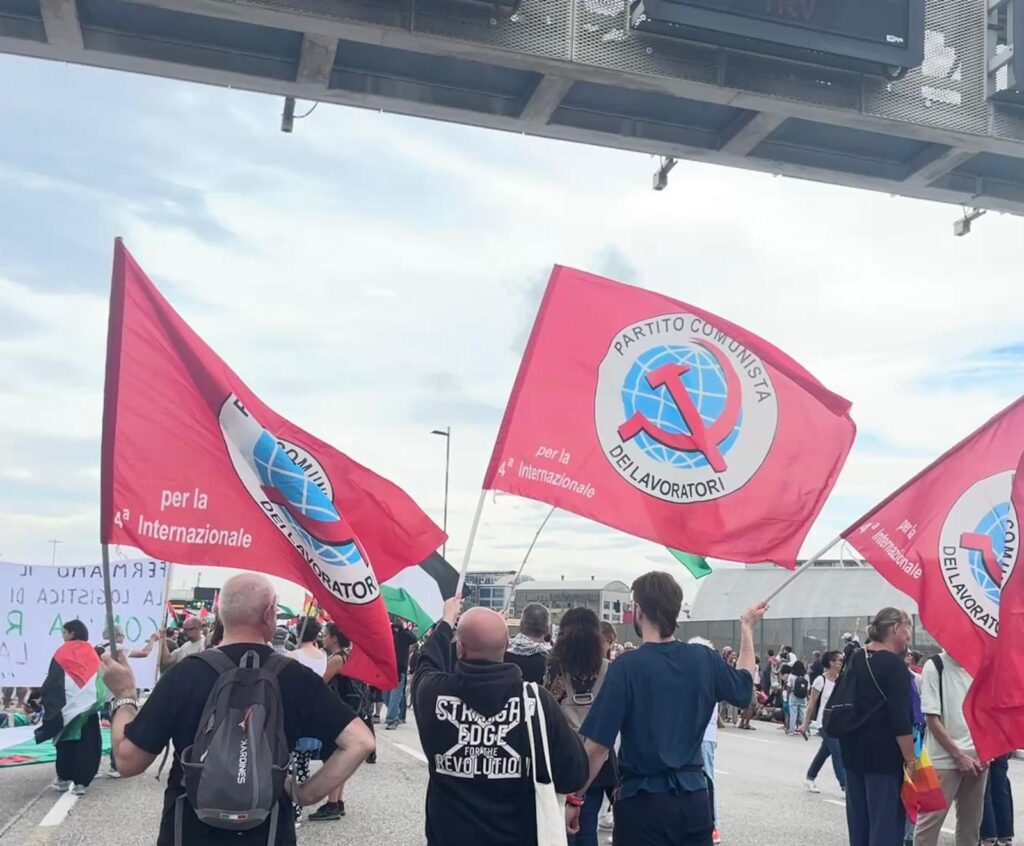
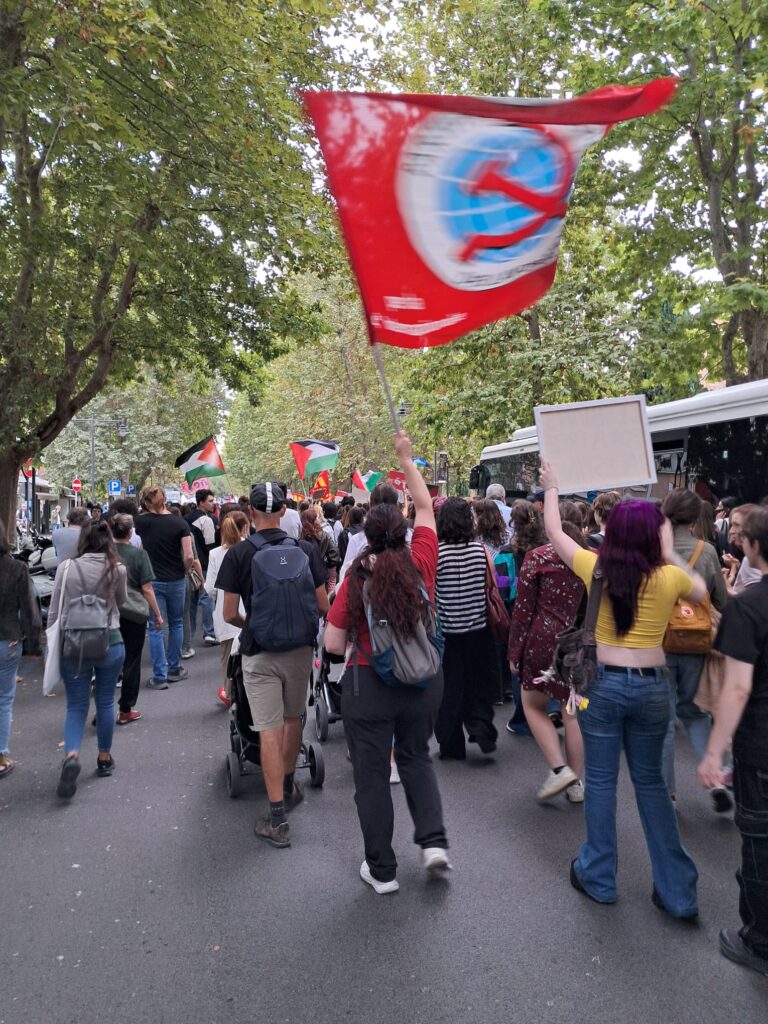
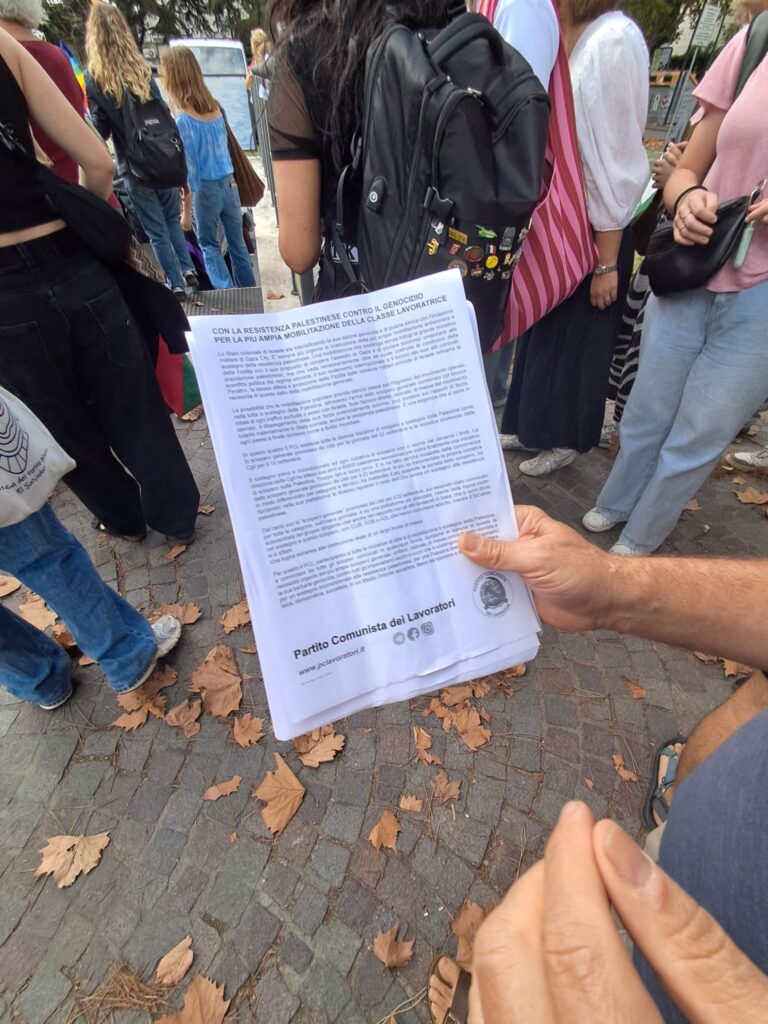
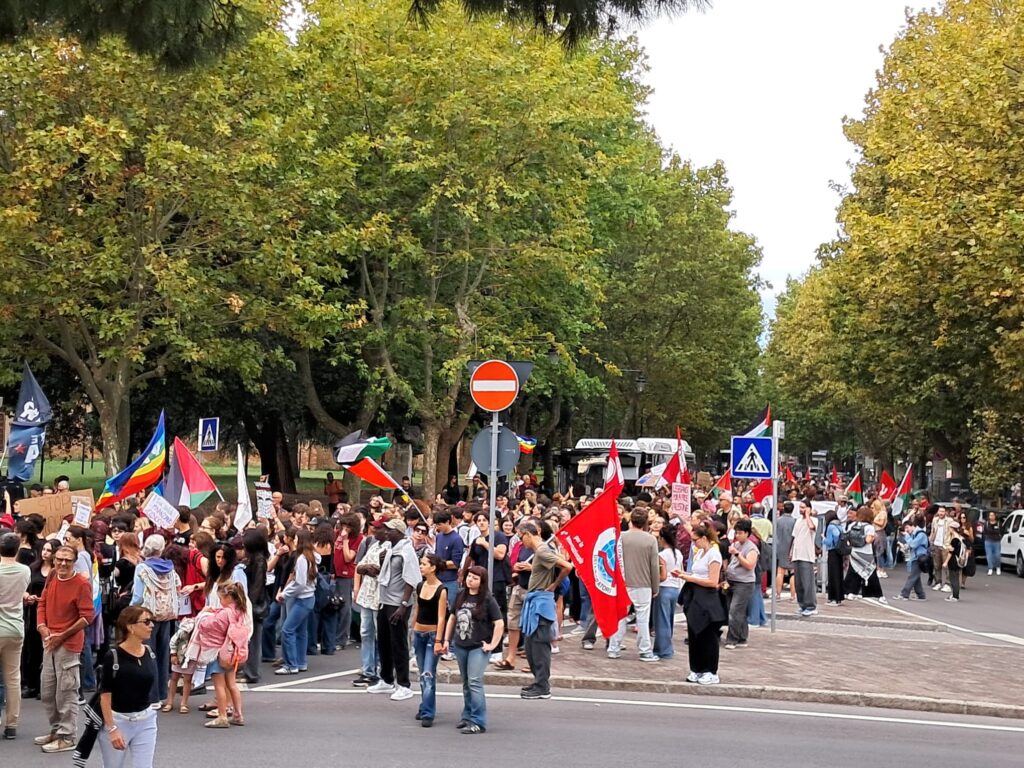
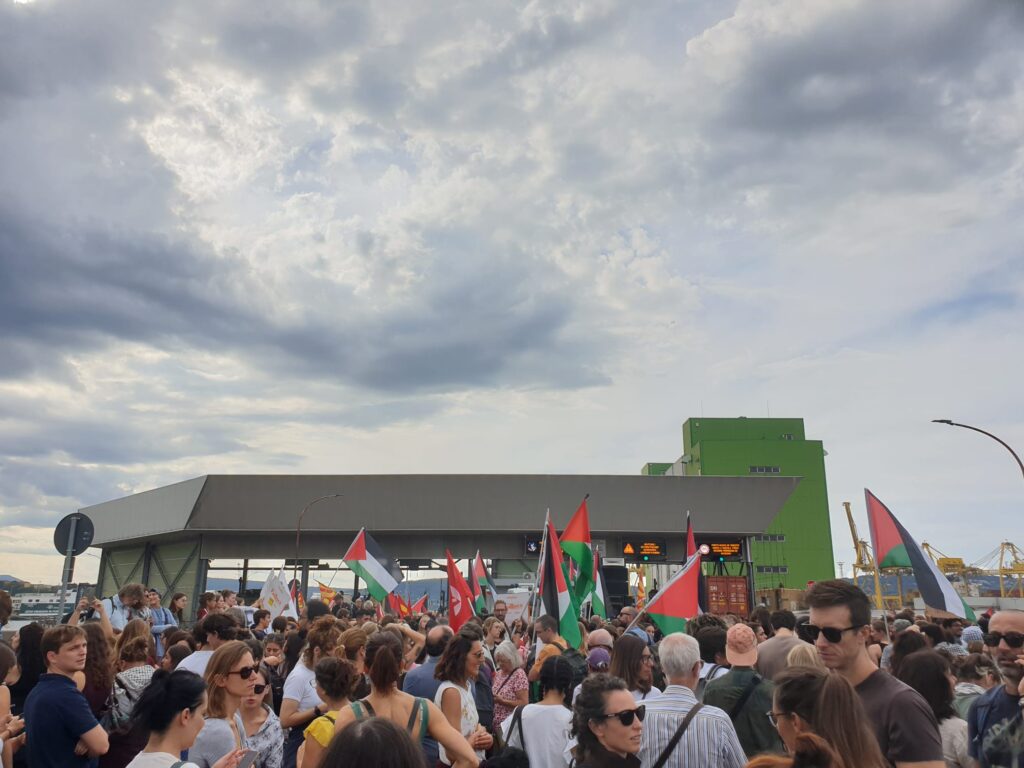
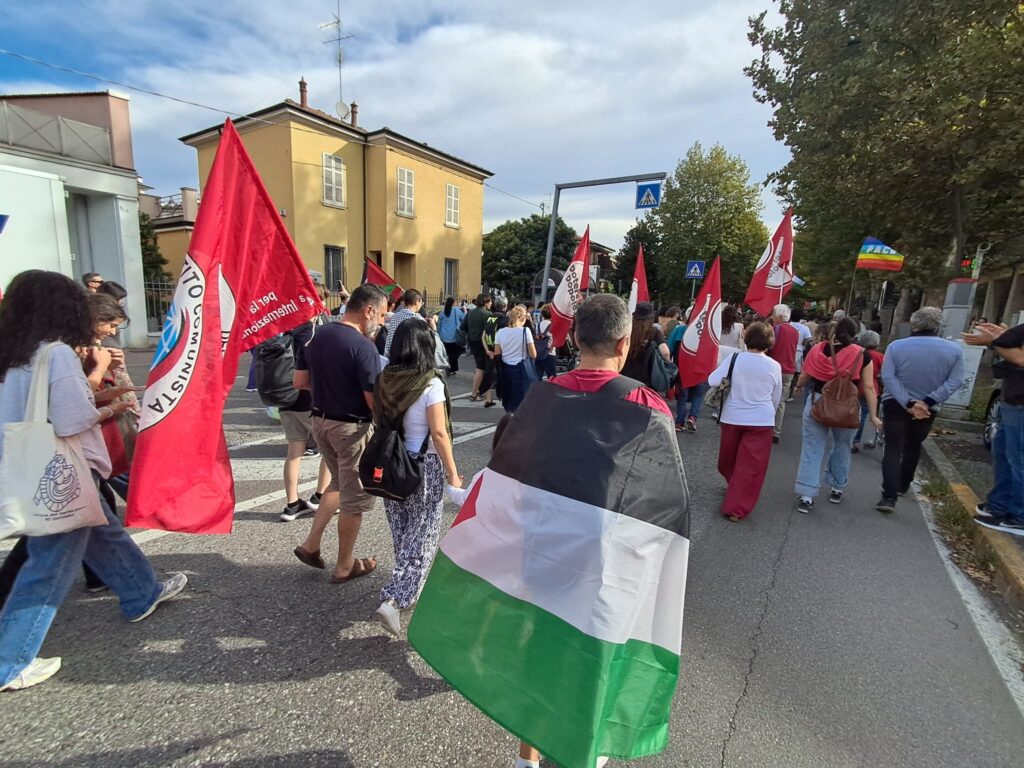
The PCL was part of the mobilizations in the most important cities and towns of Italy.
Communist Party of the Workers (PCL)