At the Meeting of Internationalist Forces in Paris, we spoke with Lam Chi Leung, a Hong Kong socialist activist. In this interview, we share his perspective.
What kind of regime and state is China?
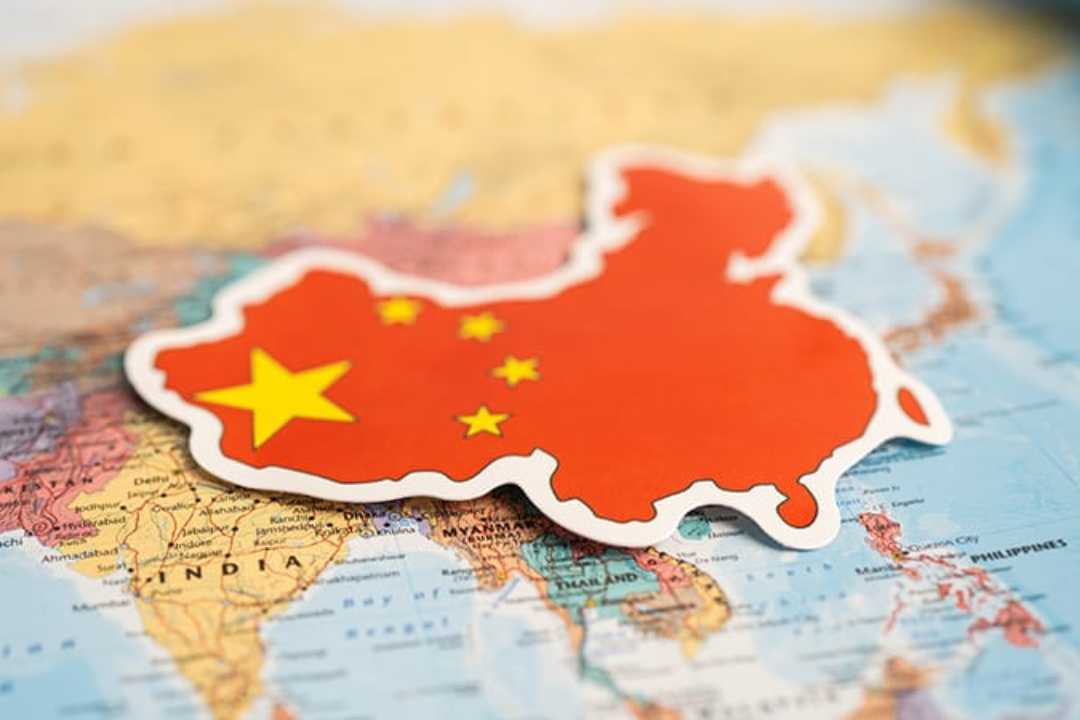
As I mentioned this morning, we believe we can now definitively say that China is a capitalist regime. Its level of development has reached that of an imperialist power. Although it is not as strong as the United States, we must acknowledge that China is one of the world’s imperialist powers.
So, is China imperialist?
In short, according to Lenin’s criteria for imperialism, it is undoubtedly an imperialist power. It has developed to the point where it exports capital and has a high degree of monopoly. It has met all these criteria; therefore, China is imperialist.
How did this change come about?
We had an old comrade, Xiang Qing, who passed away four years ago. As far as I know, he was probably one of the earliest Trotskyist revolutionaries to conclude that a capitalist restoration had occurred in China. He believed that the constitutional amendment in 1988 at the latest, which allowed for the unlimited development of the market economy, was sufficient to conclude that a capitalist restoration had been achieved. He wrote The Transformation of China in 2003. The article clearly points out: “Since the second half of the 1990s, despite the fact that the political and economic situation of China has been conspicuously different from that of the USSR and Eastern Europe, capitalist restoration has also occurred in China, as was the case in the latter countries… On the international scene, China no longer represents anti-imperialist forces, nor is it anti-capitalist. Rather, it has become a late-coming but powerful competitor among the dependent third-world countries.”
What are the characteristics of the regime?
There are two main characteristics. First, it has achieved unprecedentedly high economic growth. This is an advantage brought about by the industrial foundation laid during the Mao Zedong era. It is a capitalist regime, but a bureaucratic capitalist one. It was not a government directly controlled by private capitalists, but rather established by a bureaucratic group that served the development of capitalism, or even by the bureaucrats themselves or their children who had become capitalists.
Secondly, it still maintains the tradition of a Stalinist state with a high degree of public surveillance. Due to its development of high technology, surveillance systems, and QR code technology, the level of surveillance is possibly the highest in the world.
What is the current state of the Communist Party of China?
The current state of the CCP is determined by restrictions and similar issues. The CCP is large and powerful. Workers and peasants are oppressed, and even private capitalists have to curry favor with the whims of bureaucrats; even Jack Ma (1) is intimidated by them. So the CCP now serves the capitalists, and the private sector and State-Owned Enterprises are, in fact, part of a state-capitalist sector. It is an unprecedented autocracy. Under Xi Jinping, this has become increasingly complex.
What happened after the Tiananmen Square crackdown?
The decision to embark on the path toward capitalism was made as early as the second half of the 1980s, but the real push for this began in the 1990s. From 1997 to 2012, those 15 years saw significant and diverse struggles in China, such as the struggle against the privatization of state-owned enterprises, especially in Northeast China and Sichuan Province. In this round of struggle, there were some victories, but they were few; there were far more defeats…
Are there workers’ and popular demands now?
There are individual protests. Individuals are often dissatisfied with certain measures or practices of local governments, so perhaps they occupy a governor’s office or demonstrate in front of it. However, there is no national mass movement.
Is there organized public political opposition?
No. In the late 1990s, Chinese liberals formed the “China Democracy Party,” and some Maoists also attempted to establish the “China Maoist Communist Federation” in 2015, but these have been banned.
What role do the unions play?
Since the 1980s, the All-China Federation of Trade Unions (ACFTU) has continued to be a channel for obtaining benefits; it offers some advantages. In the mid-1990s, at the ACFTU Congress and among some teachers at the China University of Labor Relations, there was a voice that wanted to promote reform so that the union could play a more active role in defending workers’ rights. In the 2010s, the ACFTU in Guangdong province (Canton) also wanted to do more, trying to collaborate with civil organizations and NGOs… but oh well.
What are your thoughts on Taiwan, and what do you think is the position that should be adopted if China attacks it?
Taiwan is a politically independent and capitalist entity. Personally, I think we should strive for peaceful, democratic unification through negotiation. So-called democratic unification entails recognizing the Taiwanese people’s right to self-determination and achieving unification through equal negotiations, based on a system that prioritizes the welfare of the working people.
For this democratic unification to happen, Beijing needs to stop trying to attack Taiwan. We need to defend Taiwan’s right to self-determination. This includes the right to choose whether to unify with mainland China, as well as when and how to unify.
We are absolutely against China’s use of force to unify Taiwan. We defend the right to self-defense and self-organization of the Taiwanese masses.
What do you think will be the course of the inter-imperialist dispute?
In my opinion, there is a possibility of war between China and the United States. Whether Democrats or Republicans are in the US government, they will always want to suppress China’s development. China will continue to maintain cooperation with Russia. It will seek to develop influence in Latin America and aims to establish cooperative relationships with Iran and Middle Eastern countries as well. We cannot predict the future, but it is clear that everything has changed since the 2010s. We are now returning to a situation of geopolitical conflict between imperialist powers. This implies a complex crisis of capitalism that includes economic and environmental crises, as well as a reduction in social welfare programs. In 2005, there was a famous book called “The World Is Flat,” which depicted a vision of the future world… But now, we can rename the book “The World Is a Powder Keg.” We see a contradictory world full of intensified conflicts; humanity is in danger.
What are your thoughts on the need to regroup revolutionaries in an international project?
While this is the fourth Meeting of Internationalist Forces, it’s the first time I’ve participated in this type of event. I think they are very important because they bring together different traditions, currents of Trotskyism, anarcho-syndicalists, communists, and revolutionaries to discuss ideas. Even though there are no common resolutions like those from the famous Zimmerwald Conference in Switzerland in 1915, it’s still very important.
The world is rotten, especially after Trump and everything he’s done. While there are no common resolutions, it’s important to hold these kinds of conferences to meet and debate.
(1) Jack Ma (Chinese name: Ma Yun) is one of China’s best-known businessmen and the founder of Alibaba Group, one of the world’s largest e-commerce