Remembering the great masters in the struggle to build a revolutionary leadership for the proletariat leads us to commemorate the timeless classics—and, alongside them, those who took up the torch after the deaths of the former and continued on the path, passing on their experience and revolutionary fervor to new generations. These fighters have earned a historic place in the annals of the international socialist revolution.
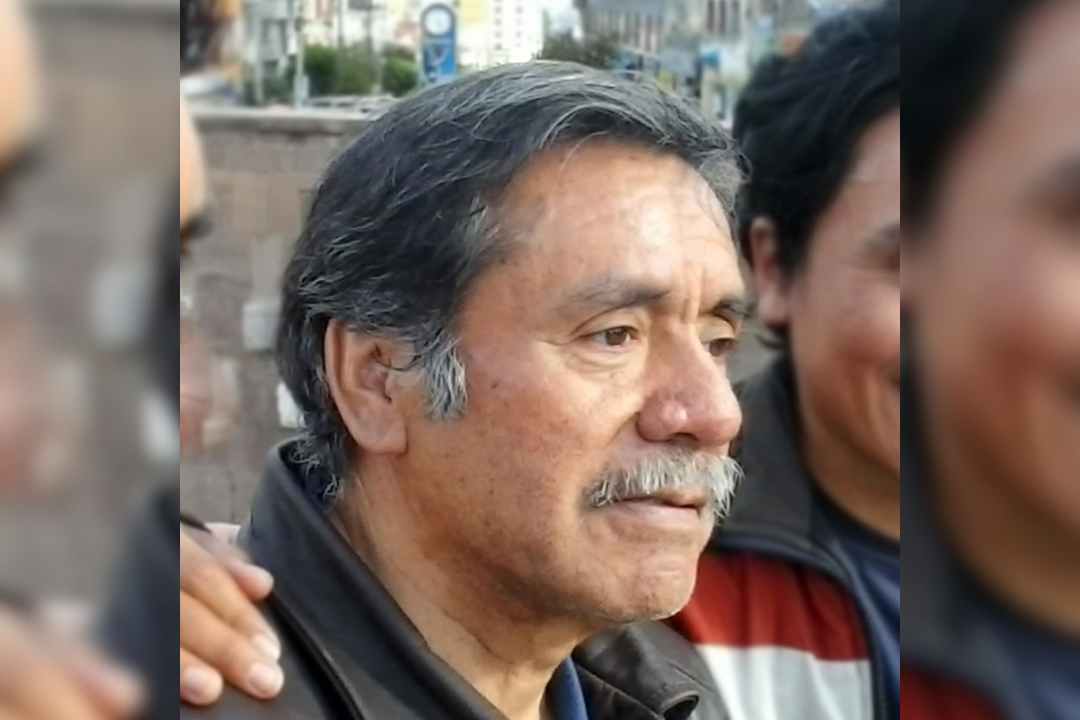
The Bolivian Socialist Workers’ Movement (MST) pays tribute to one of its members, who was also its principal leader: Juan Villa Arroyo (1945–2015), also known as Pedro, his nom de guerre. He was not a public figure, which is why little has been said about him. His work focused on one of the most difficult tasks of the revolution: building the party, which requires not only the precise application of democracy in debate and centralism in action, but also the abandonment of any desire for petty-bourgeois prestige in order to devote oneself above all to building revolutionary teams; and he carried out his work in an exemplary manner.
He made his name as an organizer of Trotskyist, workers’, and internationalist parties beginning in the 1970s. In Peru, he founded and led the Revolutionary Left Front—Trotskyist Workers’ and Peasants’ Party (FIR POC-T) and its official newspaper, Bandera Socialista. He protected the party from persecution by the dictatorship and prepared it to play a role during the democratic period. Together with the Socialist Workers’ Party (PST) and the Revolutionary Marxist Workers’ Party (POMR), he formed the Workers’, Peasants’, Students’, and People’s Front (FOCEP), a left-wing electoral organization that nominated the renowned peasant leader Hugo Blanco and Trotskyist figures such as Ricardo Napurí in the 1978 Peruvian Constituent Assembly elections; FOCEP received the third-highest number of votes and became the country’s leading left-wing political force.
In light of this experience, the idea of unifying the Trotskyist revolutionaries into a single party was raised, but the factions of the Mandelist SU called for unity based on a program of conciliation with the “progressive nationalist” bourgeoisie, in contrast to Villa’s FIR POC and Nahuel Moreno’s PST, which defended the Trotskyist program of class independence, advocating for a workers’ and peasants’ government[1].
The agreements reached within the FOCEP and the international situation—particularly regarding the Angolan and Portuguese revolutions—along with the Trotskyist position to rebuild the Fourth International in the face of the degeneration of the Mandelist SU, led to the merger of Villa’s FIR POC and Moreno’s PST, giving rise to a new workers’ party. The terms of unity were published on September 21, 1978, in the newspaper Bandera Socialista: “The name of the unified party will be: Socialist Workers’ Party, given the political presence of the PST (…), and the name of the unified newspaper will be: Bandera Socialista, given the political presence of the FIR POC (…)”[2].
The merger with the FIR POC was key to navigating the PST’s new phase, which would suffer a severe blow despite its successful electoral strategy, when its influential public figure, Hugo Blanco, broke with the party, yielding to the far-left pressures of Mandelism, leaving the FOCEP weakened and in the hands of Ledesma’s petty-bourgeois leadership.
Pedro Villa played a central role in keeping the PST organized as a class-based alternative to the mass movement, demonstrating the decisive importance of the organizer in times of crisis. The PST wielded significant political influence, which led the Morales Bermúdez dictatorship to raid its headquarters in Lima, the capital of Peru, on April 22, 1979.
More than 200 police officers surrounded the street, beat, and arrested 21 comrades who were inside. “When Juan Villa, secretary-general of our party, demanded an explanation for the arbitrary arrest, he was met with kicks to the stomach and ribs,”[3]reported issue No. 12 of Bandera Socialista. Ultimately, the international solidarity campaign and a hunger strike in the Constituent Assembly secured the release of those detained.
In the 1980s, following the merger of Ricardo Napurí’s POMR with the PST, Villa undertook the difficult task of rebuilding the political organization of the militant Cuajone miners’ union in southern Peru—a task at which other prominent leaders had failed. The party reorganization was a success and forged unbreakable ties with the working class and the miners’ leader Santos Dávila.
As part of Nahuel Moreno’s internationalist current, Villa was a founding member of the International League of Workers for the Fourth International (LIT-CI), and in the late 1990s and early 2000s, he served as a leader of the International Secretariat in Brazil.
In response to the petty-bourgeois deviations of the PST’s new leadership in 1999, he formed a workers’ bloc with Santos Dávila to preserve the party’s tradition. In this way, the closure of the newspaper *Bandera Socialista* was prevented, and a plan was launched in line with the assessment of the global revolutionary upsurge, which in Peru pointed to the fall of the Fujimori dictatorship. Some time later, the party’s workers’ wing would suffer a severe blow with the death of Santos Dávila following a workplace accident that has yet to be fully clarified. Villa, from his international post, would pay tribute to the memory of his dear comrade and friend.
In Bolivia, as an international organizer, he rebuilt the Socialist Workers’ Movement (MST) and spearheaded the revival of the Socialist Youth (JS) from 2001 until the day of his death.
BOLIVIA: LEADERSHIP MEANS FORESIGHT
It is almost a recurring pattern for current leaders to offer their analyses and assessments only after the fact, oscillating between an inability to foresee events and—when they do formulate future scenarios—finding themselves confronted with a reality very different from what they had imagined. Trotsky was categorical in stating that to lead is to foresee, so as not to get lost in the tide of events. It is no exaggeration to say that Pedro knew how to foresee, and he demonstrated this in the difficult test of leading a party in crisis in the midst of a revolution.
In the context of a global revolutionary upsurge, Villa noted that Bolivia had been experiencing a revolutionary situation since 2000 and that this began with the workers’ victory in Cochabamba, when they succeeded in expelling the transnational corporation Aguas del Tunari; that the strength of the mobilizations in 2001 brought the Banzer government to the brink of collapse, and that the bourgeoisie, together with the reformist parties, diverted the struggle toward elections; that the government of Gonzalo Sánchez de Lozada (Goni), which took office in 2002, was weak, having emerged from a parliamentary coalition lacking popular support and facing strong challenges from direct mass action; and that the rising working class could overthrow it in alliance with the peasantry. To this end, it formulated a policy of reclaiming workers’ organizations—primarily the Bolivian Workers’ Confederation (COB), which included the CSUTCB peasant union within its ranks—through a plan for an offensive struggle. “Out with Goni!” for a government of workers and peasants embodied in the COB’s power—a line that clashed with the main left-wing currents that were holding back the proletariat’s momentum, such as the MAS, which sought to keep Sánchez de Lozada in power for five years, and others, such as the Communist Party and the POR Lora, which advocated a defensive retreat, arguing that the conditions for a revolution were not yet ripe. Reality prevailed with two revolutions (2003–2005) that overthrew two governments (Goni and Mesa) and led to two constitutional successions (Vaca Diez and Cossío). The COB served as the organ of dual power.
THE BOLIVIAN PROLETARIAN REVOLUTION
Amid opportunistic attacks that denied—and continue to deny—the possibility of a proletarian revolution in the world, arguing that this was a thing of the past and that the 21st century ushers in an era of postmodern rebellions in which the concept of the working class is rejected in favor of the supremacy of cultural, gender, or race; the reality in Bolivia and Comrade Villa demonstrated that this entire conception—contrary to Marxism—was false, and that the objective conditions for a workers’ and socialist revolution were vividly present in a specific country, where, in addition to overthrowing bourgeois governments, the workers’ organ of dual power was forged at the same time.
The massive mobilization of the Bolivian people on February 12 and 13, 2003, raised the issue of power. It was a nationwide insurrectionary uprising centered on the seat of government that, while defeating the wage tax, demonstrated the bourgeoisie’s inability to govern. For two days, the masses took to the streets without the government being able to control or subdue them. Villa identified the protagonists of this spontaneous insurrection as the city’s working-class rank-and-file, alongside informal workers with a working-class background—that is, miners and factory workers who had been displaced since 1985 by neoliberalism. In short, the rank-and-file of the COB. This analysis challenged the pro-bourgeois viewpoint and the entire left, which denied the proletarian presence and downplayed the insurrection by calling it a classless “neighborhood protest”; the fact of specifying that they were COB rank-and-file members made it clearer than ever that the reconstitution of this organization was the order of the day, after 18 years of neoliberal ostracism. In turn, Villa argued that the intensification of the class struggle foreshadowed another insurrection in the coming months and that, therefore, the COB must prepare to lead it toward the seizure of power.
Reality unfolded in accordance with these characterizations: the working class reconstituted the COB at its 13th Congress held in June of that year, and the MST played a central role by actively participating with its “Theses on Workers’ Power”[4]. Finally, the parent organization called for a general strike and led the mass uprising of October 2003. Sánchez de Lozada was overthrown. The COB effectively became an organ of dual power. “All Power to the COB!” was the Bolivian party’s line.
The leaders of the mass movement opposed workers’ power. This paved the way for Carlos Mesa’s constitutional succession; he had to ask the COB leader for permission so that the masses who had taken over Plaza Murillo would let him pass through to be sworn in at the Government Palace.
A year and a half later, another general strike by the COB and its member organizations toppled the Mesa administration and retook Plaza Murillo. Hours later, the uprising brought down the constitutional succession of Hormando Vaca Diez, and then that of Mario Cossío.
Throughout this process, the conditions for a workers’ and socialist revolution were clearly and concretely present. The only way the bourgeoisie, the MAS, and the union bureaucracy could derail the revolutionary process was through the policy of bringing forward the general elections.
THE RECONSTRUCTION OF THE PARTY.
The Bolivian MST had just emerged from a crisis that threatened to dissolve the organization; most of its leaders had adapted to the bourgeois institutional framework and abandoned the struggle. A poorly managed policy of entryism within Evo Morales’s MAS was leading it toward total extinction.
The arrival of Comrade Villa and his guidelines, which were in tune with reality, were fundamental to rebuilding the MST. With this new orientation, the party gained influence among the workers’ vanguard and played a leading role in the central debates on class independence and the question of power at COB congresses and assemblies. The Socialist Youth, its youth wing, was emerging as the leading left-wing force at the Universidad Mayor de San Andrés (UMSA). The MST went from the brink of dissolution to becoming one of the most dynamic Trotskyist left-wing organizations in Bolivia.
The comrade’s invaluable organizational contributions were based on the insistence that a revolutionary policy can only be realized through a revolutionary organization—that is, a truly Bolshevik party. In this way, he reestablished democratic centralism: democracy in debate and centralism in action. He drafted documents that carefully outlined the organizational goals for each stage, relating to the party’s size, the integration of cadres, the opportunities presented by the current situation, the struggle to secure sound finances, among other issues—materials indispensable for conducting regular, objective assessments, with the aim of correcting errors and reinforcing successes.
This entire school of thought was built on the central pillar of the Leninist method of party-building, which emphasizes that organizational issues are just as important as political ones, and that just as we staunchly defend the political principles of Marxism, we must also defend the organizational principles. Ultimately, this is because the victory of the socialist revolution depends not only on revolutionary political lines, but also—and primarily—on the building of a revolutionary organization capable of putting them into practice.
THE DEGENERATION OF THE LIT CI
In the midst of the Bolivian revolution, the Brazilian leadership of the LIT CI—which was part of the International Secretariat (IS)—had internal political differences with the MST, which stemmed from a denial of the strength of the working class in Bolivia and the COB’s capacity to act as a dual power, thereby calling into question the party’s main characterizations.
Like the MAS, their political platform called for an electoral solution and a Constituent Assembly. They believed, like most of the left, that the objective conditions for a proletarian revolution did not exist.
When governments began to fall as a result of direct mass action, all their arguments fell apart.
Instead of providing clear explanations, their response was disastrous; they sought to settle political differences through a campaign of moral slander against our members, and primarily against Comrade Villa. They denied the Bolivian party and the comrades they were denigrating the right to a defense by spreading these slanders to the rank-and-file of the LIT CI in International Information Bulletins. The political bodies took it upon themselves to judge the moral accusations without prior investigation, in violation of the revolutionary organizational principle that requires moral issues to be investigated by a Control Commission independent of the political bodies, in order to prevent the persecution of comrades whose positions differ from those of the leadership. What is incredible is that even today, 20 years later, they have not presented any evidence to support their accusations.
Their actions were so disastrous that, despite their efforts to spread slander, they were unable to expel Villa and the Bolivian MST on moral grounds, but rather on grounds of “indiscipline.” This “indiscipline” consisted of defending the Leninist method of organization—specifically, the defense of independent Control Commissions within political organizations to properly address moral issues—as opposed to the Stalinist “anything goes” approach of the LIT CI leadership.
Years of adapting to the decaying bourgeois institutional framework ultimately cemented this political, organizational, and moral degeneration of that leadership. The moral integrity of Villa and the comrades of the MST remained intact, and their principles were further strengthened, enabling them to continue resolutely in the social struggle to build the revolutionary party.
FAREWELL TO THE UNWAVERING REVOLUTIONARY
The MST did not let itself be discouraged by the low blows and responded to the major events of the Bolivian revolution. Today, it continues to fight to build a revolutionary leadership for the proletariat, inspired by Villa’s example—an inexhaustible source of motivation to keep building the revolutionary party.
Our comrade’s moral and physical strength defied death on several occasions—he survived two heart attacks—but in the final stretch, despite the efforts he and his party made, his health deteriorated, a situation compounded by Bolivia’s inadequate healthcare system.
His writings are reflected in the Socialist Youth program; in the MST’s official publication, *El Chasqui Socialista*, Nos. 195 through 218; in the theses for the COB Congresses—the 13th on June 2003, the XIV in August 2006, and the XV in January 2011, as well as his contributions to the COB Workers’ Party’s program on class independence from 2013 to 2014.
In these writings, he applied his critique to the “Update to the Transition Program” proposed by Moreno and, centrally, to the Theory of Democratic Revolution, returning to Trotsky’s orthodox guidelines. He had been preparing an update to “the Update of the Transitional Program” in light of the profound changes taking place in the global landscape—such as the dissolution of the former USSR and the lessons learned from the Bolivian revolution—but his death prevented him from completing this work, which now rests in our hands.
Villa led by example, always encouraging us to think for ourselves. Like every true revolutionary, he lived up to Marx’s words when he said, “Nothing human is alien to me.” He was a great human being. In this regard, he leaves a huge void for us comrades, his children, and his entire family, as well as for his two pets, whom he showered with love and care.
The Latin American and global revolutionary labor movement has lost one of its most important leaders, a revolutionary of great stature.
In the early hours of June 29, 2015, at a hospital in La Paz, his heart stopped beating. Hours earlier, he had said goodbye to each of his comrades and to his beloved family, caressing his children’s faces (he always knew how to anticipate events). He died surrounded by the love of his family and his party comrades, who tried to save him until the very last minute. This was the battle the MST lost, after so many victories fought alongside him.
At noon, we—his fellow activists, family members, and friends—accompanied his remains to the crematorium, covered him with a red flag that had flown during the May Day workers’ march on May 1, 2015, in San Francisco Square in La Paz, and sang “The Internationale.” As he wished, he ended his life as a steadfast fighter and an uncompromising atheist. We took his ashes to Lima, Peru, and scattered them into the sea, as was his final wish. His loyal sister, Digna, and other family members witnessed the affection and respect that Villa had earned among the revolutionaries who accompanied him.
His passing—for those of us who stood alongside him fighting to build a “Bolshevik” party of the working class in Bolivia, as part of the party of the world socialist revolution based on a principled international regroupment that we trust will take shape in the future— leaves us with an enormous void, but it also leaves us an invaluable revolutionary, theoretical, political, programmatic, and organizational legacy that we will cherish in order to continue his work—with wisdom, determination, and patience in this new stage of the party, and above all, with historical optimism for a socialist future for humanity.
Comrade Pedro, long live socialism… forever!
BOLIVIAN SOCIALIST WORKERS’ MOVEMENT
[1]Argument taken from *Bandera Socialista* No. 1, the official publication of the unified PST party. September 1978.
[2]PST-FIR POC Unification: Building the Great Workers’ Party. *Bandera Socialista* No. 1, official organ of the unified PST party. September 1978.
[3]Quote taken from *Bandera Socialista* No. 12
[4]MST Thesis for the 13th COB Congress