By Manuel Velasco
Automatic translation made by Artificial Intelligence.
The current dynamics of capitalism demonstrate that the war in Ukraine, the imperialist aggression in Venezuela, and the military harassment of Iran are not isolated events, but rather critical manifestations of the inter-imperialist struggle for control over energy sources. The blockade of the Strait of Hormuz exposed the cracks in U.S. military hegemony, demonstrating that control of land and sea trade routes is one of the pillars upon which the capitalist powers seek to monopolize the global value chain and energy system. The capitalist mode of production is incapable of overcoming its own structural contradictions, inevitably coming up against a historic bottleneck: the need to ensure an uninterrupted flow of energy inputs to sustain production and guarantee profits.
The United States’ Strategy
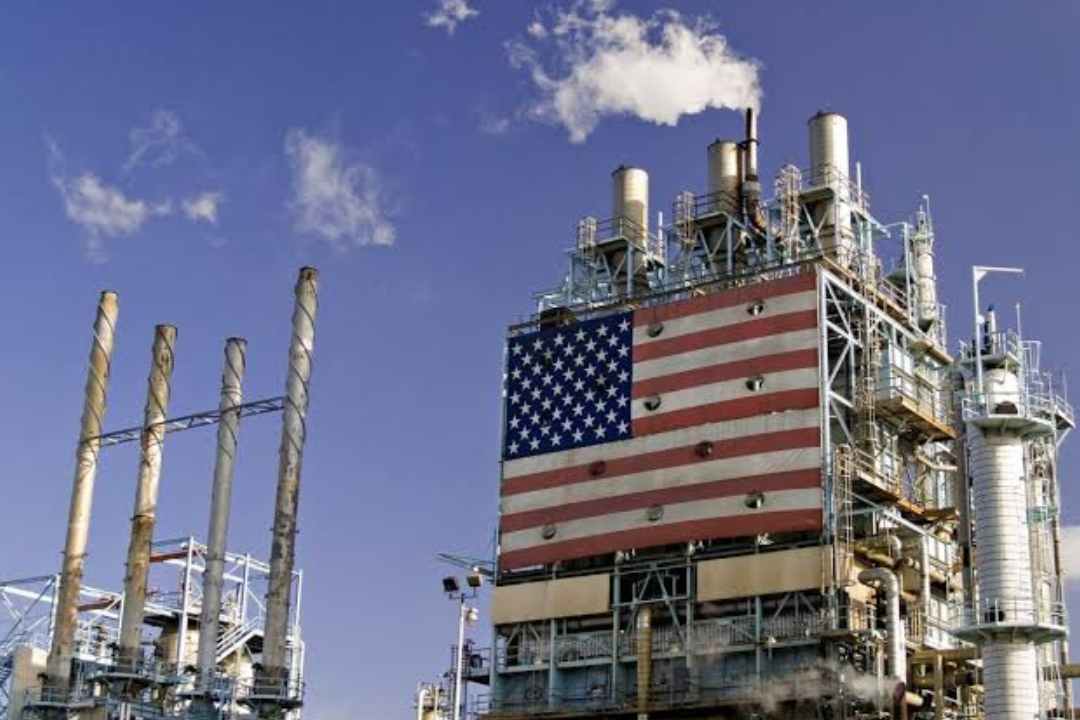
The 1970s reshaped the energy landscape in the United States, which was forced to explore alternatives as the era of cheap oil came to an end. The 21st century brought new production methods such as fracking, which secured new sources of supply for U.S. imperialism. Furthermore, in recent years, the White House has placed greater emphasis on liquefied natural gas (LNG) and strengthened its control over maritime supply routes.
Starting in 2014, its strategy to position itself as a gas importer allowed it to establish itself as Europe’s leading supplier, providing 28% of the LNG the continent received in 2021, rising to 58% in 2025. The LNG market is fragmented, consisting of a combination of bilateral contracts, business and political interests, and infrastructure vulnerable to regional tensions, setting it apart from the much more homogeneous oil market. However, it is not immune to the constraints imposed by the transportation of the resource, as it is heavily dependent on maritime routes and, therefore, susceptible to ongoing disputes over its operation and control.
As a result of the strategy pursued, U.S. energy exports surged last year, rising from $87.5 billion in 2025 to $146.5 billion in 2026. The 67% increase in exports represented not only a rise in export volume but also greater value capture amid intense competition among world powers. Total exports consist of $55.0 billion in crude oil, $33.5 billion in natural gas, and $58 billion in refined products.
Regions such as the Middle East are of particular importance for energy control. The reorganization of the gas fields off the coasts of Syria, Palestine, and Lebanon—promoted by the United States and Israel—is interpreted by some journalists as an attempt to replace the Baltic Sea’s Nord Stream with the Mediterranean’s EastMed-Poseidon corridor in geopolitical terms.
In Defense of Hegemony
On the other hand, Washington’s strategy to contain Beijing’s global expansion focuses on choking off the supply chains that fuel the Asian giant’s industrial and technological growth. By imposing severe sanctions and trade restrictions on key countries such as Russia, Venezuela, and Iran, the United States is attempting to block the flow of critical raw materials—especially oil, gas, and strategic minerals—to Chinese markets. This policy aims to weaken China’s manufacturing base and, at the same time, drive up production costs for its companies, thereby limiting their ability to compete internationally in high-tech and infrastructure sectors.
However, this offensive from the West clashes head-on with Beijing’s counterstrategy, which is based on its near-absolute monopoly over the technological elements of the future: rare earths. Far from retreating, the Asian giant has consolidated an asymmetric and strategic advance in this key sector. According to reports from the International Energy Agency (IEA), China not only accounts for nearly 69% of global rare earth mining, but it also exercises suffocating vertical control by concentrating more than 90% of the world’s refining and separation capacity and 95% of the production of permanent magnets—essential components for the manufacture of electric vehicles, microchips, wind turbines, and state-of-the-art weaponry.
Faced with pressure from Washington, Beijing transformed this technical monopoly into a weapon of macroeconomic coercion. Through successive waves of dual-use export restrictions and licensing requirements applied to critical minerals, rare-earth compounds (such as samarium or gadolinium), and processing technologies, China demonstrated its ability to paralyze or drastically increase the cost of entire value chains in the United States, Europe, and Japan. In fact, recent analyses warn that the tightening of these border controls directly jeopardizes more than $6.5 trillion annually in industrial manufacturing output outside China’s borders. By blocking supplies to U.S. defense contractors and restricting export quotas for permanent magnets, Beijing seeks to reverse the dependency equation: while Washington attempts to choke off China’s fossil fuel supply, the Politburo responds by blocking the mineral foundations of the West’s technological transition.
U.S. pressure on these three strategic suppliers aims to dismantle the alternative logistics and financial corridors that Beijing has built in recent years. Iran and Russia are cornerstones of China’s energy security, supplying millions of barrels of crude oil daily via routes that bypass traditional U.S. Navy checkpoints. By sanctioning the financial institutions and shipping fleets that facilitate this trade, Washington is attempting to cut off these regimes’ revenue streams and force China to rely on global energy markets that are more susceptible to Western influence or regulation.
Militarization and Energy Supply
The global energy landscape has ceased to be a arena for diplomatic consensus and has become a brutal arena for the accumulation and realignment of power. In recent decades, Washington has undergone a fundamental strategic shift: supply crises are no longer perceived as threats to national security, but rather as windows of opportunity for financial gain and geopolitical repositioning. This mercantilist logic exploits global instability, transforming the vulnerability of entire regions into the driving force that consolidates the economic hegemony of U.S. corporations.
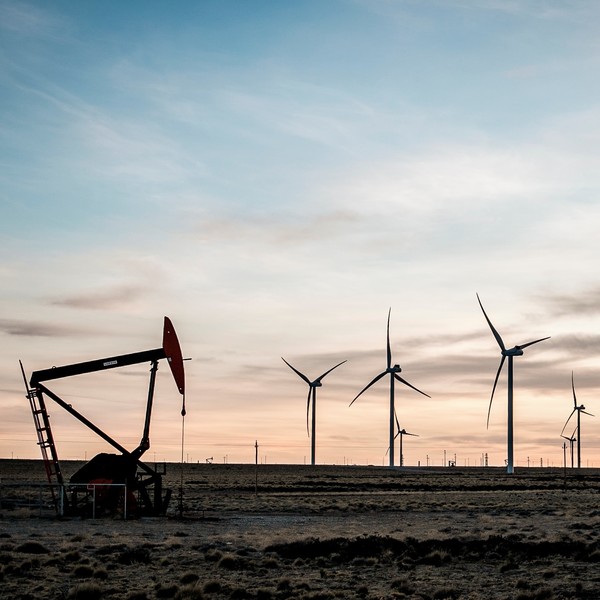
The urgency behind this race for fossil fuels is now exacerbated by the rise of artificial intelligence and state-of-the-art digital infrastructure, whose electricity and industrial demands are massive and insatiable. In its head-to-head contest with China for technological and economic supremacy, the United States is increasingly resorting to a war economy and geopolitical destabilization as mechanisms to break down material barriers and secure control of new strategic territories. From this perspective, violence and armed conflict are revealed not as anomalies of the international system, but as necessary tools for a power seeking to monopolize the resources indispensable to the industry of tomorrow.
However, even if it is intended as a solution, Trump’s military policy is creating more problems, even for the United States itself. The imbalance in oil prices resulting from the conflict with Iran is compounded by the critical situation regarding U.S. oil reserves, which have fallen to their lowest level in 43 years.
Capitalism with No Way Out
The years when international summits spent entire days discussing the urgent “energy transition” and the supposed commitment of nations to decarbonization seem to be long gone. Right now, with the far right in power, the bourgeoisie is relying on the most destructive methods to maintain its profits. Even so, the bourgeoisie’s dominance is not guaranteed by military force. Trump’s setbacks in Iran and Putin’s in Ukraine show that imperialist powers lack the strength to impose their interests. Responses like those of the Bolivian people will multiply in a world where well-being and peace are denied to the working class.
As long as capitalism persists, more conflicts, environmental destruction, and exploitation lie ahead, but so does resistance from the people. That is why it is urgent to strengthen a socialist alternative worldwide to change the course of history. A strategic solution is impossible without the construction and consolidation of an international revolutionary tool. This tool is indispensable for overcoming the fragmentation of current struggles, unifying resistance movements into a single front, and organizing the masses with the political independence needed to challenge for power. Without an instrument of this nature, the strength gained through current mobilizations risks being dissipated. For all these reasons, the international unification of revolutionaries is the most urgent task for dismantling the structures of the system and paving the way for a socialist society.