Automatic translation made by AI.
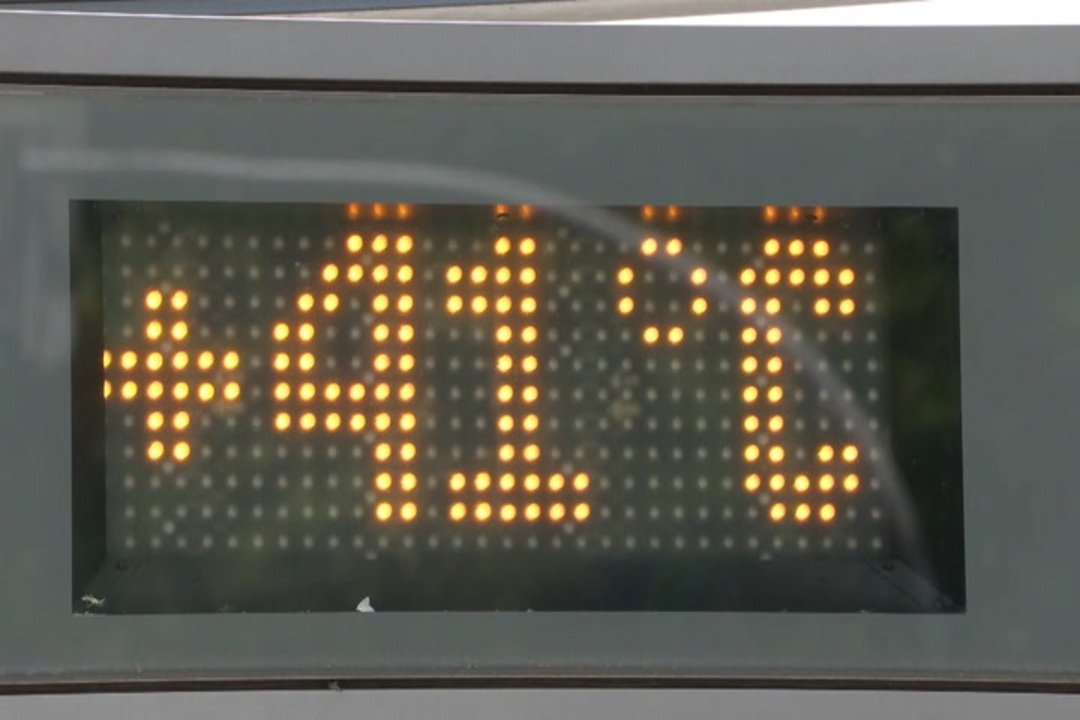
Summer in the Northern Hemisphere has become truly stifling. Although global warming is a phenomenon that affects the entire planet, the rise in temperatures in Europe has occurred at a faster rate, exacerbating the consequences. In a sense, thermometers are measuring the temperature of the capitalist crisis—the real cause of these new climate phenomena—and pointing to the barbaric fate toward which this system is leading us.
By Manuel Velasco
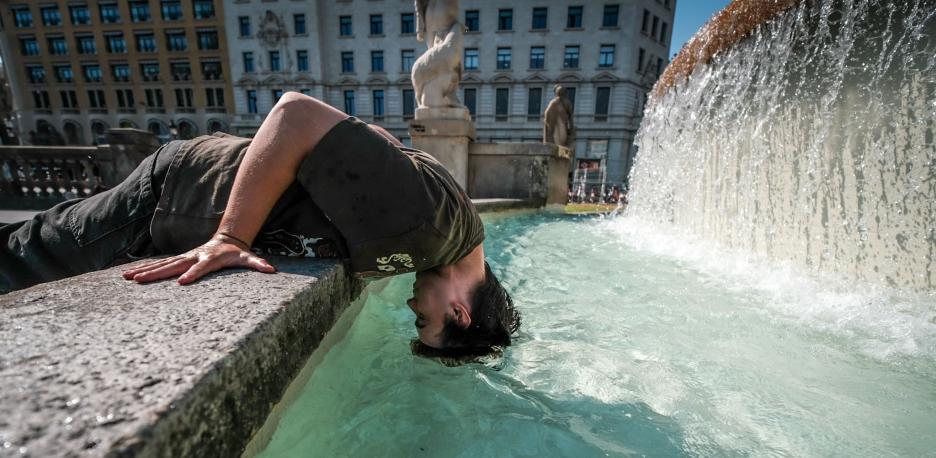
The alarming European heat wave is more severe than those experienced in 2003 and 2025. The continent has faced its fifth heat wave of the year during a season marked by wildfires, a continental drought, and the despair of millions of people. Climate records have been broken one after another in quick succession. Over the course of several weeks, various countries reached temperatures never before seen at this time of year:
- France recorded 1,243 deaths between July 3 and 22, bringing the total number of deaths caused by the 2026 heat wave in the country to 7,300.
- The United Kingdom has experienced extreme heat waves this summer, with temperatures reaching as high as 38.1 °C in London and breaking historical records.
- In Spain, data from the State Meteorological Agency (AEMET) indicate that July 5 was the hottest day in the country since at least 1940.
- Switzerland recorded its highest-ever temperature for the month of June, and in July, thermometers registered extreme temperatures that came close to the 2003 record.
Extreme heat waves have affected different regions in similar ways, resulting in an alarming death toll of at least 35,000 across Europe [1]. Adults over the age of 75 proved to be the most vulnerable. Intense heat poses a serious threat to their health, as it easily leads to dehydration and places excessive strain on the cardiovascular system. In fact, many people do not die from heatstroke itself, but because the stifling heat exacerbates the chronic conditions they already suffer from.
Even the economy has been affected by rising temperatures, which have disrupted the supply of raw materials, critical infrastructure, and energy security. Many cities have been on the brink of collapse, with schools unable to hold classes, rail services disrupted, and power outages.
The environmental crisis also translates into a social crisis, since the most vulnerable sectors are those with the fewest resources to cope with the consequences of climate change. It is the poor who suffer from overcrowding in cities and urban peripheries, inadequate transportation, and poor working conditions—often working outdoors in the open, exposed to sweltering heat.
Workers suffer when they are forced to continue working despite the extreme heat, for example, in classrooms without adequate air conditioning and, particularly, those who work on the street or in the fields—among whom there are deaths every year that could be prevented through preventive measures by the government and without the profit-driven greed of employers.
The health impacts are numerous and dramatic: respiratory disorders caused primarily by ozone formation (resulting from nitrogen oxide emissions from internal combustion engines; in June, ozone levels exceeded the danger threshold for 300 of the 450 million Europeans); cardiovascular events; infectious diseases; acute kidney failure; and air pollution from wildfire smoke.
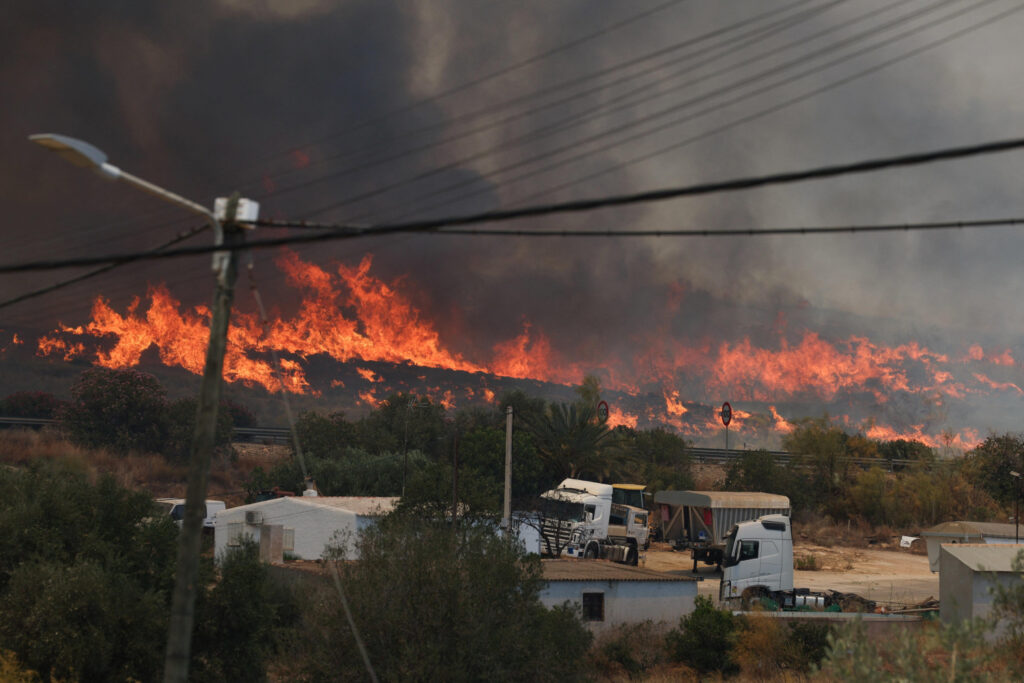
The heat wave is part of the broader context of the serious consequences of climate change on terrestrial, aquatic, and atmospheric natural environments. As a result, ecosystems are disrupted, creating concerning conditions for the development of wildfires—the worsening of which is not solely due to climate change (forest management, land use, and ignition sources also play a role)— but extreme heat, drought, and dry vegetation significantly increase the risk and the spread of fires.
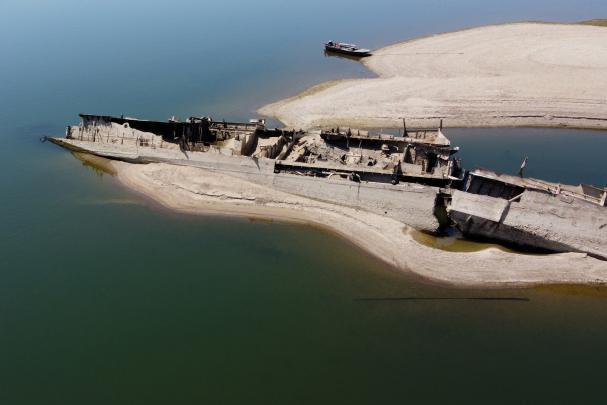
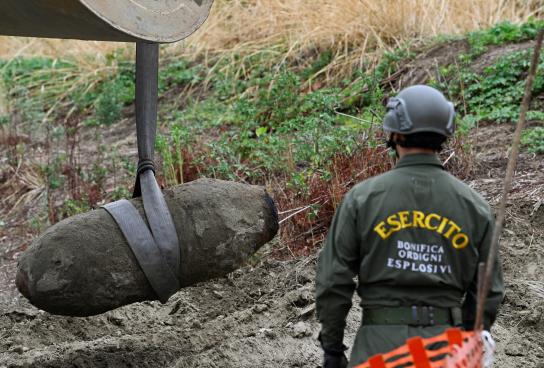
The water crisis and the situation facing European rivers also deserve mention. In August, the Loire, Po, Rhine, and Danube rivers reached exceptionally low levels following months of low rainfall and very high temperatures. The situation affected river transport, agriculture, ecosystems, and power generation. The European Commission believes that the drought has been developing since spring and that the extreme heat has significantly complicated the situation.
Symptoms and Diseases
To find a cure, we must first arrive at the correct diagnosis. Global warming and the various phenomena associated with it are manifestations of a model of life that is unsustainable and incompatible with any form of ecological balance. This crisis represents a moment of profound change and fundamental decision-making; at the same time, the interests of various conflicting sectors are at stake. In this sense, the ongoing ecological crisis is an offshoot of the broader crisis of the capitalist system, which manifests itself in the political, social, cultural, and economic spheres.
Although all the warning bells have already been sounded, the capitalists insist on maintaining their dependence on oil in order to satisfy their thirst for profit. Faced with the rise of socio-environmental activism, the bourgeoisie has bet on the illusion of “sustainable capitalism,” as outlined in various agreements for the so-called energy transition—agreements that are not even fully implemented. Instead, denialism from the far right has now taken center stage, fueling inter-imperialist competition to intensify the exploitation of workers and the plundering of territories.
Trump, at the helm of the United States, is stepping up the pressure in his battle with China—the main challenger to U.S. hegemony—over markets, common goods, and geopolitical influence. However, the Asian power by no means represents an alternative model to polluting capitalist productivism. Just as China has risen in the markets, so too has it risen on the list of CO2-emitting countries, currently accounting for 31.8% of global fossil fuel emissions. The energy transition it is promoting simultaneously entails the plundering of common goods such as lithium in peripheral countries, sustaining—and in some cases deepening—the dependence of African and Latin American nations.
Environmental degradation cannot be halted, much less remedied, without a change in the economic model. The environmental crisis will only deepen if decisions continue to be made by the same people as always. Emergency measures in favor of the social majority are only possible through democratic planning of production. To reclaim our future, we face the urgent task of building an anti-capitalist alternative that challenges for power, with the determination to implement all the policies necessary to put an end to ecocide.
References
[1] La Vanguardia (August 25, 2026), Extreme heat caused at least 35,000 additional deaths in Europe this summer. This does not mean they died directly from heatstroke; it is an estimate of “excess mortality”: people who died in numbers higher than statistically expected during heat waves.