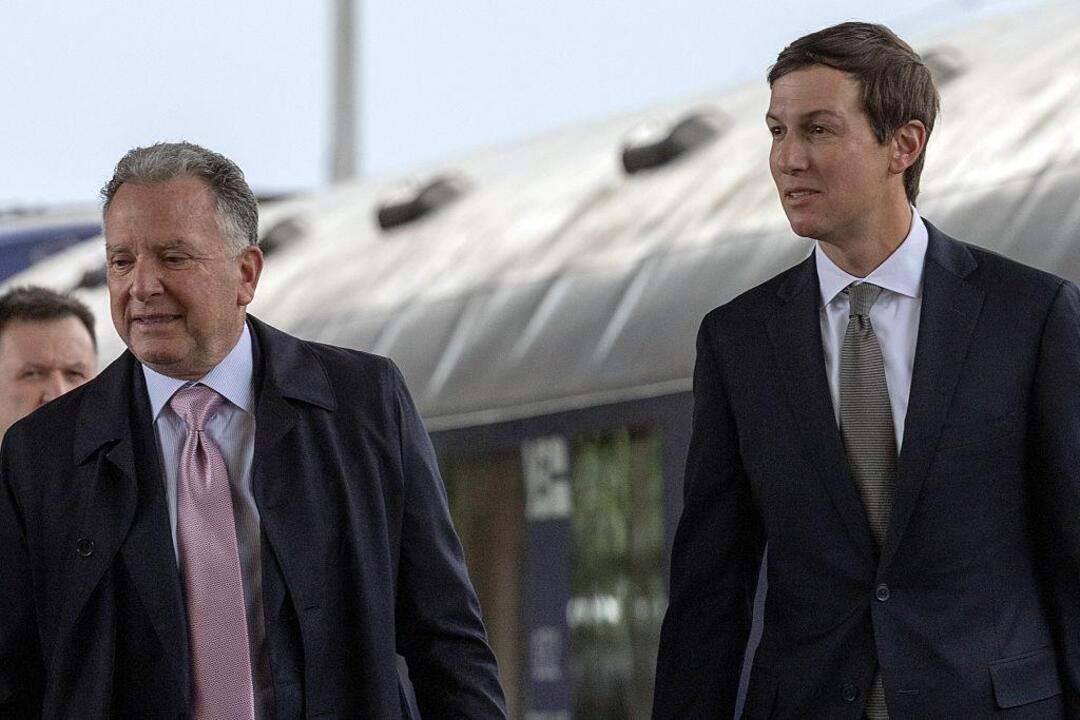
Trump has relaunched negotiations on Ukraine. His envoys met with the presidents of Russia and Ukraine, without providing details on what was discussed. We do not trust in a peace negotiated at the highest levels, under imperialist pressure, and behind the backs of the Ukrainian people. We stand for a just peace and the right of the people under attack to decide their own future.
By Oleg Vernyk and Rubén Tzanoff
Talks are officially underway
On August 25, CIA Director John Ratcliffe traveled secretly to Moscow. The visit was not announced in advance, nor were the details made public.
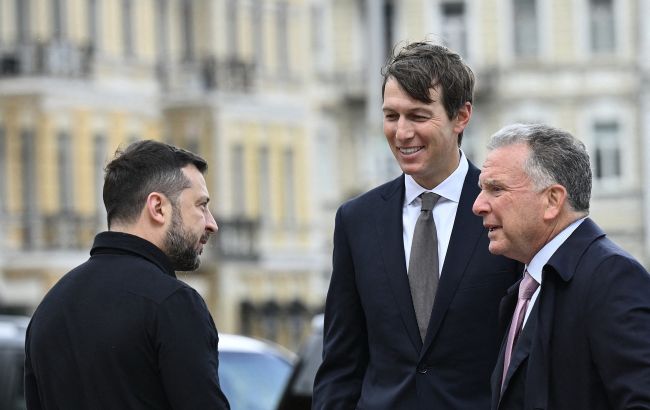
A few days later, Trump’s envoys, Steve Witkoff and Jared Kushner, traveled to Russia and met with Putin on Saturday, September 5. The next day, they traveled to Kyiv and met with Zelensky. Ukrainian authorities had been calling for this visit for months, as Trump’s representatives had previously maintained contact only with Putin’s regime. To facilitate the meetings, a temporary pause in airstrikes on Moscow and Kyiv was agreed upon.
Meetings Without Going Into Detail
Trump has relaunched his mediation effort. It is worth recalling that when he returned to the White House on January 20, 2025, he had already promised to end the war in Ukraine within 24 hours. As of September 7, 2026, 1 year, 7 months, and 18 days have passed, and the war continues.
Trump’s envoys met with Putin for more than three hours and described the talks as “substantive,” while their counterparts said they were “meaningful, constructive, and frank.”
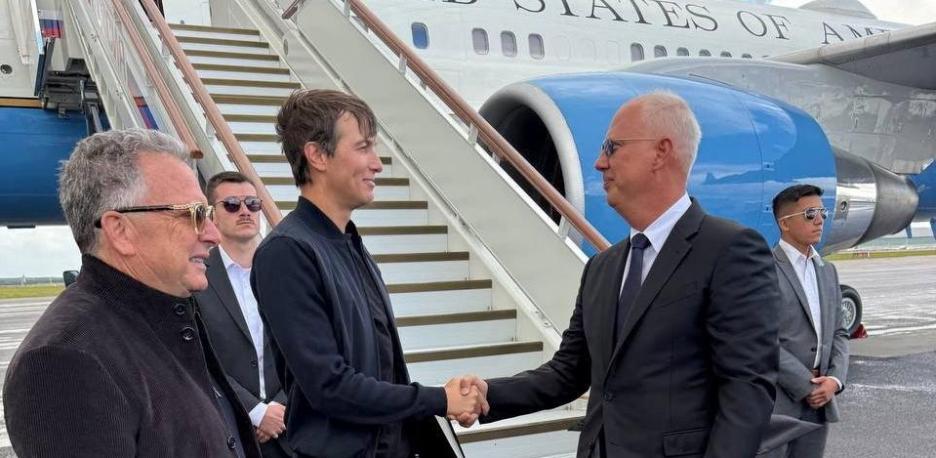
Russian presidential envoy Kiril Dimítriev (right) welcomes White House representatives Steve Witkof (left) and Jared Kushner at Vnúkovo Airport on September 5. Photo courtesy of Reuters / Reuters
Zelensky also did not provide any details about the meetings. According to an unnamed source who spoke to RBC-Ukraine, Ukraine and Russia may declare a limited truce this winter, with no mutual attacks on energy facilities. Diplomatic talks may only move forward after the Russian State Duma elections, scheduled for September 18–20.
In short, the details remain unclear. That is precisely what is worrisome. The future of Ukraine is being negotiated without the Ukrainian people knowing what is being put on the table.
Will there be any changes compared to the previous positions?
Russia has long been advocating specific conditions: it demands that Ukraine renounce joining NATO, claims control over the territories it considers its own—including Donetsk and Luhansk— based on the “actual conditions on the battlefield,” and maintains its claims on Zaporizhzhia and Kherson, for which it wants Ukraine to withdraw from the areas it still controls in those territories. On several occasions, Zelenskyy has said that accepting those conditions would amount to surrender.
This raises some questions: Are these the remaining differences? Are there any new proposals? Have the demands of either side changed? Are they truly willing to reach an agreement?
Motivations that do not include Ukraine’s victory
Every night, Kyiv and other cities come under attack from ballistic missiles against which they have no means of defense. In fact, the U.S. negotiators left, and Putin attacked Kyiv again, causing deaths, destroying supermarkets, and damaging several homes.
Despite being at a significant disadvantage on all fronts due to Russia’s superior resources, Ukraine has managed to slow down—and in some specific cases, reverse—the invading forces’ advance and has damaged Russia’s oil infrastructure, causing fuel shortages at gas stations. These developments—combined with the fact that the war has dragged on longer than the aggressors anticipated and without decisive victories, the growing number of soldiers killed in action, and the economic hardships—have taken a toll on Putin’s authoritarian regime, damaging his image and credibility. Trump wants to lend a hand to his friend-rival, who is not going through one of his best moments.
Of course, that is not the only motivation. Trump’s renewed attempt at mediation is also driven by his strategic policy and his desire to showcase some achievement ahead of the U.S. midterm elections on November 3. What is not among the imperialists’ motivations is a victory for Ukraine.
Trump on Putin: “a crazy leader who’s willing to talk”
Trump has maintained a zigzagging but relatively consistent approach toward Putin. The U.S. wants to negotiate directly with Putin and seek a functional relationship with Russia, rather than engage in permanent, direct confrontation. Since his first term, Trump has portrayed Putin as a strong leader with whom he could see eye to eye. In 2025, he revisited that approach by opening direct negotiations with Moscow and highlighting his good personal relationship with Putin. He also called Putin “absolutely crazy” for continuing to attack Ukraine, but he did not abandon the path of negotiation or the idea of improving relations.
As Russia failed to make progress toward the agreement Trump is seeking, criticism and threats have intensified. Currently, a more conciliatory approach is once again prevailing.
For a just peace, without annexations or impositions
We do not trust the peace that Trump and Putin might agree upon. History shows that agreements between imperialist powers serve their own interests. A peace negotiated from above among imperialists could turn into a peace of cemeteries and occupied territories—a peace that condemns Ukraine to even greater economic and political dependence.
We stand apart from the pro-Putin camp, the pro-Western imperialists, and the false pacifists who lump aggressors and victims, oppressors and the oppressed, all together.
We at the International Socialist League (ISL) recognize Ukraine’s right to defend itself by all means at its disposal; we stand for the victory of the resistance to drive out the invading troops, for justice for the victims of war crimes, and for the right of the Ukrainian people to determine their own future.
We stand for a just peace, without territorial annexations and without impositions by Russia, the U.S., the EU, NATO, or other powers. We reject the use of Ukraine as a bargaining chip between Western imperialist powers and Russian imperialism. We do not want it to be subjugated to Moscow or turned into a semi-colony of the Western powers.
Let the Ukrainian people decide!
Trump wants to make the decision. Putin wants to make the decision. The European powers want a seat at the negotiating table. Zelenskyy negotiates on behalf of the Ukrainian state. But it is the working people of Ukraine who are dying in combat, living under bombardment, losing their homes, their loved ones, and their jobs. And they are the ones who will have to live with the consequences of any eventual agreement.
It remains to be seen how far the negotiations will go, given that they have failed on other occasions. In any case, the exhaustion and the desire for the bombings to stop and the war to end cannot lead to these matters being left exclusively in the hands of the bourgeois and oligarchic elites. The Ukrainian working people have the right to know what proposals are on the table, to be consulted democratically before a final agreement is reached, and to mobilize to decide their future.