Both the statements regarding the priorities of the so-called opposition and the announcements of events to organize the social struggle—which will take place in September—continue to fall far short of the expectations of the rank-and-file of the Historic Pact, as well as those who voted for Cepeda in the last presidential election, as well as hundreds of sectors overwhelmed by the capitalist social crisis. In the face of the hardening stance of the new far-right government, there is a push to prioritize the upcoming elections for mayors and governors, municipal councils, and departmental deputies. But meanwhile, employers and capitalists are sharpening the chainsaw of layoffs, undemocratic decrees, repression, and bombardments. Millions who voted for the Historic Pact expect, at the very least, a mobilized response and a strong demonstration that Espriella’s plans will not go unchallenged by social organizations.
It is not just opposition toDefensores de la Patria—which backs de la Espriella—or to the machinations of those who declared themselves governing parties. During the Petro administration, the right-wing opposition led the institutional blockade to reduce the reforms to a bare minimum. But this was possible not only because of the majority of traditional political forces, but also because Petro charted the course of so-called “National Unity,” which led to agreements with Santos’s supporters and the Liberals to divide up positions and ministries, in the hope of securing votes in Congress for the so-called reforms for change.
Now, under a far-right government, that same “progressive” bourgeoisie does not hesitate to align itself with the new administration in search of the same ministerial posts and to cast votes with both hands to give free rein to the deepening of neoliberal policies and social cuts. The Green Party declared itself “independent,” thereby exacerbating its internal divisions. The U Party has also chosen to become a ruling party, while its former ministers in the progressive government have not yet stepped down from their posts.
Petro previously relied on a policy of backroom deals; now he’s aligned with the Democratic Center. In other words, no scruples take precedence when it comes to minor gains, such as granting Petro permission to leave the country. The price does not seem insignificant, as in the final days of Petro’s administration, the transfer of Álvaro Uribe’s brother to a military battalion was facilitated. 1 The Petro administration authorized the transfer of Santiago Uribe. Former President Álvaro Uribe Vélez confirmed the change in detention and publicly thanked the national government for allowing it.
He noted on his X account that “I thank the national government, on behalf of my family, for authorizing my brother Santiago’s transfer to a military garrison, even though I am a member of the opposition.” Uribe also explained that it was Defense Minister General Pedro Sánchez who informed him of the decision. “President Petro accepted the reasons given. Thank you very much,” he added.INFOBAE
The Political Maneuvering of the Parties in Congress
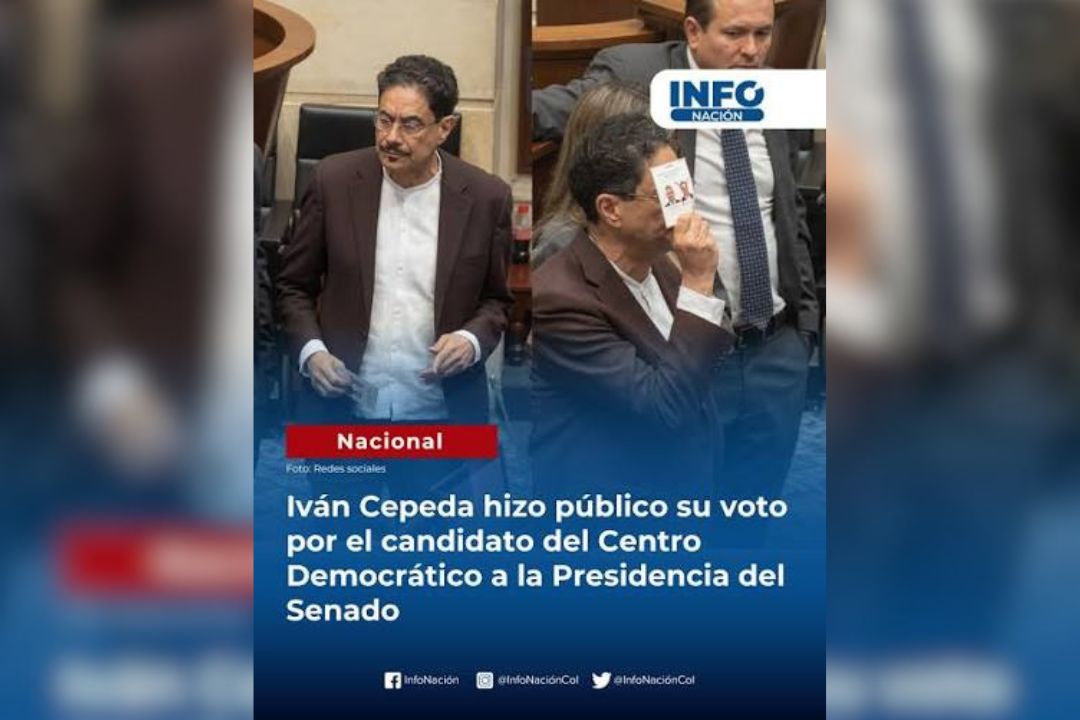
The dynamics of the so-called parliamentary opposition of the Historic Pact to Abelardo’s government have, over time, taken an opportunistic and capitulating course—not to say one that leans further to the right. One need only mention its support for Uribism in the election of the presidents of congressional committees, supposedly to defeat the government’s candidates. The most visible rifts stem from the actions of the five party members who sit on the Impeachment Committee and who voted in favor of requesting that the Attorney General’s Office release one of former President Álvaro Uribe’s case files regarding his alleged ties to paramilitarism. That vote drew attention to figures such as Gabriel Becerra, Heráclito Landinez, and María del Mar Pizarro and was described within the party itself as an “affront” to the victims of the conflict. The leading voice of that criticism was Senator Carolina Corcho. “Given that the alleged crimes—the two massacres and the murder of Jesús María Valle—took place between 1996 and 1998, when he was governor of Antioquia, prior to his presidency from 2002 to 2010, during which no such incidents were investigated. The events occurred prior to his presidency; therefore, there is no doubt that it is the Attorney General’s Office that must investigate him,”said Corcho 2. Quote from El Espectador.
In politics, there are no selfless favors, but we cannot reduce judgments to moral truths; what matters are the benefits that each social class reaps. Let’s look at the case of the Green Party, which—as part of the so-called “ALLIANCE FOR LIFE” with the Historic Pact—shifted to the right by voting for the Char clan’s candidate to determine the composition of the National Electoral Council. The Historic Pact secured only two magistrates—both aligned with Santos—thereby revealing the internal power struggles that sidelined Cepeda’s interests.
The Role of the Shadow Cabinet
In reality, it is a club of former ministers from the previous administration, disconnected from the debates that should take place in Congress. It reflects Petro’s top-down management style, as he fears being overtaken in leadership and in the decisions the PH will face. In reality, the aim is to overshadow the political processes pushing to chart a course of social confrontation, to ensure that every action against a government defined by its reactionary and antisocial dynamics is controlled from the highest levels and in the halls of Congress. It aims to drive social demands and conflicts—which will intensify as the government, the bourgeoisie, and imperialism step up their offensive—into the underground. The mobilization cannot now be tied to mere parliamentary rhetoric, while laws are being pushed through—such as the reform aimed at privatizing education and regulations designed to criminalize social mobilization.
Launch the Historic Pact, or Fine-Tune the Electoral Machine?
Everything revolves around preparing for the PH’s Founding Congress, because what will become clear there is that Petro will have the final say, despite the tendencies and factions expressed in his strategy of prioritizing alliances with petty-bourgeois organizations and parties and his own call for “National Unity,” as if that were a path to blocking and confronting the far right. This is, in reality, a many-headed hydra, all of whose heads revolve around preserving capitalism and derailing any process that fuels a workers’ and popular uprising—or, even more so, quelling a new social upheaval. What the founding congress will do is refine the machinery of a mechanism designed to demobilize and numb social struggle, forging alliances with bourgeois and petty-bourgeois parties to assemble a future slate of candidates for mayoral and gubernatorial offices.
That is why everything revolves around strengthening alliances and fine-tuning the electoral machinery, and there will be no hesitation in reaching agreements with the parliamentary factions of the bourgeois parties regarding mayoral and gubernatorial races.
The Historic Pact cannot expect to win the regional elections with a strategy of class conciliation. It runs directly counter to the causes of the working class and the people. Only by advancing a mobilized, oppositional movement in the streets against Abelardo de la Espriella’s reactionary government can we forge a path to defeat the plans of the government and imperialism. Any agreement with the bourgeoisie serves to temper the struggle and shift the burden of finding the urgent solutions demanded by workers and the popular sectors onto the bureaucracy and bourgeois institutions. To think that this is how hard-won rights are defended is the path to new defeats and only strengthens the plans of the far right and, ultimately, the survival of capitalism.
The National Meeting of Social Organizations on September 11 and 12
One need only look at the preparations for the national gathering of social organizations scheduled for September 11: it is being shaped by the union leadership based on the notion of mere electoral activism rather than grassroots organizing to build a movement of resistance against the government of Abelardo de la Espriella and its anti-rights agenda. This, in part, accounts for the internal friction and contradictions that the social and political leaders of the Historic Pact must confront. More than just an underground tremor from the political grassroots pushing for effective, cohesive unity in the struggle, there is a latent seismic shift that could overwhelm a political leadership tied to the electoral calendar rather than to the urgent needs imposed by capitalist poverty and the effects of the humanitarian crisis following the earthquake in Chocó, Valle del Cauca, and the Coffee Region.
- The meeting itself must prioritize the earthquake victims in the list of demands
- The government must ensure social, democratic, and political protections for workers and all social sectors that are mobilized and affected by poverty.
- Suspend the purchase of weapons and new spending on the state’s repressive apparatus.
- Suspend the Fiscal Rule and the payment of the government’s external and internal debt so that direct subsidies—not loans—can be provided interest-free by private banks for housing
- Revisit and update the list of demands that social organizations drew up during the national strike, emphasizing the defense of our rights and the autonomy of labor and social organizations
- Develop an Action Plan to counter the anti-social policies of Abelardo De la Espriella’s government and U.S. intervention in our country, with the goal of organizing a nationwide strike in the public sector, covering both production and services, as a means of pressure to enforce our list of demands.
Points Highlighted in the Draft Resolution for the National Meeting of Social Organizations. https://docs.google.com/forms/d/e/1FAIpQLSfbYMir3uatdIiNXtQGxixysVmi5A3KaQD8mx5VoRrXP-th6g/viewform
- The decision means that Santiago Uribe Vélez will not be transferred to a regular prison but will remain at a military facility. According to the ruling, he will serve his sentence at the aforementioned National Army garrison, located in the eastern region of Antioquia, according to information provided by Caracol Radio. INFOBAEhttps://www.infobae.com/colombia/2026/07/15/hermano-del-expresidente-alvaro-uribe-cumplira-en-una-guarnicion-militar-su-condena-de-28-anos-por-el-caso-los-doce-apostoles/
- https://www.msn.com/es-co/noticias/other/pacto-hist%C3%B3rico-profundiza-choques-en-medio-de-ruidos-por-divisi%C3%B3n-interna/ar-AA2bnrCt?ocid=hpmsn&cvid=6a98369d4aa244439ea93d
Juand
September 4, 2026